Technical
SEO
Crawl, Indexing and Serving in Detail
Introduction
This presentation delves into the technicalities
of SEO, specifically focusing on crawl,
indexing, and serving processes crucial for
effective website visibility.
Crawl Basics
01
Crawling refers to the process by which search engines, such as Google,
discover new and updated content on the web. This is the first step in
ensuring that web pages are indexed and appear in search results.
Effective crawling allows search engines to stay current with content
changes, ensuring only relevant information is presented to users.
Definition and Importance of Crawling
Crawlers vs. Bots
Crawlers are specialized bots designed to
systematically browse the web, while the term
'bots' can refer to any automated software.
Crawlers focus on indexing and content
retrieval, and they adhere to guidelines
specified in the robots.txt file. Contrastly,
various other bots perform different roles,
from data aggregation to website monitoring.
User-Agent strings identify the type of bot visiting a website, informing
servers how to respond to requests. Different search engines use
distinct User-Agents. Understanding User-Agent roles is crucial for
troubleshooting issues related to data delivery and ensuring complete
indexing by providing tailored experiences for crawlers.
User-Agent Roles
Indexing
Explained
02
Indexing is the process of organizing and storing crawled data in a way that
allows quick access and retrieval. It involves analyzing web content,
categorizing it based on relevance, and placing it in a searchable database.
This index is what search engines rely on to return relevant results to users.
Without proper indexing, web pages may not appear in search results, no
matter how quality the content is.
What is Indexing?
Index vs. Cache
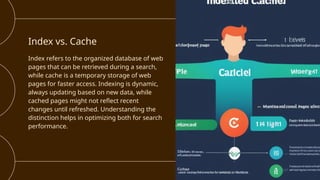
Index refers to the organized database of web
pages that can be retrieved during a search,
while cache is a temporary storage of web
pages for faster access. Indexing is dynamic,
always updating based on new data, while
cached pages might not reflect recent
changes until refreshed. Understanding the
distinction helps in optimizing both for search
performance.
The indexing process involves several steps: first, content is fetched through
crawling; next, the content is parsed and analyzed for context; then, it is
categorized and stored in the search engine's index. Finally, an algorithm
assesses the relevance of the indexed content for future searches,
determining its visibility in search results. Understanding these steps is key
in optimizing content for better indexing.
Indexing Process Steps
Serving
Mechanisms
03
How Search Engines Serve Results
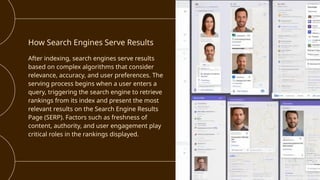
After indexing, search engines serve results
based on complex algorithms that consider
relevance, accuracy, and user preferences. The
serving process begins when a user enters a
query, triggering the search engine to retrieve
rankings from its index and present the most
relevant results on the Search Engine Results
Page (SERP). Factors such as freshness of
content, authority, and user engagement play
critical roles in the rankings displayed.
Relevance is determined by matching user queries with indexed content
based on keywords, semantics, and context. Ranking factors encompass
various elements including content quality, backlinks, site speed, mobile
optimization, and user engagement metrics. Search engines continuously
evolve their algorithms to refine how relevance is assessed and ensure users
receive the best possible answers to their inquiries.
Relevance and Ranking Factors
SERPs display results in several formats including organic listings, paid ads,
featured snippets, and knowledge panels. Understanding this layout helps
SEO professionals to optimize content effectively. The positioning of results
influences click-through rates, with higher placements naturally receiving
more traffic. The structure of SERPs can also change based on the query
intent, such as navigational, informational, or transactional.
Understanding SERPs Layout
Technical SEO
Best Practices
04
The robots.txt file instructs search engine bots on which pages they can or
cannot crawl. Proper optimization of this file is vital for controlling how search
engines interact with a website. Misconfiguration can lead to unintended
indexing or exclusion of important pages, which can impact visibility and
ranking. A well-structured robots.txt file also enhances the crawling efficiency
and prioritization of vital content.
Robots.txt Optimization
XML sitemaps guide search engines in discovering and indexing content on
a site. Proper configuration, including accurate scoping of URLs,
prioritization of pages, and frequency of updates within the sitemap, is
essential for enhancing SEO. Regularly updating the sitemap ensures that
new pages are crawled and indexed promptly, ultimately improving the
site’s visibility in search results.
XML Sitemaps Configuration
Ensuring Mobile-Friendliness
With the increasing number of searches
conducted on mobile devices, ensuring that a
website is mobile-friendly is crucial. Mobile-
friendliness affects user experience and is a
significant ranking factor. Techniques such as
responsive design, fast loading speeds, and
mobile-optimized content are vital for
capturing mobile traffic and improving
rankings in mobile search results.
Advanced
Techniques
05
Crawl budget management is about optimizing how search engines crawl a
website to ensure important pages are prioritized. Factors like site
structure, server response times, and the overall size of the site affect crawl
budgets. Efficient management ensures that search engines find and index
the most relevant content while not wasting crawl resources on low-priority
pages.
Crawl Budget Management
Schema markup enhances a website's visibility by providing search engines
with additional context about the content. By implementing structured data,
websites can enable rich snippets in search results, improving click-through
rates. Understanding how to utilize schema effectively can be a game
changer in attracting more organic traffic and providing enhanced
information to users right from the SERP.
Schema Markup Utilization
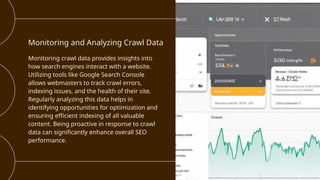
Monitoring and Analyzing Crawl Data
Monitoring crawl data provides insights into
how search engines interact with a website.
Utilizing tools like Google Search Console
allows webmasters to track crawl errors,
indexing issues, and the health of their site.
Regularly analyzing this data helps in
identifying opportunities for optimization and
ensuring efficient indexing of all valuable
content. Being proactive in response to crawl
data can significantly enhance overall SEO
performance.
Conclusions
In conclusion, understanding the intricate
processes of crawling, indexing, and serving is
crucial for optimizing website visibility.
Implementing technical SEO best practices and
advanced techniques can greatly influence how
search engines perceive and rank content,
leading to improved traffic and engagement. By
continuously monitoring and optimizing these
elements, SEO professionals can enhance a
site's performance and ensure compliance with
search engine standards.
CREDITS: This presentation template was created by Slidesgo,
and includes icons by Flaticon, and infographics & images by
Freepik
Thank you!
Do you have any questions?

Technical SEO explain by Akramujjaman Mridha

  • 1.
  • 2.
    Introduction This presentation delvesinto the technicalities of SEO, specifically focusing on crawl, indexing, and serving processes crucial for effective website visibility.
  • 3.
  • 4.
    Crawling refers tothe process by which search engines, such as Google, discover new and updated content on the web. This is the first step in ensuring that web pages are indexed and appear in search results. Effective crawling allows search engines to stay current with content changes, ensuring only relevant information is presented to users. Definition and Importance of Crawling
  • 5.
    Crawlers vs. Bots Crawlersare specialized bots designed to systematically browse the web, while the term 'bots' can refer to any automated software. Crawlers focus on indexing and content retrieval, and they adhere to guidelines specified in the robots.txt file. Contrastly, various other bots perform different roles, from data aggregation to website monitoring.
  • 6.
    User-Agent strings identifythe type of bot visiting a website, informing servers how to respond to requests. Different search engines use distinct User-Agents. Understanding User-Agent roles is crucial for troubleshooting issues related to data delivery and ensuring complete indexing by providing tailored experiences for crawlers. User-Agent Roles
  • 7.
  • 8.
    Indexing is theprocess of organizing and storing crawled data in a way that allows quick access and retrieval. It involves analyzing web content, categorizing it based on relevance, and placing it in a searchable database. This index is what search engines rely on to return relevant results to users. Without proper indexing, web pages may not appear in search results, no matter how quality the content is. What is Indexing?
  • 9.
    Index vs. Cache Indexrefers to the organized database of web pages that can be retrieved during a search, while cache is a temporary storage of web pages for faster access. Indexing is dynamic, always updating based on new data, while cached pages might not reflect recent changes until refreshed. Understanding the distinction helps in optimizing both for search performance.
  • 10.
    The indexing processinvolves several steps: first, content is fetched through crawling; next, the content is parsed and analyzed for context; then, it is categorized and stored in the search engine's index. Finally, an algorithm assesses the relevance of the indexed content for future searches, determining its visibility in search results. Understanding these steps is key in optimizing content for better indexing. Indexing Process Steps
  • 11.
  • 12.
    How Search EnginesServe Results After indexing, search engines serve results based on complex algorithms that consider relevance, accuracy, and user preferences. The serving process begins when a user enters a query, triggering the search engine to retrieve rankings from its index and present the most relevant results on the Search Engine Results Page (SERP). Factors such as freshness of content, authority, and user engagement play critical roles in the rankings displayed.
  • 13.
    Relevance is determinedby matching user queries with indexed content based on keywords, semantics, and context. Ranking factors encompass various elements including content quality, backlinks, site speed, mobile optimization, and user engagement metrics. Search engines continuously evolve their algorithms to refine how relevance is assessed and ensure users receive the best possible answers to their inquiries. Relevance and Ranking Factors
  • 14.
    SERPs display resultsin several formats including organic listings, paid ads, featured snippets, and knowledge panels. Understanding this layout helps SEO professionals to optimize content effectively. The positioning of results influences click-through rates, with higher placements naturally receiving more traffic. The structure of SERPs can also change based on the query intent, such as navigational, informational, or transactional. Understanding SERPs Layout
  • 15.
  • 16.
    The robots.txt fileinstructs search engine bots on which pages they can or cannot crawl. Proper optimization of this file is vital for controlling how search engines interact with a website. Misconfiguration can lead to unintended indexing or exclusion of important pages, which can impact visibility and ranking. A well-structured robots.txt file also enhances the crawling efficiency and prioritization of vital content. Robots.txt Optimization
  • 17.
    XML sitemaps guidesearch engines in discovering and indexing content on a site. Proper configuration, including accurate scoping of URLs, prioritization of pages, and frequency of updates within the sitemap, is essential for enhancing SEO. Regularly updating the sitemap ensures that new pages are crawled and indexed promptly, ultimately improving the site’s visibility in search results. XML Sitemaps Configuration
  • 18.
    Ensuring Mobile-Friendliness With theincreasing number of searches conducted on mobile devices, ensuring that a website is mobile-friendly is crucial. Mobile- friendliness affects user experience and is a significant ranking factor. Techniques such as responsive design, fast loading speeds, and mobile-optimized content are vital for capturing mobile traffic and improving rankings in mobile search results.
  • 19.
  • 20.
    Crawl budget managementis about optimizing how search engines crawl a website to ensure important pages are prioritized. Factors like site structure, server response times, and the overall size of the site affect crawl budgets. Efficient management ensures that search engines find and index the most relevant content while not wasting crawl resources on low-priority pages. Crawl Budget Management
  • 21.
    Schema markup enhancesa website's visibility by providing search engines with additional context about the content. By implementing structured data, websites can enable rich snippets in search results, improving click-through rates. Understanding how to utilize schema effectively can be a game changer in attracting more organic traffic and providing enhanced information to users right from the SERP. Schema Markup Utilization
  • 22.
    Monitoring and AnalyzingCrawl Data Monitoring crawl data provides insights into how search engines interact with a website. Utilizing tools like Google Search Console allows webmasters to track crawl errors, indexing issues, and the health of their site. Regularly analyzing this data helps in identifying opportunities for optimization and ensuring efficient indexing of all valuable content. Being proactive in response to crawl data can significantly enhance overall SEO performance.
  • 23.
    Conclusions In conclusion, understandingthe intricate processes of crawling, indexing, and serving is crucial for optimizing website visibility. Implementing technical SEO best practices and advanced techniques can greatly influence how search engines perceive and rank content, leading to improved traffic and engagement. By continuously monitoring and optimizing these elements, SEO professionals can enhance a site's performance and ensure compliance with search engine standards.
  • 24.
    CREDITS: This presentationtemplate was created by Slidesgo, and includes icons by Flaticon, and infographics & images by Freepik Thank you! Do you have any questions?