

In education, teachers facilitate student learning, often
in a school or academy or perhaps in another
environment such as outdoors. A teacher who teaches
on an individual basis may be described as a tutor.
The teaching profession in Alberta fulfills those criteria
in the following ways:
Its members have an organized body of knowledge that separates the
group from all others. Teachers are equipped with such a body of
knowledge, having an extensive background in the world and its
culture and a set of teaching methods experientially derived through
continuous research in all parts of the world.
It serves a great social purpose. Teachers carry responsibilities
weighted with social purpose. Through a rigid and self-imposed
adherence to the Code of Professional Conduct, which sets out their
duties and responsibilities, teachers pass on their accumulated culture
and assist each student under their care in achieving self-realization.
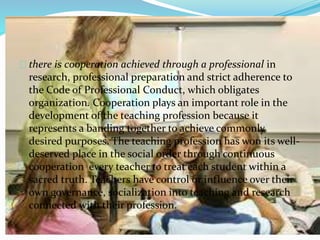
there is cooperation achieved through a professional in
research, professional preparation and strict adherence to
the Code of Professional Conduct, which obligates
organization. Cooperation plays an important role in the
development of the teaching profession because it
represents a banding together to achieve commonly
desired purposes. The teaching profession has won its well-
deserved place in the social order through continuous
cooperation every teacher to treat each student within a
sacred truth. Teachers have control or influence over their
own governance, socialization into teaching and research
connected with their profession.
There is a formal period of preparation and a requirement for
continuous growth and development. Teachers are required
to complete a defined teacher preparation program followed
by a period of induction or internship prior to being granted
permanent certification. This period includes support for
the formative growth of teachers and judgments about their
competence. Teachers are devoted to continuous
development of their ability to deliver their service.
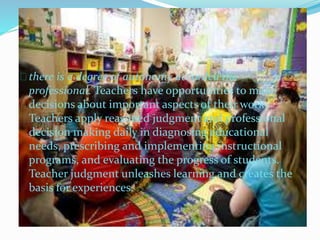
there is a degree of autonomy accorded the
professional. Teachers have opportunities to make
decisions about important aspects of their work.
Teachers apply reasoned judgment and professional
decision making daily in diagnosing educational
needs, prescribing and implementing instructional
programs, and evaluating the progress of students.
Teacher judgment unleashes learning and creates the
basis for experiences.
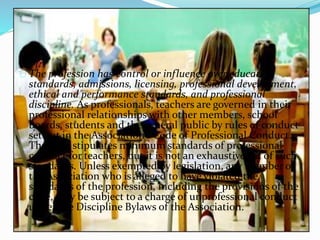
The profession has control or influence over education
standards, admissions, licensing, professional development,
ethical and performance standards, and professional
discipline. As professionals, teachers are governed in their
professional relationships with other members, school
boards, students and the general public by rules of conduct
set out in the Association’s Code of Professional Conduct.
The code stipulates minimum standards of professional
conduct for teachers, but it is not an exhaustive list of such
standards. Unless exempted by legislation, any member of
the Association who is alleged to have violated the
standards of the profession, including the provisions of the
code, may be subject to a charge of unprofessional conduct
under the Discipline Bylaws of the Association.
Professional Self-Governance
According to Alberta the Association believes that teachers require
one teaching certificate and that all teachers have the same certificate. As
previously mentioned, the profession, through the Association, should have
full responsibility for the issuance of teaching certificates and the suspension
or cancellation of certificates on grounds of incompetence or unprofessional
conduct.

Teaching profession powerpoint

  • 1.
    In education, teachersfacilitate student learning, often in a school or academy or perhaps in another environment such as outdoors. A teacher who teaches on an individual basis may be described as a tutor.
  • 2.
    The teaching professionin Alberta fulfills those criteria in the following ways: Its members have an organized body of knowledge that separates the group from all others. Teachers are equipped with such a body of knowledge, having an extensive background in the world and its culture and a set of teaching methods experientially derived through continuous research in all parts of the world. It serves a great social purpose. Teachers carry responsibilities weighted with social purpose. Through a rigid and self-imposed adherence to the Code of Professional Conduct, which sets out their duties and responsibilities, teachers pass on their accumulated culture and assist each student under their care in achieving self-realization.
  • 3.
    there is cooperationachieved through a professional in research, professional preparation and strict adherence to the Code of Professional Conduct, which obligates organization. Cooperation plays an important role in the development of the teaching profession because it represents a banding together to achieve commonly desired purposes. The teaching profession has won its well- deserved place in the social order through continuous cooperation every teacher to treat each student within a sacred truth. Teachers have control or influence over their own governance, socialization into teaching and research connected with their profession.
  • 4.
    There is aformal period of preparation and a requirement for continuous growth and development. Teachers are required to complete a defined teacher preparation program followed by a period of induction or internship prior to being granted permanent certification. This period includes support for the formative growth of teachers and judgments about their competence. Teachers are devoted to continuous development of their ability to deliver their service.
  • 5.
    there is adegree of autonomy accorded the professional. Teachers have opportunities to make decisions about important aspects of their work. Teachers apply reasoned judgment and professional decision making daily in diagnosing educational needs, prescribing and implementing instructional programs, and evaluating the progress of students. Teacher judgment unleashes learning and creates the basis for experiences.
  • 6.
    The profession hascontrol or influence over education standards, admissions, licensing, professional development, ethical and performance standards, and professional discipline. As professionals, teachers are governed in their professional relationships with other members, school boards, students and the general public by rules of conduct set out in the Association’s Code of Professional Conduct. The code stipulates minimum standards of professional conduct for teachers, but it is not an exhaustive list of such standards. Unless exempted by legislation, any member of the Association who is alleged to have violated the standards of the profession, including the provisions of the code, may be subject to a charge of unprofessional conduct under the Discipline Bylaws of the Association.
  • 7.
    Professional Self-Governance According toAlberta the Association believes that teachers require one teaching certificate and that all teachers have the same certificate. As previously mentioned, the profession, through the Association, should have full responsibility for the issuance of teaching certificates and the suspension or cancellation of certificates on grounds of incompetence or unprofessional conduct.