jferro@knights.ucf.edu 
mseayucf@knights.ucf.edu 
EEX 4070 
11/12/14
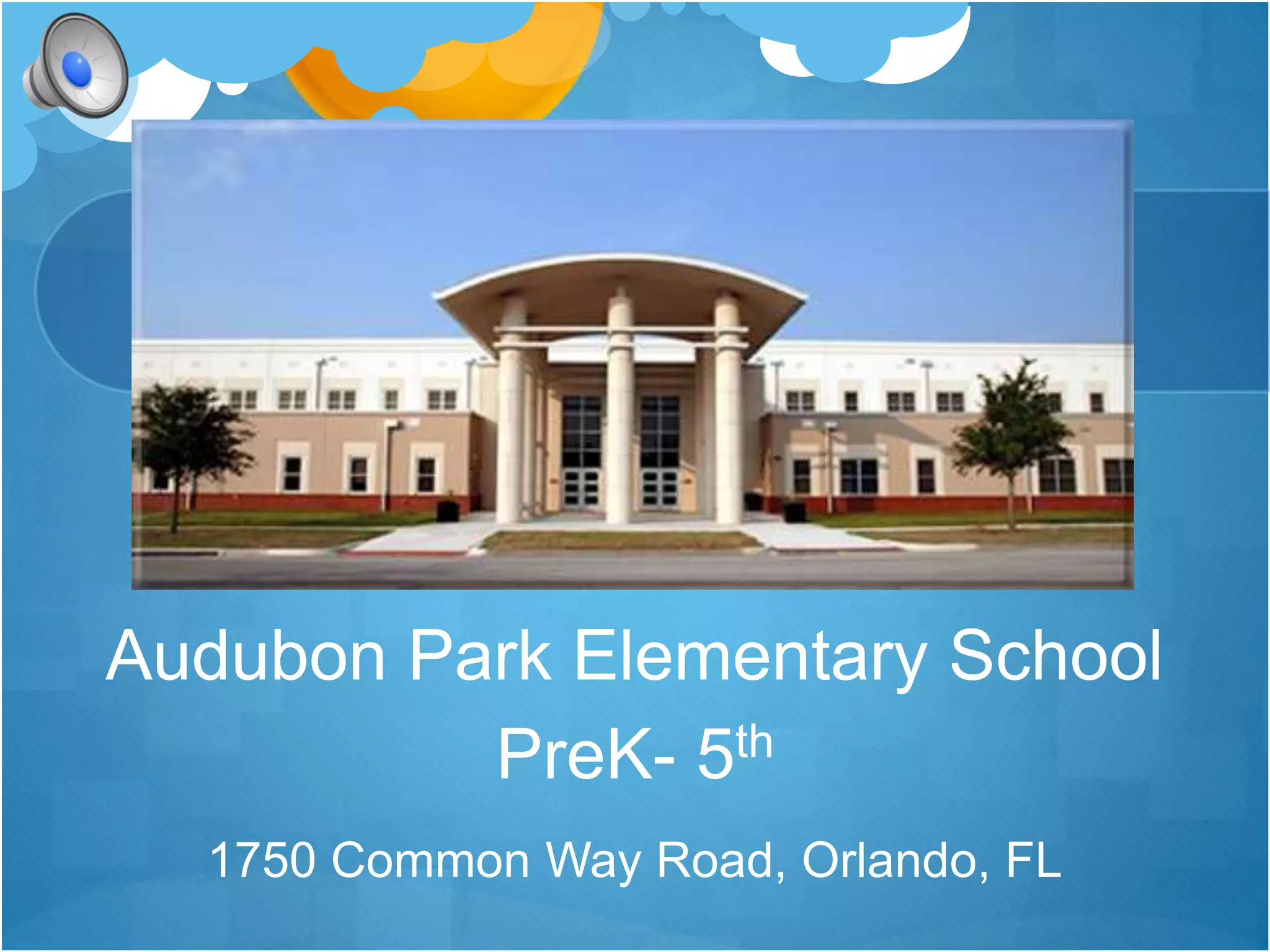
Audubon Park Elementary School 
PreK- 5th 
1750 Common Way Road, Orlando, FL
Introduction to the 
Host Setting 
Vision: To be the top producer of 
successful students in the nation 
Mission: To lead our students to success 
with the support and involvement of 
families and the community 
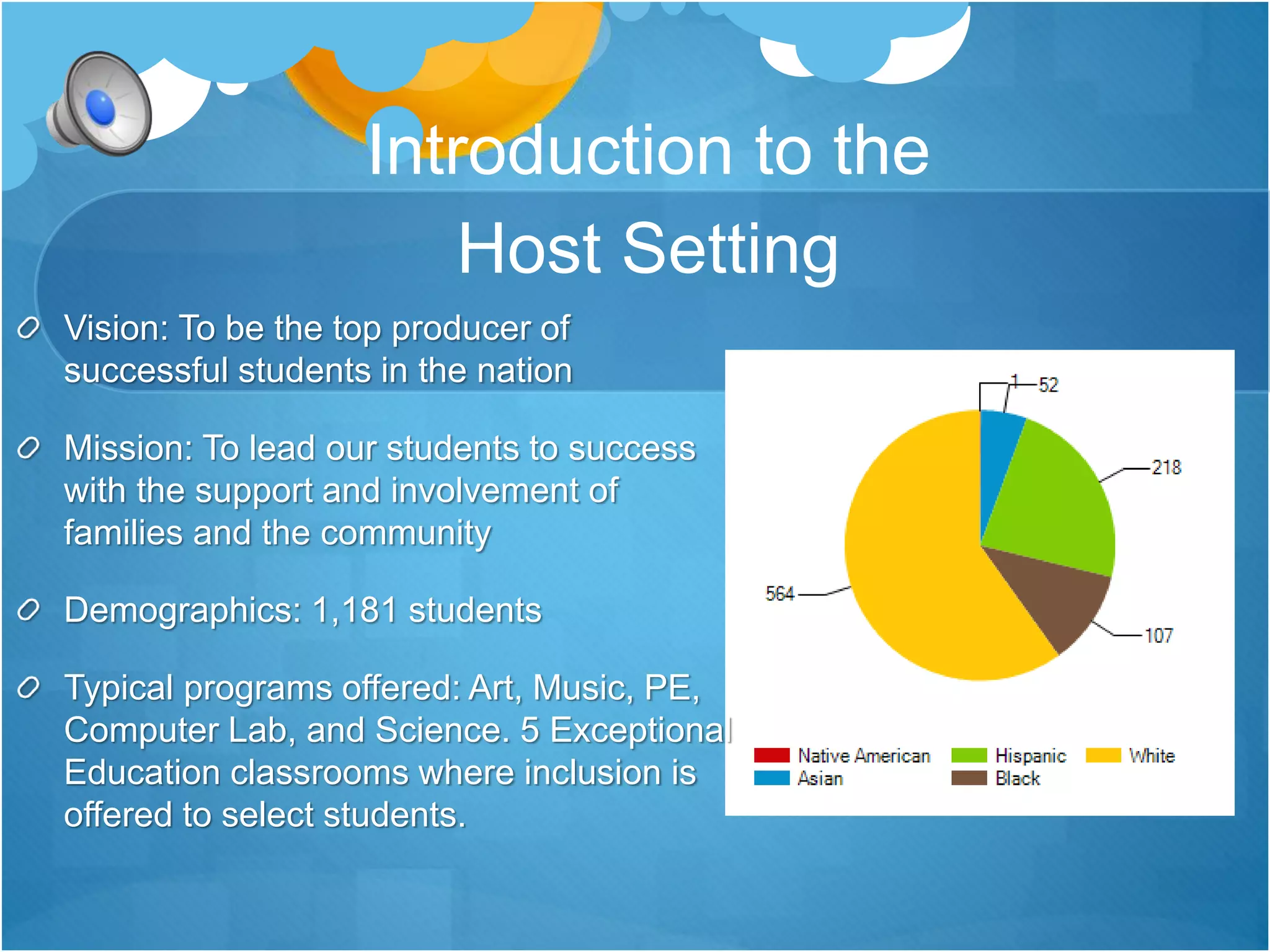
Demographics: 1,181 students 
Typical programs offered: Art, Music, PE, 
Computer Lab, and Science. 5 Exceptional 
Education classrooms where inclusion is 
offered to select students.
Engagement Activities 
Community to address: Special Education Classrooms 
15 hours of service learning in these classrooms; Three 5 hour 
sessions 
Activities engaged with the ESE students: 
Helping with worksheets during independent work time 
Participating in story time 
Assisting with educational crafts 
Games during outside play 
Observing teacher-led lessons and stations
Participant Demographics 
Age range: 6-13 years old 
“IDEA requires that schools provide special education services to 
eligible students as outline in a student’s IEP. IDEA also provides 
requirements to guarantee a free appropriate public education for 
students with disabilities in the least restrictive environment.” 
Exceptionalities witnessed: 
ADD, ADHD, Dyslexia, Auditory Processing, Nonverbal disabilities, Down 
Syndrome, Mild to Severe Autism, and Developmental delays
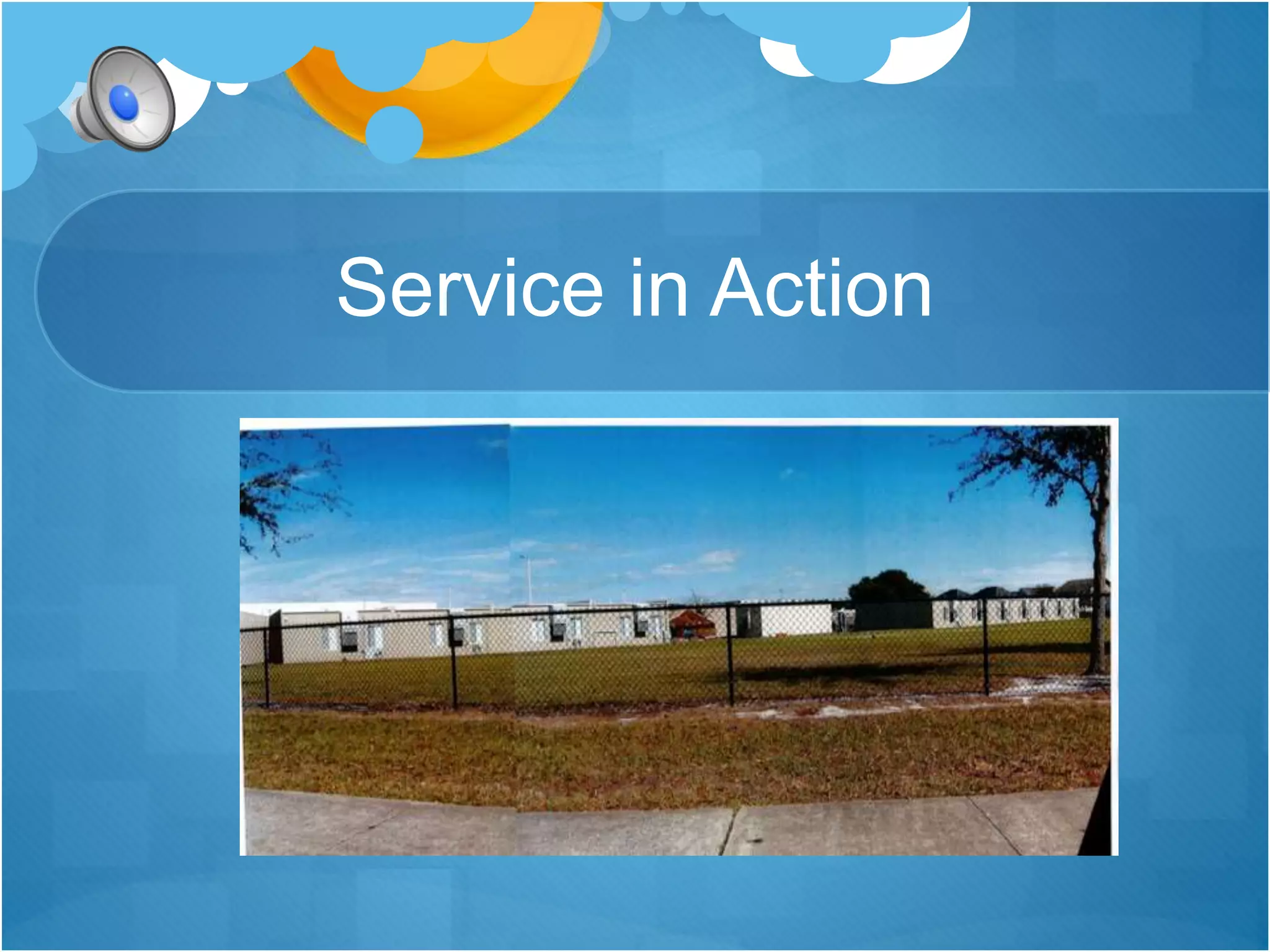
Service in Action
Perceptions of Differences 
Initial thoughts? Nervous! We didn’t know what to expect 
being that we were faced with a wide range of disabilities. 
Thoughts now? We learned about the positives and 
negatives of instructing ESE classroom; for example how 
much work goes in to tracking the students’ behavior and 
making sure the requirements of their IEPs are being met. 
Most impactful experience? How excited the students 
were to have us there.
Connections to our Course 
We are in the course EEX 4070 
This experience was very useful for our future studies 
because we got to see first hand how special education will 
be present in our careers. Jillian (elementary education) and 
Meagan (speech pathology). 
Three Concepts we better understand: 
Evaluating and how important it is in the classroom 
Maintaining each student’s IEP 
Multidisciplinary team- Speech Pathologist
Civic Engagement 
Being in a sorority, we already participate/volunteer in community events. 
However, after this project, we want to get more involved in organizations 
that cater to citizens with disabilities. 
Volunteering and civic engagement serve a huge purpose in our society 
because it’s so important to have that support from the community, 
especially when it comes to those with disabilities because they don’t have 
access to all the social interactions like we do. 
Serving learning is definitely a method of learning because you’re taking 
information from texts and modules and getting to experience them. 
Therefore, we would encourage teachers and students to embrace 
volunteering because how beneficial it is to see how things play out in a real 
classroom setting.
Final Thoughts & Reflections 
Greater understanding? Actually volunteering with people with 
disabilities because ultimately that increases your empathy and 
understanding since you’re actively interacting. 
Help others become more involved? Post flyers and spread the 
word on social media 
Teacher role? Being passionate about topics other than academics 
because students already look up to them, so they will want to be 
more involved.

Teachers in action project

  • 1.
  • 2.
    Audubon Park ElementarySchool PreK- 5th 1750 Common Way Road, Orlando, FL
  • 3.
    Introduction to the Host Setting Vision: To be the top producer of successful students in the nation Mission: To lead our students to success with the support and involvement of families and the community Demographics: 1,181 students Typical programs offered: Art, Music, PE, Computer Lab, and Science. 5 Exceptional Education classrooms where inclusion is offered to select students.
  • 4.
    Engagement Activities Communityto address: Special Education Classrooms 15 hours of service learning in these classrooms; Three 5 hour sessions Activities engaged with the ESE students: Helping with worksheets during independent work time Participating in story time Assisting with educational crafts Games during outside play Observing teacher-led lessons and stations
  • 5.
    Participant Demographics Agerange: 6-13 years old “IDEA requires that schools provide special education services to eligible students as outline in a student’s IEP. IDEA also provides requirements to guarantee a free appropriate public education for students with disabilities in the least restrictive environment.” Exceptionalities witnessed: ADD, ADHD, Dyslexia, Auditory Processing, Nonverbal disabilities, Down Syndrome, Mild to Severe Autism, and Developmental delays
  • 6.
  • 7.
    Perceptions of Differences Initial thoughts? Nervous! We didn’t know what to expect being that we were faced with a wide range of disabilities. Thoughts now? We learned about the positives and negatives of instructing ESE classroom; for example how much work goes in to tracking the students’ behavior and making sure the requirements of their IEPs are being met. Most impactful experience? How excited the students were to have us there.
  • 8.
    Connections to ourCourse We are in the course EEX 4070 This experience was very useful for our future studies because we got to see first hand how special education will be present in our careers. Jillian (elementary education) and Meagan (speech pathology). Three Concepts we better understand: Evaluating and how important it is in the classroom Maintaining each student’s IEP Multidisciplinary team- Speech Pathologist
  • 9.
    Civic Engagement Beingin a sorority, we already participate/volunteer in community events. However, after this project, we want to get more involved in organizations that cater to citizens with disabilities. Volunteering and civic engagement serve a huge purpose in our society because it’s so important to have that support from the community, especially when it comes to those with disabilities because they don’t have access to all the social interactions like we do. Serving learning is definitely a method of learning because you’re taking information from texts and modules and getting to experience them. Therefore, we would encourage teachers and students to embrace volunteering because how beneficial it is to see how things play out in a real classroom setting.
  • 10.
    Final Thoughts &Reflections Greater understanding? Actually volunteering with people with disabilities because ultimately that increases your empathy and understanding since you’re actively interacting. Help others become more involved? Post flyers and spread the word on social media Teacher role? Being passionate about topics other than academics because students already look up to them, so they will want to be more involved.