Genetic Algorithm


              PRESENTED BY- TAUSEEF AHAMD
      M.TECH (COMPUTER SC. & ENGINEERING)
          COMPUTER ENGINEERING DEPARTMENT
   ZAKIR HUSSAIN COLLEGE OF ENGG. & TECH.
                           A.M.U, ALIGARH
Outlines

 A quick overview of GA
 Features of GA
 Various Methods of Population Selection
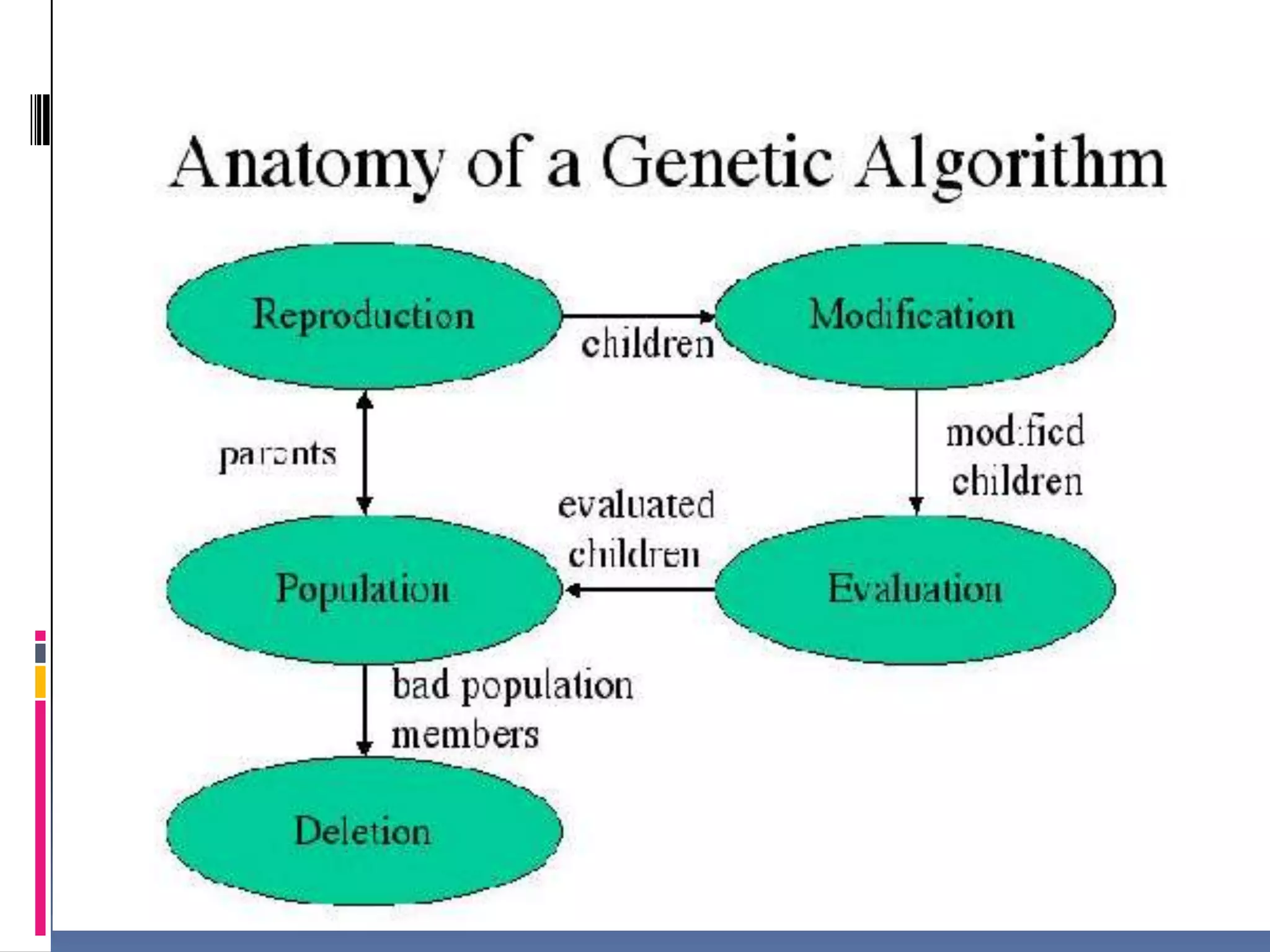
 Anatomy Of GA
 An example of GA
References….

 Adaptation in Neural and Artificial
  Systems, John Holland, 1975.
 Genetic Algorithm in Search, Optimization and
  Machine Learning, David E. Goldberg, 1989.
 C. Darwin. On the Origin of Species by Means of
  Natural Selection; or, the Preservation of flavored
  Races in the Struggle for Life. John
  Murray, London, 1859.
A quick overview of GA

 Developed: USA in the 1970’s, by John Holland
 Holland’s original GA is now known as the simple genetic
  algorithm (SGA)
 GA was inspired by process of biological evolution
 It is based on the Darwin’s theory of “survival of the
  fittest” : the better individuals have better chance of
  reproducing.
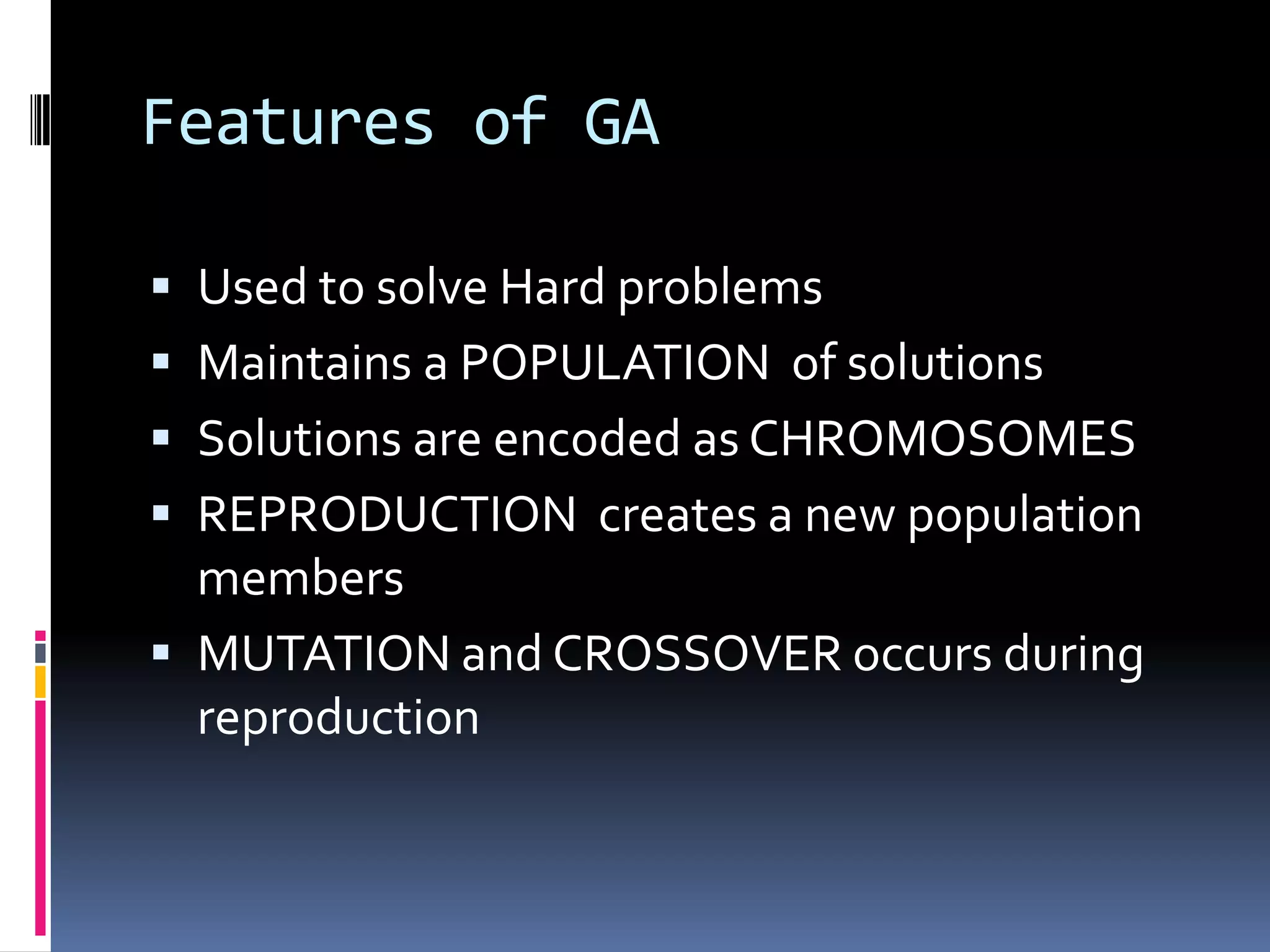
Features of GA

 Used to solve Hard problems
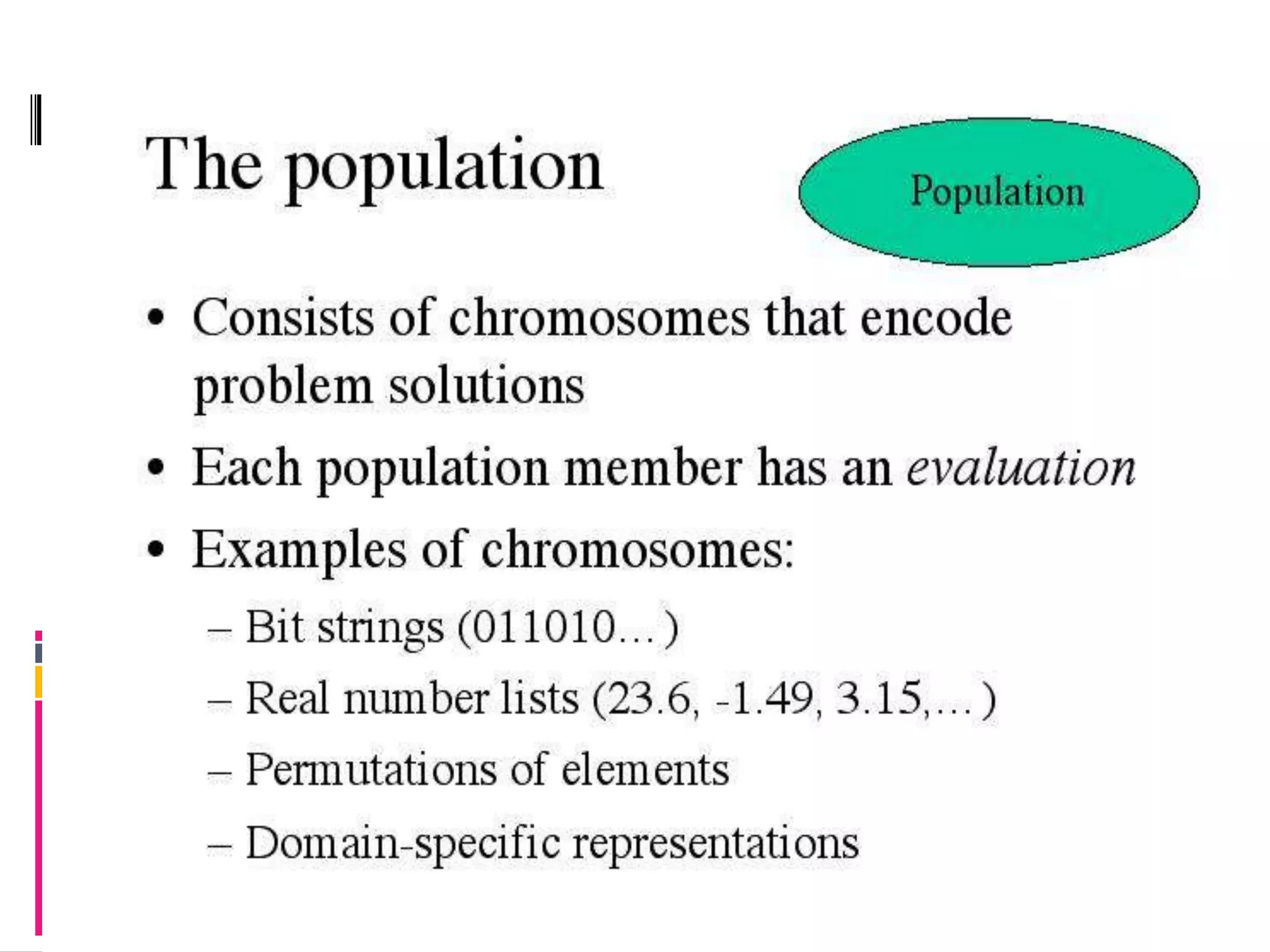
 Maintains a POPULATION of solutions
 Solutions are encoded as CHROMOSOMES
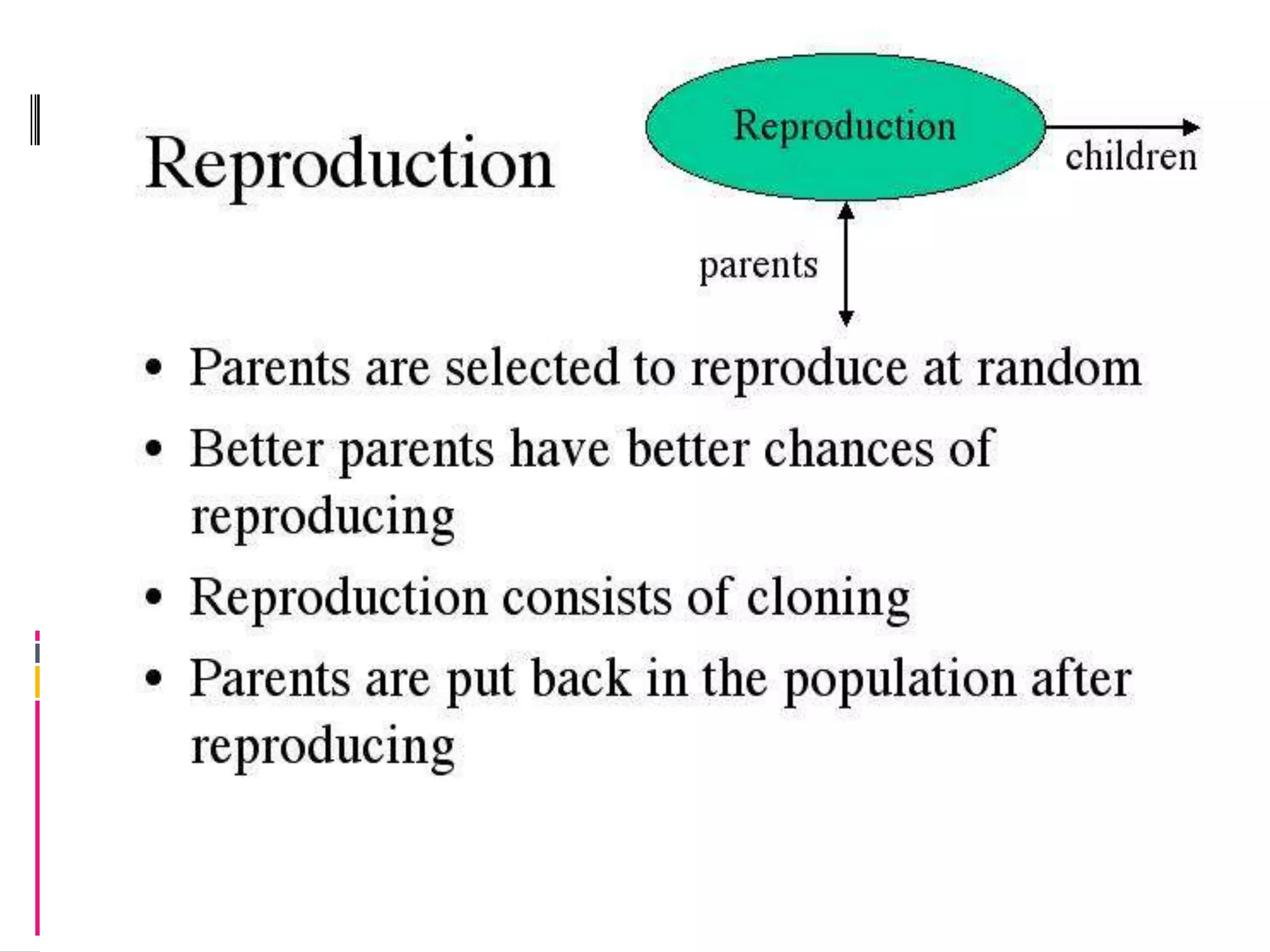
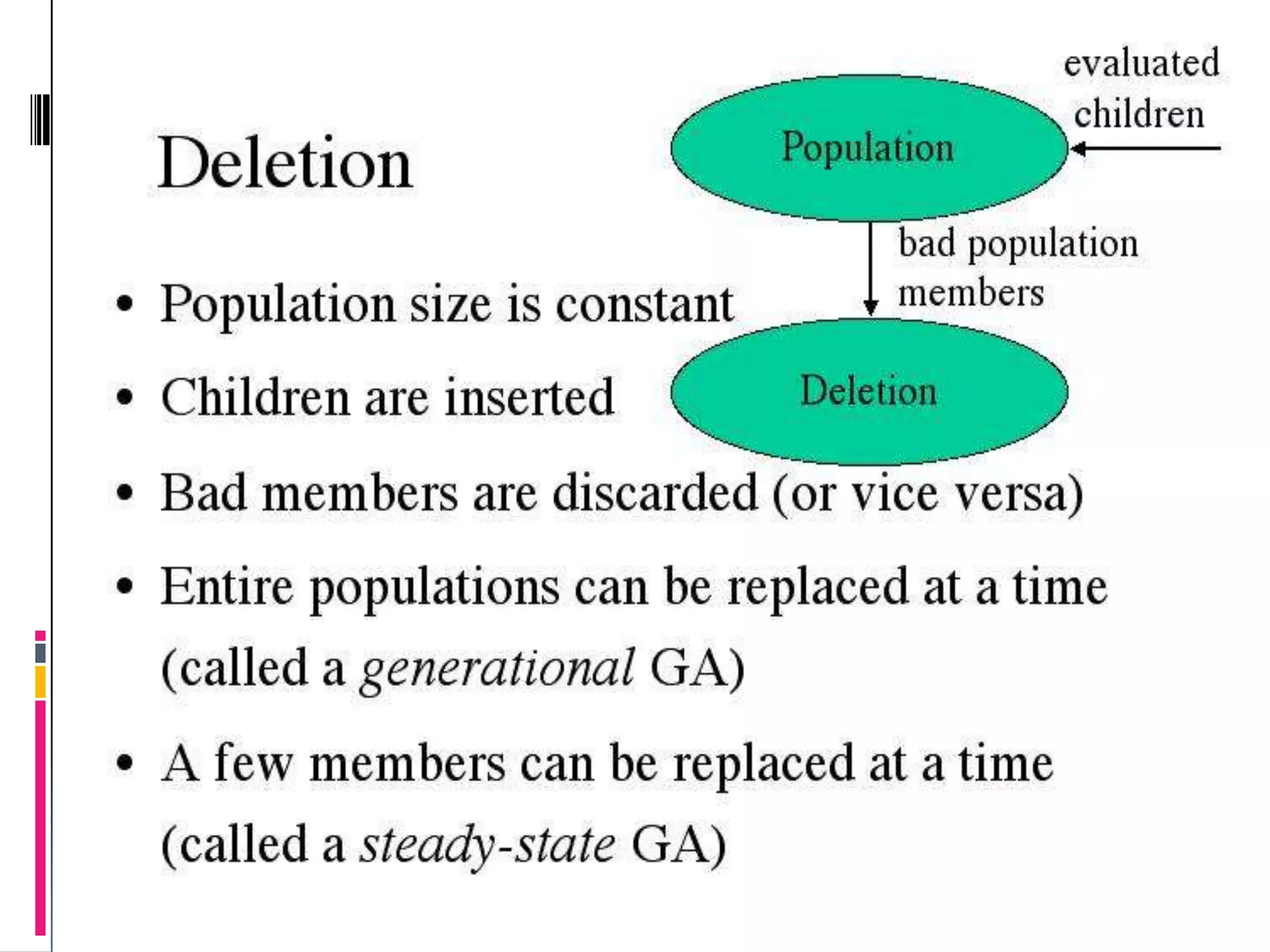
 REPRODUCTION creates a new population
  members
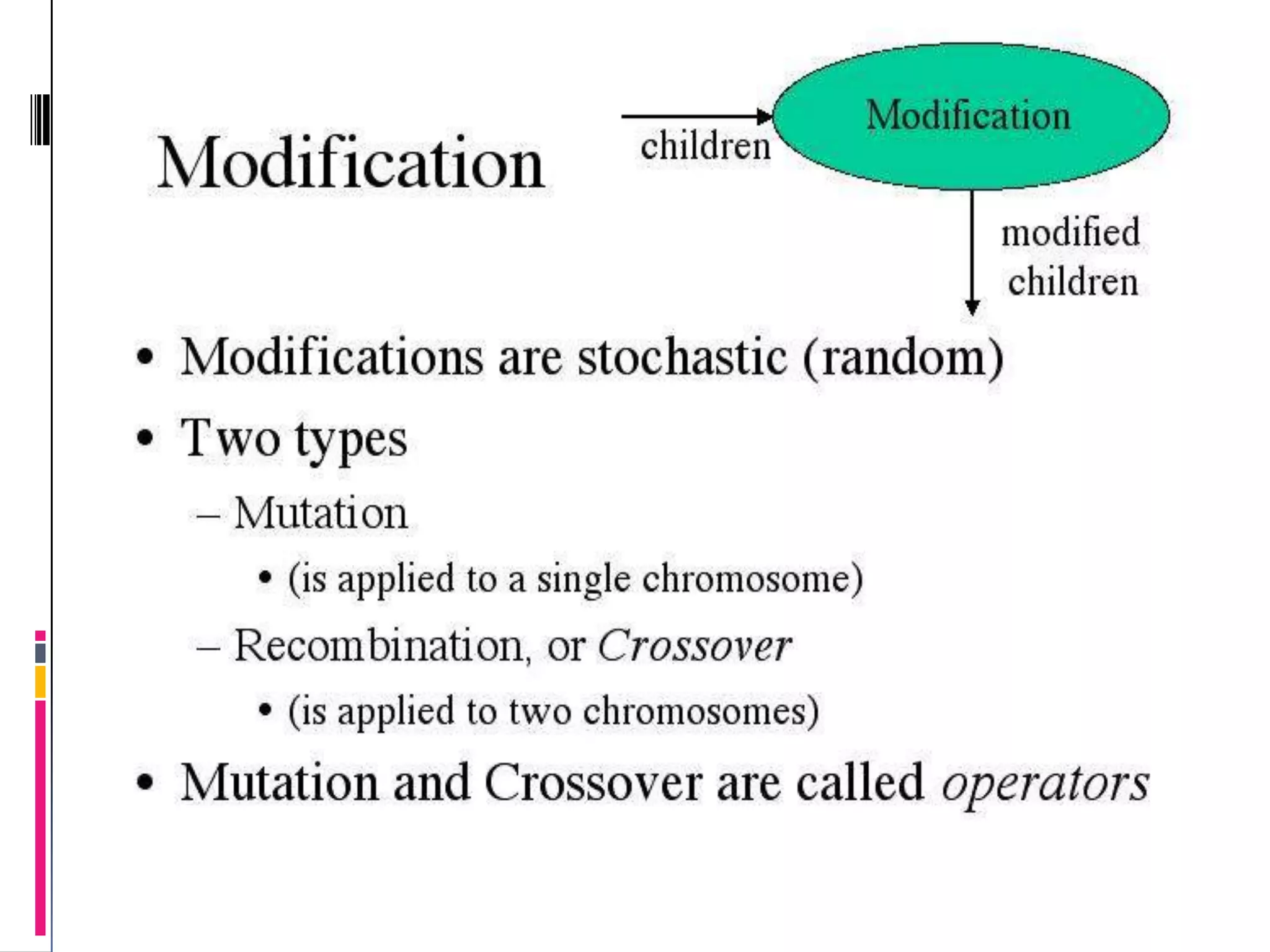
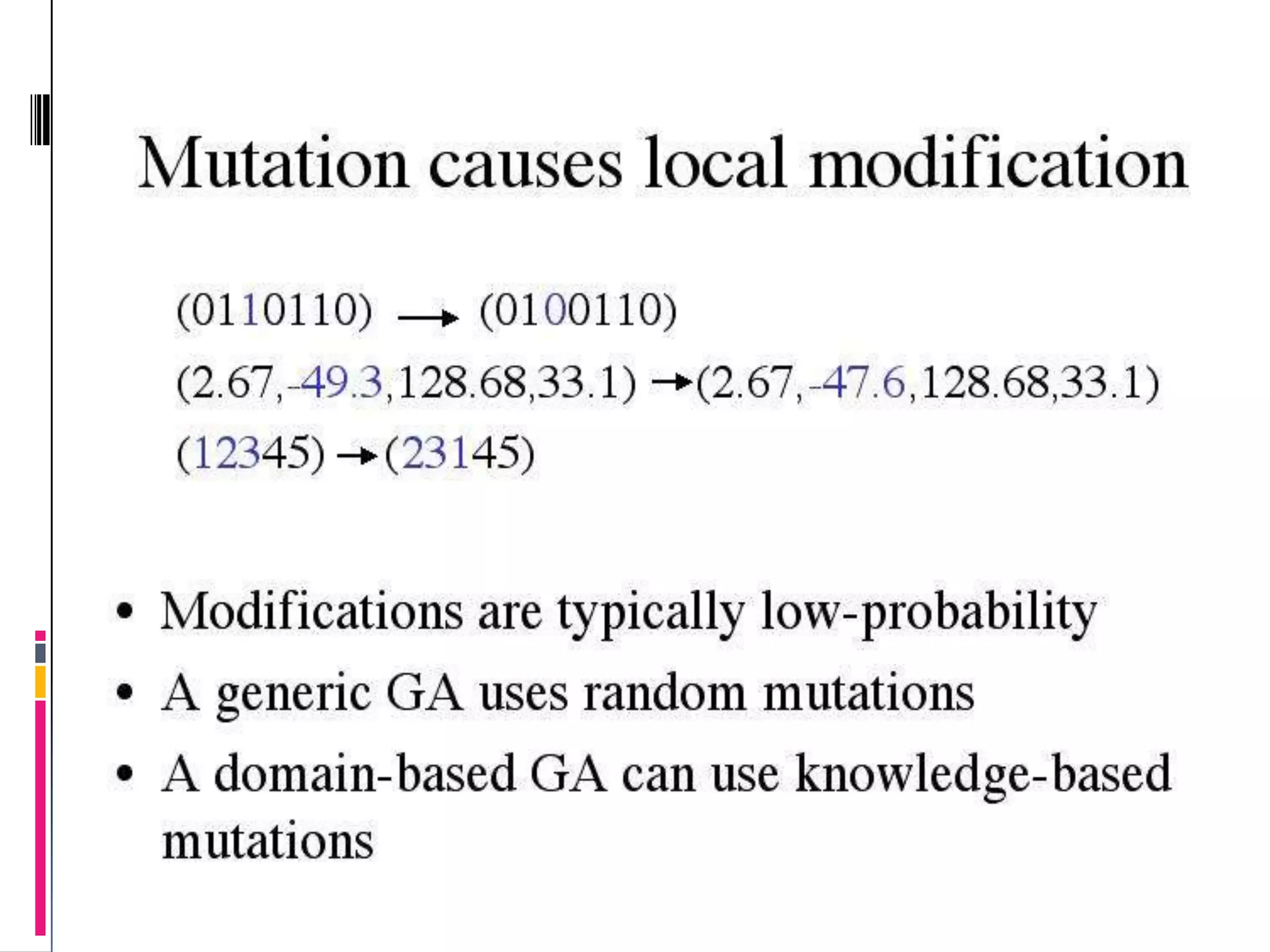
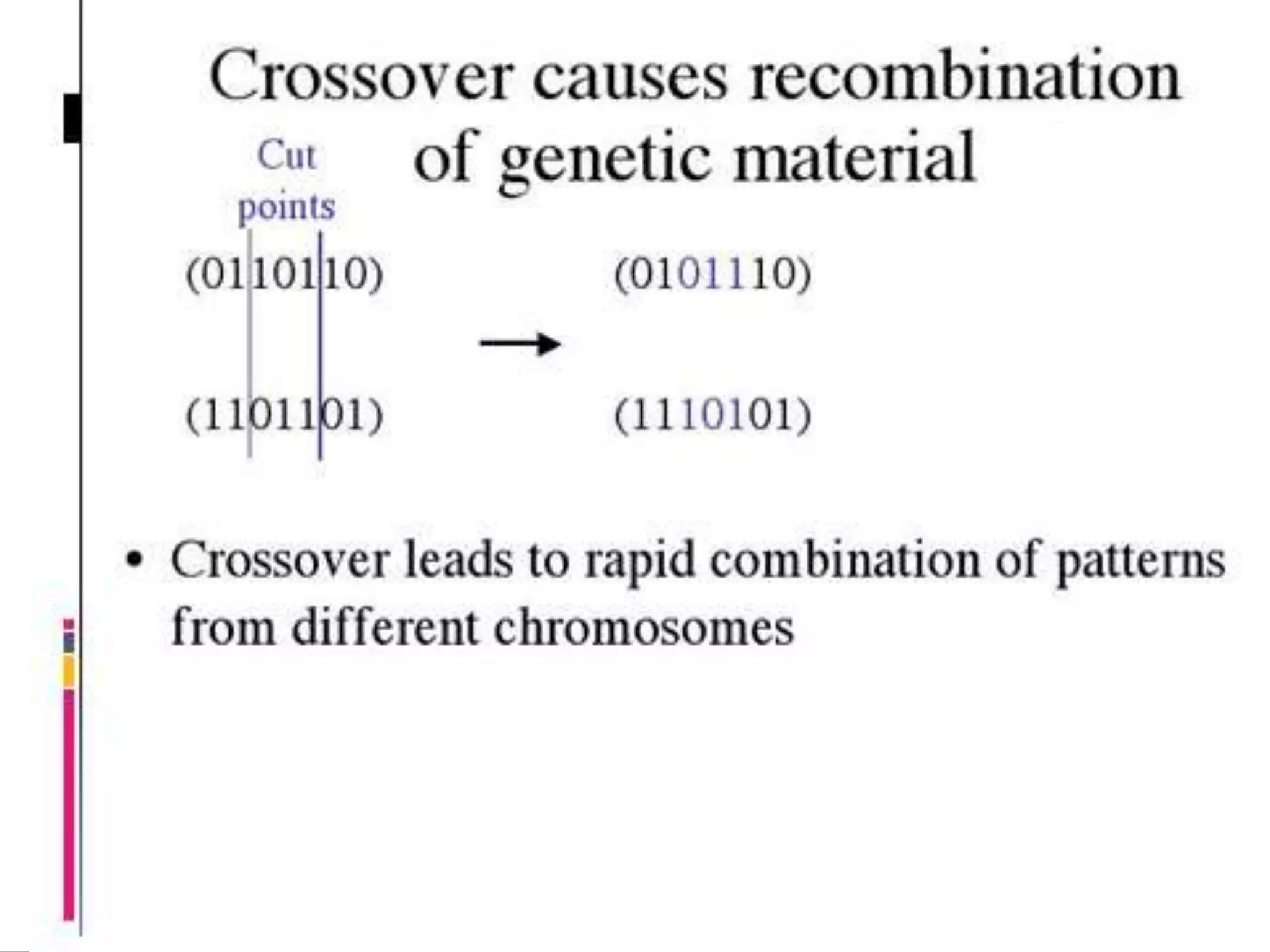
 MUTATION and CROSSOVER occurs during
  reproduction
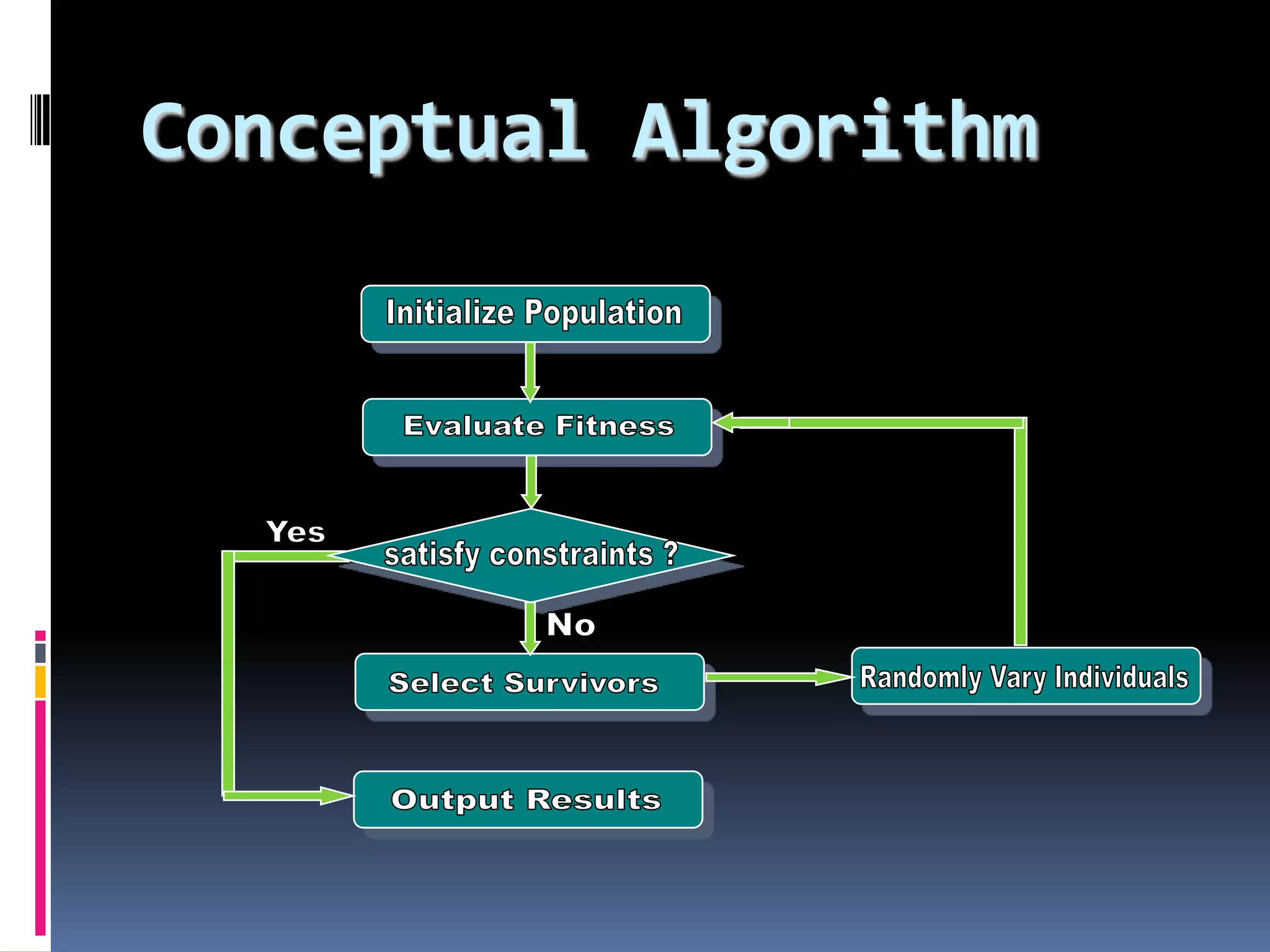
Conceptual Algorithm
Population Selection
 stochastically select from one generation to
  create the basis of the next generation
 The requirement is that the fittest individuals
  have a greater chance of survival than weaker
  ones
 fitter individuals will tend to have a better
  probability of survival and will go forward to
  form the mating pool for the next generation
Various Methods of population
Selection
 a) Roulette Wheel selection
 b) Rank Selection
 c) Tournament Selection
 d) Elitism

  There are many other methods, but we will
  discuss briefly only these methods.
Roulette Wheel selection(Example)
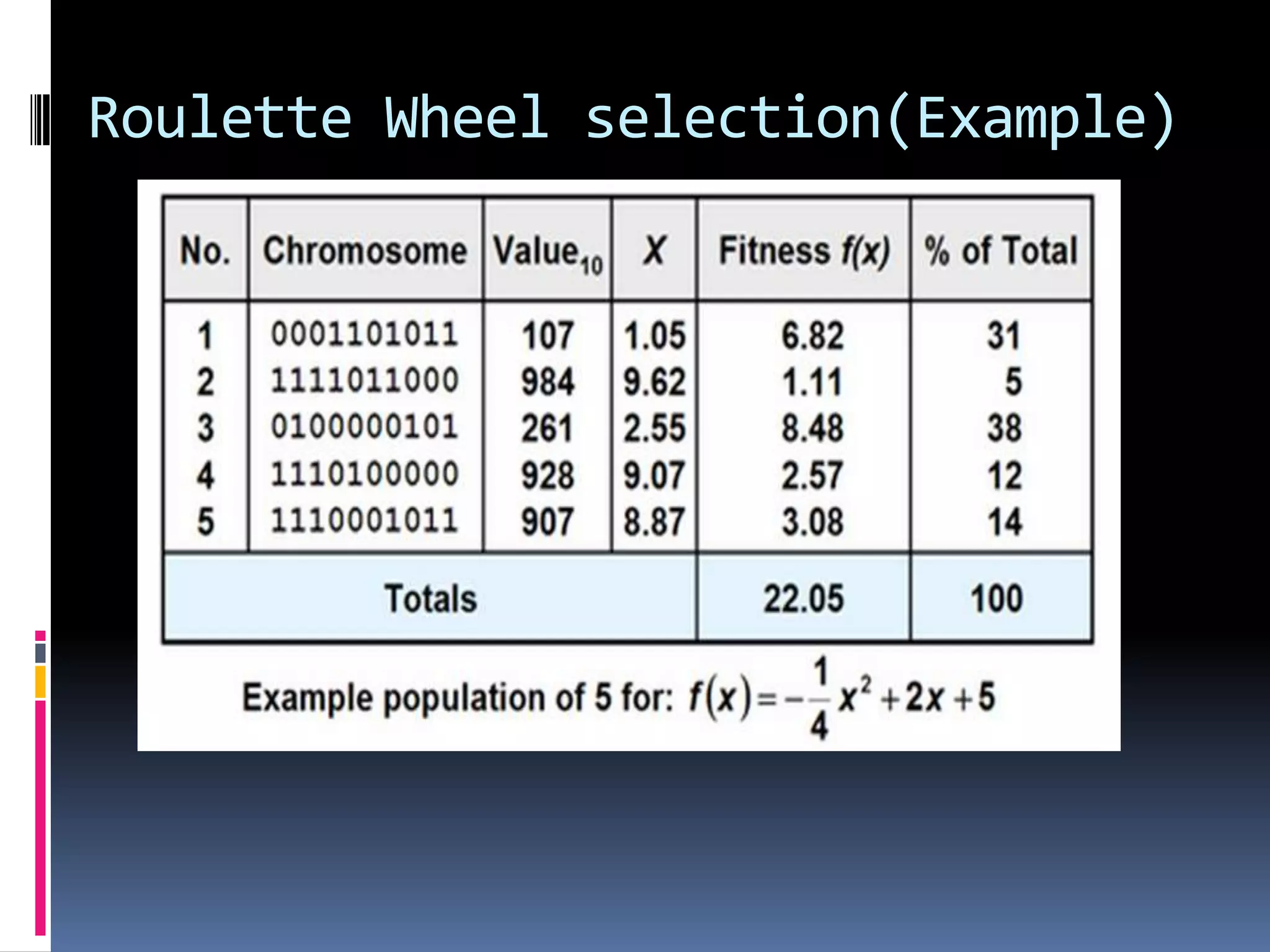
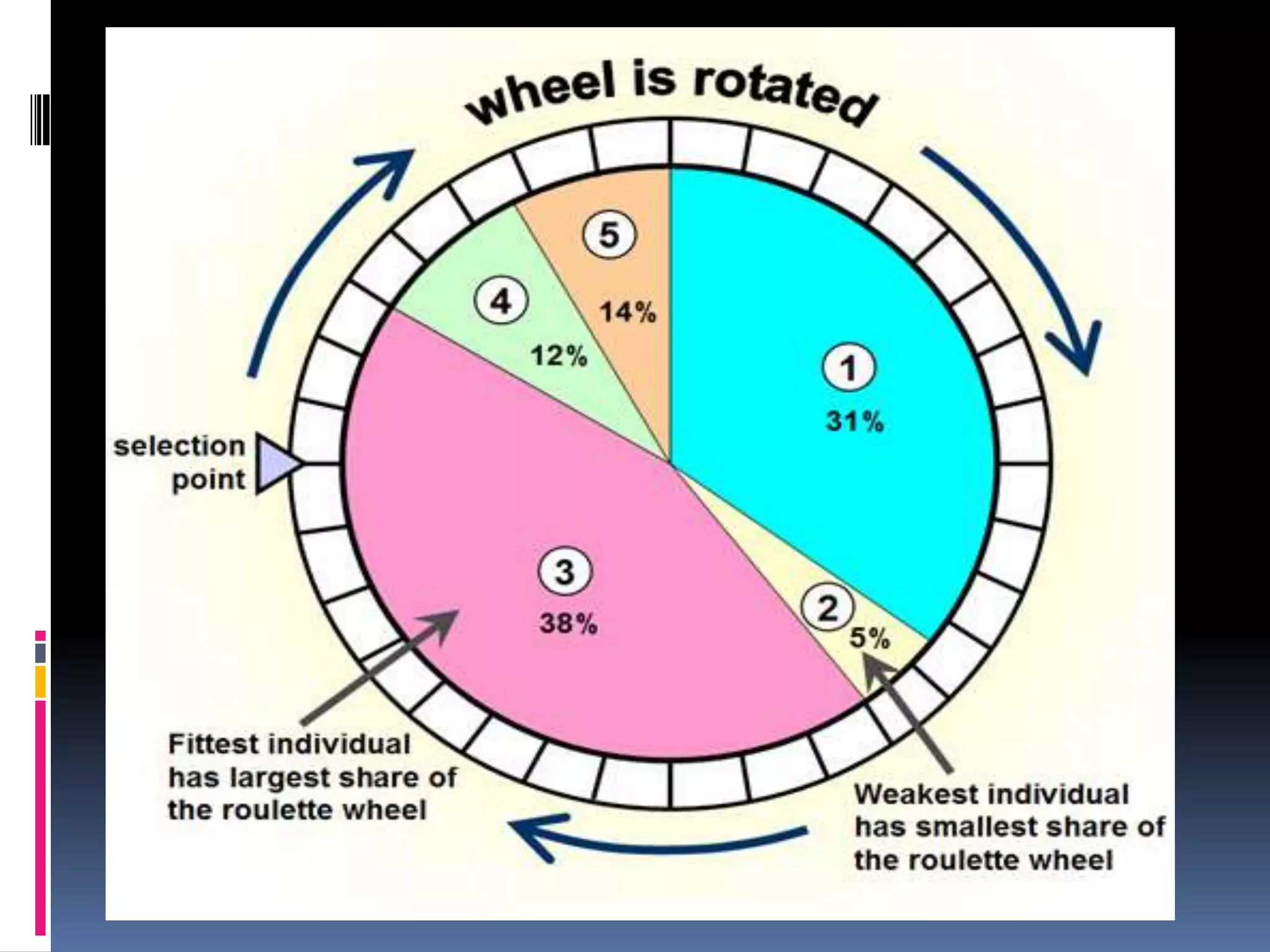
 Fitness f(x) of individual No. 3 is the fittest and
    No. 2 is the weakest
   Strongest individual a value of 38% and the
    weakest 5%
   These percentage fitness values can then be used
    to configure the roulette wheel
   Number of times the roulette wheel is spun is
    equal to size of the population
   Each time the wheel stops this gives the fitter
    individuals the greatest chance of being selected
    for the next generation and subsequent mating
    pool.
   Individual No. 3: 01000001012 will become more
    prevalent in the general population because it is
    fitter
Tournament Selection
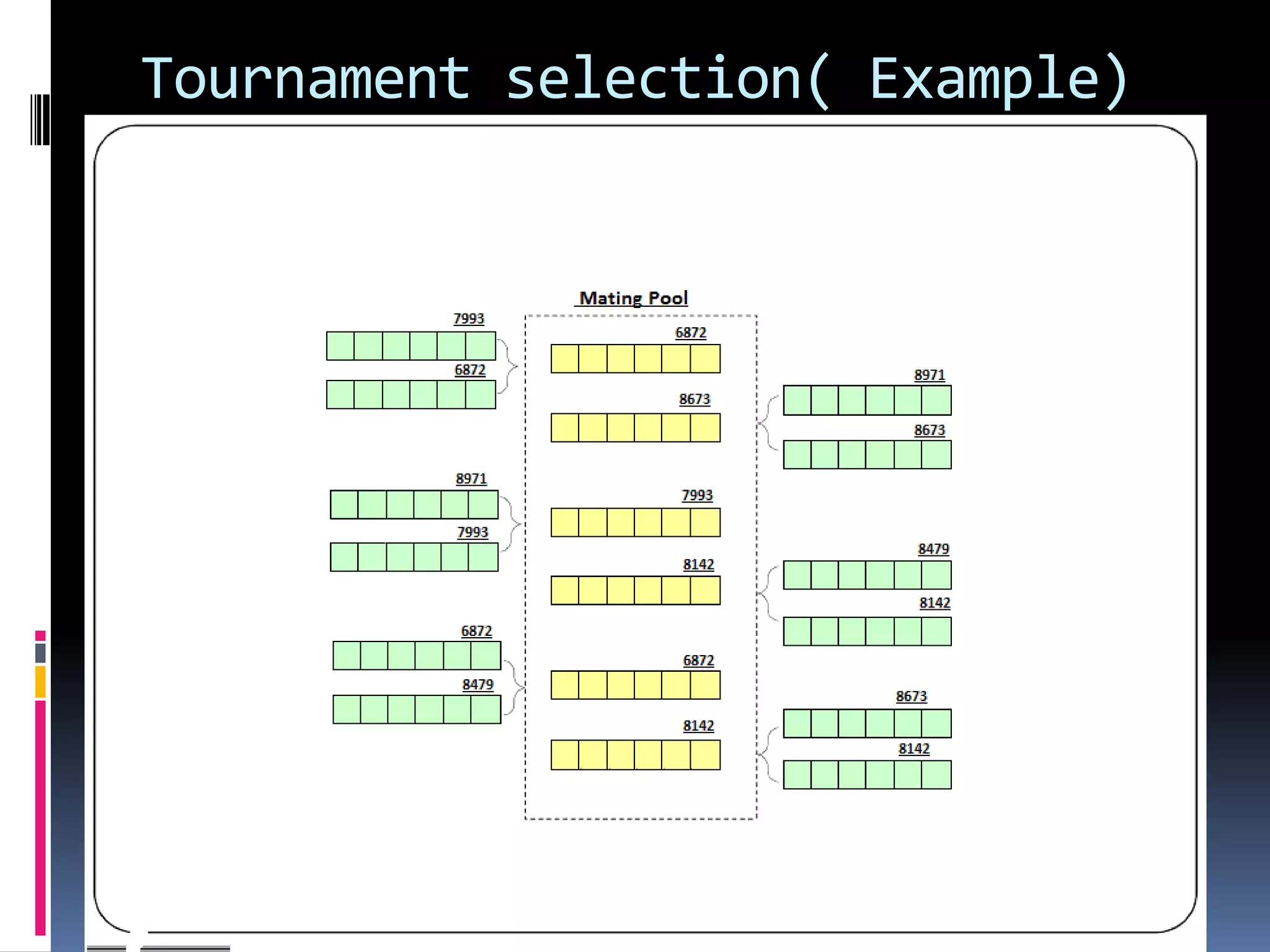
 Provides Selective pressure by holding a
  tournament competition among n individuals
 Best individual from tournament is one having
  highest fitness, which is the winner of
  tournament
 Tournament competitions and winner is then
  inserted into mating pool
Tournament selection( Example)
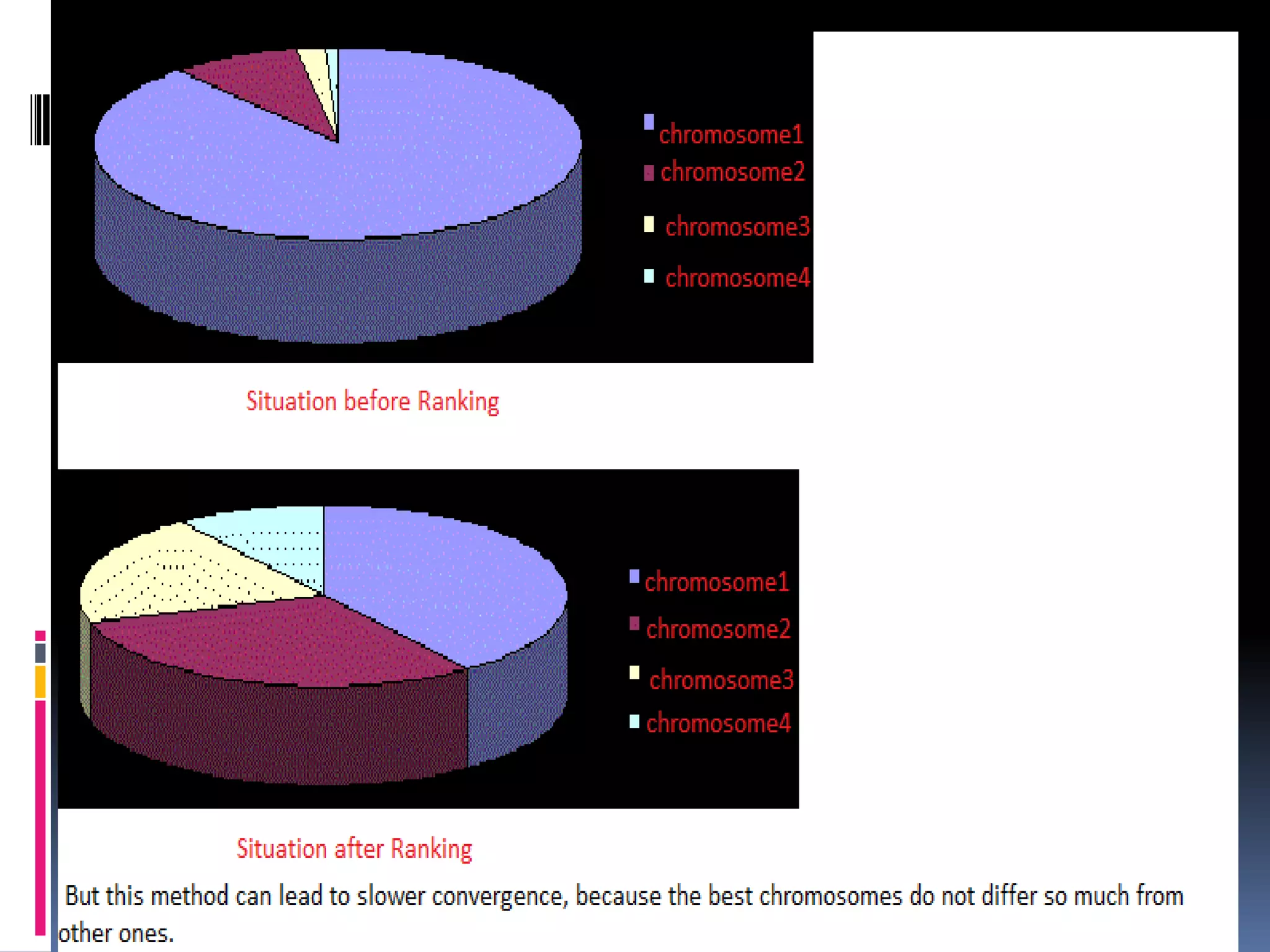
Rank Selection
 previous selection will have problems when the
  fatnesses differs very much
 For example, if the best chromosome fitness is
  90% of all the roulette wheel then the other
  chromosomes will have very few chances to be
  selected
 first ranks the population and then every
  chromosome receives fitness from this ranking
 The worst will have fitness 1, second worst 2 etc.
  and the best will have fitness N(number of
  chromosomes in population).
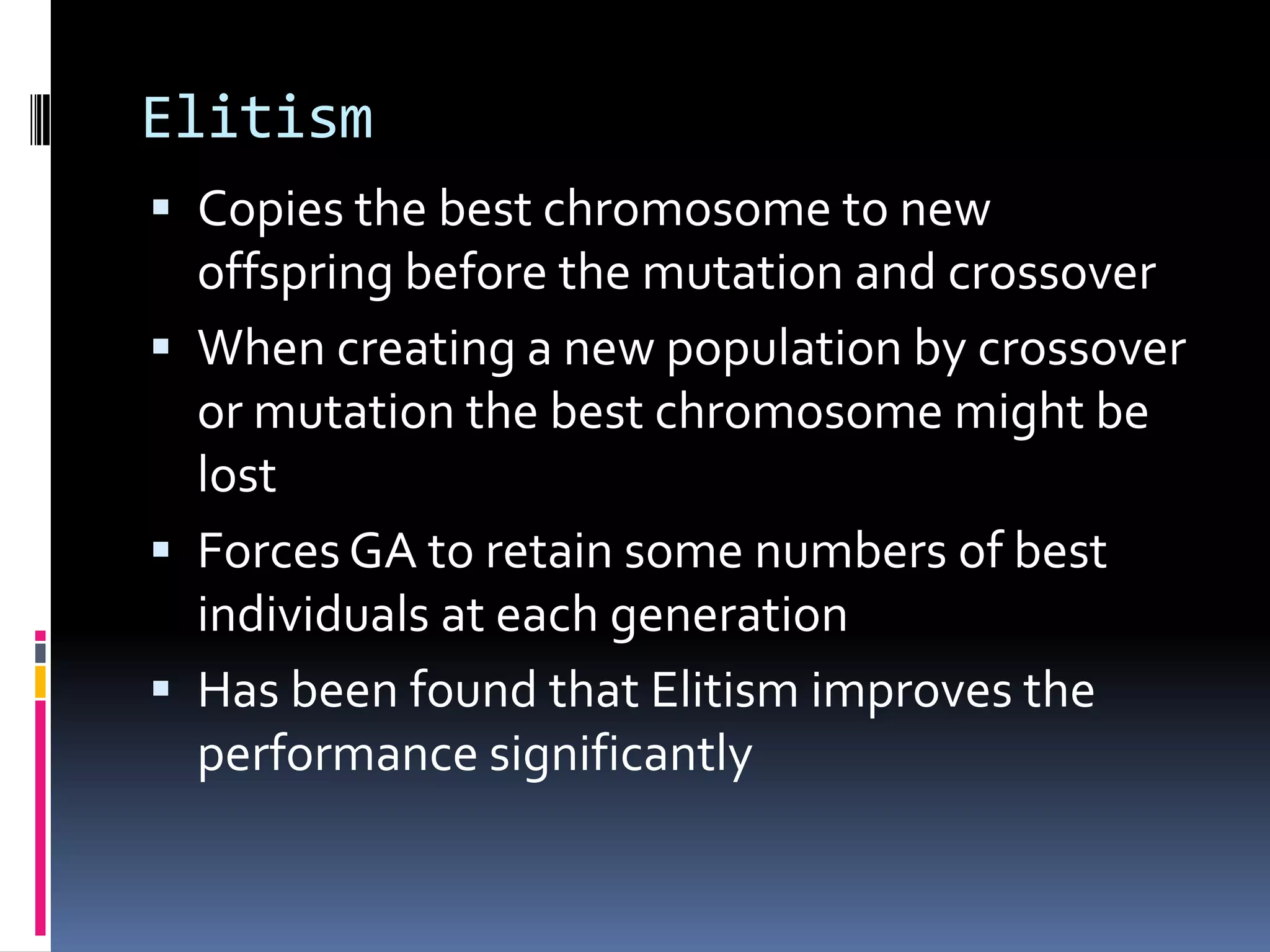
Elitism
 Copies the best chromosome to new
  offspring before the mutation and crossover
 When creating a new population by crossover
  or mutation the best chromosome might be
  lost
 Forces GA to retain some numbers of best
  individuals at each generation
 Has been found that Elitism improves the
  performance significantly
An Example

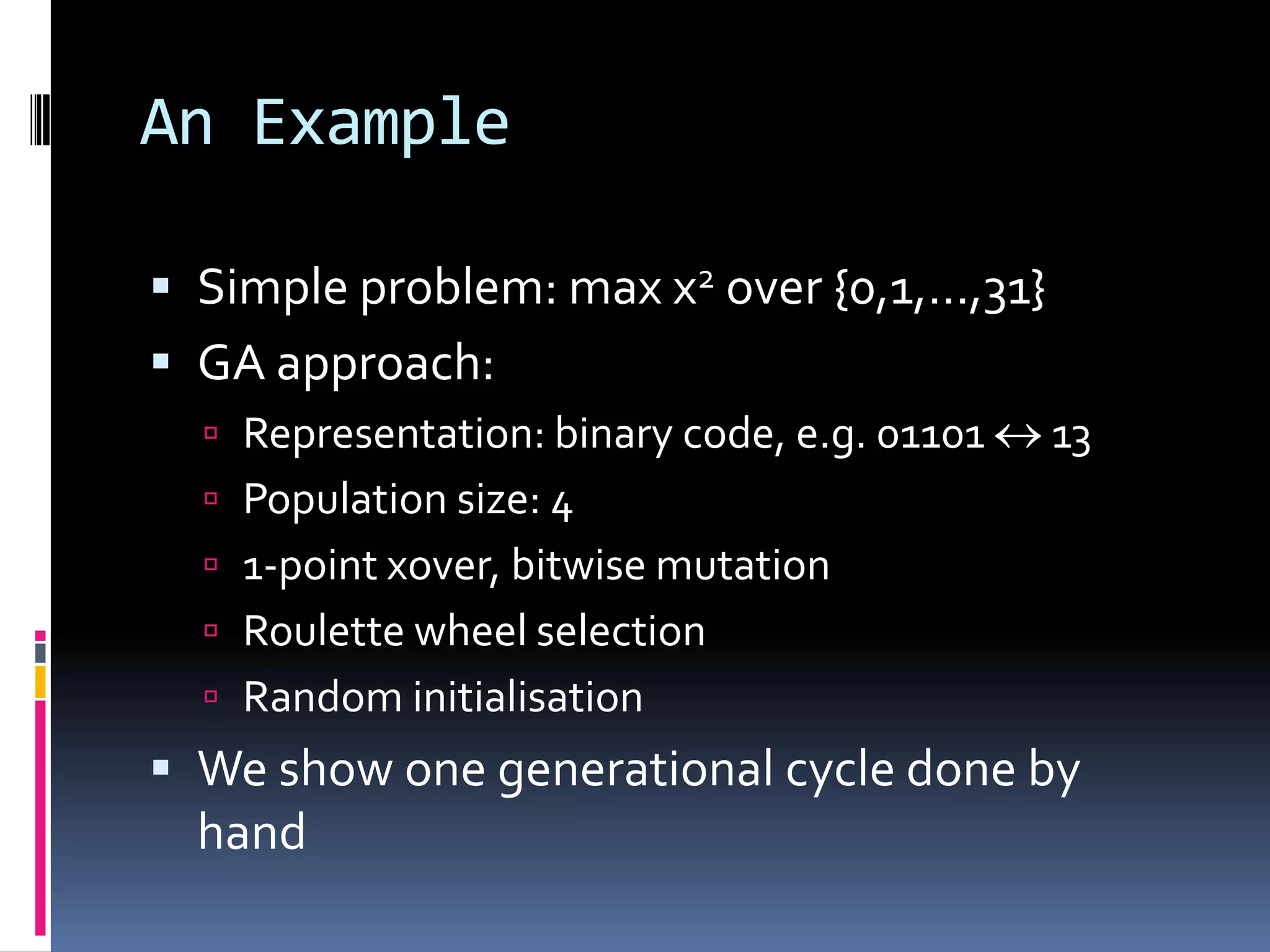
 Simple problem: max x2 over {0,1,…,31}
 GA approach:
   Representation: binary code, e.g. 01101   13
   Population size: 4
   1-point xover, bitwise mutation
   Roulette wheel selection
   Random initialisation
 We show one generational cycle done by
  hand
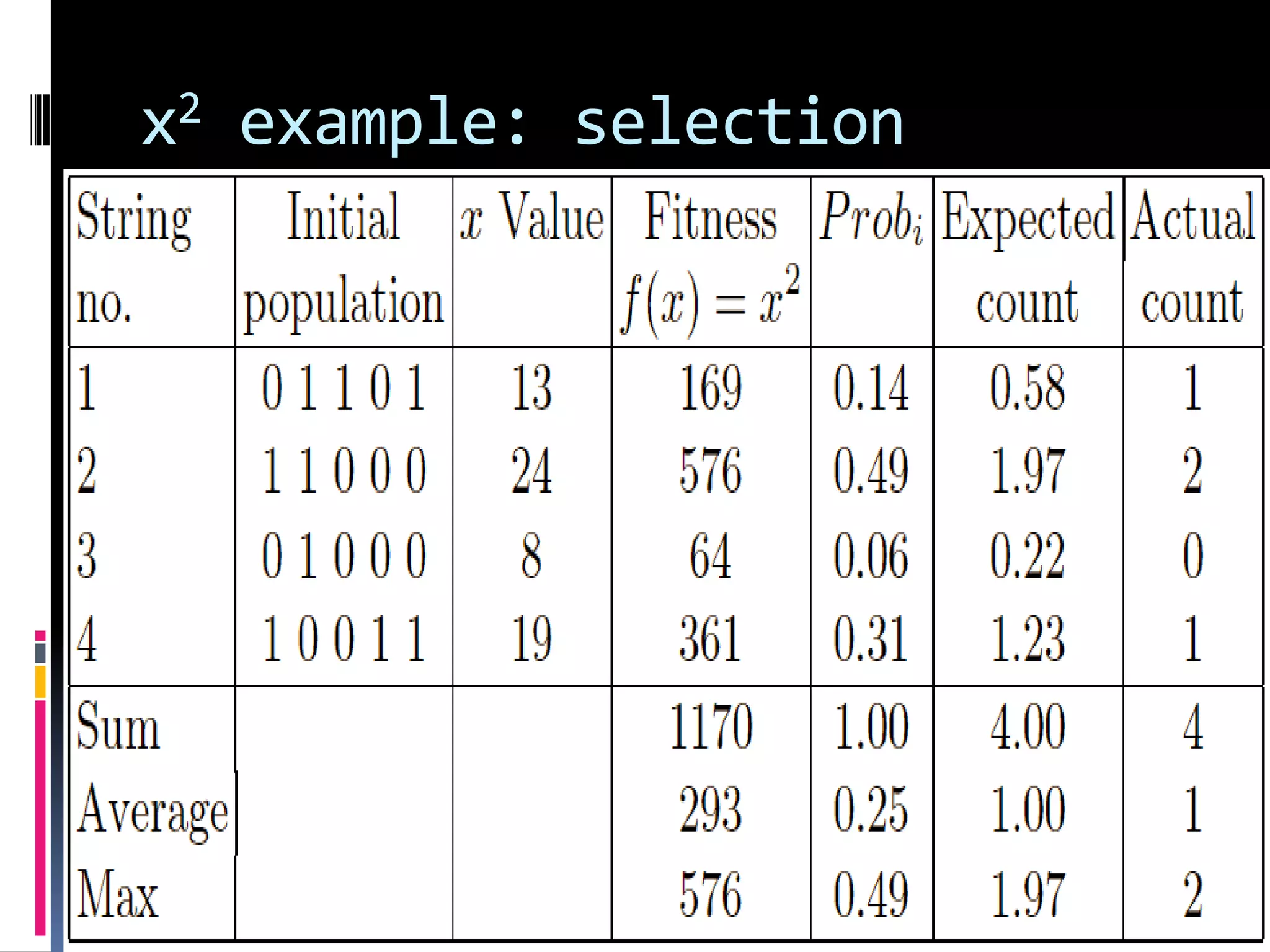
x2 example: selection
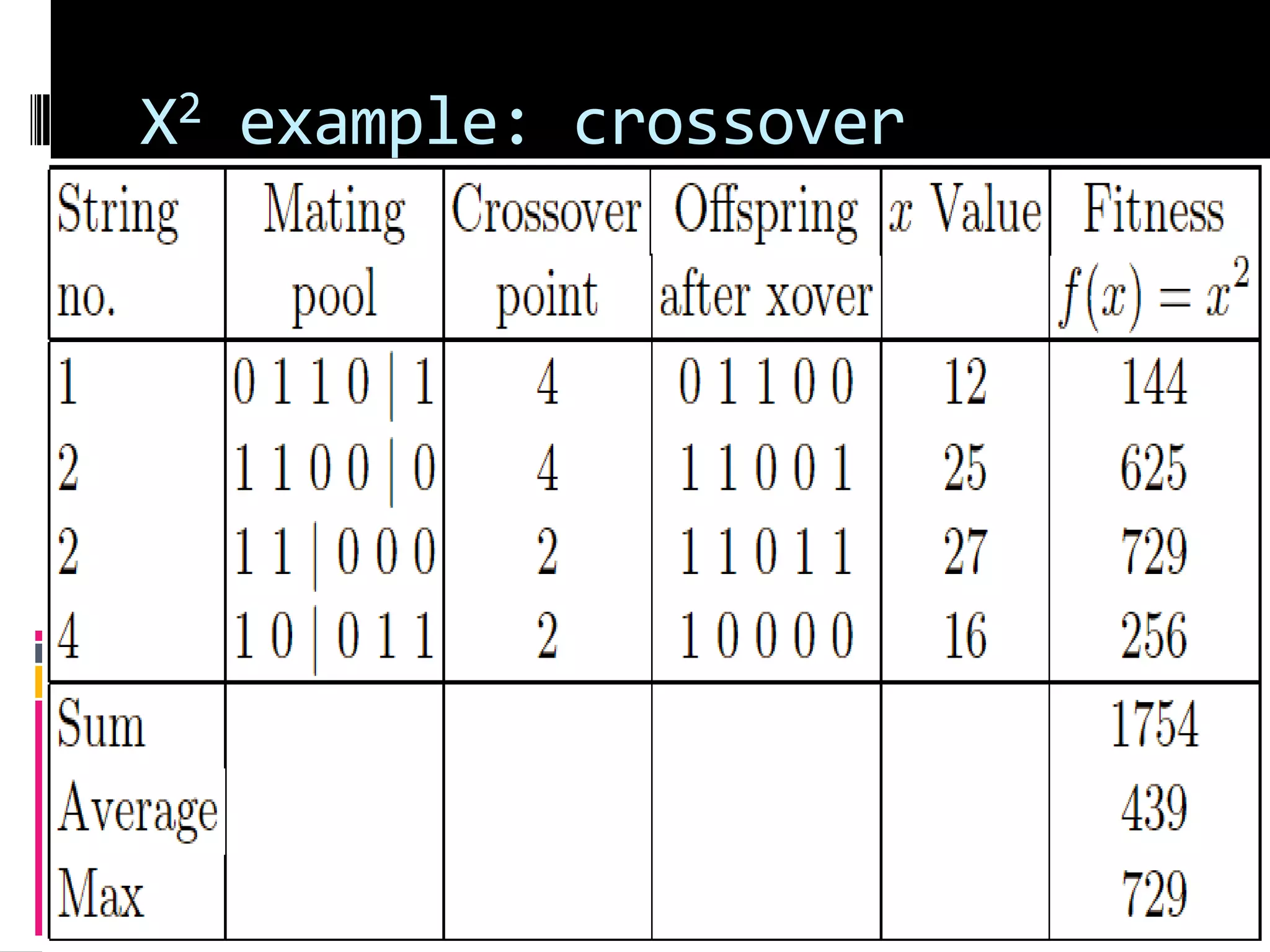
X2 example: crossover
Thank you……

Genetic Algorithm

  • 1.
    Genetic Algorithm PRESENTED BY- TAUSEEF AHAMD M.TECH (COMPUTER SC. & ENGINEERING) COMPUTER ENGINEERING DEPARTMENT ZAKIR HUSSAIN COLLEGE OF ENGG. & TECH. A.M.U, ALIGARH
  • 2.
    Outlines  A quickoverview of GA  Features of GA  Various Methods of Population Selection  Anatomy Of GA  An example of GA
  • 3.
    References….  Adaptation inNeural and Artificial Systems, John Holland, 1975.  Genetic Algorithm in Search, Optimization and Machine Learning, David E. Goldberg, 1989.  C. Darwin. On the Origin of Species by Means of Natural Selection; or, the Preservation of flavored Races in the Struggle for Life. John Murray, London, 1859.
  • 4.
    A quick overviewof GA  Developed: USA in the 1970’s, by John Holland  Holland’s original GA is now known as the simple genetic algorithm (SGA)  GA was inspired by process of biological evolution  It is based on the Darwin’s theory of “survival of the fittest” : the better individuals have better chance of reproducing.
  • 5.
    Features of GA Used to solve Hard problems  Maintains a POPULATION of solutions  Solutions are encoded as CHROMOSOMES  REPRODUCTION creates a new population members  MUTATION and CROSSOVER occurs during reproduction
  • 6.
  • 9.
    Population Selection  stochasticallyselect from one generation to create the basis of the next generation  The requirement is that the fittest individuals have a greater chance of survival than weaker ones  fitter individuals will tend to have a better probability of survival and will go forward to form the mating pool for the next generation
  • 10.
    Various Methods ofpopulation Selection a) Roulette Wheel selection b) Rank Selection c) Tournament Selection d) Elitism There are many other methods, but we will discuss briefly only these methods.
  • 11.
  • 12.
     Fitness f(x)of individual No. 3 is the fittest and No. 2 is the weakest  Strongest individual a value of 38% and the weakest 5%  These percentage fitness values can then be used to configure the roulette wheel  Number of times the roulette wheel is spun is equal to size of the population  Each time the wheel stops this gives the fitter individuals the greatest chance of being selected for the next generation and subsequent mating pool.  Individual No. 3: 01000001012 will become more prevalent in the general population because it is fitter
  • 14.
    Tournament Selection  ProvidesSelective pressure by holding a tournament competition among n individuals  Best individual from tournament is one having highest fitness, which is the winner of tournament  Tournament competitions and winner is then inserted into mating pool
  • 15.
  • 16.
    Rank Selection  previousselection will have problems when the fatnesses differs very much  For example, if the best chromosome fitness is 90% of all the roulette wheel then the other chromosomes will have very few chances to be selected  first ranks the population and then every chromosome receives fitness from this ranking  The worst will have fitness 1, second worst 2 etc. and the best will have fitness N(number of chromosomes in population).
  • 18.
    Elitism  Copies thebest chromosome to new offspring before the mutation and crossover  When creating a new population by crossover or mutation the best chromosome might be lost  Forces GA to retain some numbers of best individuals at each generation  Has been found that Elitism improves the performance significantly
  • 25.
    An Example  Simpleproblem: max x2 over {0,1,…,31}  GA approach:  Representation: binary code, e.g. 01101 13  Population size: 4  1-point xover, bitwise mutation  Roulette wheel selection  Random initialisation  We show one generational cycle done by hand
  • 26.
  • 27.
  • 28.