Task-based
Learning: Unlocking
Language Potential
Task-based learning is a dynamic approach to language acquisition
where learners focus on completing authentic tasks that mimic
real-life communication scenarios.
por EDWARD MALDONADO
Understanding Task-based
Learning
1 Real-world Application
It bridges the gap
between classroom
learning and real-life
situations, enabling
learners to use language
authentically.
2 Learner-centered
This approach empowers
learners to take
ownership of their
learning, making choices
and developing their
language skills.
3 Meaningful Engagement
It motivates learners by providing them with practical tasks
that have relevance to their lives and interests.
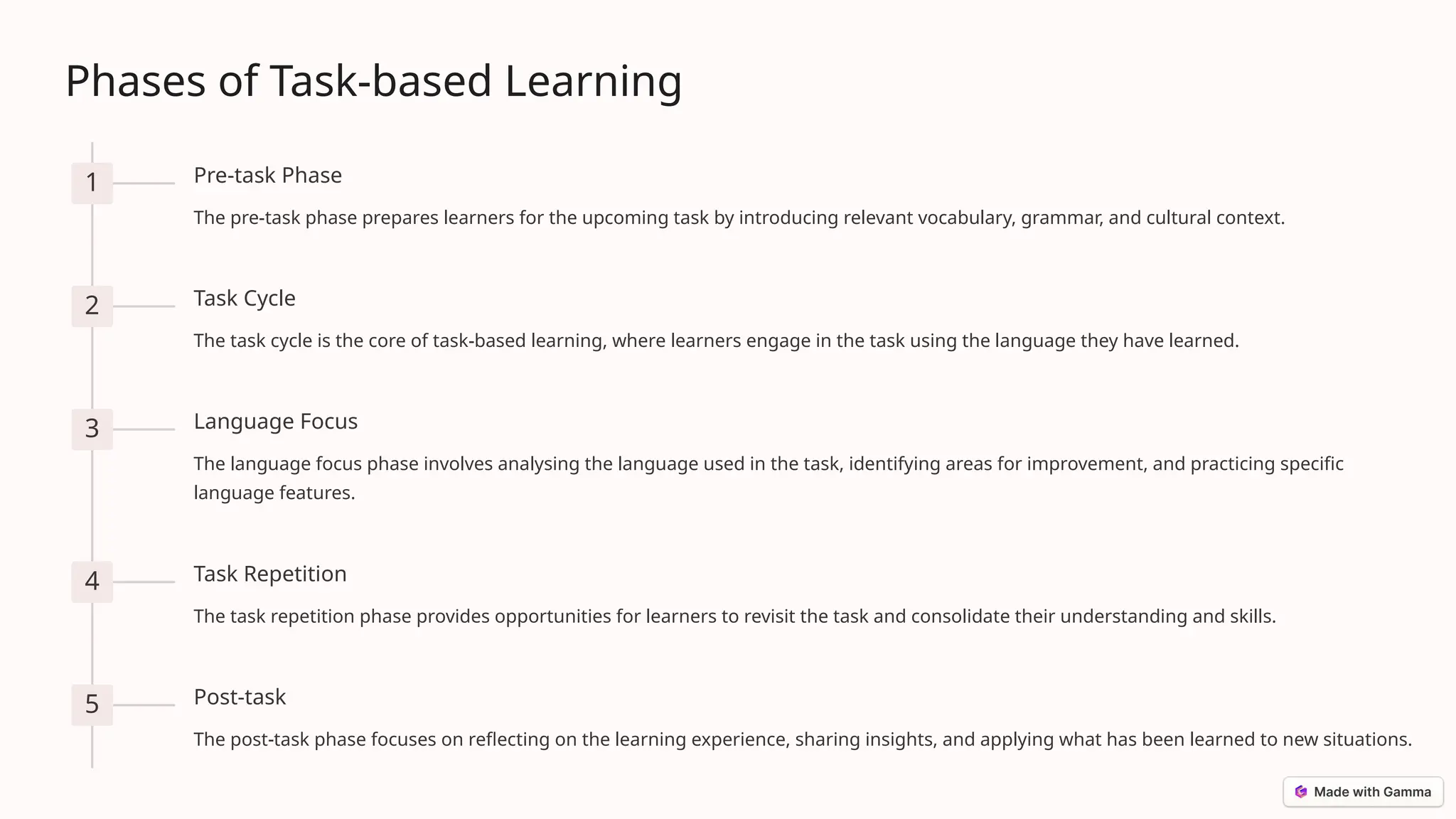
Phases of Task-based Learning
1 Pre-task Phase
The pre-task phase prepares learners for the upcoming task by introducing relevant vocabulary, grammar, and cultural context.
2 Task Cycle
The task cycle is the core of task-based learning, where learners engage in the task using the language they have learned.
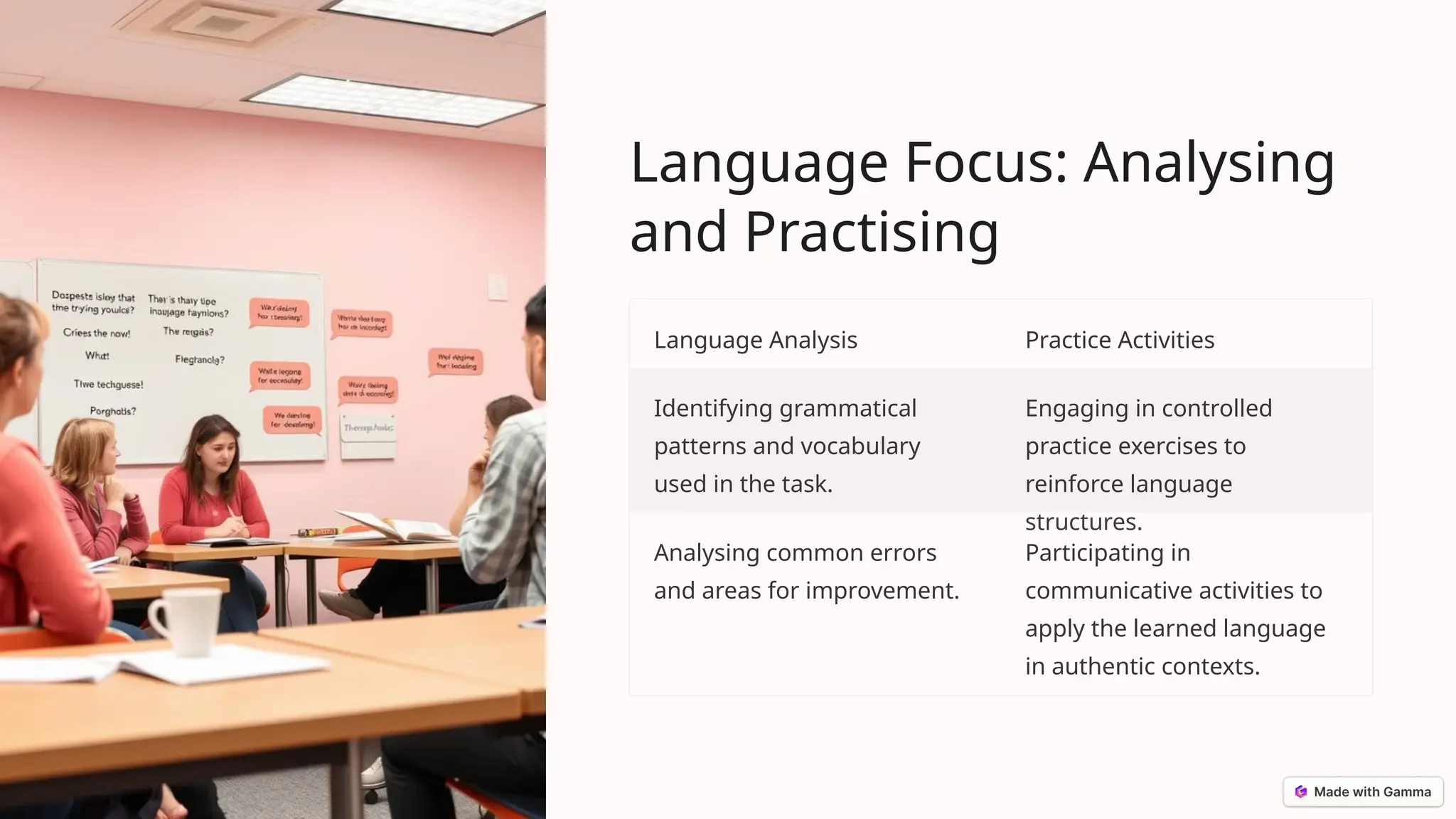
3 Language Focus
The language focus phase involves analysing the language used in the task, identifying areas for improvement, and practicing specific
language features.
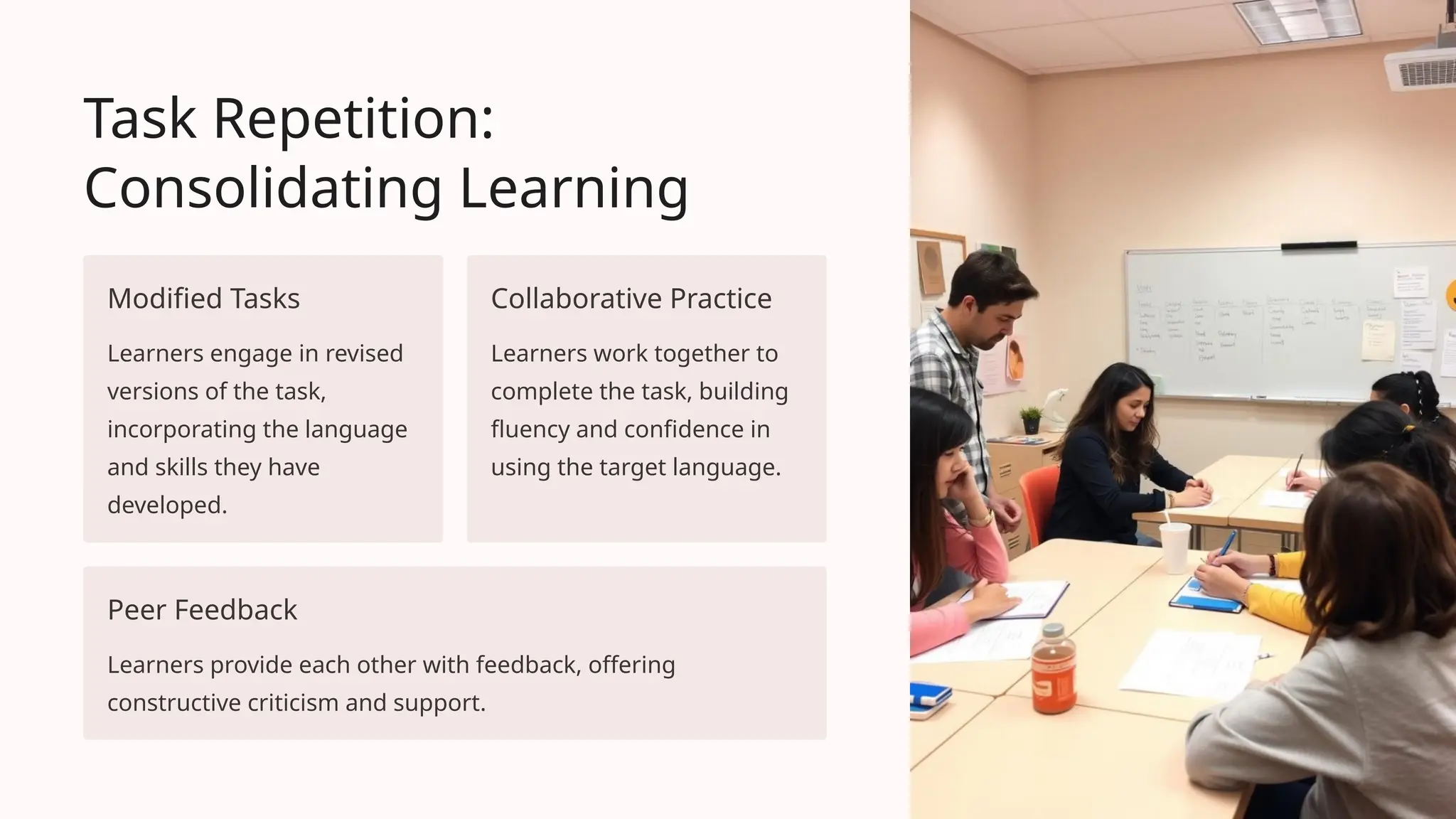
4 Task Repetition
The task repetition phase provides opportunities for learners to revisit the task and consolidate their understanding and skills.
5 Post-task
The post-task phase focuses on reflecting on the learning experience, sharing insights, and applying what has been learned to new situations.
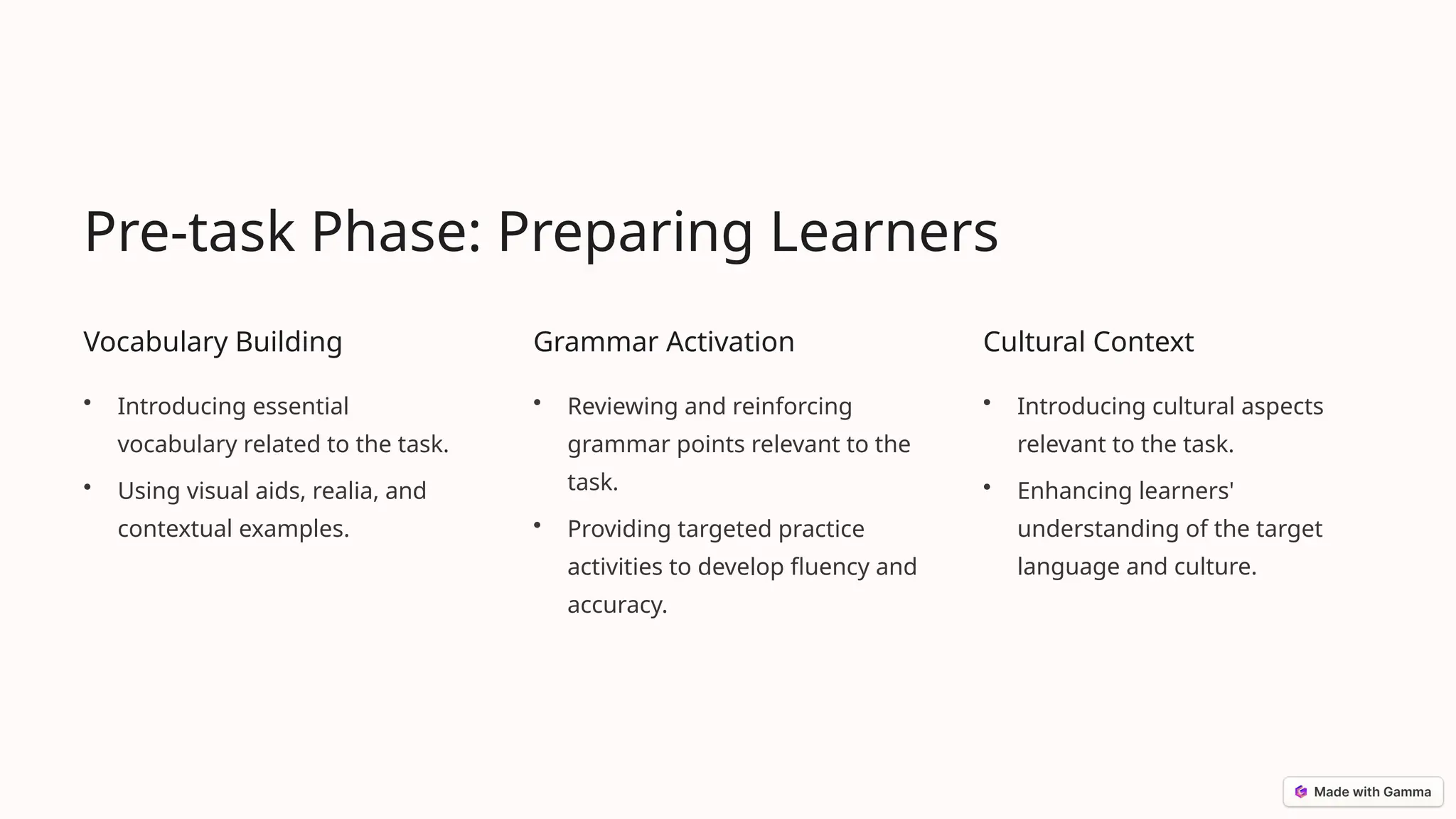
Pre-task Phase: Preparing Learners
Vocabulary Building
• Introducing essential
vocabulary related to the task.
• Using visual aids, realia, and
contextual examples.
Grammar Activation
• Reviewing and reinforcing
grammar points relevant to the
task.
• Providing targeted practice
activities to develop fluency and
accuracy.
Cultural Context
• Introducing cultural aspects
relevant to the task.
• Enhancing learners'
understanding of the target
language and culture.
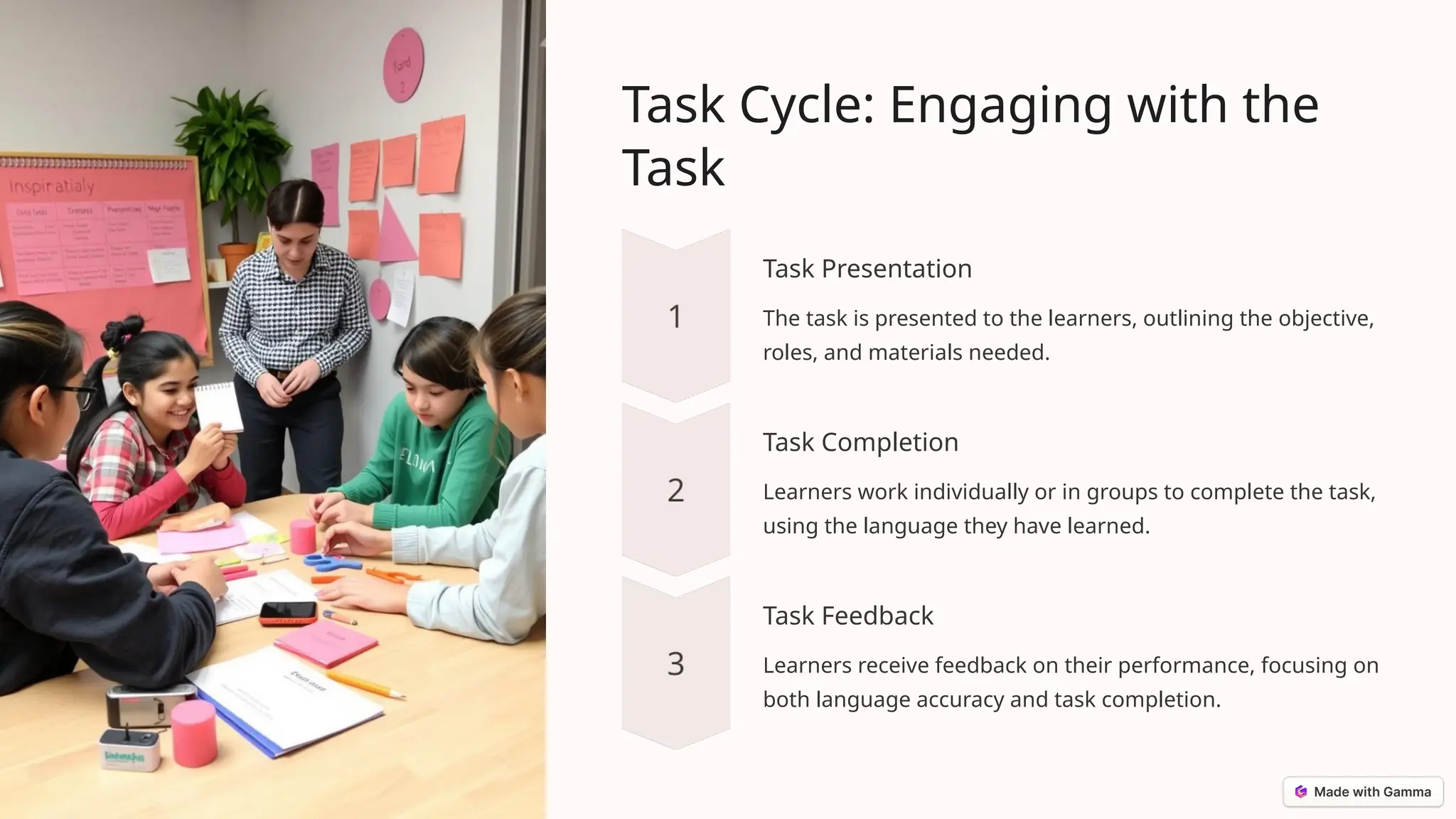
Task Cycle: Engaging with the
Task
Task Presentation
The task is presented to the learners, outlining the objective,
roles, and materials needed.
Task Completion
Learners work individually or in groups to complete the task,
using the language they have learned.
Task Feedback
Learners receive feedback on their performance, focusing on
both language accuracy and task completion.
Language Focus: Analysing
and Practising
Language Analysis Practice Activities
Identifying grammatical
patterns and vocabulary
used in the task.
Engaging in controlled
practice exercises to
reinforce language
structures.
Analysing common errors
and areas for improvement.
Participating in
communicative activities to
apply the learned language
in authentic contexts.
Task Repetition:
Consolidating Learning
Modified Tasks
Learners engage in revised
versions of the task,
incorporating the language
and skills they have
developed.
Collaborative Practice
Learners work together to
complete the task, building
fluency and confidence in
using the target language.
Peer Feedback
Learners provide each other with feedback, offering
constructive criticism and support.
Benefits of Task-based Learning
Increased Fluency
Task-based learning promotes fluency
development by providing
opportunities for real-life
communication.
Improved Accuracy
Through focused language analysis
and practice, learners gain a deeper
understanding of grammatical
structures and vocabulary.
Enhanced Communication Skills
Learners develop essential
communication skills, such as
negotiation, collaboration, and
problem-solving.
Increased Motivation
Engaging in meaningful tasks that
connect to learners' lives and interests
fosters a positive and motivating
learning environment.

Task-based-Learning-Unlocking-Language-Potential.pptx

  • 1.
    Task-based Learning: Unlocking Language Potential Task-basedlearning is a dynamic approach to language acquisition where learners focus on completing authentic tasks that mimic real-life communication scenarios. por EDWARD MALDONADO
  • 2.
    Understanding Task-based Learning 1 Real-worldApplication It bridges the gap between classroom learning and real-life situations, enabling learners to use language authentically. 2 Learner-centered This approach empowers learners to take ownership of their learning, making choices and developing their language skills. 3 Meaningful Engagement It motivates learners by providing them with practical tasks that have relevance to their lives and interests.
  • 3.
    Phases of Task-basedLearning 1 Pre-task Phase The pre-task phase prepares learners for the upcoming task by introducing relevant vocabulary, grammar, and cultural context. 2 Task Cycle The task cycle is the core of task-based learning, where learners engage in the task using the language they have learned. 3 Language Focus The language focus phase involves analysing the language used in the task, identifying areas for improvement, and practicing specific language features. 4 Task Repetition The task repetition phase provides opportunities for learners to revisit the task and consolidate their understanding and skills. 5 Post-task The post-task phase focuses on reflecting on the learning experience, sharing insights, and applying what has been learned to new situations.
  • 4.
    Pre-task Phase: PreparingLearners Vocabulary Building • Introducing essential vocabulary related to the task. • Using visual aids, realia, and contextual examples. Grammar Activation • Reviewing and reinforcing grammar points relevant to the task. • Providing targeted practice activities to develop fluency and accuracy. Cultural Context • Introducing cultural aspects relevant to the task. • Enhancing learners' understanding of the target language and culture.
  • 5.
    Task Cycle: Engagingwith the Task Task Presentation The task is presented to the learners, outlining the objective, roles, and materials needed. Task Completion Learners work individually or in groups to complete the task, using the language they have learned. Task Feedback Learners receive feedback on their performance, focusing on both language accuracy and task completion.
  • 6.
    Language Focus: Analysing andPractising Language Analysis Practice Activities Identifying grammatical patterns and vocabulary used in the task. Engaging in controlled practice exercises to reinforce language structures. Analysing common errors and areas for improvement. Participating in communicative activities to apply the learned language in authentic contexts.
  • 7.
    Task Repetition: Consolidating Learning ModifiedTasks Learners engage in revised versions of the task, incorporating the language and skills they have developed. Collaborative Practice Learners work together to complete the task, building fluency and confidence in using the target language. Peer Feedback Learners provide each other with feedback, offering constructive criticism and support.
  • 8.
    Benefits of Task-basedLearning Increased Fluency Task-based learning promotes fluency development by providing opportunities for real-life communication. Improved Accuracy Through focused language analysis and practice, learners gain a deeper understanding of grammatical structures and vocabulary. Enhanced Communication Skills Learners develop essential communication skills, such as negotiation, collaboration, and problem-solving. Increased Motivation Engaging in meaningful tasks that connect to learners' lives and interests fosters a positive and motivating learning environment.