TASK AND PROJECT WORK


          By :
   Sandra Rodriguez
   Julieth Quintana
     Cilena Cuellar
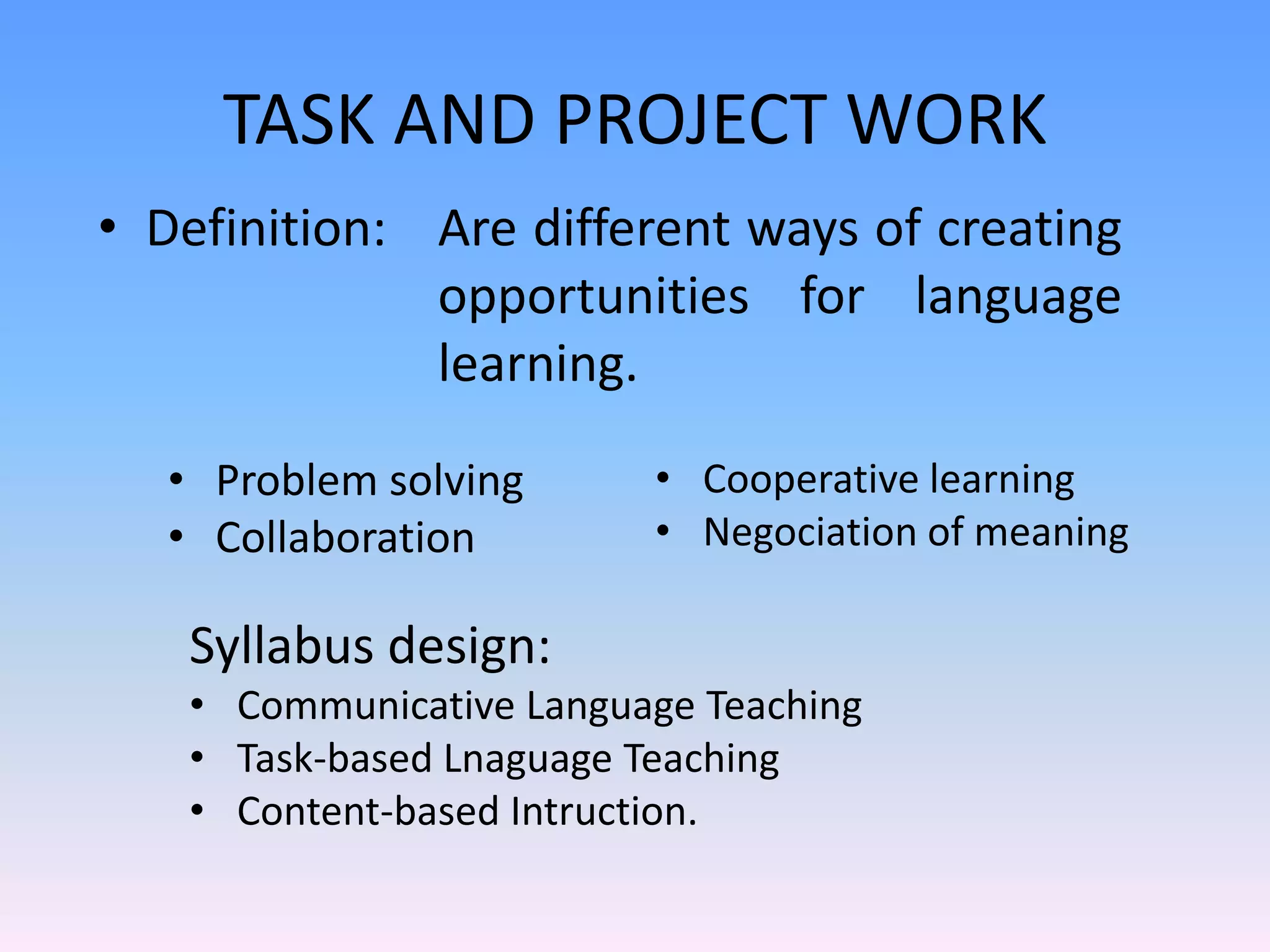
TASK AND PROJECT WORK
• Definition: Are different ways of creating
              opportunities for language
              learning.

   • Problem solving      • Cooperative learning
   • Collaboration        • Negociation of meaning

    Syllabus design:
    • Communicative Language Teaching
    • Task-based Lnaguage Teaching
    • Content-based Intruction.
Implementing Task-Baseed
       Language Teaching
Two categories of syllabus.

• The synthetic sillabus
Discrete: linguistis item, points of Grammar,
lexical items, and functions.

• The analytic syllabus
Immerse learners in real-life communication.
The project: Student-Generated
       Action Research
 • Task-based project:
 Time, Activities, Make group
 Design a questionnaire (choise of topic)

          Objective
 •   Authentic purposes
 •   Intrinsically motivation
 •   Take responsabilities
 •   Ability (grammatically – pragmatically)
 •   Group of work
TOPIC CHOICES
• Key element: The learners have primary
  control over the topic they investigate.
           motivation
           enthusiasm
           successful conclusion
  Topic
  • Marrige
  • Suicide
  • The enviroment
DISCUSSION
• Aspects that promote language acquisition.


POSITIVE ASPECTS OF THE PROJECT
• Activities (meaning is primary)
• Task       (real-world activities)
NEGOTIATION OF MEANING

• 1. Inclusion of large amounts of pair
  and group interaction.

• 2. two-way task in wich both partners
  of group members have access to
  unique information
• 3. Convergent task, which require
  participants to come to a single soltution

• 4. Learners formed groups with their
  friends.

• 5. Learners undertake a task after first
  hearing and seeing the task performed
Introducing more flexibility
    into the curriculum

 Good communication between teachers
in different skill areas.

 The curriculum is highly coordinated can
be disadvantageous.
Three factors

 Decreasing the numbers of
 participants.

 The use of more familiar information.

 The use of concrete rather than
 abstract information.
Encouraging self-evaluation

• a priority in task-based approaches is to
  mobilize the learner´s metacognitive
  recourses to keep track of what is being
  learner´s, and what remains to be learned.
  engaging in self-assessment is the first step
  in consciously understanding one´s
  weaknesses.
• This allows them to use all the
  language they know and are learning,
  rather than just the 'target language' of
  the lesson.

• tasks can also be designed to make
  certain target forms 'task-essential,'
  thus making it communicatively
  necessary for students to practice using
  them.
conclusion
• They found the experience to be rewarding,
  intrinsically interesting, and educationally
  beneficial.

• allows for more meaningful communication,
  and often provides for practical extra-
  linguistic skill building.

• promotes language acquisition through the
  types of language and interaction they
  require.

Task and project work

  • 1.
    TASK AND PROJECTWORK By : Sandra Rodriguez Julieth Quintana Cilena Cuellar
  • 2.
    TASK AND PROJECTWORK • Definition: Are different ways of creating opportunities for language learning. • Problem solving • Cooperative learning • Collaboration • Negociation of meaning Syllabus design: • Communicative Language Teaching • Task-based Lnaguage Teaching • Content-based Intruction.
  • 3.
    Implementing Task-Baseed Language Teaching Two categories of syllabus. • The synthetic sillabus Discrete: linguistis item, points of Grammar, lexical items, and functions. • The analytic syllabus Immerse learners in real-life communication.
  • 4.
    The project: Student-Generated Action Research • Task-based project: Time, Activities, Make group Design a questionnaire (choise of topic) Objective • Authentic purposes • Intrinsically motivation • Take responsabilities • Ability (grammatically – pragmatically) • Group of work
  • 5.
    TOPIC CHOICES • Keyelement: The learners have primary control over the topic they investigate. motivation enthusiasm successful conclusion Topic • Marrige • Suicide • The enviroment
  • 6.
    DISCUSSION • Aspects thatpromote language acquisition. POSITIVE ASPECTS OF THE PROJECT • Activities (meaning is primary) • Task (real-world activities)
  • 7.
    NEGOTIATION OF MEANING •1. Inclusion of large amounts of pair and group interaction. • 2. two-way task in wich both partners of group members have access to unique information
  • 8.
    • 3. Convergenttask, which require participants to come to a single soltution • 4. Learners formed groups with their friends. • 5. Learners undertake a task after first hearing and seeing the task performed
  • 9.
    Introducing more flexibility into the curriculum  Good communication between teachers in different skill areas.  The curriculum is highly coordinated can be disadvantageous.
  • 10.
    Three factors  Decreasingthe numbers of participants.  The use of more familiar information.  The use of concrete rather than abstract information.
  • 11.
    Encouraging self-evaluation • apriority in task-based approaches is to mobilize the learner´s metacognitive recourses to keep track of what is being learner´s, and what remains to be learned. engaging in self-assessment is the first step in consciously understanding one´s weaknesses.
  • 12.
    • This allowsthem to use all the language they know and are learning, rather than just the 'target language' of the lesson. • tasks can also be designed to make certain target forms 'task-essential,' thus making it communicatively necessary for students to practice using them.
  • 13.
    conclusion • They foundthe experience to be rewarding, intrinsically interesting, and educationally beneficial. • allows for more meaningful communication, and often provides for practical extra- linguistic skill building. • promotes language acquisition through the types of language and interaction they require.