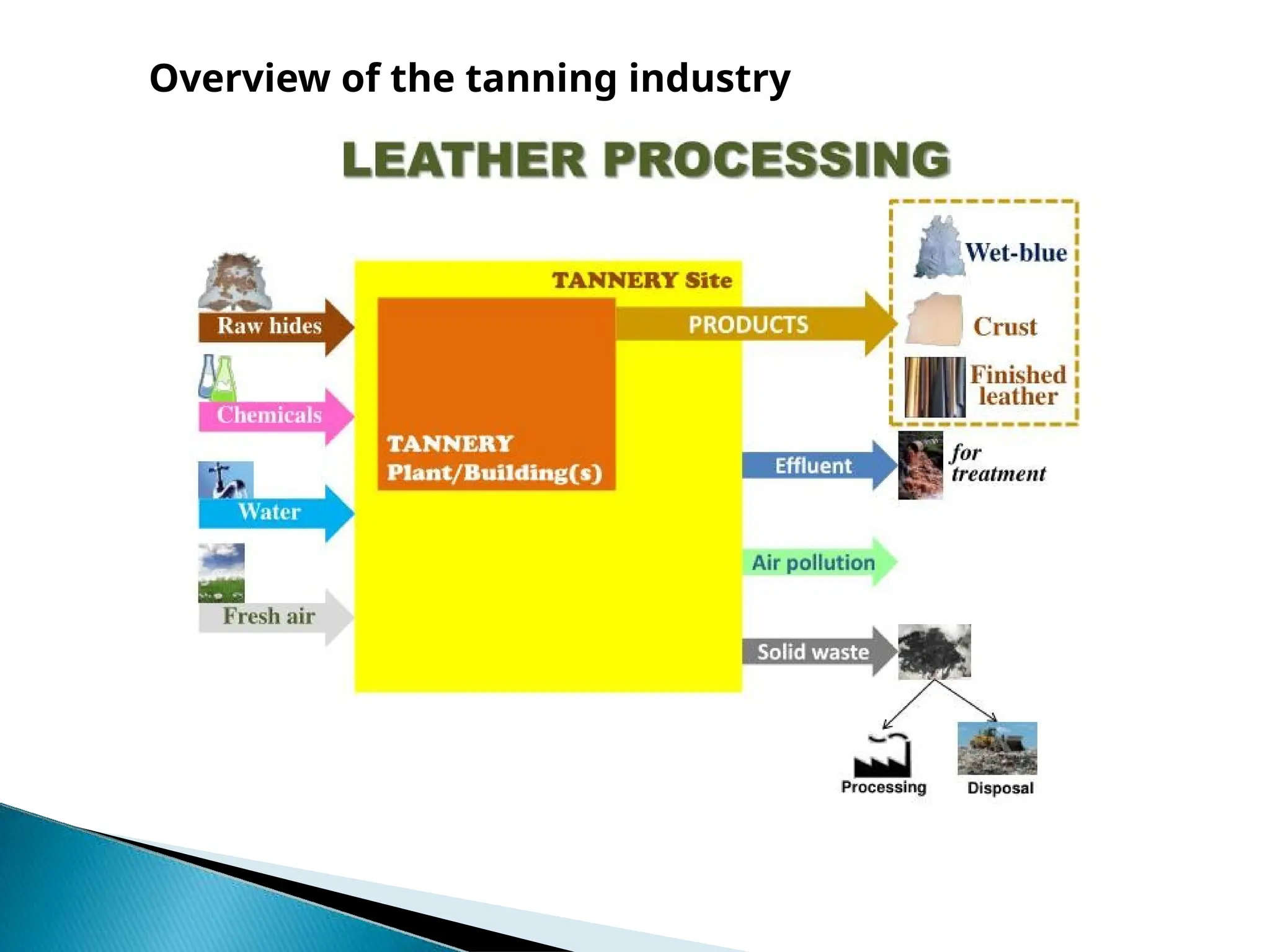
Overview of the tanning industry
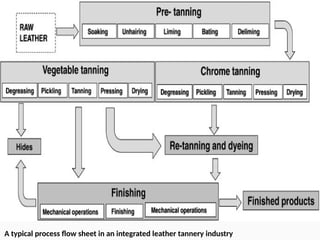
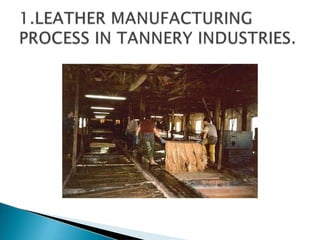
A typical process flow sheet in an integrated leather tannery industry
The preparatory stages are when hide/skin is
prepared for tanning.Many options for
pretreatment of skin exist.Not all of the options
may be performed.Preparatory stages may
include:-
 Preservation-the hide/skin is treated with a
method which renders it temporarily.
unputrescible.
 Soaking-water for purpose of washing or
rehydration is reintroduced.
 Liming-unwanted proteins and “opening up” is
achieved.
 Unhairing-the majority of hair is removed.
 Fleshing-subcutaneous material is removed.
 Splitting-the hide/skin is cut into two or
more horizontal layer.
 Reliming-the hide/skin is further treated to
achieve more “opening up” or more protein
removal.
 Deliming-liming & unhairing chemicals
are removed this step.
 Bating-proteolytic proteins are introduced to
the skin to remove further proteins and to
assist with softening of the pelt.
 Degreasing-natural fats/oils are stripped
or as much as is possible from the hide
skin.
 Frizing-physical removal of fat layer
inside the skin.
 Bleaching-chemical modification of dark
pigments to yield a lighter coloured pelt.
 Pickling-lowering of pH value to the
acidic region. Must be done in presence
of salt.
 Depickling-raising of the pH out of the
acidic region.
 SOLIDS:-Solids to be found in tannery
effluent fall into several distinct categories:-
 SUSPENDED SOLIDS:-Quality of
insoluble matter contained in waste water.
 SETTELEABLE SOLIDS:-Quantity of
solids, having tandency of settle down.
 GROSS SOLIDS:-They are larger than a
sampling machine can handle.
ex-leather pieces,fleshing residue.
 BOD:-Tanning waste have a long break down
period,this longer digestion periods can
apply to a variety of chemicals used in
manufacturing leather.
 NITROGEN:-Nitrogen is contained in several
different compounds:-
 Total kjeldahl nitrogen:-Nitrogen contained
in proteinaceous material(liming and
unhairing)
 SULPHIDES:-Sulphide content is tannery
effluent result from the use of sodium
sulphide & sodium hydrosulphide.and the
breakdown of hair in unhairing process.
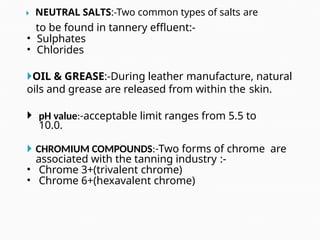
 NEUTRAL SALTS:-Two common types of salts are
to be found in tannery effluent:-
• Sulphates
• Chlorides
OIL & GREASE:-During leather manufacture, natural
oils and grease are released from within the skin.
 pH value:-acceptable limit ranges from 5.5 to
10.0.
 CHROMIUM COMPOUNDS:-Two forms of chrome are
associated with the tanning industry :-
• Chrome 3+(trivalent chrome)
• Chrome 6+(hexavalent chrome)
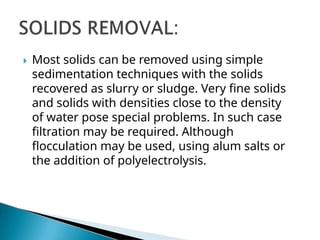
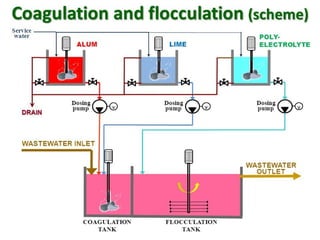
 Most solids can be removed using simple
sedimentation techniques with the solids
recovered as slurry or sludge. Very fine solids
and solids with densities close to the density
of water pose special problems. In such case
filtration may be required. Although
flocculation may be used, using alum salts or
the addition of polyelectrolysis.
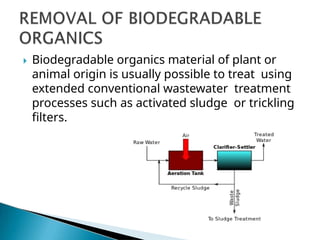
 Biodegradable organics material of plant or
animal origin is usually possible to treat using
extended conventional wastewater treatment
processes such as activated sludge or trickling
filters.
TREATMENT OF OTHER ORGANICS:-
 Synthetic organics material including
solvents, paint, pharmaceuticals,
pesticides, cooking products and so forth
can be very difficult to treat.
Treatment methods are often specific to
the material being treated. Methods
include advanced oxidation processing,
distillation, adsorbtion, nitrification,
incineration, chemical immobilization or
landfill disposal.
TREATMENT OF ACIDS & ALKALIS:
 Acids & alkalis can usually be neutralised
under controlled conditions. neutralization
frequently produces a precipitate that will
require treatment as a solid residue that
may also be toxic. In some cases,gases may
be evolved requiring treatment for the gas
stream. Some other forms of treatment are
usually required following neutralisation.
OIL AND GREASE REMOVAL:
 Oil and grease can be recovered from open
water surfaces by skimming devices.
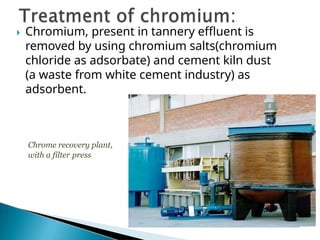
 Chromium, present in tannery effluent is
removed by using chromium salts(chromium
chloride as adsorbate) and cement kiln dust
(a waste from white cement industry) as
adsorbent.
Chrome recovery plant,
with a filter press
tanneries.pptx in which it is the leather

tanneries.pptx in which it is the leather

  • 1.
    Overview of thetanning industry
  • 2.
    A typical processflow sheet in an integrated leather tannery industry
  • 3.
    The preparatory stagesare when hide/skin is prepared for tanning.Many options for pretreatment of skin exist.Not all of the options may be performed.Preparatory stages may include:-  Preservation-the hide/skin is treated with a method which renders it temporarily. unputrescible.  Soaking-water for purpose of washing or rehydration is reintroduced.  Liming-unwanted proteins and “opening up” is achieved.
  • 4.
     Unhairing-the majorityof hair is removed.  Fleshing-subcutaneous material is removed.  Splitting-the hide/skin is cut into two or more horizontal layer.  Reliming-the hide/skin is further treated to achieve more “opening up” or more protein removal.  Deliming-liming & unhairing chemicals are removed this step.  Bating-proteolytic proteins are introduced to the skin to remove further proteins and to assist with softening of the pelt.
  • 5.
     Degreasing-natural fats/oilsare stripped or as much as is possible from the hide skin.  Frizing-physical removal of fat layer inside the skin.  Bleaching-chemical modification of dark pigments to yield a lighter coloured pelt.  Pickling-lowering of pH value to the acidic region. Must be done in presence of salt.  Depickling-raising of the pH out of the acidic region.
  • 7.
     SOLIDS:-Solids tobe found in tannery effluent fall into several distinct categories:-  SUSPENDED SOLIDS:-Quality of insoluble matter contained in waste water.  SETTELEABLE SOLIDS:-Quantity of solids, having tandency of settle down.  GROSS SOLIDS:-They are larger than a sampling machine can handle. ex-leather pieces,fleshing residue.
  • 8.
     BOD:-Tanning wastehave a long break down period,this longer digestion periods can apply to a variety of chemicals used in manufacturing leather.  NITROGEN:-Nitrogen is contained in several different compounds:-  Total kjeldahl nitrogen:-Nitrogen contained in proteinaceous material(liming and unhairing)  SULPHIDES:-Sulphide content is tannery effluent result from the use of sodium sulphide & sodium hydrosulphide.and the breakdown of hair in unhairing process.
  • 9.
     NEUTRAL SALTS:-Twocommon types of salts are to be found in tannery effluent:- • Sulphates • Chlorides OIL & GREASE:-During leather manufacture, natural oils and grease are released from within the skin.  pH value:-acceptable limit ranges from 5.5 to 10.0.  CHROMIUM COMPOUNDS:-Two forms of chrome are associated with the tanning industry :- • Chrome 3+(trivalent chrome) • Chrome 6+(hexavalent chrome)
  • 10.
     Most solidscan be removed using simple sedimentation techniques with the solids recovered as slurry or sludge. Very fine solids and solids with densities close to the density of water pose special problems. In such case filtration may be required. Although flocculation may be used, using alum salts or the addition of polyelectrolysis.
  • 12.
     Biodegradable organicsmaterial of plant or animal origin is usually possible to treat using extended conventional wastewater treatment processes such as activated sludge or trickling filters.
  • 13.
    TREATMENT OF OTHERORGANICS:-  Synthetic organics material including solvents, paint, pharmaceuticals, pesticides, cooking products and so forth can be very difficult to treat. Treatment methods are often specific to the material being treated. Methods include advanced oxidation processing, distillation, adsorbtion, nitrification, incineration, chemical immobilization or landfill disposal.
  • 14.
    TREATMENT OF ACIDS& ALKALIS:  Acids & alkalis can usually be neutralised under controlled conditions. neutralization frequently produces a precipitate that will require treatment as a solid residue that may also be toxic. In some cases,gases may be evolved requiring treatment for the gas stream. Some other forms of treatment are usually required following neutralisation. OIL AND GREASE REMOVAL:  Oil and grease can be recovered from open water surfaces by skimming devices.
  • 15.
     Chromium, presentin tannery effluent is removed by using chromium salts(chromium chloride as adsorbate) and cement kiln dust (a waste from white cement industry) as adsorbent. Chrome recovery plant, with a filter press