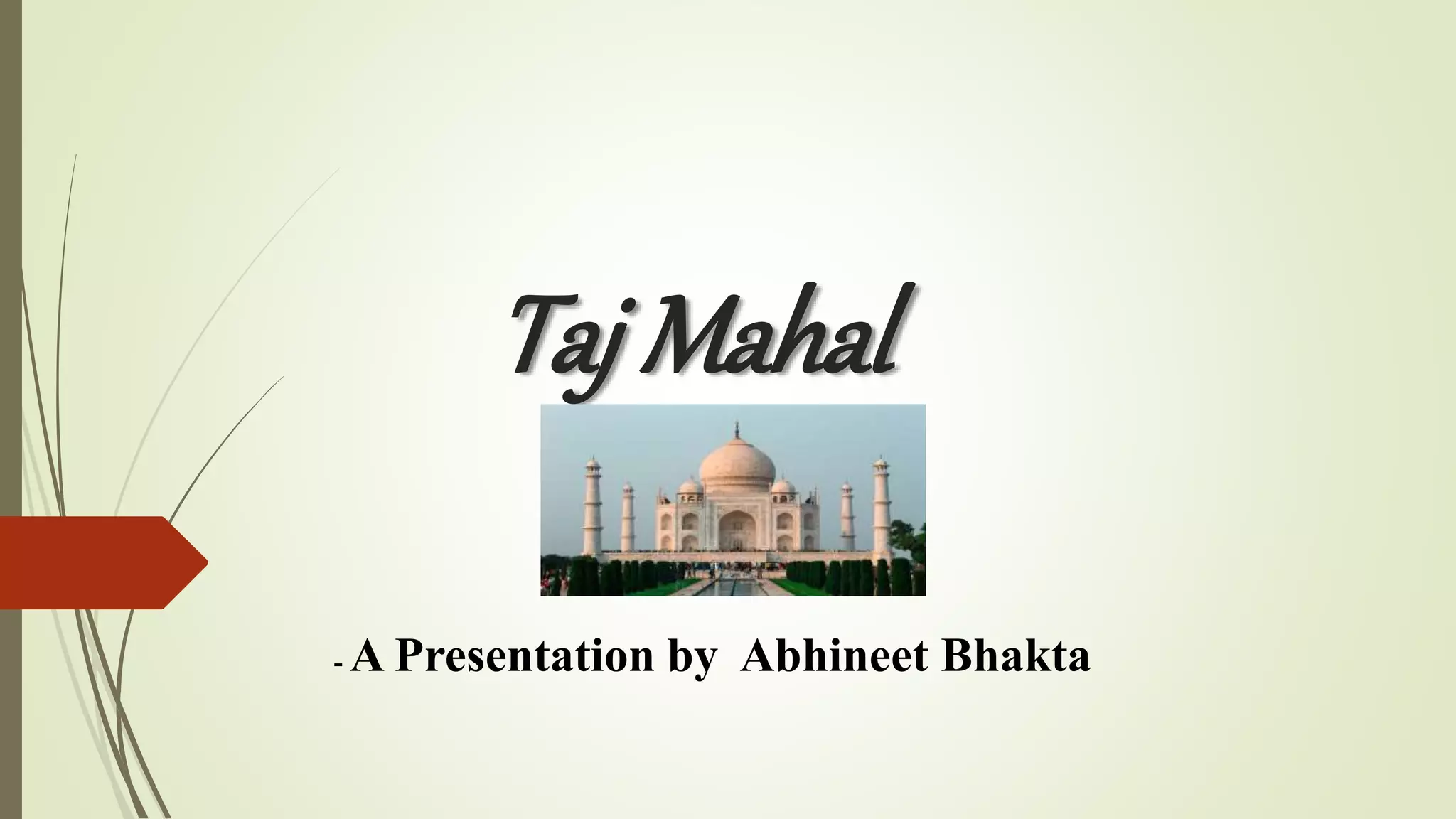
Taj Mahal
- A Presentation by Abhineet Bhakta
Introduction:-
 It was built by Mughal Emperor Shah Jahan in the memory of his third
wife Mumtaz Mahal.
 The Taj Mahal is widely recognised as Jewel of Muslim Art in India.
 Taj Mahal is finest example of Mughal architecture, a style that combines
the elements of Persian, Turkish and Indian architecture
 The construction of Taj Mahal began around 1632 and completed about
1653 employing thousands of artists and craftsmen.
 In 1983 Taj Mahal became a UNESCO World Heritage Site.
 It is also the part of the 7 Wonders of the world.
Some Basic Facts about Taj Mahal:-
• Location-Agra India
• Built-1632-1653
• Architect-Ustad Ahamad Lahuri
• Patronage- Emperor Shah Jhan
• Architectural Style- Mughal
• Type-Cultural
Construction:-
 Taj Mahal was constructed using materials from all over
India and Asia.
 Over 1,000 elephants were used to transport materials
during the construction.
 The Makrana Marble which is found in Makrana Rajasthan
was used to built the Taj Mahal. Moreover stones like
Jasper, Jade, Turquoise, Lapis Lzuli, Sapphire and
Carnelian were also used in decoration.
Designers and workers of Taj Mahal:-
 Ustad Isa of Iran designed the Taj Mahal
 Ismail Khan designed Taj Mahal’s main dome
 Puru from Persia supervised the architect
 Chiranjilal was the head sculpture
 Amanat Khan from Shiraz, Iran for calligraphy
 Mir Abdul Karim and Mukkarimat Khan of Persia for managing
 finances and daily production.
Exterior:-
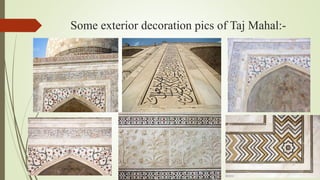
 The exteriors were the finest of Mughal architecture.
 The decorative elements were created by applying paint,
stucco, stones, inlays and carvings.
 Much of the calligraphy is composed of florid thuluth script,
made of Jasper or Black Marble.
 Floors and walkways use contrasting tiles or block in
tessellation pattern.
 On the lower walls of the tomb there are white marble that
had been sculpted with realistic bas relief depiction of
flowers and vines.
 The inlay stones are of yellow marble jasper and jade,
polished and levelled to the wall.
Some exterior decoration pics of Taj Mahal:-
Interior:-
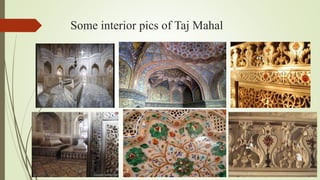
 The inner chamber is an octagon, with the design allowing
entry from each face, although the door facing the garden to
the south is used.
 The interior walls are about 25 meters high and are topped by
a false interior dome with a sun motif.
 In addition from the light of the balcony screens, light
enters through roof openings with “chatris” at corner.
 Muslim tradition forbids elaborate decoration of graves.
Hence the bodies of Mumtaz Mahal and Shah Jahan were put
in relatively plain crypt beneath the inner chamber with their
faces turning right towards the meca.
Some interior pics of Taj Mahal
Historical Significance of Taj Mahal:-
 An immense mausoleum of white marble, built in Agra
between 1631 and 1648 by order of the Mughal emperor
Shah Jahan in memory of his favourite wife, the Taj Mahal
is the jewel of Muslim art in India and one of the
universally admired masterpieces of the world's heritage.
What made me choose Taj Mahal:-
 There were three main reasons why I opted for Taj Mahal
• It is the only monument of India which is the part of the 7
Wonders of the world.
• It is a masterpiece
• It is a pride of India.
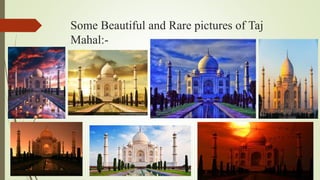
Some Beautiful and Rare pictures of Taj
Mahal:-
Taj Mahal.

Taj Mahal.

  • 1.
    Taj Mahal - APresentation by Abhineet Bhakta
  • 2.
    Introduction:-  It wasbuilt by Mughal Emperor Shah Jahan in the memory of his third wife Mumtaz Mahal.  The Taj Mahal is widely recognised as Jewel of Muslim Art in India.  Taj Mahal is finest example of Mughal architecture, a style that combines the elements of Persian, Turkish and Indian architecture  The construction of Taj Mahal began around 1632 and completed about 1653 employing thousands of artists and craftsmen.  In 1983 Taj Mahal became a UNESCO World Heritage Site.  It is also the part of the 7 Wonders of the world.
  • 3.
    Some Basic Factsabout Taj Mahal:- • Location-Agra India • Built-1632-1653 • Architect-Ustad Ahamad Lahuri • Patronage- Emperor Shah Jhan • Architectural Style- Mughal • Type-Cultural
  • 4.
    Construction:-  Taj Mahalwas constructed using materials from all over India and Asia.  Over 1,000 elephants were used to transport materials during the construction.  The Makrana Marble which is found in Makrana Rajasthan was used to built the Taj Mahal. Moreover stones like Jasper, Jade, Turquoise, Lapis Lzuli, Sapphire and Carnelian were also used in decoration.
  • 5.
    Designers and workersof Taj Mahal:-  Ustad Isa of Iran designed the Taj Mahal  Ismail Khan designed Taj Mahal’s main dome  Puru from Persia supervised the architect  Chiranjilal was the head sculpture  Amanat Khan from Shiraz, Iran for calligraphy  Mir Abdul Karim and Mukkarimat Khan of Persia for managing  finances and daily production.
  • 6.
    Exterior:-  The exteriorswere the finest of Mughal architecture.  The decorative elements were created by applying paint, stucco, stones, inlays and carvings.  Much of the calligraphy is composed of florid thuluth script, made of Jasper or Black Marble.  Floors and walkways use contrasting tiles or block in tessellation pattern.  On the lower walls of the tomb there are white marble that had been sculpted with realistic bas relief depiction of flowers and vines.  The inlay stones are of yellow marble jasper and jade, polished and levelled to the wall.
  • 7.
    Some exterior decorationpics of Taj Mahal:-
  • 8.
    Interior:-  The innerchamber is an octagon, with the design allowing entry from each face, although the door facing the garden to the south is used.  The interior walls are about 25 meters high and are topped by a false interior dome with a sun motif.  In addition from the light of the balcony screens, light enters through roof openings with “chatris” at corner.  Muslim tradition forbids elaborate decoration of graves. Hence the bodies of Mumtaz Mahal and Shah Jahan were put in relatively plain crypt beneath the inner chamber with their faces turning right towards the meca.
  • 9.
    Some interior picsof Taj Mahal
  • 10.
    Historical Significance ofTaj Mahal:-  An immense mausoleum of white marble, built in Agra between 1631 and 1648 by order of the Mughal emperor Shah Jahan in memory of his favourite wife, the Taj Mahal is the jewel of Muslim art in India and one of the universally admired masterpieces of the world's heritage.
  • 11.
    What made mechoose Taj Mahal:-  There were three main reasons why I opted for Taj Mahal • It is the only monument of India which is the part of the 7 Wonders of the world. • It is a masterpiece • It is a pride of India.
  • 12.
    Some Beautiful andRare pictures of Taj Mahal:-