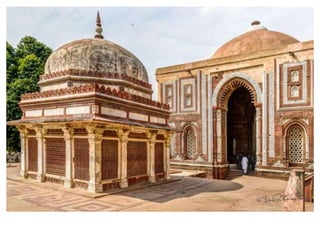
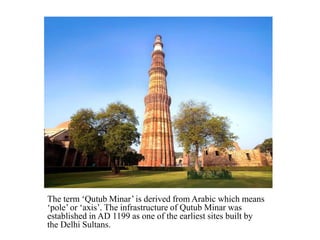
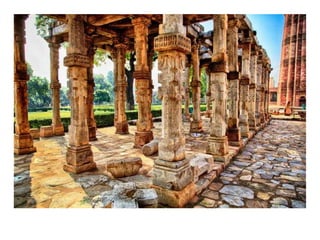
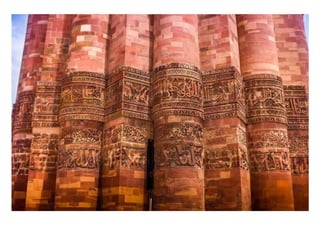
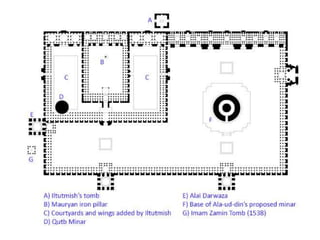
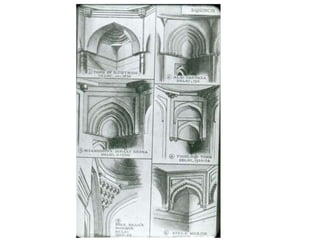
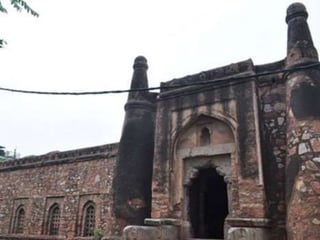
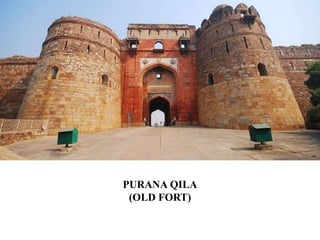
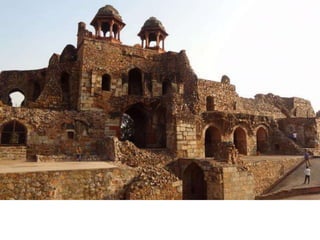
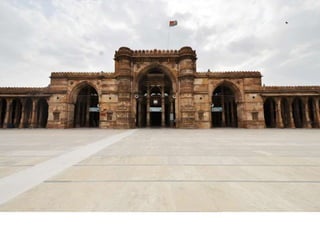
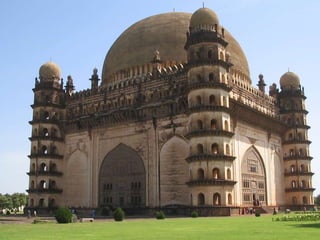
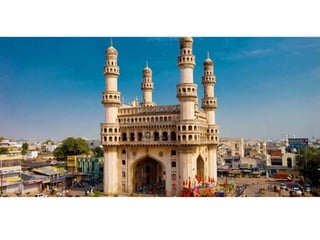
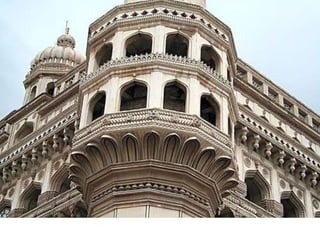
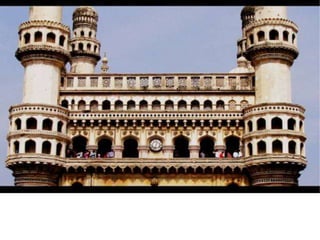
The document discusses the evolution of Islamic architecture in India under the Delhi Sultanate. It describes how the Turkic rulers blended indigenous Indian styles with styles from Central Asia and Persia to develop a distinct Indo-Islamic style. Key features of this early Islamic architecture included the use of pointed arches, domes, towers, and decorative elements like flowers, leaves, and calligraphy rather than figurative designs. Important monuments from this period mentioned include the Quwwat-ul-Islam Mosque and Qutub Minar complex in Delhi, which showcased this new hybrid architectural style.