

FIRST LEVEL
‫تحفة‬‫تجويد‬ ‫في‬ ‫والغلمان‬ ‫األطفال‬
‫القرآن‬
What Is Tajweed?
Tajweed simply means to recite every
letter correctly i.e. from its proper origin
of pronunciation together with the
attribute of its accompanying letters.
in English: Phone X fone
Arabic: Heart X Dog !!
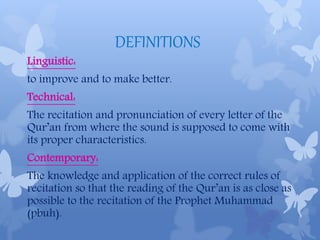
DEFINITIONS
Linguistic:
to improve and to make better.
Technical:
The recitation and pronunciation of every letter of the
Qur’an from where the sound is supposed to come with
its proper characteristics.
Contemporary:
The knowledge and application of the correct rules of
recitation so that the reading of the Qur’an is as close as
possible to the recitation of the Prophet Muhammad
(pbuh).
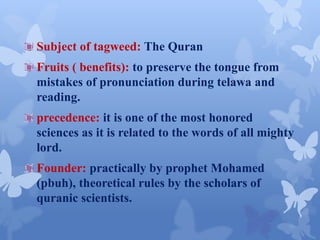
Subject of tagweed: The Quran
Fruits ( benefits): to preserve the tongue from
mistakes of pronunciation during telawa and
reading.
precedence: it is one of the most honored
sciences as it is related to the words of all mighty
lord.
Founder: practically by prophet Mohamed
(pbuh), theoretical rules by the scholars of
quranic scientists.
Why Do We Learn Tajweed??!
Allah says in the Qur’an ً‫يل‬ِ‫ت‬ْ‫ر‬َ‫ت‬ َ‫رآن‬ْ‫الق‬‫تل‬َ‫ر‬َ‫و‬
and recite the Qur’an as is taught to be recited (lit.
‘with tarteel’).
Qur’an reading is the recitation of the Qur’an
according to tajweed & tarteel as taught by the
Prophet Muhammad (pbuh).
Why else??
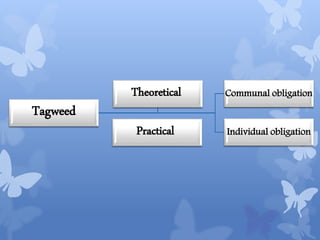
Tagweed
Communal obligation
Individual obligation
Theoretical
Practical
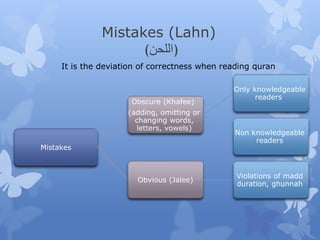
Mistakes (Lahn)
(‫اللحن‬)
Mistakes
Obscure (Khafee)
(adding, omitting or
changing words,
letters, vowels)
Only knowledgeable
readers
Non knowledgeable
readers
Obvious (Jalee)
Violations of madd
duration, ghunnah
It is the deviation of correctness when reading quran
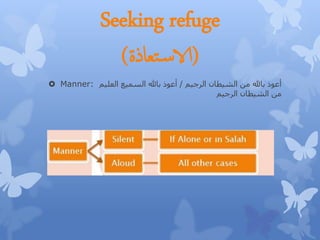
Seeking refuge
(‫تعاذة‬‫س‬‫الا‬)
 Manner: ‫الرجيم‬ ‫الشيطان‬ ‫من‬ ‫باهلل‬ ‫أعوذ‬/‫أعوذ‬‫العليم‬ ‫السميع‬ ‫باهلل‬
‫الرجيم‬ ‫الشيطان‬ ‫من‬
'In the Name of Allah, Most Beneficient, Most
Merciful‘
 at the beginning of a surah, the reader should say the
Basmala (as part of the surah).
 in the middle of the surah, the reader has a choice of
saying the Basmala after the ta'awwuth or just saying
the ta'awwuth
 Surah Al- Fatihah (according to the Shafi'i school)
 At-Taubah - Surah 9 (it is not written)
‫ة‬َ‫ل‬َ‫م‬ْ‫س‬َ‫ب‬‫ال‬Basmala
1. Cutting all three off from each other.
2. Joining all three with each other.
3. Joining the basmalah and the beginning of the surah.
4. Joining seeking refuge with the basmalah.
Ways of ta'awuth and basmalah
((at the beginning of a surah
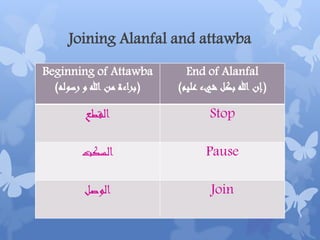
Joining Alanfal and attawba
End of Alanfal
(‫عليم‬ ‫شيء‬ ‫بكل‬ ‫هللا‬ ‫إن‬)
Beginning of Attawba
(‫رسوله‬ ‫و‬ ‫هللا‬ ‫من‬ ‫براءة‬)
Stop‫القطع‬
Pause‫السكت‬
Join‫الوصل‬
STOPPING SIGNS
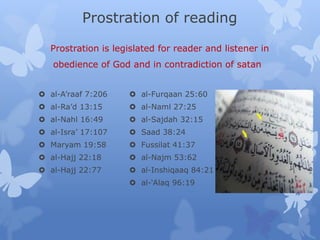
Prostration of reading
Prostration is legislated for reader and listener in
obedience of God and in contradiction of satan
 al-A’raaf 7:206
 al-Ra’d 13:15
 al-Nahl 16:49
 al-Isra’ 17:107
 Maryam 19:58
 al-Hajj 22:18
 al-Hajj 22:77
 al-Furqaan 25:60
 al-Naml 27:25
 al-Sajdah 32:15
 Saad 38:24
 Fussilat 41:37
 al-Najm 53:62
 al-Inshiqaaq 84:21
 al-‘Alaq 96:19
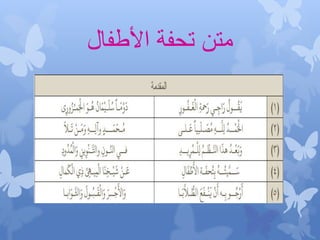
‫األطفال‬ ‫تحفة‬ ‫متن‬
‫خيرا‬‫هللا‬ ‫جزاكم‬

The Science of Tagweed - Lesson 1

  • 1.
    FIRST LEVEL ‫تحفة‬‫تجويد‬ ‫في‬‫والغلمان‬ ‫األطفال‬ ‫القرآن‬
  • 2.
    What Is Tajweed? Tajweedsimply means to recite every letter correctly i.e. from its proper origin of pronunciation together with the attribute of its accompanying letters. in English: Phone X fone Arabic: Heart X Dog !!
  • 3.
    DEFINITIONS Linguistic: to improve andto make better. Technical: The recitation and pronunciation of every letter of the Qur’an from where the sound is supposed to come with its proper characteristics. Contemporary: The knowledge and application of the correct rules of recitation so that the reading of the Qur’an is as close as possible to the recitation of the Prophet Muhammad (pbuh).
  • 4.
    Subject of tagweed:The Quran Fruits ( benefits): to preserve the tongue from mistakes of pronunciation during telawa and reading. precedence: it is one of the most honored sciences as it is related to the words of all mighty lord. Founder: practically by prophet Mohamed (pbuh), theoretical rules by the scholars of quranic scientists.
  • 5.
    Why Do WeLearn Tajweed??! Allah says in the Qur’an ً‫يل‬ِ‫ت‬ْ‫ر‬َ‫ت‬ َ‫رآن‬ْ‫الق‬‫تل‬َ‫ر‬َ‫و‬ and recite the Qur’an as is taught to be recited (lit. ‘with tarteel’). Qur’an reading is the recitation of the Qur’an according to tajweed & tarteel as taught by the Prophet Muhammad (pbuh). Why else??
  • 6.
  • 7.
    Mistakes (Lahn) (‫اللحن‬) Mistakes Obscure (Khafee) (adding,omitting or changing words, letters, vowels) Only knowledgeable readers Non knowledgeable readers Obvious (Jalee) Violations of madd duration, ghunnah It is the deviation of correctness when reading quran
  • 8.
    Seeking refuge (‫تعاذة‬‫س‬‫الا‬)  Manner:‫الرجيم‬ ‫الشيطان‬ ‫من‬ ‫باهلل‬ ‫أعوذ‬/‫أعوذ‬‫العليم‬ ‫السميع‬ ‫باهلل‬ ‫الرجيم‬ ‫الشيطان‬ ‫من‬
  • 9.
    'In the Nameof Allah, Most Beneficient, Most Merciful‘  at the beginning of a surah, the reader should say the Basmala (as part of the surah).  in the middle of the surah, the reader has a choice of saying the Basmala after the ta'awwuth or just saying the ta'awwuth  Surah Al- Fatihah (according to the Shafi'i school)  At-Taubah - Surah 9 (it is not written) ‫ة‬َ‫ل‬َ‫م‬ْ‫س‬َ‫ب‬‫ال‬Basmala
  • 10.
    1. Cutting allthree off from each other. 2. Joining all three with each other. 3. Joining the basmalah and the beginning of the surah. 4. Joining seeking refuge with the basmalah. Ways of ta'awuth and basmalah ((at the beginning of a surah
  • 11.
    Joining Alanfal andattawba End of Alanfal (‫عليم‬ ‫شيء‬ ‫بكل‬ ‫هللا‬ ‫إن‬) Beginning of Attawba (‫رسوله‬ ‫و‬ ‫هللا‬ ‫من‬ ‫براءة‬) Stop‫القطع‬ Pause‫السكت‬ Join‫الوصل‬
  • 12.
  • 13.
    Prostration of reading Prostrationis legislated for reader and listener in obedience of God and in contradiction of satan  al-A’raaf 7:206  al-Ra’d 13:15  al-Nahl 16:49  al-Isra’ 17:107  Maryam 19:58  al-Hajj 22:18  al-Hajj 22:77  al-Furqaan 25:60  al-Naml 27:25  al-Sajdah 32:15  Saad 38:24  Fussilat 41:37  al-Najm 53:62  al-Inshiqaaq 84:21  al-‘Alaq 96:19
  • 14.
  • 15.

Editor's Notes

  • #13 It is important to know the correct points at which to stop or continue during recitation in order to not change or distort the meaning of the ayaat.
  • #14 الدعاء