Negative Yes/No
 3            Questions and
              Tag Questions

This Isn’t Dangerous,
         Is It?

    Focus on Grammar 4
    Part III, Unit 7
    By Ruth Luman, Gabriele Steiner, and BJ Wells
    Copyright © 2006. Pearson Education, Inc. All rights reserved.
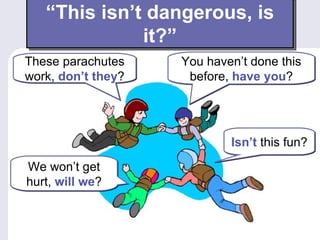
“This isn’t dangerous, is
              it?”
These parachutes    You haven’t done this
work, don’t they?    before, have you?


                            Isn’t this fun?
We won’t get
hurt, will we?
Use
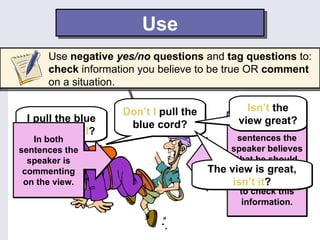
      Use negative yes/no questions and tag questions to:
      check information you believe to be true OR comment
      on a situation.

                    Don’t I pull the           Isn’t the
 I pull the blue                             view great?
                     blue cord?                   In both
 cord, don’t I?
   In both                                   sentences the
sentences the                              speaker believes
  speaker is                                 that he should
 commenting                            The view is great,
                                              pull the blue
 on the view.                               isn’t and wants
                                            cord it?
                                              to check this
                                               information.
Negative Yes/No Questions
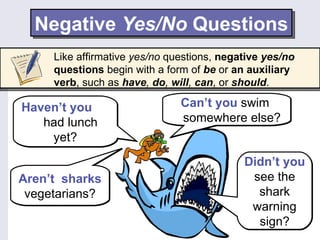
     Like affirmative yes/no questions, negative yes/no
     questions begin with a form of be or an auxiliary
     verb, such as have, do, will, can, or should.

Haven’t you                    Can’t you swim
   had lunch                   somewhere else?
    yet?
                                            Didn’t you
Aren’t sharks                                see the
 vegetarians?                                 shark
                                             warning
                                              sign?
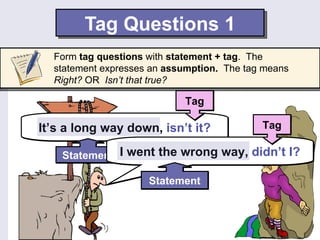
Tag Questions 1
  Form tag questions with statement + tag. The
  statement expresses an assumption. The tag means
  Right? OR Isn’t that true?

                            Tag

It’s a long way down, isn’t it?             Tag

    Statement I went the wrong way, didn’t I?

                     Statement
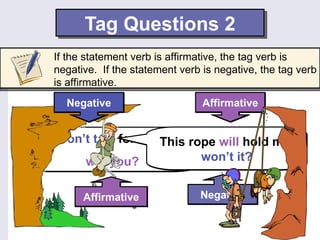
Tag Questions 2
    If the statement verb is affirmative, the tag verb is
    negative. If the statement verb is negative, the tag verb
    is affirmative.
      Negative                      Affirmative


You won’t talk for too This rope will hold me,
                       long,
        will you?             won’t it?


          Affirmative              Negative
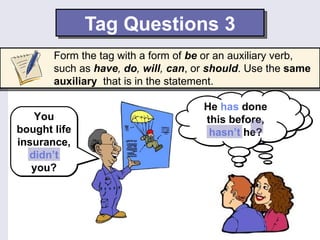
Tag Questions 3
       Form the tag with a form of be or an auxiliary verb,
       such as have, do, will, can, or should. Use the same
       auxiliary that is in the statement.

                                     He has done
   You                                    He isn’t
                                     this before,
bought life                           hasn’t he? he?
                                       joking, is
insurance,
  didn’t
   you?
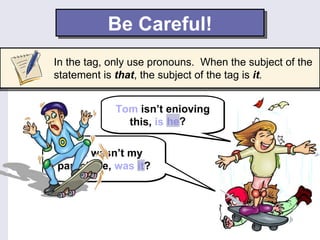
Be Careful!
In the tag, only use pronouns. When the subject of the
statement is that, the subject of the tag is it.


            Tom isn’t enjoying
                       he?
              this, is Tom?

 That wasn’t my
parachute, was it?
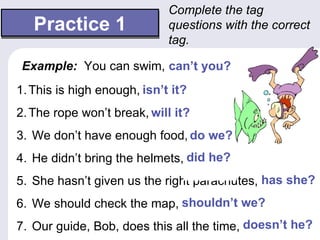
Complete the tag
   Practice 1                questions with the correct
                             tag.

 Example: You can swim, …
                        can’t you?
1. This is high enough, isn’t it?
                        …
2. The rope won’t break, will it?
                         …
3. We don’t have enough food, do we?
                              …
4. He didn’t bring the helmets, did he?
                                …
5. She hasn’t given us the right parachutes, has she?
                                             …
6. We should check the map, shouldn’t we?
                            …
7. Our guide, Bob, does this all the time, doesn’t he?
                                           …
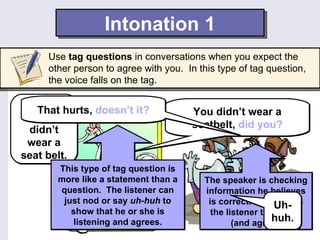
Intonation 1
     Use tag questions in conversations when you expect the
     other person to agree with you. In this type of tag question,
     the voice falls on the tag.

 You’re
    That hurts, doesn’t it?            You didn’t wear a
 right. I
  didn’t                               seatbelt, did you?
 wear a
seat belt.
       This type of tag question is
       more like a statement than a      The speaker is checking
       question. The listener can        information he believes
        just nod or say uh-huh to         is correct. He expects
                                                            Uh-
          show that he or she is           the listener to answer
          listening and agrees.                            huh.
                                                 (and agree).
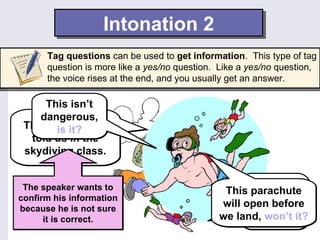
Intonation 2
      Tag questions can be used to get information. This type of tag
      question is more like a yes/no question. Like a yes/no question,
      the voice rises at the end, and you usually get an answer.

     This isn’t
    dangerous,
 That’s is it? they
        what
  told us in the
 skydiving class.


 The speaker wants to                                 Well,
                                               Thissometimes
                                                    parachute
confirm his information
because he is not sure
                                              will open before
                                                    there are
      it is correct.                          we land, won’t it?
                                                     sharks.
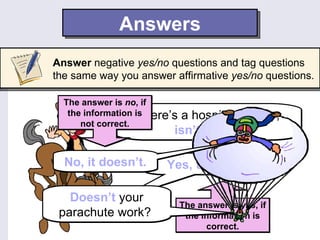
Answers
Answer negative yes/no questions and tag questions
the same way you answer affirmative yes/no questions.

  The answer is no, if
                    There’s
   the information is      a hospital nearby,
      not correct.
                          isn’t there?

  No, it doesn’t.       Yes, there is.

   Doesn’t your
                              The answer is yes, if
 parachute work?               the information is
                                    correct.
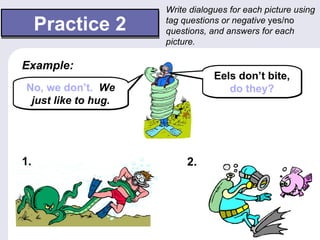
Write dialogues for each picture using

     Practice 2      tag questions or negative yes/no
                     questions, and answers for each
                     picture.

Example:
                                 Eels don’t bite,
No, we don’t. We                    do they?
 just like to hug.


1.                        2.
References

Copyright © 2006 Pearson Education and
its licensors. All rights reserved.

English Tag questions

  • 1.
    Negative Yes/No 3 Questions and Tag Questions This Isn’t Dangerous, Is It? Focus on Grammar 4 Part III, Unit 7 By Ruth Luman, Gabriele Steiner, and BJ Wells Copyright © 2006. Pearson Education, Inc. All rights reserved.
  • 2.
    “This isn’t dangerous,is it?” These parachutes You haven’t done this work, don’t they? before, have you? Isn’t this fun? We won’t get hurt, will we?
  • 3.
    Use Use negative yes/no questions and tag questions to: check information you believe to be true OR comment on a situation. Don’t I pull the Isn’t the I pull the blue view great? blue cord? In both cord, don’t I? In both sentences the sentences the speaker believes speaker is that he should commenting The view is great, pull the blue on the view. isn’t and wants cord it? to check this information.
  • 4.
    Negative Yes/No Questions Like affirmative yes/no questions, negative yes/no questions begin with a form of be or an auxiliary verb, such as have, do, will, can, or should. Haven’t you Can’t you swim had lunch somewhere else? yet? Didn’t you Aren’t sharks see the vegetarians? shark warning sign?
  • 5.
    Tag Questions 1 Form tag questions with statement + tag. The statement expresses an assumption. The tag means Right? OR Isn’t that true? Tag It’s a long way down, isn’t it? Tag Statement I went the wrong way, didn’t I? Statement
  • 6.
    Tag Questions 2 If the statement verb is affirmative, the tag verb is negative. If the statement verb is negative, the tag verb is affirmative. Negative Affirmative You won’t talk for too This rope will hold me, long, will you? won’t it? Affirmative Negative
  • 7.
    Tag Questions 3 Form the tag with a form of be or an auxiliary verb, such as have, do, will, can, or should. Use the same auxiliary that is in the statement. He has done You He isn’t this before, bought life hasn’t he? he? joking, is insurance, didn’t you?
  • 8.
    Be Careful! In thetag, only use pronouns. When the subject of the statement is that, the subject of the tag is it. Tom isn’t enjoying he? this, is Tom? That wasn’t my parachute, was it?
  • 9.
    Complete the tag Practice 1 questions with the correct tag. Example: You can swim, … can’t you? 1. This is high enough, isn’t it? … 2. The rope won’t break, will it? … 3. We don’t have enough food, do we? … 4. He didn’t bring the helmets, did he? … 5. She hasn’t given us the right parachutes, has she? … 6. We should check the map, shouldn’t we? … 7. Our guide, Bob, does this all the time, doesn’t he? …
  • 10.
    Intonation 1 Use tag questions in conversations when you expect the other person to agree with you. In this type of tag question, the voice falls on the tag. You’re That hurts, doesn’t it? You didn’t wear a right. I didn’t seatbelt, did you? wear a seat belt. This type of tag question is more like a statement than a The speaker is checking question. The listener can information he believes just nod or say uh-huh to is correct. He expects Uh- show that he or she is the listener to answer listening and agrees. huh. (and agree).
  • 11.
    Intonation 2 Tag questions can be used to get information. This type of tag question is more like a yes/no question. Like a yes/no question, the voice rises at the end, and you usually get an answer. This isn’t dangerous, That’s is it? they what told us in the skydiving class. The speaker wants to Well, Thissometimes parachute confirm his information because he is not sure will open before there are it is correct. we land, won’t it? sharks.
  • 12.
    Answers Answer negative yes/noquestions and tag questions the same way you answer affirmative yes/no questions. The answer is no, if There’s the information is a hospital nearby, not correct. isn’t there? No, it doesn’t. Yes, there is. Doesn’t your The answer is yes, if parachute work? the information is correct.
  • 13.
    Write dialogues foreach picture using Practice 2 tag questions or negative yes/no questions, and answers for each picture. Example: Eels don’t bite, No, we don’t. We do they? just like to hug. 1. 2.
  • 14.
    References Copyright © 2006Pearson Education and its licensors. All rights reserved.