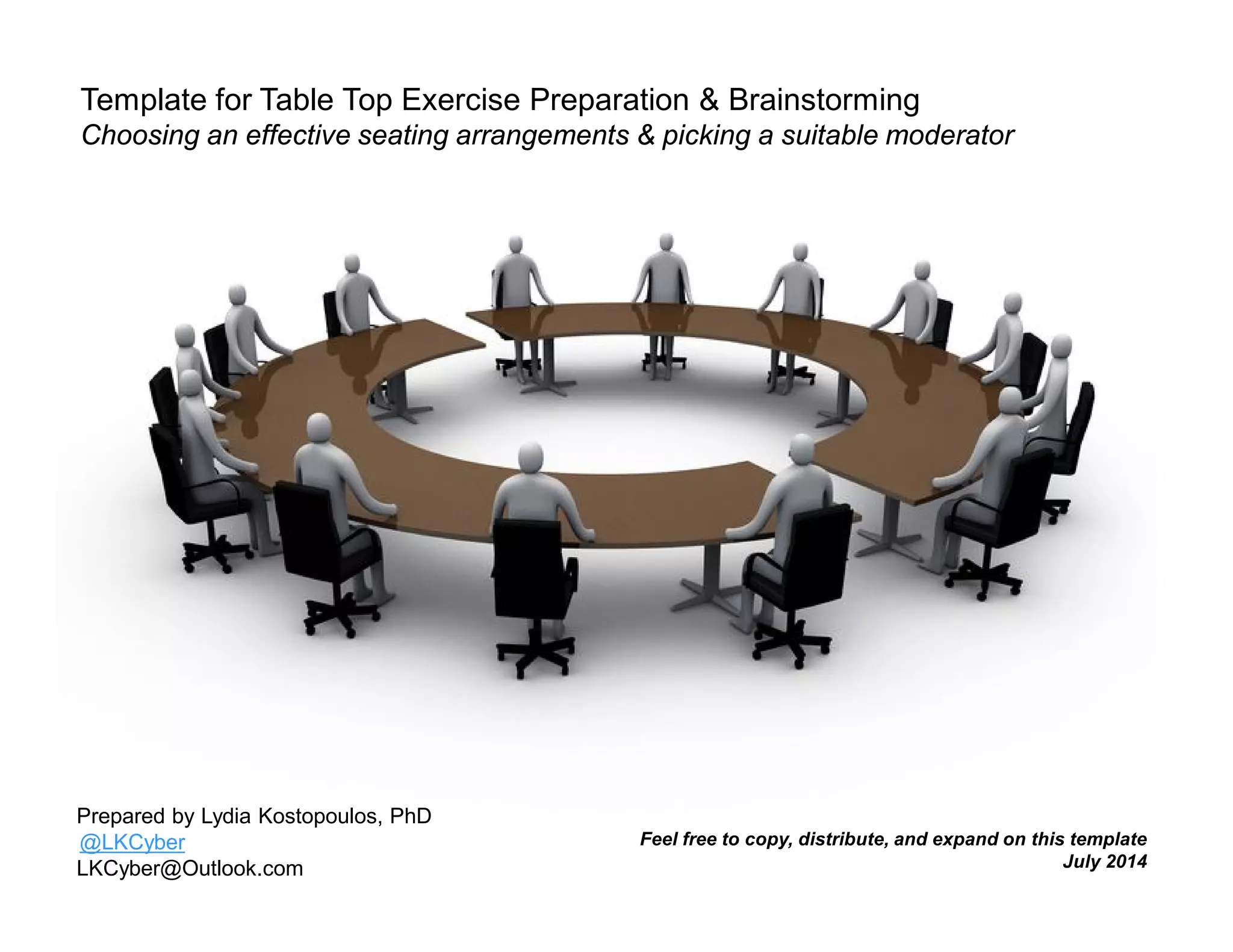
Template for Table Top Exercise Preparation & Brainstorming 
Choosing an effective seating arrangements & picking a suitable moderator 
Feel free to copy, distribute, and expand on this template 
July 2014 
Prepared by Lydia Kostopoulos, PhD 
@LKCyber 
LKCyber@Outlook.com
Table Top Panel Design 
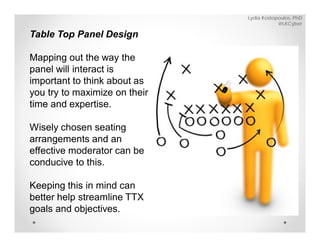
Mapping out the way the 
panel will interact is 
important to think about as 
you try to maximize on their 
time and expertise. 
Wisely chosen seating 
arrangements and an 
effective moderator can be 
conducive to this. 
Keeping this in mind can 
better help streamline TTX 
goals and objectives. 
Lydia Kostopoulos, PhD 
@LKCyber
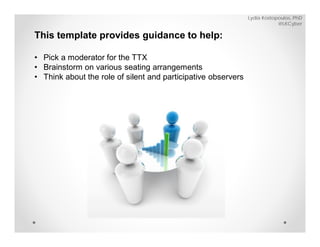
This template provides guidance to help: 
• Pick a moderator for the TTX 
• Brainstorm on various seating arrangements 
• Think about the role of silent and participative observers 
Lydia Kostopoulos, PhD 
@LKCyber
Lydia Kostopoulos, PhD 
Picking a TTX Moderator 
More often than not moderators are determined later on in the TTX preparation 
and sometimes they do not have any situational awareness on the scenario, or its 
vision. 
After identifying the goal of the scenario, it helps to brainstorm ahead of time on who the 
moderator should be to bring the TTX scenario to life. If the moderator is a part of the 
scenario building process they will be more effective in streamlining the TTX participants’ 
thoughts and directing the scenario to meet the TTX objectives. 
Here are some things to consider when choosing a moderator: 
* This is not a comprehensive list * 
General traits Scenario Specific Traits 
• People person, friendly 
• Ability to synthesize ideas and connect 
dots on the spot 
• Objective critical thinker 
• Expertise on the subject matter 
• Awareness of issues surrounding the 
gaps that the TTX is focusing on 
• Ability to add value to the scenario 
Some general traits to avoid. People who: 
• Are afraid to speak in public 
• Get nervous in leadership roles 
• Unable to think quick 
• Are not good at teamwork 
• Lack emotional intelligence to assess the mood of others 
@LKCyber
Lydia Kostopoulos, PhD 
Table Top Panel Design: Seating Arrangement Ideas 
The following slides are a compilation of some table top exercise 
seating arrangements; however it is not a comprehensive list of all 
the arrangements that are possible. 
The idea is to find the seating arrangement that works best for the 
scenario, environment and organizational culture to meet the 
identified objective(s) of the TTX and the desired end-state. 
@LKCyber
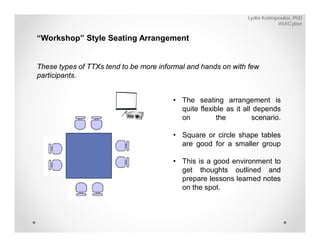
“Workshop” Style Seating Arrangement 
Lydia Kostopoulos, PhD 
These types of TTXs tend to be more informal and hands on with few 
participants. 
@LKCyber 
• The seating arrangement is 
quite flexible as it all depends 
on the scenario. 
• Square or circle shape tables 
are good for a smaller group 
• This is a good environment to 
get thoughts outlined and 
prepare lessons learned notes 
on the spot.
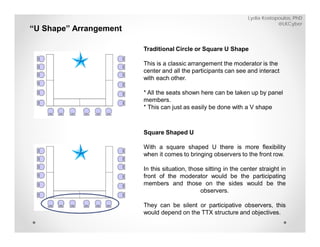
“U Shape” Arrangement 
Lydia Kostopoulos, PhD 
@LKCyber 
Traditional Circle or Square U Shape 
This is a classic arrangement the moderator is the 
center and all the participants can see and interact 
with each other. 
* All the seats shown here can be taken up by panel 
members. 
* This can just as easily be done with a V shape 
Square Shaped U 
With a square shaped U there is more flexibility 
when it comes to bringing observers to the front row. 
In this situation, those sitting in the center straight in 
front of the moderator would be the participating 
members and those on the sides would be the 
observers. 
They can be silent or participative observers, this 
would depend on the TTX structure and objectives.
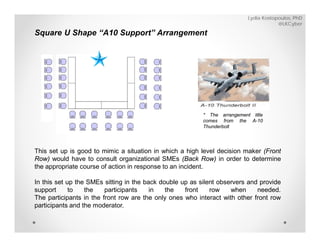
Square U Shape “A10 Support” Arrangement 
Lydia Kostopoulos, PhD 
@LKCyber 
* The arrangement title 
comes from the A-10 
Thunderbolt 
This set up is good to mimic a situation in which a high level decision maker (Front 
Row) would have to consult organizational SMEs (Back Row) in order to determine 
the appropriate course of action in response to an incident. 
In this set up the SMEs sitting in the back double up as silent observers and provide 
support to the participants in the front row when needed. 
The participants in the front row are the only ones who interact with other front row 
participants and the moderator.
Lydia Kostopoulos, PhD 
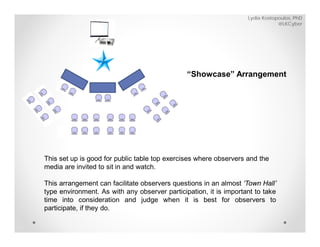
“Showcase” Arrangement 
This set up is good for public table top exercises where observers and the 
media are invited to sit in and watch. 
This arrangement can facilitate observers questions in an almost ‘Town Hall’ 
type environment. As with any observer participation, it is important to take 
time into consideration and judge when it is best for observers to 
participate, if they do. 
@LKCyber
Lydia Kostopoulos, PhD 
@LKCyber 
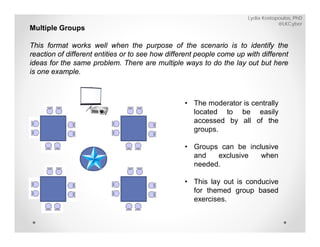
Multiple Groups 
This format works well when the purpose of the scenario is to identify the 
reaction of different entities or to see how different people come up with different 
ideas for the same problem. There are multiple ways to do the lay out but here 
is one example. 
• The moderator is centrally 
located to be easily 
accessed by all of the 
groups. 
• Groups can be inclusive 
and exclusive when 
needed. 
• This lay out is conducive 
for themed group based 
exercises.
Lydia Kostopoulos, PhD 
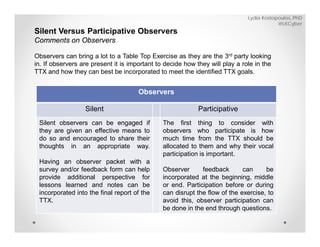
Silent Versus Participative Observers 
Comments on Observers 
Observers can bring a lot to a Table Top Exercise as they are the 3rd party looking 
in. If observers are present it is important to decide how they will play a role in the 
TTX and how they can best be incorporated to meet the identified TTX goals. 
Observers 
Silent Participative 
Silent observers can be engaged if 
they are given an effective means to 
do so and encouraged to share their 
thoughts in an appropriate way. 
Having an observer packet with a 
survey and/or feedback form can help 
provide additional perspective for 
lessons learned and notes can be 
incorporated into the final report of the 
TTX. 
The first thing to consider with 
observers who participate is how 
much time from the TTX should be 
allocated to them and why their vocal 
participation is important. 
Observer feedback can be 
incorporated at the beginning, middle 
or end. Participation before or during 
can disrupt the flow of the exercise, to 
avoid this, observer participation can 
be done in the end through questions. 
@LKCyber
Lydia Kostopoulos, PhD 
@LKCyber 
www.linkedin.com/in/lydiak 
LKCyber@Outlook.com 
If you have any questions or would like more 
information or other templates don’t hesitate to get 
in touch!

Template for Table Top Exercise Seating Arrangement and Moderator Selection

  • 1.
    Template for TableTop Exercise Preparation & Brainstorming Choosing an effective seating arrangements & picking a suitable moderator Feel free to copy, distribute, and expand on this template July 2014 Prepared by Lydia Kostopoulos, PhD @LKCyber LKCyber@Outlook.com
  • 2.
    Table Top PanelDesign Mapping out the way the panel will interact is important to think about as you try to maximize on their time and expertise. Wisely chosen seating arrangements and an effective moderator can be conducive to this. Keeping this in mind can better help streamline TTX goals and objectives. Lydia Kostopoulos, PhD @LKCyber
  • 3.
    This template providesguidance to help: • Pick a moderator for the TTX • Brainstorm on various seating arrangements • Think about the role of silent and participative observers Lydia Kostopoulos, PhD @LKCyber
  • 4.
    Lydia Kostopoulos, PhD Picking a TTX Moderator More often than not moderators are determined later on in the TTX preparation and sometimes they do not have any situational awareness on the scenario, or its vision. After identifying the goal of the scenario, it helps to brainstorm ahead of time on who the moderator should be to bring the TTX scenario to life. If the moderator is a part of the scenario building process they will be more effective in streamlining the TTX participants’ thoughts and directing the scenario to meet the TTX objectives. Here are some things to consider when choosing a moderator: * This is not a comprehensive list * General traits Scenario Specific Traits • People person, friendly • Ability to synthesize ideas and connect dots on the spot • Objective critical thinker • Expertise on the subject matter • Awareness of issues surrounding the gaps that the TTX is focusing on • Ability to add value to the scenario Some general traits to avoid. People who: • Are afraid to speak in public • Get nervous in leadership roles • Unable to think quick • Are not good at teamwork • Lack emotional intelligence to assess the mood of others @LKCyber
  • 5.
    Lydia Kostopoulos, PhD Table Top Panel Design: Seating Arrangement Ideas The following slides are a compilation of some table top exercise seating arrangements; however it is not a comprehensive list of all the arrangements that are possible. The idea is to find the seating arrangement that works best for the scenario, environment and organizational culture to meet the identified objective(s) of the TTX and the desired end-state. @LKCyber
  • 6.
    “Workshop” Style SeatingArrangement Lydia Kostopoulos, PhD These types of TTXs tend to be more informal and hands on with few participants. @LKCyber • The seating arrangement is quite flexible as it all depends on the scenario. • Square or circle shape tables are good for a smaller group • This is a good environment to get thoughts outlined and prepare lessons learned notes on the spot.
  • 7.
    “U Shape” Arrangement Lydia Kostopoulos, PhD @LKCyber Traditional Circle or Square U Shape This is a classic arrangement the moderator is the center and all the participants can see and interact with each other. * All the seats shown here can be taken up by panel members. * This can just as easily be done with a V shape Square Shaped U With a square shaped U there is more flexibility when it comes to bringing observers to the front row. In this situation, those sitting in the center straight in front of the moderator would be the participating members and those on the sides would be the observers. They can be silent or participative observers, this would depend on the TTX structure and objectives.
  • 8.
    Square U Shape“A10 Support” Arrangement Lydia Kostopoulos, PhD @LKCyber * The arrangement title comes from the A-10 Thunderbolt This set up is good to mimic a situation in which a high level decision maker (Front Row) would have to consult organizational SMEs (Back Row) in order to determine the appropriate course of action in response to an incident. In this set up the SMEs sitting in the back double up as silent observers and provide support to the participants in the front row when needed. The participants in the front row are the only ones who interact with other front row participants and the moderator.
  • 9.
    Lydia Kostopoulos, PhD “Showcase” Arrangement This set up is good for public table top exercises where observers and the media are invited to sit in and watch. This arrangement can facilitate observers questions in an almost ‘Town Hall’ type environment. As with any observer participation, it is important to take time into consideration and judge when it is best for observers to participate, if they do. @LKCyber
  • 10.
    Lydia Kostopoulos, PhD @LKCyber Multiple Groups This format works well when the purpose of the scenario is to identify the reaction of different entities or to see how different people come up with different ideas for the same problem. There are multiple ways to do the lay out but here is one example. • The moderator is centrally located to be easily accessed by all of the groups. • Groups can be inclusive and exclusive when needed. • This lay out is conducive for themed group based exercises.
  • 11.
    Lydia Kostopoulos, PhD Silent Versus Participative Observers Comments on Observers Observers can bring a lot to a Table Top Exercise as they are the 3rd party looking in. If observers are present it is important to decide how they will play a role in the TTX and how they can best be incorporated to meet the identified TTX goals. Observers Silent Participative Silent observers can be engaged if they are given an effective means to do so and encouraged to share their thoughts in an appropriate way. Having an observer packet with a survey and/or feedback form can help provide additional perspective for lessons learned and notes can be incorporated into the final report of the TTX. The first thing to consider with observers who participate is how much time from the TTX should be allocated to them and why their vocal participation is important. Observer feedback can be incorporated at the beginning, middle or end. Participation before or during can disrupt the flow of the exercise, to avoid this, observer participation can be done in the end through questions. @LKCyber
  • 12.
    Lydia Kostopoulos, PhD @LKCyber www.linkedin.com/in/lydiak LKCyber@Outlook.com If you have any questions or would like more information or other templates don’t hesitate to get in touch!