The Grind: Grounds for Your GardenRebecca Dubis
The Starbucks AddictionOur country has become addicted to coffee, and the everyday convenience of Starbucks.Starbucks sells 4 million coffee drinks everyday in the US.
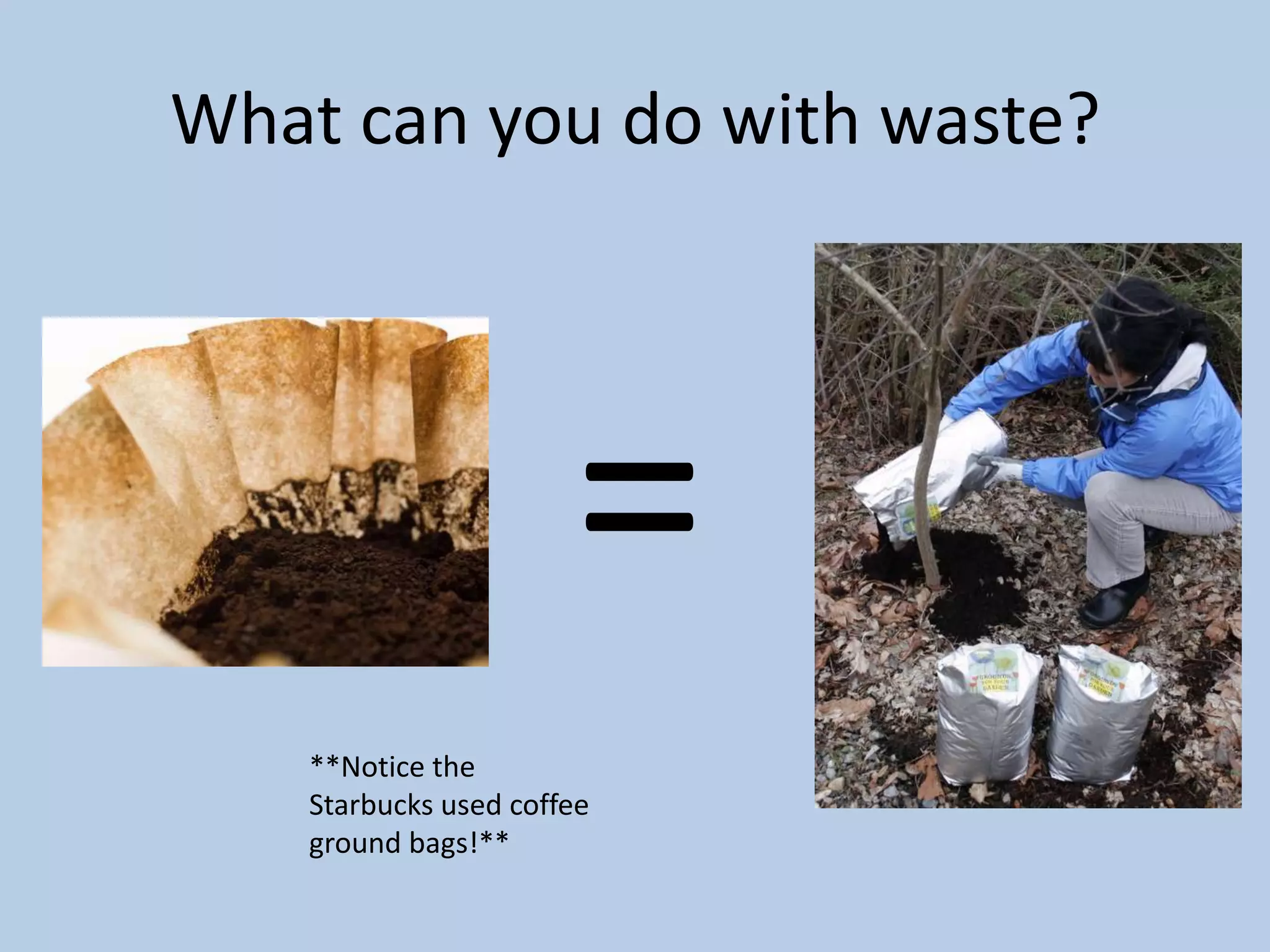
What can you do with waste?=**Notice the Starbucks used coffee ground bags!**
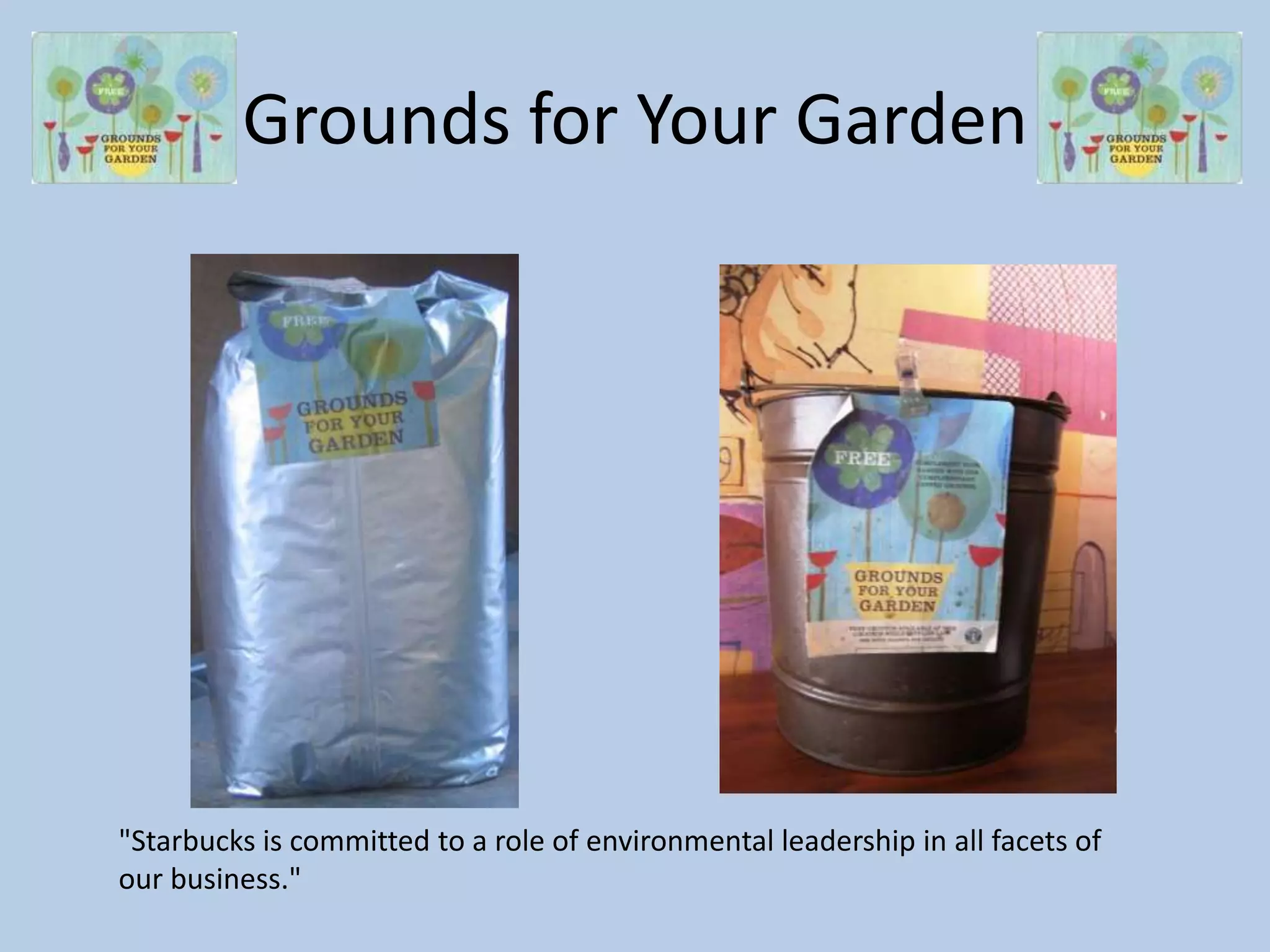
Grounds for Your Garden"Starbucks is committed to a role of environmental leadership in all facets of our business."
My experiment
Question and HypothesisQuestion: 	Do seeds thrive differently under different ratios of coffee?Hypothesis:	If seeds are grown in different ratios of coffee to soil, then the seeds planted in the 1:1 ratio will grow faster and larger.
Ratios100%Coffee100% soil50:50 soil to coffee20:80 soil to coffee30:70 soil to coffee40:60 soil to coffee
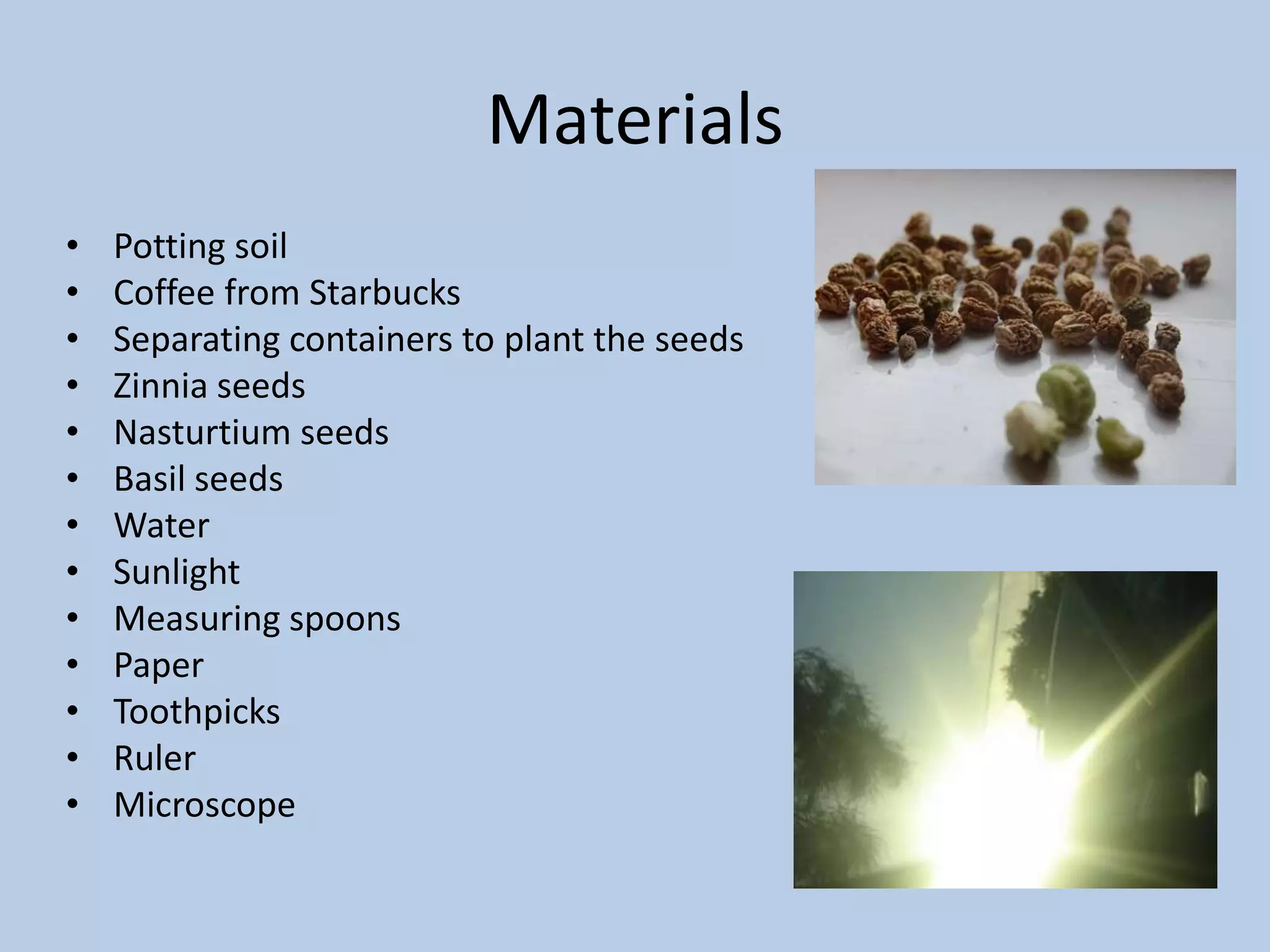
MaterialsPotting soilCoffee from StarbucksSeparating containers to plant the seedsZinnia seedsNasturtium seedsBasil seedsWaterSunlightMeasuring spoonsPaperToothpicksRulerMicroscope
ProcedureGather the seeds, container, soil, and coffee.Organize the ratios of coffee to soil.  There will be trials with 100% coffee, 100% soil, 20:80 of soil to coffee, 30:70 soil to coffee, 40:60 soil to coffee, and 50:50 soil to coffee. Combine the soil and coffee ratio before placing in container.Fill individual pot 3/4 of the way with the soil/coffee mixture.Then put in seeds.Fill with remaining soil/coffee and cover the seeds.Repeat with all seeds and ratios of coffee until the seeds are all planted.Water the seeds with 1/4 cup water (60mL).Monitor them and record changes in the daily log.Water every other day with 30mL of water (2t)and put water in the bottom of the tray.Every day put seeds outside in sunlight, but bring them in during the nighttime.After a month or so of growing, dig up the plants.  Be extremely careful as to not break off any root growth.Take your data.  When taking the height, use a ruler and only measure the plant from the soil up, not including the roots.  Use a microscope for counting root hairs.Replant the seedlings.
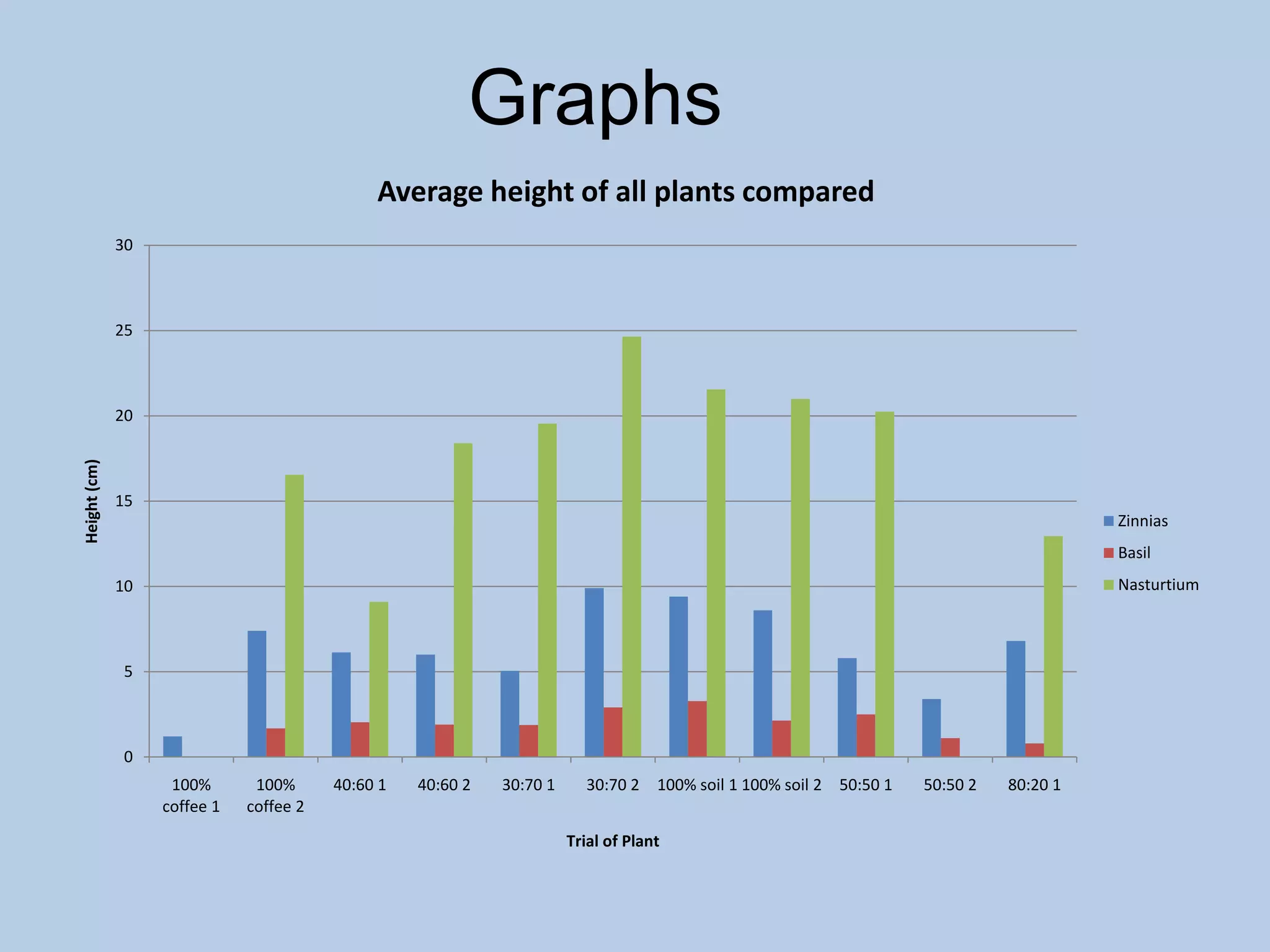
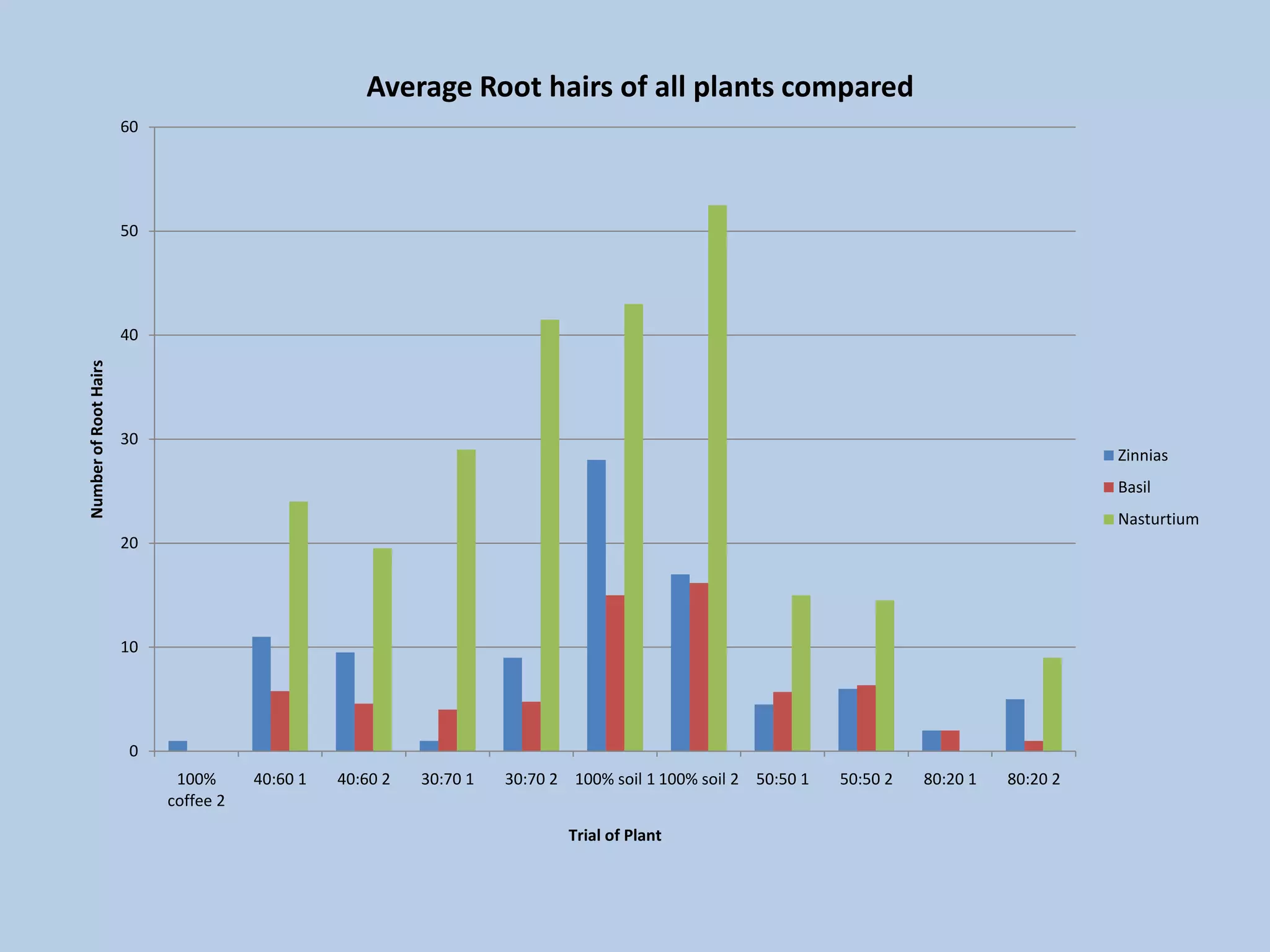
ResultsIn this experiment, there are several things being compared.  First, the ratios of coffee are being compared with their effects on different plants.  Then, the plant height was being measured. Also, the root hair was being measured.  Finally, the three different flowers were compared to see how they were individually affected by coffee.  The hypothesis in this experiment was ‘If seeds are grown in different ratios of coffee to soil, then the seeds planted in the 1:1 ratio will grow faster and larger.’  This hypothesis was not supported in any aspect of the experiment.  In all of the plants and in both height and root hair, the 3:7 soil plants grew the tallest and most root hair.  The 100% soil was the second best, which did not support the hypothesis either.  Finally, the 1:1 ratio of coffee to soil grew the third best.  The nasturtiums grew that tallest in general, and the basil the shortest, but that depended on the type of the plant and their tendencies.  In conclusion, the data did support the idea that coffee was good for the development of seeds.  The ideal ratio of coffee to soil turned out to be 30:70.
Graphs
Thank You!

T3 Sustainablility Project

  • 1.
    The Grind: Groundsfor Your GardenRebecca Dubis
  • 2.
    The Starbucks AddictionOurcountry has become addicted to coffee, and the everyday convenience of Starbucks.Starbucks sells 4 million coffee drinks everyday in the US.
  • 3.
    What can youdo with waste?=**Notice the Starbucks used coffee ground bags!**
  • 4.
    Grounds for YourGarden"Starbucks is committed to a role of environmental leadership in all facets of our business."
  • 5.
  • 6.
    Question and HypothesisQuestion: Do seeds thrive differently under different ratios of coffee?Hypothesis: If seeds are grown in different ratios of coffee to soil, then the seeds planted in the 1:1 ratio will grow faster and larger.
  • 7.
    Ratios100%Coffee100% soil50:50 soilto coffee20:80 soil to coffee30:70 soil to coffee40:60 soil to coffee
  • 8.
    MaterialsPotting soilCoffee fromStarbucksSeparating containers to plant the seedsZinnia seedsNasturtium seedsBasil seedsWaterSunlightMeasuring spoonsPaperToothpicksRulerMicroscope
  • 9.
    ProcedureGather the seeds,container, soil, and coffee.Organize the ratios of coffee to soil. There will be trials with 100% coffee, 100% soil, 20:80 of soil to coffee, 30:70 soil to coffee, 40:60 soil to coffee, and 50:50 soil to coffee. Combine the soil and coffee ratio before placing in container.Fill individual pot 3/4 of the way with the soil/coffee mixture.Then put in seeds.Fill with remaining soil/coffee and cover the seeds.Repeat with all seeds and ratios of coffee until the seeds are all planted.Water the seeds with 1/4 cup water (60mL).Monitor them and record changes in the daily log.Water every other day with 30mL of water (2t)and put water in the bottom of the tray.Every day put seeds outside in sunlight, but bring them in during the nighttime.After a month or so of growing, dig up the plants. Be extremely careful as to not break off any root growth.Take your data. When taking the height, use a ruler and only measure the plant from the soil up, not including the roots. Use a microscope for counting root hairs.Replant the seedlings.
  • 10.
    ResultsIn this experiment,there are several things being compared. First, the ratios of coffee are being compared with their effects on different plants. Then, the plant height was being measured. Also, the root hair was being measured. Finally, the three different flowers were compared to see how they were individually affected by coffee. The hypothesis in this experiment was ‘If seeds are grown in different ratios of coffee to soil, then the seeds planted in the 1:1 ratio will grow faster and larger.’ This hypothesis was not supported in any aspect of the experiment. In all of the plants and in both height and root hair, the 3:7 soil plants grew the tallest and most root hair. The 100% soil was the second best, which did not support the hypothesis either. Finally, the 1:1 ratio of coffee to soil grew the third best. The nasturtiums grew that tallest in general, and the basil the shortest, but that depended on the type of the plant and their tendencies. In conclusion, the data did support the idea that coffee was good for the development of seeds. The ideal ratio of coffee to soil turned out to be 30:70.
  • 11.
  • 13.