Mohammed	A.	Alawadh
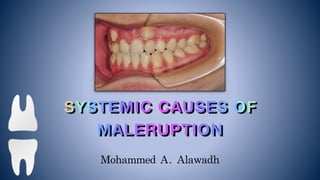
SYSTEMIC CAUSES OF
MALERUPTION
Systemic conditions ; 
Trisomy 21 syndrome (Down syndrome)
CLEIDOCRANIAL DYSPLASIA (CCD)
HYPOTHYROIDISM
HYPOPITUITARISM
CONTENT
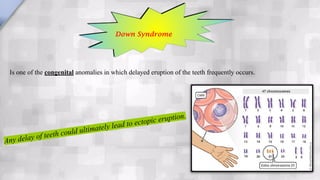
Is one of the congenital anomalies in which delayed eruption of the teeth frequently occurs.
Down Syndrome
Any delay of teeth could ultimately lead to ectopic eruption.
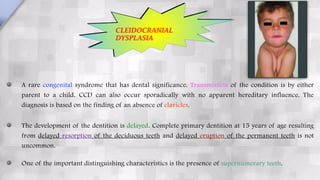
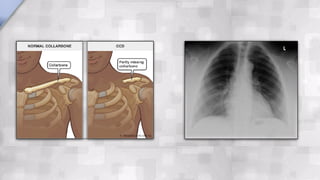
A rare congenital syndrome that has dental significance. Transmission of the condition is by either
parent to a child. CCD can also occur sporadically with no apparent hereditary influence. The
diagnosis is based on the finding of an absence of clavicles.
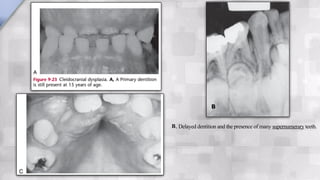
The development of the dentition is delayed. Complete primary dentition at 15 years of age resulting
from delayed resorption of the deciduous teeth and delayed eruption of the permanent teeth is not
uncommon.
One of the important distinguishing characteristics is the presence of supernumerary teeth. 
CLEIDOCRANIAL
DYSPLASIA
B, Delayed dentition and the presence of many supernumerary teeth.
B
Hypothyroidism is another possible cause of delayed eruption. Patients in whom the function of the thyroid
gland is extremely deficient have characteristic dental findings.
Hypothyroidism
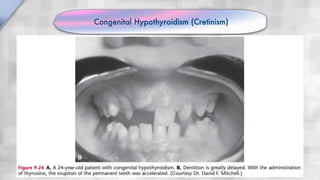
Congenital Hypothyroidism (Cretinism)
Juvenile Hypothyroidism (Acquired Hypothyroidism)
Congenital Hypothyroidism (Cretinism)
Congenital hypothyroidism is the result of an absence or underdevelopment of the thyroid gland and insufficient
levels of thyroid hormone. Today it is corrected at birth because of mandatory blood screening of newborn infants.
Without adequate hormonal therapy the dentition of the child with congenital hypothyroidism is delayed in all
stages, including:
Eruption of the primary teeth
Exfoliation of the primary teeth
Eruption of the permanent teeth
Congenital Hypothyroidism (Cretinism)
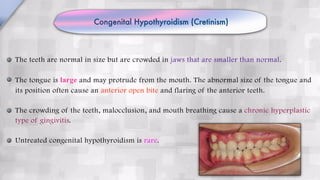
The teeth are normal in size but are crowded in jaws that are smaller than normal.
The tongue is large and may protrude from the mouth. The abnormal size of the tongue and
its position often cause an anterior open bite and flaring of the anterior teeth.
The crowding of the teeth, malocclusion, and mouth breathing cause a chronic hyperplastic
type of gingivitis.
Untreated congenital hypothyroidism is rare.
Results from a malfunction of the thyroid gland, usually between 6 and 12 years of age. Because the
deficiency occurs after the period of rapid growth, the unusual facial and body pattern characteristic of a
person with congenital hypothyroidism is not present.
In the untreated case of juvenile hypothyroidism, delayed exfoliation of the primary teeth and delayed
eruption of the permanent teeth are a characteristic.
Juvenile Hypothyroidism (Acquired Hypothyroidism)
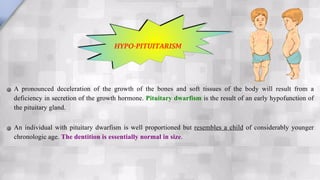
A pronounced deceleration of the growth of the bones and soft tissues of the body will result from a
deficiency in secretion of the growth hormone. Pituitary dwarfism is the result of an early hypofunction of
the pituitary gland.
An individual with pituitary dwarfism is well proportioned but resembles a child of considerably younger
chronologic age. The dentition is essentially normal in size.
HYPO-PITUITARISM
Delayed eruption of the dentition is characteristic. In severe cases the primary teeth do not undergo
resorption but instead may be retained throughout the life of the person.
The underlying permanent teeth continue to develop but do not erupt.
Extraction of the deciduous teeth is not indicated, since eruption of the permanent teeth cannot be
assured.
HYPO-PITUITARISM
REFERENCES:
McDonald and Avery Dentistry for the Child and
Adolescent, 9th Edition, ISBN: 9780323057240
Page 164 - 174
End

Systemic Causes of Maleruption

  • 1.
  • 2.
    Systemic conditions ;  Trisomy21 syndrome (Down syndrome) CLEIDOCRANIAL DYSPLASIA (CCD) HYPOTHYROIDISM HYPOPITUITARISM CONTENT
  • 3.
    Is one ofthe congenital anomalies in which delayed eruption of the teeth frequently occurs. Down Syndrome Any delay of teeth could ultimately lead to ectopic eruption.
  • 4.
    A rare congenitalsyndrome that has dental significance. Transmission of the condition is by either parent to a child. CCD can also occur sporadically with no apparent hereditary influence. The diagnosis is based on the finding of an absence of clavicles. The development of the dentition is delayed. Complete primary dentition at 15 years of age resulting from delayed resorption of the deciduous teeth and delayed eruption of the permanent teeth is not uncommon. One of the important distinguishing characteristics is the presence of supernumerary teeth.  CLEIDOCRANIAL DYSPLASIA
  • 6.
    B, Delayed dentitionand the presence of many supernumerary teeth. B
  • 7.
    Hypothyroidism is anotherpossible cause of delayed eruption. Patients in whom the function of the thyroid gland is extremely deficient have characteristic dental findings. Hypothyroidism Congenital Hypothyroidism (Cretinism) Juvenile Hypothyroidism (Acquired Hypothyroidism)
  • 8.
    Congenital Hypothyroidism (Cretinism) Congenital hypothyroidismis the result of an absence or underdevelopment of the thyroid gland and insufficient levels of thyroid hormone. Today it is corrected at birth because of mandatory blood screening of newborn infants. Without adequate hormonal therapy the dentition of the child with congenital hypothyroidism is delayed in all stages, including: Eruption of the primary teeth Exfoliation of the primary teeth Eruption of the permanent teeth
  • 9.
  • 10.
    Congenital Hypothyroidism (Cretinism) The teethare normal in size but are crowded in jaws that are smaller than normal. The tongue is large and may protrude from the mouth. The abnormal size of the tongue and its position often cause an anterior open bite and flaring of the anterior teeth. The crowding of the teeth, malocclusion, and mouth breathing cause a chronic hyperplastic type of gingivitis. Untreated congenital hypothyroidism is rare.
  • 11.
    Results from amalfunction of the thyroid gland, usually between 6 and 12 years of age. Because the deficiency occurs after the period of rapid growth, the unusual facial and body pattern characteristic of a person with congenital hypothyroidism is not present. In the untreated case of juvenile hypothyroidism, delayed exfoliation of the primary teeth and delayed eruption of the permanent teeth are a characteristic. Juvenile Hypothyroidism (Acquired Hypothyroidism)
  • 12.
    A pronounced decelerationof the growth of the bones and soft tissues of the body will result from a deficiency in secretion of the growth hormone. Pituitary dwarfism is the result of an early hypofunction of the pituitary gland. An individual with pituitary dwarfism is well proportioned but resembles a child of considerably younger chronologic age. The dentition is essentially normal in size. HYPO-PITUITARISM
  • 13.
    Delayed eruption ofthe dentition is characteristic. In severe cases the primary teeth do not undergo resorption but instead may be retained throughout the life of the person. The underlying permanent teeth continue to develop but do not erupt. Extraction of the deciduous teeth is not indicated, since eruption of the permanent teeth cannot be assured. HYPO-PITUITARISM
  • 14.
    REFERENCES: McDonald and AveryDentistry for the Child and Adolescent, 9th Edition, ISBN: 9780323057240 Page 164 - 174
  • 15.