Mohammed	A.	Alawadh
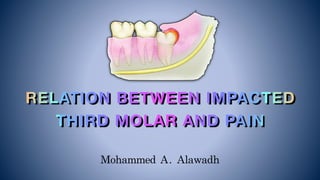
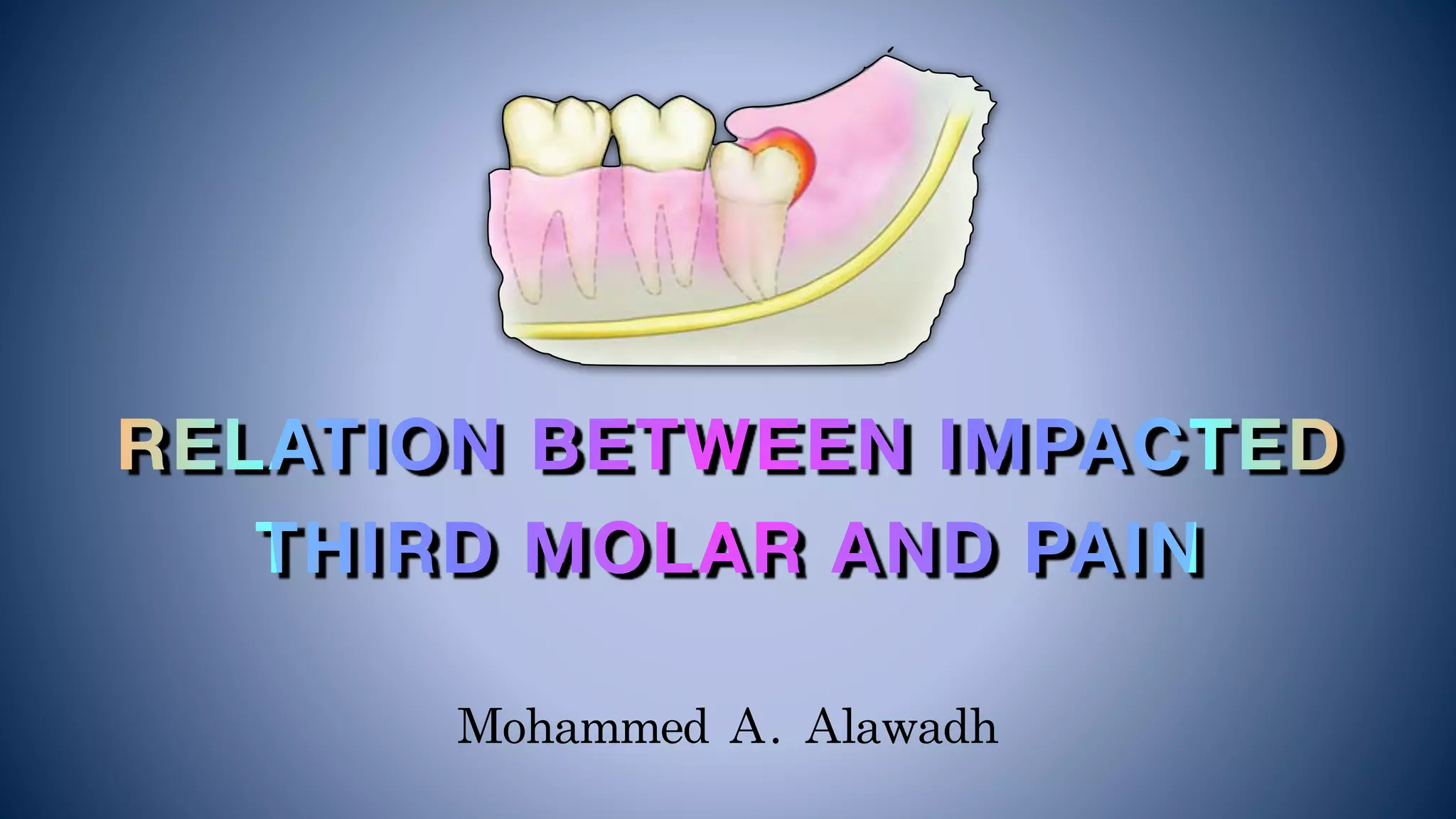
RELATION BETWEEN IMPACTED
THIRD MOLAR AND PAIN 
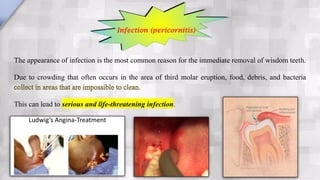
The appearance of infection is the most common reason for the immediate removal of wisdom teeth.
Due to crowding that often occurs in the area of third molar eruption, food, debris, and bacteria
collect in areas that are impossible to clean.
This can lead to serious and life-threatening infection.
Infection (pericornitis)
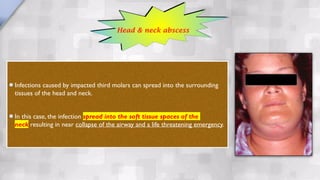
Infections caused by impacted third molars can spread into the surrounding
tissues of the head and neck.
In this case, the infection spread into the soft tissue spaces of the
neck resulting in near collapse of the airway and a life threatening emergency.
Head & neck abscess
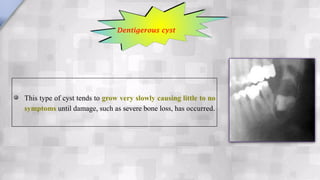
This type of cyst tends to grow very slowly causing little to no
symptoms until damage, such as severe bone loss, has occurred.
Dentigerous cyst
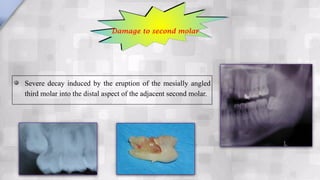
Severe decay induced by the eruption of the mesially angled
third molar into the distal aspect of the adjacent second molar.
Damage to second molar
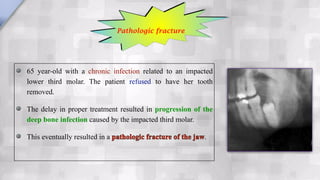
65 year-old with a chronic infection related to an impacted
lower third molar. The patient refused to have her tooth
removed.
The delay in proper treatment resulted in progression of the
deep bone infection caused by the impacted third molar.
This eventually resulted in a pathologic fracture of the jaw.
Pathologic fracture
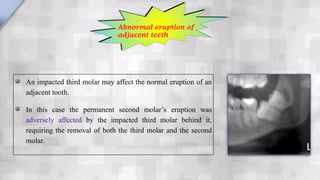
An impacted third molar may affect the normal eruption of an
adjacent tooth.
In this case the permanent second molar’s eruption was
adversely affected by the impacted third molar behind it,
requiring the removal of both the third molar and the second
molar.
Abnormal eruption of
adjacent teeth
REFERENCES:
Journal of Oral and Maxillofacial Surgery 60(6):613-617,2002
Blakey GH, et al. (1996). Clinical/biological outcomes of treatment for
pericoronitis. ncbi.nlm.nih.gov/pubmed/8859232
End

Impacted Wisdom tooth/Third Molar Complications

  • 1.
  • 2.
    The appearance ofinfection is the most common reason for the immediate removal of wisdom teeth. Due to crowding that often occurs in the area of third molar eruption, food, debris, and bacteria collect in areas that are impossible to clean. This can lead to serious and life-threatening infection. Infection (pericornitis)
  • 3.
    Infections caused byimpacted third molars can spread into the surrounding tissues of the head and neck. In this case, the infection spread into the soft tissue spaces of the neck resulting in near collapse of the airway and a life threatening emergency. Head & neck abscess
  • 4.
    This type ofcyst tends to grow very slowly causing little to no symptoms until damage, such as severe bone loss, has occurred. Dentigerous cyst
  • 5.
    Severe decay inducedby the eruption of the mesially angled third molar into the distal aspect of the adjacent second molar. Damage to second molar
  • 6.
    65 year-old witha chronic infection related to an impacted lower third molar. The patient refused to have her tooth removed. The delay in proper treatment resulted in progression of the deep bone infection caused by the impacted third molar. This eventually resulted in a pathologic fracture of the jaw. Pathologic fracture
  • 7.
    An impacted thirdmolar may affect the normal eruption of an adjacent tooth. In this case the permanent second molar’s eruption was adversely affected by the impacted third molar behind it, requiring the removal of both the third molar and the second molar. Abnormal eruption of adjacent teeth
  • 8.
    REFERENCES: Journal of Oraland Maxillofacial Surgery 60(6):613-617,2002 Blakey GH, et al. (1996). Clinical/biological outcomes of treatment for pericoronitis. ncbi.nlm.nih.gov/pubmed/8859232
  • 9.