PRESENTATION
TOPIC – Syncephalastrum
Submitted to - Dr. Divya Singh
Submitted by – Ashish Kumar choudhari
Msc. Microbiology 1sem
CONTENT
• Introduction
• Classification
• Features
• Life cycle and reproduction
• Disease
• Culture
• Cherectarstic
INTRODUCTION
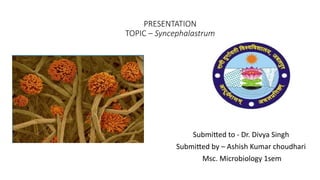
Syncephalastrum is a filamentous fungus that is commonly isolated
from soil and animal feces particularly in tropical and subtropical
areas.
• It is a heterothallic fungus and requires a mating strain to produce
zygospores.
• It is very rarely associated with human disease Cutaneous infection
and onychomycosis.
• The genus Syncephalastrum contains a single species
Syncephalastrum recemosusum.
Classification
• Kingdom – Myceteae
• Division – Amastigomycota
• Sub- division – Zygomycotena
• Class – Zygomycetes
• Order – Mucorales
• Family – Syncephalastraceae
• Genus – Syncephalastrum
FEATURES
1. Taxonomy: Belongs to the Mucoraceae family within the
Zygomycetes class of fungi.
2. Species: The most notable species is Syncephalastrum
racemosum.
3. Habitat: Found in soil, decaying organic matter, and sometimes in
indoor environments.
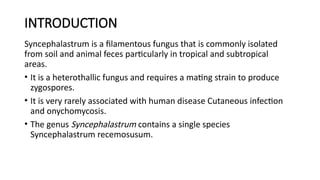
4. Morphology: Characterized by branched hyphae and a distinctive
conidiophore structure that bears conidia (asexual spores).
5. Diagnosis: Identified through culture and microscopic
examination of specimens.
LIFE CYCLE AND REPRODUCTION
Asexual reproduction
Syncephalastrum produces an abundant aerial mycelium –
Sporangiophores.
Sporangiophores terminate in swollen vesicles
Merosporangia (finger-shaped, tubular sporangia) develop from
swollen vesicle.
Each merosporangium contains a single row of 3-18
merosporangiospores.
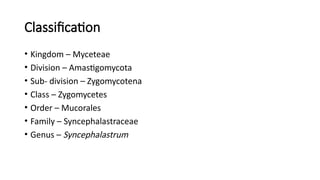
• Merosporangiospores are one celled and spherical to cylindrical in
shape
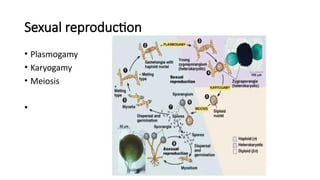
Sexual reproduction
• Plasmogamy
• Karyogamy
• Meiosis
•
Disease
Infection Type: Syncephalastrum is considered an opportunistic pathogen,
which means it typically affects individuals with weakened immune
systems, such as those with diabetes, cancer, or undergoing
immunosuppressive therapies.
1. Symptoms: Infections can manifest in various ways, depending on the
site of infection. Common symptoms may include:
2. Fever
3. Pain or swelling in the affected area
4. Respiratory issues if lungs are involved
• Sinus symptoms if the sinuses are affected
Culture
Growth Medium: It is typically cultured on Sabouraud Dextrose
Agar (SDA), which supports fungal growth.
Temperature: Optimal growth occurs at around 25-30°C.
• Colony Morphology: Colonies are generally white to light brown
initially and may darken to gray or black as they mature.
Cherectarstic
Sporangia Structure: This fungus has globe- or barrel-shaped sporangia
that produce spores.
Hyphal Structure: The hyphae are non-septate (without partitions),
which distinguishes it from other fungi like Aspergillus.
Asexual Reproduction: It primarily reproduces asexually through
sporangiospores.
1. Pathogenicity: While generally considered non-pathogenic, it can
cause rare infections in immunocompromised patients.
Thankyou

Syncephalastrum (Mycology) presentation.pptx

  • 1.
    PRESENTATION TOPIC – Syncephalastrum Submittedto - Dr. Divya Singh Submitted by – Ashish Kumar choudhari Msc. Microbiology 1sem
  • 2.
    CONTENT • Introduction • Classification •Features • Life cycle and reproduction • Disease • Culture • Cherectarstic
  • 3.
    INTRODUCTION Syncephalastrum is afilamentous fungus that is commonly isolated from soil and animal feces particularly in tropical and subtropical areas. • It is a heterothallic fungus and requires a mating strain to produce zygospores. • It is very rarely associated with human disease Cutaneous infection and onychomycosis. • The genus Syncephalastrum contains a single species Syncephalastrum recemosusum.
  • 4.
    Classification • Kingdom –Myceteae • Division – Amastigomycota • Sub- division – Zygomycotena • Class – Zygomycetes • Order – Mucorales • Family – Syncephalastraceae • Genus – Syncephalastrum
  • 5.
    FEATURES 1. Taxonomy: Belongsto the Mucoraceae family within the Zygomycetes class of fungi. 2. Species: The most notable species is Syncephalastrum racemosum. 3. Habitat: Found in soil, decaying organic matter, and sometimes in indoor environments. 4. Morphology: Characterized by branched hyphae and a distinctive conidiophore structure that bears conidia (asexual spores). 5. Diagnosis: Identified through culture and microscopic examination of specimens.
  • 6.
    LIFE CYCLE ANDREPRODUCTION Asexual reproduction Syncephalastrum produces an abundant aerial mycelium – Sporangiophores. Sporangiophores terminate in swollen vesicles Merosporangia (finger-shaped, tubular sporangia) develop from swollen vesicle. Each merosporangium contains a single row of 3-18 merosporangiospores. • Merosporangiospores are one celled and spherical to cylindrical in shape
  • 7.
    Sexual reproduction • Plasmogamy •Karyogamy • Meiosis •
  • 8.
    Disease Infection Type: Syncephalastrumis considered an opportunistic pathogen, which means it typically affects individuals with weakened immune systems, such as those with diabetes, cancer, or undergoing immunosuppressive therapies. 1. Symptoms: Infections can manifest in various ways, depending on the site of infection. Common symptoms may include: 2. Fever 3. Pain or swelling in the affected area 4. Respiratory issues if lungs are involved • Sinus symptoms if the sinuses are affected
  • 9.
    Culture Growth Medium: Itis typically cultured on Sabouraud Dextrose Agar (SDA), which supports fungal growth. Temperature: Optimal growth occurs at around 25-30°C. • Colony Morphology: Colonies are generally white to light brown initially and may darken to gray or black as they mature.
  • 10.
    Cherectarstic Sporangia Structure: Thisfungus has globe- or barrel-shaped sporangia that produce spores. Hyphal Structure: The hyphae are non-septate (without partitions), which distinguishes it from other fungi like Aspergillus. Asexual Reproduction: It primarily reproduces asexually through sporangiospores. 1. Pathogenicity: While generally considered non-pathogenic, it can cause rare infections in immunocompromised patients.
  • 11.