Downloaded 210 times


































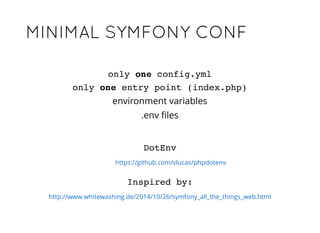
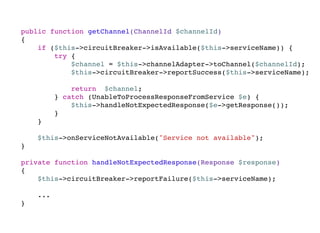
![require_once __DIR__ . "/../vendor/autoload.php";
require_once __DIR__ . "/../app/AppKernel.php";
use SymfonyComponentHttpFoundationRequest;
use DotenvDotenv;
//load environment variables. It doesn't overwrite existing ones
$dotenv = new Dotenv(__DIR__ . '/../');
$dotenv->load();
$request = Request::createFromGlobals();
$kernel = new AppKernel(
$_SERVER['SYMFONY_ENV'],
(bool)$_SERVER['SYMFONY_DEBUG']
);
$response = $kernel->handle($request);
$response->send();
$kernel->terminate($request, $response);
Only one index.php](https://image.slidesharecdn.com/sfmicroversionefinale-151008234251-lva1-app6891/85/Symfony-in-microservice-architecture-54-320.jpg)






![class ChannelTranslator
{
public function toChannelFromResponse(Response $response)
{
if (200 === $response->getStatusCode()) {
$contentArray = $this->validateAndGetResponseBodyArray($response);
return new Channel(new ChannelId($contentArray["id"]), $contentArray["isOpen"]);
}
....
}
private function validateAndGetResponseBodyArray(Response $response)
{
$contentArray = $response->getBody();
if (isset($contentArray["id"]) && isset($contentArray["isOpen"])) {
return $contentArray;
}
....
}
}
Only what we need
{
"id": "456t-889-4444",
"isOpen": false,
"createAt": "26/05/2015",
"publisherId": "11111-5555-3333-5555",
"name": "a channel name",
"spot": "a channel spot",
"messagges_count": 450
...
...
}
The original response](https://image.slidesharecdn.com/sfmicroversionefinale-151008234251-lva1-app6891/85/Symfony-in-microservice-architecture-71-320.jpg)


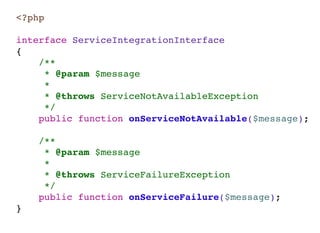
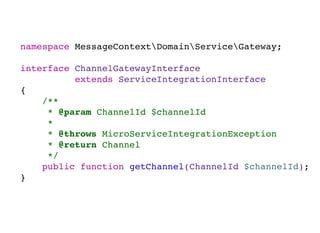
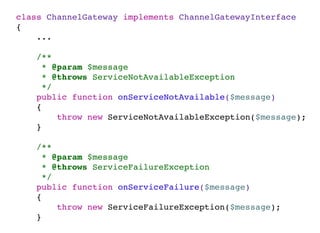



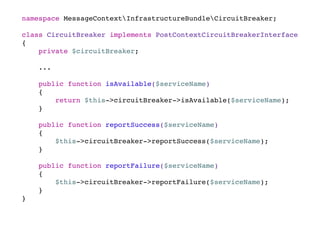






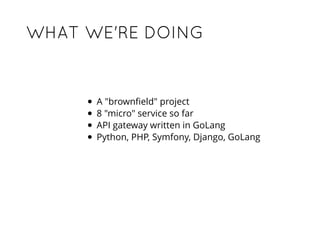
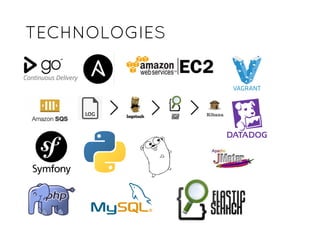
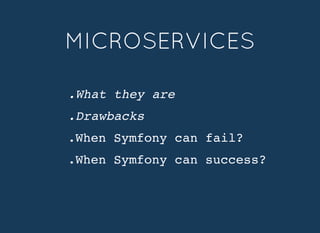
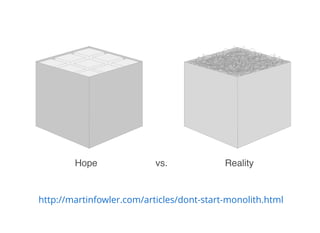
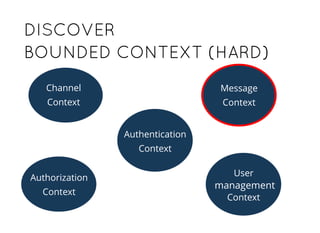
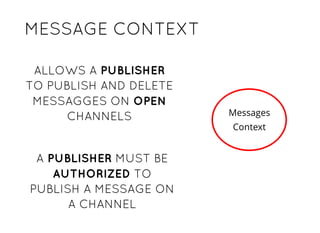
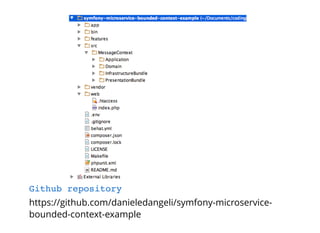
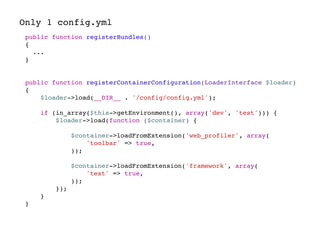
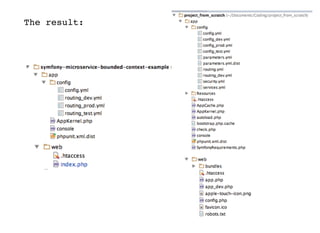
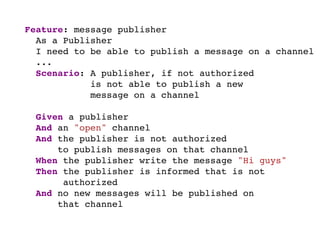
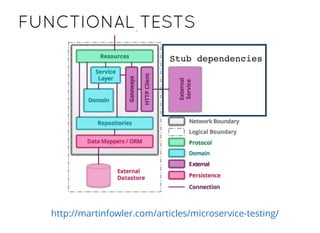
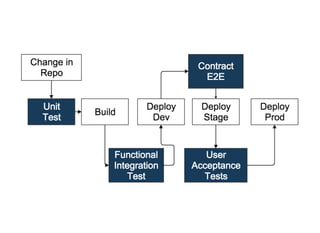
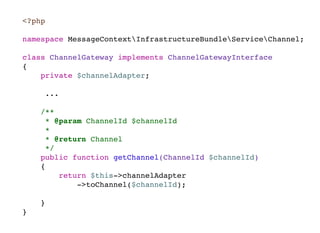
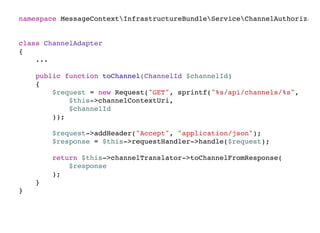
Under certain conditions, Symfony can be used successfully in a microservices architecture. Symfony works best when services start large and decompose over time into bounded contexts, rather than starting with many small services. Key considerations include using minimal Symfony configurations, domain-driven design principles to map services to contexts, handling failures through circuit breakers, and focusing on behavior-driven development and integration testing between services. While Symfony introduces more complexity than micro frameworks, these strategies can help address issues of over-decomposition when applying it to microservices.


