Sustain Your Community | Sustainable Community Development |
A project funded by the Ontario Trillium Foundation |
Delivered by EnviroCentre in collaboration with various community partners
| Evaluated by the Social Planning Council of Ottawa
SUSTAIN
LOWERTOWN
The
evaluation
examines outcomes,
aspects of the
implementation process, the
measurable improvements
with respect to the desired
outcomes and lessons
learned.
1
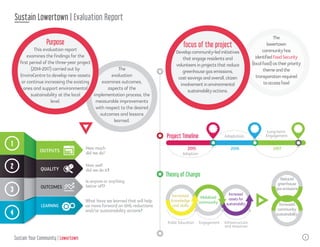
focus of the project
Developcommunity-ledinitiatives
thatengageresidentsand
volunteersinprojectsthatreduce
greenhousegasemissions,
cost-savingsandoverall,citizen
involvementinenvironmental
sustainabilityactions.
The
lowertown
communityhas
identifiedFoodSecurity
(localfood)astheirpriority
themeandthe
transporationrequired
toaccessfood
How much
did we do?
Increased
knowledge
and skills
Purpose
This evaluation report
examines the findings for the
first period of the three-year project
(2014-2017) carried out by
EnviroCentre to develop new assets
or continue increasing the existing
ones and support environmental
sustainability at the local
level.
Mobilized
community
Increased
assetsfor
sustainability
Reduced
greenhouse
gasemissions
How well
did we do it?
Is anyone or anything
better off?
What have we learned that will help
us move forward on GHG reductions
and/or sustainability actions?
Increased
community
sustainability
2015 2016 2017
Project Timeline
Theory of Change
Adaptation
Long-term
Engagement
Adoption
Public Education Engagement Infrastructure
and resources
OUTPUTS
QUALITY
LEARNING
OUTCOMES
1
2
3
4
Sustain Your Community | Lowertown
Sustain Lowertown | Evaluation Report
2Sustain Your Community | Lowertown
Sustain Lowertown | Theme: Food Security
QUALITY
LEARNINGOUTCOMES
1
+20
2
3 4
How much did we do?
#
workshops
and activities
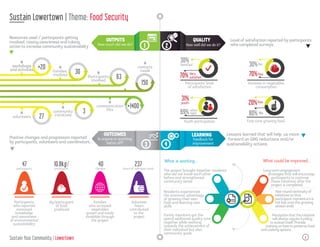
Level of satisfaction reported by participants
who completed surveys.
What is working... What could be improved...
participants
30%
Satisfied
70% Very
satisfied
#
Families
involved 30
3
27
#
Participants
involved
#
contacts
made
63
Howwelldidwedoit?
OUTPUTS
Isanyoneoranything
betteroff?
Feedbackfor
improvement
150
#
communication
hits#
community
initiatives#
volunteers
+1400
Participants’ level
of satisfaction
47
families
40 237
participant
10.8kg/
Participants
who reported
increased
knowledge
and awareness
of environmental
sustainability
Kg/participant
of food
produced
Families
who accessed
vegetables
grown and made
available through
the project
30%No
70%Yes
Increase in vegetables
consumption
20%Yes
80% No
First time growing food
31%
youth
69% other
ages
Youth participation
Resources used / participants getting
involved, raising awareness and taking
action to increase community sustainability
Positive changes and progression reported
by participants, volunteers and coordinators...
Lessons learned that will help us move
forward on GHG reductions and/or
sustainability actions
Residents experienced
the economic advantage
of growing their own
food and learning new
skills
Family members got the
spend additional quality time
together while working
towards the achievement of
their individual but also
community goals
Yearroundcontinuityof
initiativessothat
participantmomentumis
notlostoncethegrowing
seasonends
The project brought together residents
who did not know each other
before and strengthened
community sense
Longtermengagement
strategiesthatwillencourage
participantstocontinue
theseinitiativesafterthe
projectiscompleted
Perceptionthattheinitiative
willalwaysrequirefunding
tosustainitself.Provide
trainingonhowtopreservefood
andcookingoptions
hours of volunteer work
Volunteer
hours
contributed
to the
project

SustainC1_Lowertown_shortversion

  • 1.
    Sustain Your Community| Sustainable Community Development | A project funded by the Ontario Trillium Foundation | Delivered by EnviroCentre in collaboration with various community partners | Evaluated by the Social Planning Council of Ottawa SUSTAIN LOWERTOWN
  • 2.
    The evaluation examines outcomes, aspects ofthe implementation process, the measurable improvements with respect to the desired outcomes and lessons learned. 1 focus of the project Developcommunity-ledinitiatives thatengageresidentsand volunteersinprojectsthatreduce greenhousegasemissions, cost-savingsandoverall,citizen involvementinenvironmental sustainabilityactions. The lowertown communityhas identifiedFoodSecurity (localfood)astheirpriority themeandthe transporationrequired toaccessfood How much did we do? Increased knowledge and skills Purpose This evaluation report examines the findings for the first period of the three-year project (2014-2017) carried out by EnviroCentre to develop new assets or continue increasing the existing ones and support environmental sustainability at the local level. Mobilized community Increased assetsfor sustainability Reduced greenhouse gasemissions How well did we do it? Is anyone or anything better off? What have we learned that will help us move forward on GHG reductions and/or sustainability actions? Increased community sustainability 2015 2016 2017 Project Timeline Theory of Change Adaptation Long-term Engagement Adoption Public Education Engagement Infrastructure and resources OUTPUTS QUALITY LEARNING OUTCOMES 1 2 3 4 Sustain Your Community | Lowertown Sustain Lowertown | Evaluation Report
  • 3.
    2Sustain Your Community| Lowertown Sustain Lowertown | Theme: Food Security QUALITY LEARNINGOUTCOMES 1 +20 2 3 4 How much did we do? # workshops and activities Level of satisfaction reported by participants who completed surveys. What is working... What could be improved... participants 30% Satisfied 70% Very satisfied # Families involved 30 3 27 # Participants involved # contacts made 63 Howwelldidwedoit? OUTPUTS Isanyoneoranything betteroff? Feedbackfor improvement 150 # communication hits# community initiatives# volunteers +1400 Participants’ level of satisfaction 47 families 40 237 participant 10.8kg/ Participants who reported increased knowledge and awareness of environmental sustainability Kg/participant of food produced Families who accessed vegetables grown and made available through the project 30%No 70%Yes Increase in vegetables consumption 20%Yes 80% No First time growing food 31% youth 69% other ages Youth participation Resources used / participants getting involved, raising awareness and taking action to increase community sustainability Positive changes and progression reported by participants, volunteers and coordinators... Lessons learned that will help us move forward on GHG reductions and/or sustainability actions Residents experienced the economic advantage of growing their own food and learning new skills Family members got the spend additional quality time together while working towards the achievement of their individual but also community goals Yearroundcontinuityof initiativessothat participantmomentumis notlostoncethegrowing seasonends The project brought together residents who did not know each other before and strengthened community sense Longtermengagement strategiesthatwillencourage participantstocontinue theseinitiativesafterthe projectiscompleted Perceptionthattheinitiative willalwaysrequirefunding tosustainitself.Provide trainingonhowtopreservefood andcookingoptions hours of volunteer work Volunteer hours contributed to the project