Supply Chain Development
Facilitator’s Training Day
Sustainable Value Chain Analysis
             SVCA
   A Business Tool for the NIRDP Supply
      Chain Development Measure?
What is Sustainable
Value Chain Analysis?

• Defines value creation
• Identifies value adding activities in the chain
• Assesses scope to behave collaboratively and
  create competitive advantage
• Analyses environmental impact along the
  chain
• Evaluates ability to create, realise and
  distribute value effectively along the chain.
What’s different about
SVCA?
SVCA sits above traditional SCD/ LEAN/ Six Sigma/
VSM in that;

• It views the complete supply chain and the
  product lifecycle as a ‘connected whole’
• It focuses on sustainable competitiveness and
  resilience
• It manages environmental impact
• It promotes capacity building, collaboration and
  innovation.
What can SVCA achieve ?

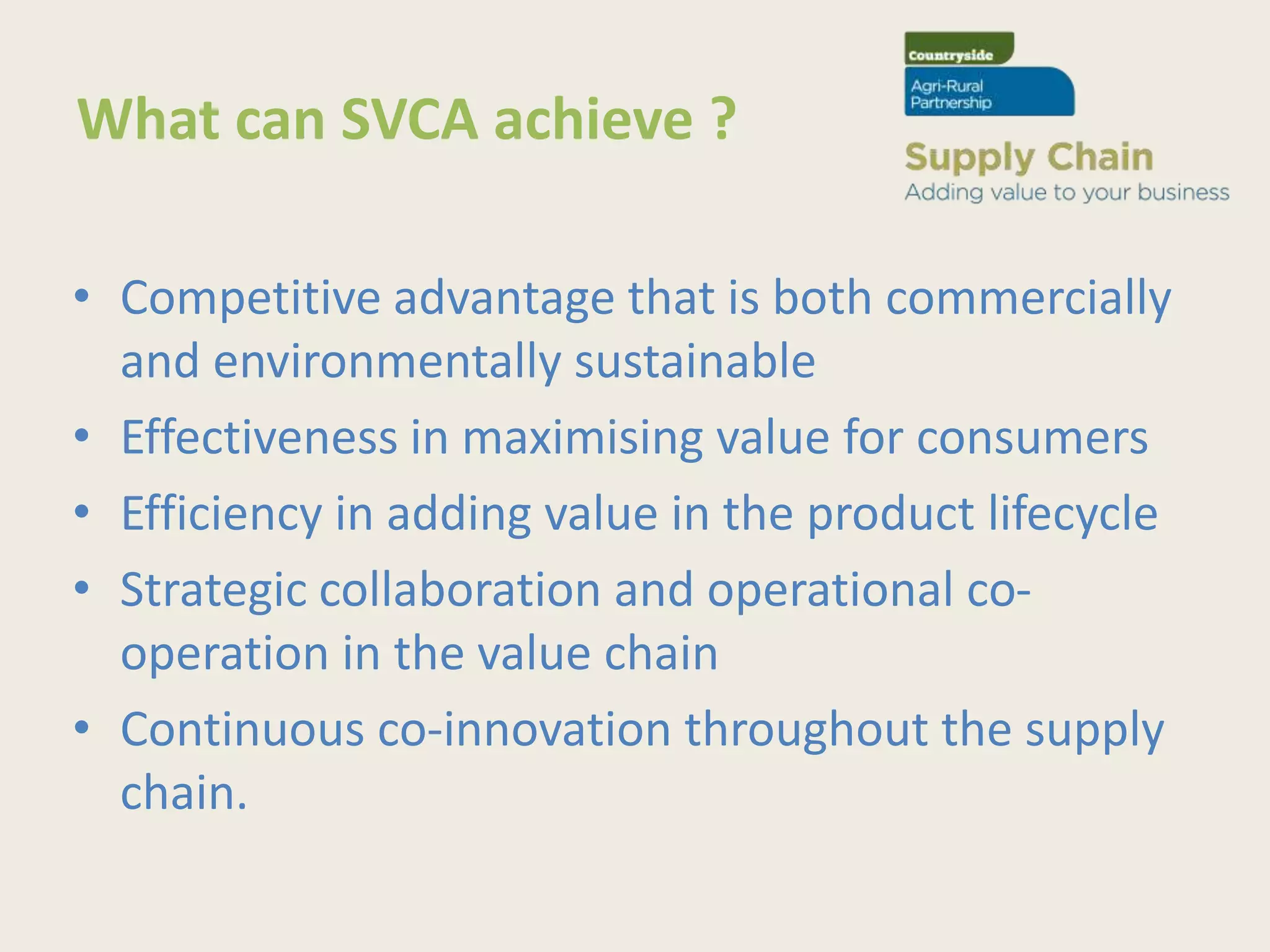
• Competitive advantage that is both commercially
  and environmentally sustainable
• Effectiveness in maximising value for consumers
• Efficiency in adding value in the product lifecycle
• Strategic collaboration and operational co-
  operation in the value chain
• Continuous co-innovation throughout the supply
  chain.
Key concepts…

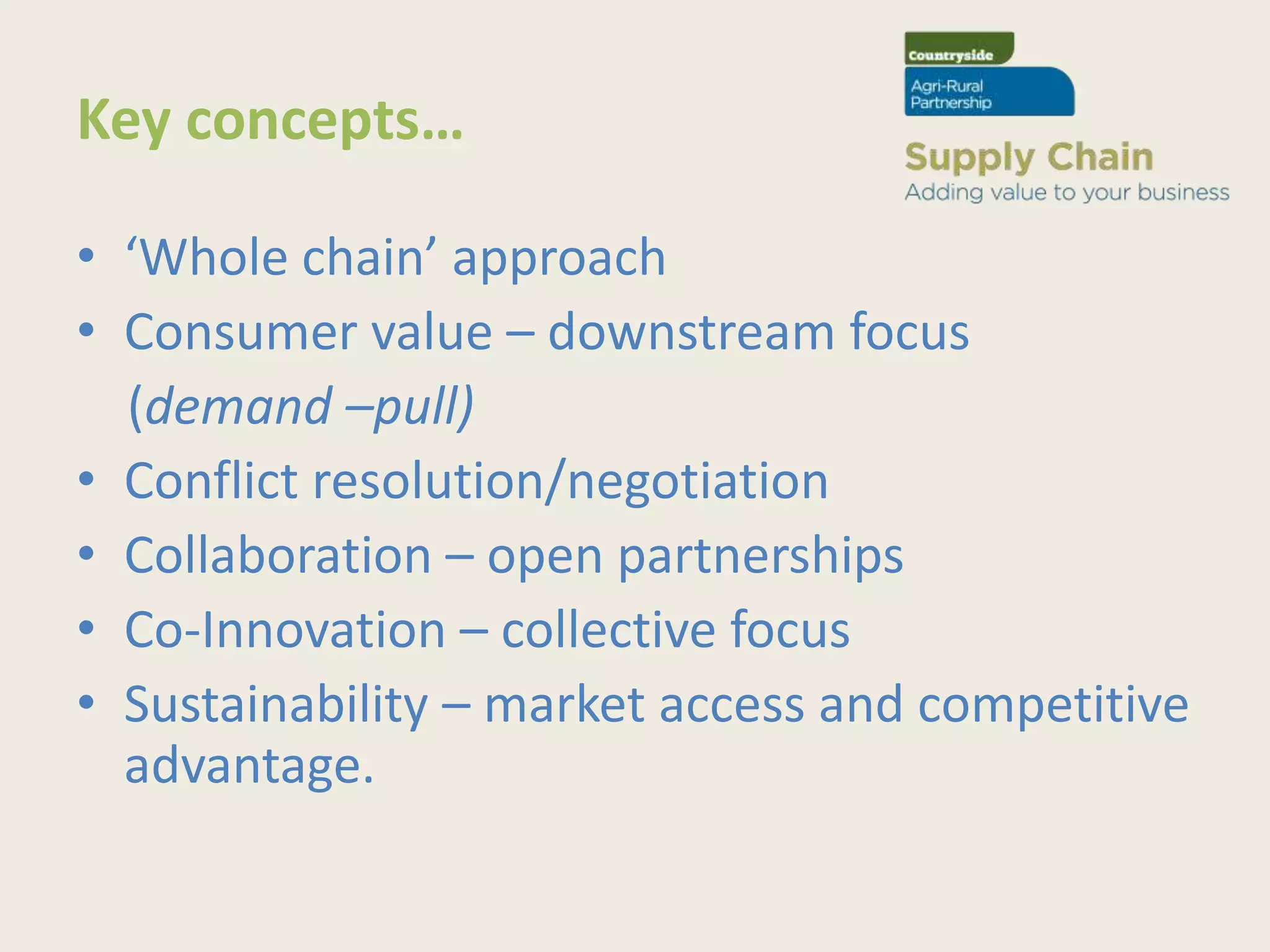
• ‘Whole chain’ approach
• Consumer value – downstream focus
  (demand –pull)
• Conflict resolution/negotiation
• Collaboration – open partnerships
• Co-Innovation – collective focus
• Sustainability – market access and competitive
  advantage.
5 key themes…

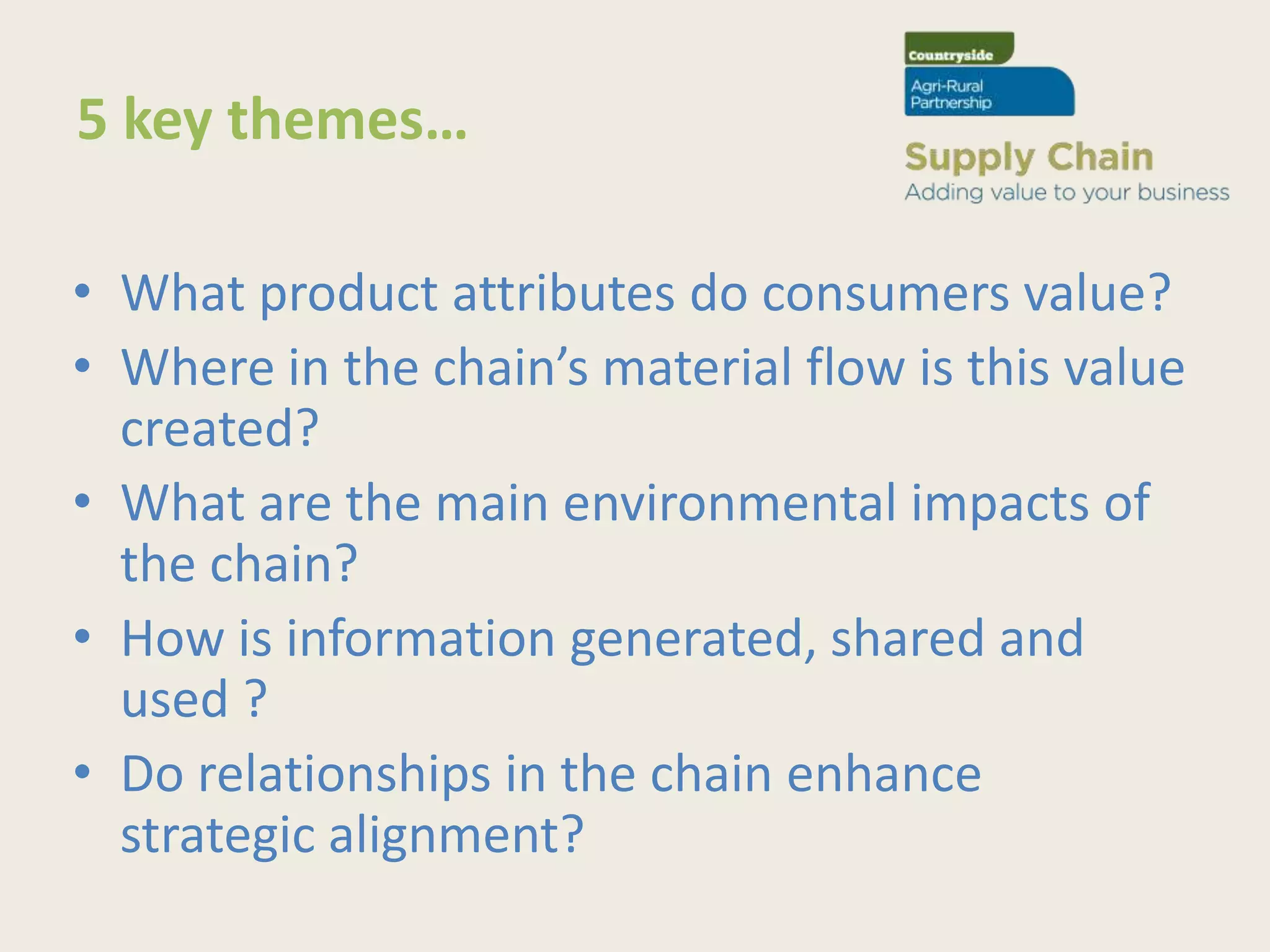
• What product attributes do consumers value?
• Where in the chain’s material flow is this value
  created?
• What are the main environmental impacts of
  the chain?
• How is information generated, shared and
  used ?
• Do relationships in the chain enhance
  strategic alignment?
7 stage process…

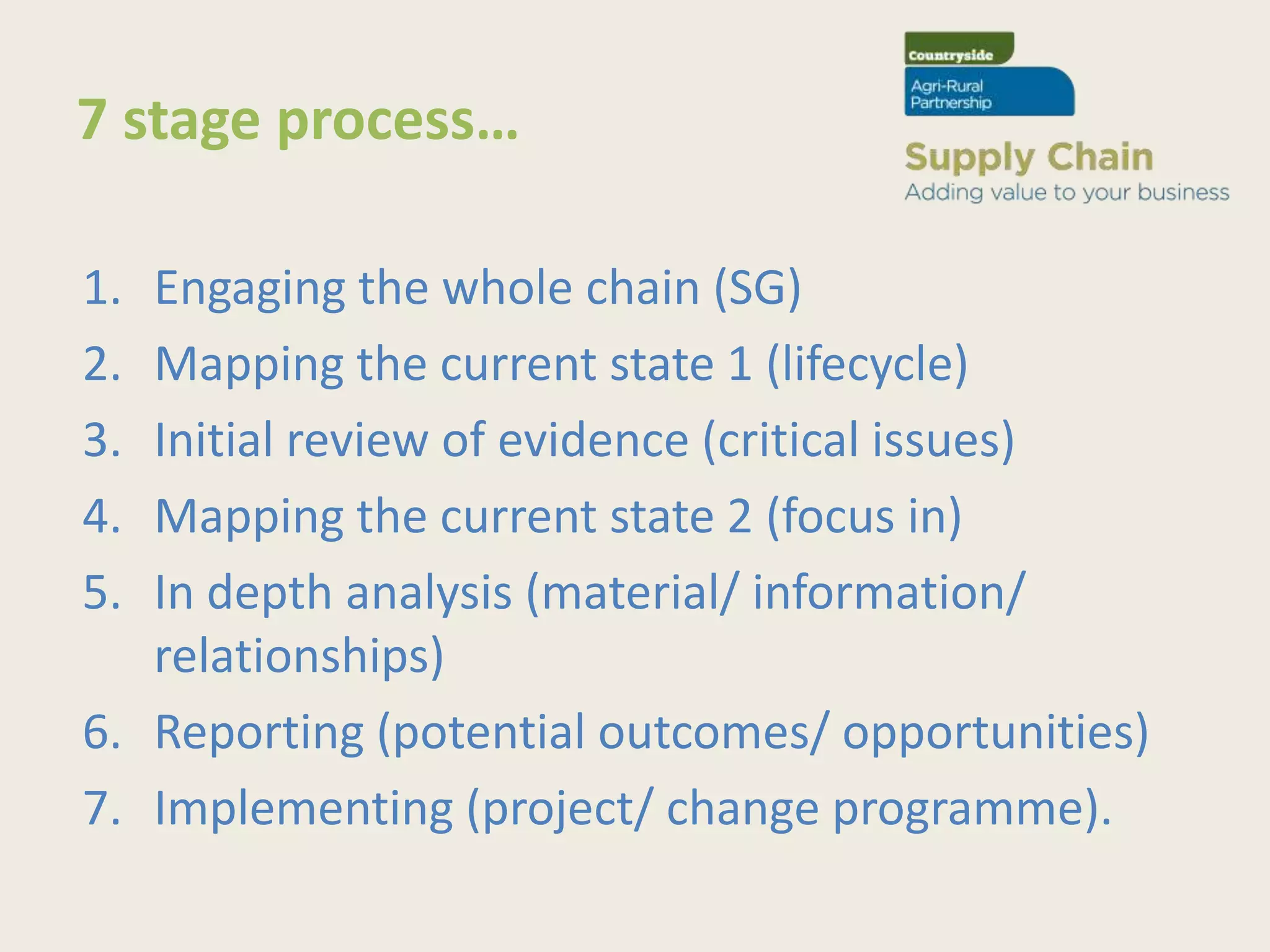
1. Engaging the whole chain (SG)
2. Mapping the current state 1 (lifecycle)
3. Initial review of evidence (critical issues)
4. Mapping the current state 2 (focus in)
5. In depth analysis (material/ information/
   relationships)
6. Reporting (potential outcomes/ opportunities)
7. Implementing (project/ change programme).
Thoughts…

• How can this work in the NI context?
• Where might be a good place to start?
• What are the incentives for this type of
  approach?
• What are the barriers to this type of
  approach?
• Do we try to do something with this?

Sustainable Value Chain Analysis

  • 1.
  • 2.
    Sustainable Value ChainAnalysis SVCA A Business Tool for the NIRDP Supply Chain Development Measure?
  • 3.
    What is Sustainable ValueChain Analysis? • Defines value creation • Identifies value adding activities in the chain • Assesses scope to behave collaboratively and create competitive advantage • Analyses environmental impact along the chain • Evaluates ability to create, realise and distribute value effectively along the chain.
  • 4.
    What’s different about SVCA? SVCAsits above traditional SCD/ LEAN/ Six Sigma/ VSM in that; • It views the complete supply chain and the product lifecycle as a ‘connected whole’ • It focuses on sustainable competitiveness and resilience • It manages environmental impact • It promotes capacity building, collaboration and innovation.
  • 5.
    What can SVCAachieve ? • Competitive advantage that is both commercially and environmentally sustainable • Effectiveness in maximising value for consumers • Efficiency in adding value in the product lifecycle • Strategic collaboration and operational co- operation in the value chain • Continuous co-innovation throughout the supply chain.
  • 6.
    Key concepts… • ‘Wholechain’ approach • Consumer value – downstream focus (demand –pull) • Conflict resolution/negotiation • Collaboration – open partnerships • Co-Innovation – collective focus • Sustainability – market access and competitive advantage.
  • 7.
    5 key themes… •What product attributes do consumers value? • Where in the chain’s material flow is this value created? • What are the main environmental impacts of the chain? • How is information generated, shared and used ? • Do relationships in the chain enhance strategic alignment?
  • 8.
    7 stage process… 1.Engaging the whole chain (SG) 2. Mapping the current state 1 (lifecycle) 3. Initial review of evidence (critical issues) 4. Mapping the current state 2 (focus in) 5. In depth analysis (material/ information/ relationships) 6. Reporting (potential outcomes/ opportunities) 7. Implementing (project/ change programme).
  • 9.
    Thoughts… • How canthis work in the NI context? • Where might be a good place to start? • What are the incentives for this type of approach? • What are the barriers to this type of approach? • Do we try to do something with this?

Editor's Notes

  • #2 Introduce myselfAs a newcomer I don’t know that muchJust like to take this opportunity to ge t to know you all betterOne way to do that is is to engage with you on what we could do to accelerate the progress of SCD GroupsWhat are the main issues with SCD?List on flip chart.Explore – divide into 3 groups to look at issuesProvide feedback to the groupIntroduce SCVA
  • #3 I want to take a look at SCVA just to encourage another perspectiveHow many have come across this ? Does anyone have experience?I would like you to bear in mind the NI context as we look at this. It is based on an approach used in Australia for lambs but it can be applied in any sector, small or large, local or international.
  • #4 Value creation in terms of the product attributes which affect consumerbehaviour (willingness to pay and frequency of purchase)Identifies which activities through out the whole supply chain add this value, from inputs for agricultural production to consumption/disposal of the final productAssesses the scope for the chain to act collaboratively to create competitive advantage through both product and process innovation and improved environmental managementCompares the environmental impact of different activities along the chainEvaluates the preparedness of chain to create, realise and distribute value effectively
  • #7 Whole chain approach. SVCA examines the whole chain in terms of product and process, looking at the connections and interdependencies along the chain and opportunities to strengthen competitiveness and resilience.Consumer value. Supply chains focus upstream on integrating supplier and producer processes; improving efficiency, reducing waste and meeting customer value; value chains focus downstream, on understanding what it is that consumers value, and then delivering it as effectively and efficiently as possible. This requires a shift in the view of the chain – from supply push to demand pull. The essential distinction here is that whilst customer value is critical in order to gain market access, it is the final consumer who ultimately determines where and how much value lies in a product or service.Conflict resolution. There will always be tensions and conflicting interests within any supply chain in any sector. SCVA looks at trying to resolve, balance and even out and these in order to promote open and collaborative relationships s and strengthen competitiveness Collaboration In an effective value chain, firms to do not act in isolation. Collaboration becomes possible when there is a shared vision between the partners; the presence of trust and commitment; compatible structures and processes; open communication, co-operation and opportunities for mutual benefits. When a chain acts in partnership, it develops products and systems which are much harder for competitors to imitate, and therefore which deliver more resilient competitive advantage.Innovation: To remain competitive firms must pursue continuous improvement, in existing processes (marketing, operations management, purchasing and logistics) and the development of products and services that add consumer value. One particularly beneficial outcome of collaboration is ‘collaborative innovation’, or co-innovation. But while co innovation is a powerful option for a value chain, it requires both the foundation of partnership within and between firms and a focus on innovation; this approach often needs to overcome structural, cultural and organisational barriers.Sustainability: There are mounting imperatives for more sustainable production systems. These emerge from consumers, retailers, other stakeholders and national and international regulation including taxes, emissions trading, standards, voluntary incentives and related regulations. These have far reaching commercial and market access implications for all food and drink value chains. Sustainability also offers many chains with a potential source of competitive advantage. The objective of SVCA is to align the allocation of a chain’s resources with consumer preferences and environmental management throughout the chain.
  • #8 What product attributes do consumers value in the product? Where in the chain’s material flow is this value created? Value adding activitiesshould be targeted for investment; whereas necessary but non-value-addingactivities should focus on efficiency and only attract investment for cost reduction.Any unnecessary activities should be eliminated. What are the main environmental impacts of the chain, and through which activities do these impacts arise? What commercial advantage can be gained from reducing these impacts? How is information generated, shared and used, from final consumption/disposal up to primary production and input genetics and back again? Are decisions about what, when and how to produce pulled by the consumer, or distorted by fractured flows? Do the relationships in the chain enhance strategic alignment? How much trust and commitment exists? Do the relationships foster an equitable distribution of value, reflecting where it was created and the risks taken by different chain partners?