
P R E S E N T A T I O N O N
“ C O N C E P T O F G R E E N S U P P L Y C H A I N M A N A G E M E N T
A N D U S E O F I . T I N I T ”
S U B M I T T E D T O : S U B M I T T E D B Y :
D R . A K A N S H A S I N G H I S U R A B H I K A U S H A L
P R O J E C T G U I D E M . I . B ( 4 T H S E M )
School Of Economics
DAVV
Introduction
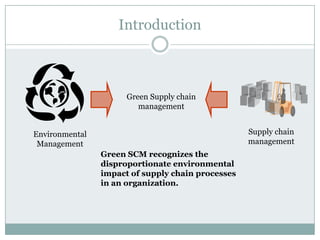
Green Supply chain
management
Environmental
Management
Supply chain
management
Green SCM recognizes the
disproportionate environmental
impact of supply chain processes
in an organization.
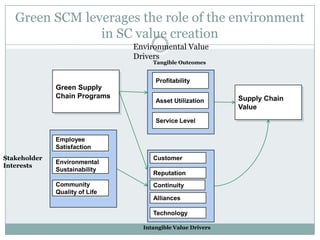
Green SCM leverages the role of the environment
in SC value creation
Employee
Satisfaction
Environmental
Sustainability
Community
Quality of Life
Green Supply
Chain Programs Supply Chain
Value
Profitability
Asset Utilization
Service Level
Customer
Reputation
Continuity
Alliances
Technology
Tangible Outcomes
Intangible Value Drivers
Stakeholder
Interests
Environmental Value
Drivers
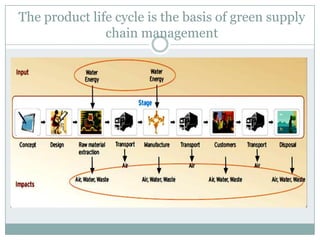
The product life cycle is the basis of green supply
chain management
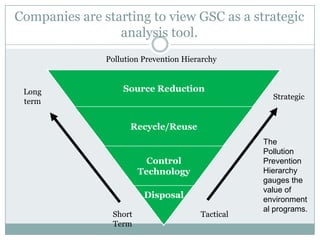
Companies are starting to view GSC as a strategic
analysis tool.
Source Reduction
Recycle/Reuse
Control
Technology
Disposal
Pollution Prevention Hierarchy
Long
term
Short
Term
Strategic
Tactical
The
Pollution
Prevention
Hierarchy
gauges the
value of
environment
al programs.
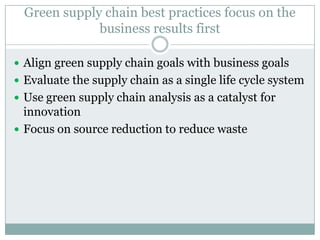
Green supply chain best practices focus on the
business results first
 Align green supply chain goals with business goals
 Evaluate the supply chain as a single life cycle system
 Use green supply chain analysis as a catalyst for
innovation
 Focus on source reduction to reduce waste
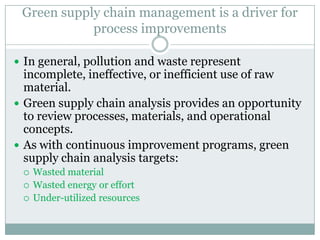
Green supply chain management is a driver for
process improvements
 In general, pollution and waste represent
incomplete, ineffective, or inefficient use of raw
material.
 Green supply chain analysis provides an opportunity
to review processes, materials, and operational
concepts.
 As with continuous improvement programs, green
supply chain analysis targets:
 Wasted material
 Wasted energy or effort
 Under-utilized resources
Use Of Information Technology in
GSCM
IT on Purchasing
 The use of the IT in managing a supply chain purchasing in
the supply chains includes
 The communication with vendors, checking particularly
important for a company catalogues.
 Vendor negotiation has also been streamlined through the use
of the IT.
 This includes the bargaining, services firm or a consulting
operation, the supply chain renegotiation, price and term
agreements.
 The receipt of queries from vendors, providing vendors with
information and the processing of returns and damaged goods
were all handled by the IT.
 The other more popular use of the IT in supply chains is in
order processing applications.
IT on Operation
 One of the most costly aspects of supply chains is the
management of inventory. The research has shown
that the most popular use of the IT in this area is the
communication of stock outs by customers to
vendors
 Production scheduling has traditionally been the
most difficult aspect of SCM. The IT has enabled
firms to minimize the difficulty in their production
scheduling by improving the communication
between vendors, firms and customers.
IT on Logistic:
 The Transportation typically is the highest cost
component in most popular use of the IT in supply
chains is in the management of transport a supply
chain, according to literature review
 The research showed that the monitoring of pickups
at regional distribution centres by carriers is the
most popular application of the IT in this area
IT on Customer Relationships:
 Many management experts argue that, by focusing
on total customer satisfaction, a company can
improve its processes to deliver better service at a
lower cost. Customer-satisfaction driven is often
described as the next step beyond TQM, total quality
ma but to deliver total satisfaction to the customer,
of which management: the objective is not simply to
deliver some abstract definition of quality but to
deliver total satisfaction to the customer, of which
the delivery of quality is only a part.
The green supply chain data framework
 Collect
 Optimize
 Report
Green supply chain efforts need to rise above the
cost center view
 Green supply chain projects need to be clearly defined in
terms of the business value to the organization.
 Clear value will gain senior management support.
 Clear value will help secure buy-in from other organizations
 Environmental programs are viewed as business cost centers.
 Environmental, safety, and health (ESH) resources are often scarce in an
organization.
 ESH offices are targeted early during cost cutting programs.
 ESH offices have difficulty articulating their business value.
 The inability to articulate the value of green supply chain effort in
business terms lowers their profile.
 Many executives have misconceptions of how green supply chain efforts
will impact their operations.
 Without a clear business value proposition, it is difficult to get executive
support for projects
Implementing Green supply chain properly will
drive real business value
 Green supply chain concepts manage environmental
impacts where they occur—ideally before they occur.
 Best practices focus on the business, not social, value that
green supply chain management creates.
 Align green supply chain goals with business goals
 Evaluate the supply chain as a single life cycle system
 Use environmental analysis as a catalyst for innovation
 Focus on source reduction to reduce waste
 Successful implementation requires raising the profile
and perceived value of environmental projects.
 Articulate project value in terms of business value
 Create the project to work within the organizational culture
 Use effective tools (e.g., Green SCOR) to enable project execution
Green supply chain management

Green supply chain management

  • 1.
    P R ES E N T A T I O N O N “ C O N C E P T O F G R E E N S U P P L Y C H A I N M A N A G E M E N T A N D U S E O F I . T I N I T ” S U B M I T T E D T O : S U B M I T T E D B Y : D R . A K A N S H A S I N G H I S U R A B H I K A U S H A L P R O J E C T G U I D E M . I . B ( 4 T H S E M ) School Of Economics DAVV
  • 2.
    Introduction Green Supply chain management Environmental Management Supplychain management Green SCM recognizes the disproportionate environmental impact of supply chain processes in an organization.
  • 3.
    Green SCM leveragesthe role of the environment in SC value creation Employee Satisfaction Environmental Sustainability Community Quality of Life Green Supply Chain Programs Supply Chain Value Profitability Asset Utilization Service Level Customer Reputation Continuity Alliances Technology Tangible Outcomes Intangible Value Drivers Stakeholder Interests Environmental Value Drivers
  • 4.
    The product lifecycle is the basis of green supply chain management
  • 5.
    Companies are startingto view GSC as a strategic analysis tool. Source Reduction Recycle/Reuse Control Technology Disposal Pollution Prevention Hierarchy Long term Short Term Strategic Tactical The Pollution Prevention Hierarchy gauges the value of environment al programs.
  • 6.
    Green supply chainbest practices focus on the business results first  Align green supply chain goals with business goals  Evaluate the supply chain as a single life cycle system  Use green supply chain analysis as a catalyst for innovation  Focus on source reduction to reduce waste
  • 7.
    Green supply chainmanagement is a driver for process improvements  In general, pollution and waste represent incomplete, ineffective, or inefficient use of raw material.  Green supply chain analysis provides an opportunity to review processes, materials, and operational concepts.  As with continuous improvement programs, green supply chain analysis targets:  Wasted material  Wasted energy or effort  Under-utilized resources
  • 8.
    Use Of InformationTechnology in GSCM
  • 9.
    IT on Purchasing The use of the IT in managing a supply chain purchasing in the supply chains includes  The communication with vendors, checking particularly important for a company catalogues.  Vendor negotiation has also been streamlined through the use of the IT.  This includes the bargaining, services firm or a consulting operation, the supply chain renegotiation, price and term agreements.  The receipt of queries from vendors, providing vendors with information and the processing of returns and damaged goods were all handled by the IT.  The other more popular use of the IT in supply chains is in order processing applications.
  • 10.
    IT on Operation One of the most costly aspects of supply chains is the management of inventory. The research has shown that the most popular use of the IT in this area is the communication of stock outs by customers to vendors  Production scheduling has traditionally been the most difficult aspect of SCM. The IT has enabled firms to minimize the difficulty in their production scheduling by improving the communication between vendors, firms and customers.
  • 11.
    IT on Logistic: The Transportation typically is the highest cost component in most popular use of the IT in supply chains is in the management of transport a supply chain, according to literature review  The research showed that the monitoring of pickups at regional distribution centres by carriers is the most popular application of the IT in this area
  • 12.
    IT on CustomerRelationships:  Many management experts argue that, by focusing on total customer satisfaction, a company can improve its processes to deliver better service at a lower cost. Customer-satisfaction driven is often described as the next step beyond TQM, total quality ma but to deliver total satisfaction to the customer, of which management: the objective is not simply to deliver some abstract definition of quality but to deliver total satisfaction to the customer, of which the delivery of quality is only a part.
  • 13.
    The green supplychain data framework  Collect  Optimize  Report
  • 14.
    Green supply chainefforts need to rise above the cost center view  Green supply chain projects need to be clearly defined in terms of the business value to the organization.  Clear value will gain senior management support.  Clear value will help secure buy-in from other organizations  Environmental programs are viewed as business cost centers.  Environmental, safety, and health (ESH) resources are often scarce in an organization.  ESH offices are targeted early during cost cutting programs.  ESH offices have difficulty articulating their business value.  The inability to articulate the value of green supply chain effort in business terms lowers their profile.  Many executives have misconceptions of how green supply chain efforts will impact their operations.  Without a clear business value proposition, it is difficult to get executive support for projects
  • 15.
    Implementing Green supplychain properly will drive real business value  Green supply chain concepts manage environmental impacts where they occur—ideally before they occur.  Best practices focus on the business, not social, value that green supply chain management creates.  Align green supply chain goals with business goals  Evaluate the supply chain as a single life cycle system  Use environmental analysis as a catalyst for innovation  Focus on source reduction to reduce waste  Successful implementation requires raising the profile and perceived value of environmental projects.  Articulate project value in terms of business value  Create the project to work within the organizational culture  Use effective tools (e.g., Green SCOR) to enable project execution