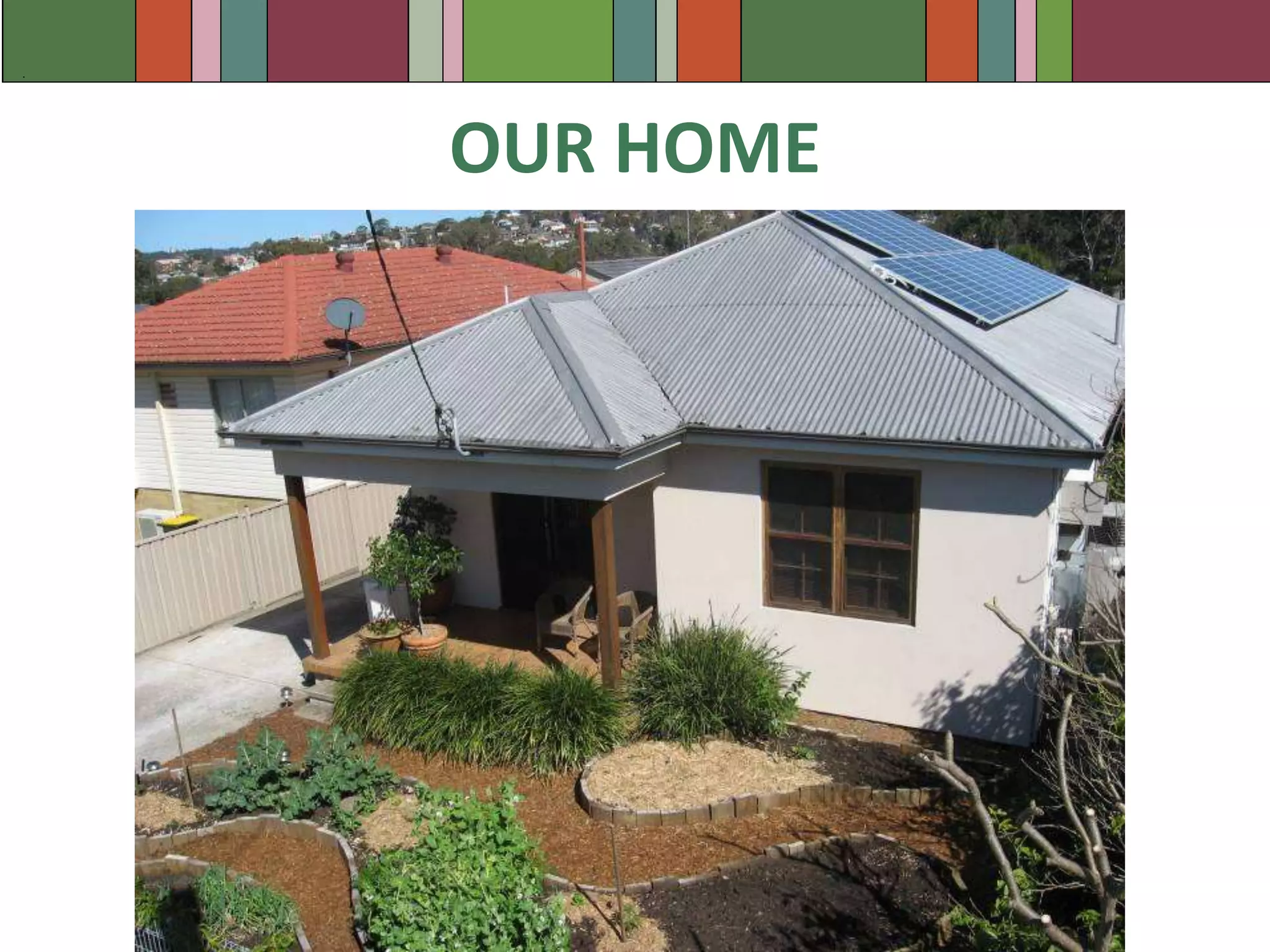
OUR HOME
Before we movedOur previous home had lots of west facing windows (6 out of 13), heated up terribly in summer and then couldn’t be easily cooled when the easterly or southerly cool breezes arrived in the evening.It was also a very cold house in winter, with only one small room (a bedroom) having a north facing window for good access to sun.There had to be a better way of designing a home.So we moved!
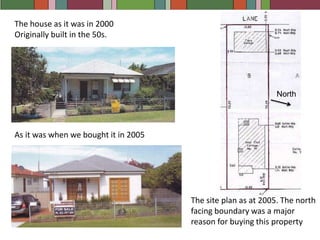
The house as it was in 2000 Originally built in the 50s.North As it was when we bought it in 2005The site plan as at 2005. The north facing boundary was a major reason for buying this property
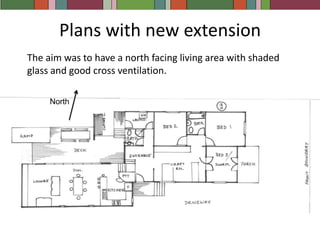
Plans with new extensionThe aim was to have a north facing living area with shaded glass and good cross ventilation. North
The building commences
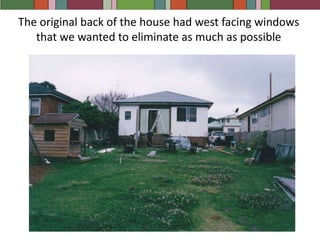
The original back of the house had west facing windows that we wanted to eliminate as much as possible
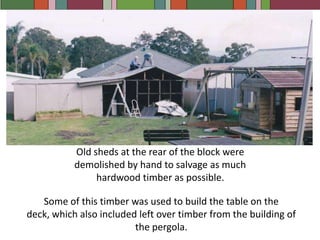
Old sheds at the rear of the block were demolished by hand to salvage as much hardwood timber as possible.Some of this timber was used to build the table on the deck, which also included left over timber from the building of the pergola.
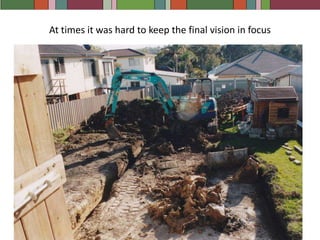
At times it was hard to keep the final vision in focus
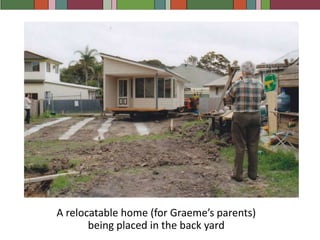
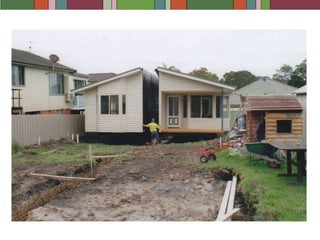
A relocatable home (for Graeme’s parents) being placed in the back yard
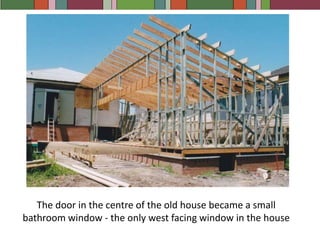
The door in the centre of the old house became a small bathroom window - the only west facing window in the house
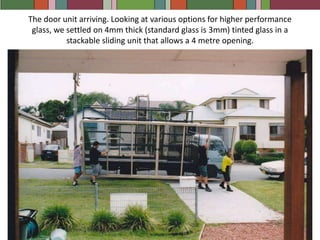
The door unit arriving. Looking at various options for higher performance glass, we settled on 4mm thick (standard glass is 3mm) tinted glass in a stackable sliding unit that allows a 4 metre opening.
High louvre windows vent hot summer air. Solar panels located on the old section of the house4500L Bladder tank under old section of the house
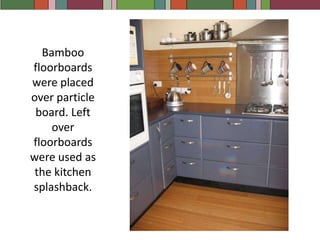
Bamboo floorboards were placed over particle board. Left over floorboards were used as the kitchen splashback.
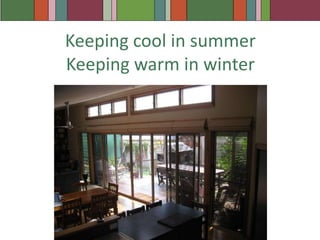
Keeping cool in summerKeeping warm in winter
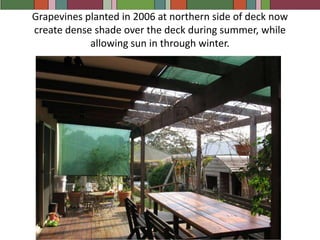
Grapevines planted in 2006 at northern side of deck now create dense shade over the deck during summer, while allowing sun in through winter.
All insulation materials are rated for their performance in restricting heat transfer. The R value is a guide to its performance as an insulator—the higher the R value, the greater the insulating effect.E.g., Recommended R values in Newcastle for bulk ceiling insulation are R3 to R3.5 and for wall insulation, R1.5 to R2.
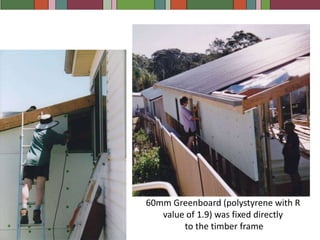
60mm Greenboard (polystyrene with R value of 1.9) was fixed directly to the timber frame
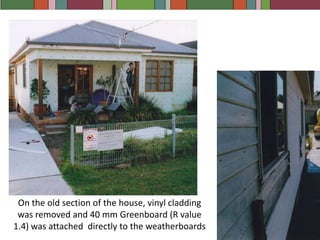
On the old section of the house, vinyl cladding was removed and 40 mm Greenboard (R value 1.4) was attached  directly to the weatherboards
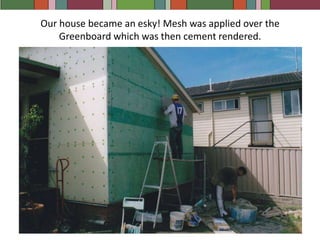
Our house became an esky! Mesh was applied over the Greenboard which was then cement rendered.
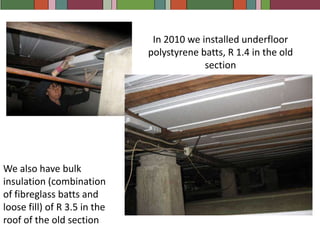
In 2010 we installed underfloor polystyrene batts, R 1.4 in the old sectionWe also have bulk insulation (combination of fibreglassbatts and loose fill) of R 3.5 in the roof of the old section
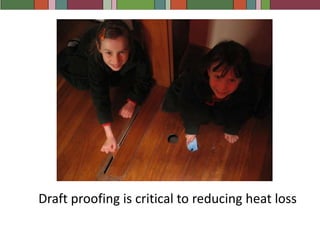
Draft proofing is critical to reducing heat loss
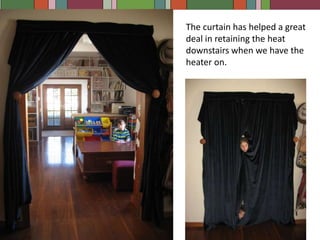
The curtain has helped a great deal in retaining the heat downstairs when we have the heater on.
Electricity Production
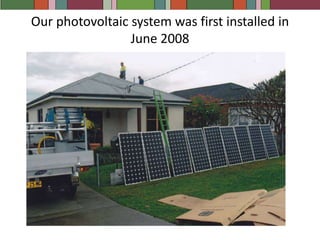
Our photovoltaic system was first installed in June 2008
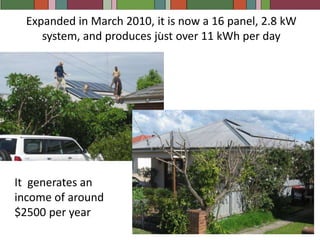
.Expanded in March 2010, it is now a 16 panel, 2.8 kW system, and produces just over 11 kWh per dayIt  generates an income of around $2500 per year
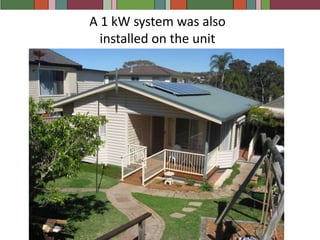
A 1 kW system was also installed on the unit
Energy consumption
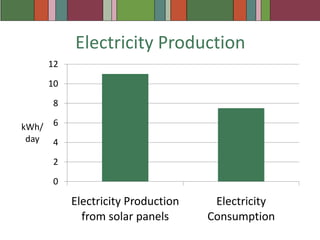
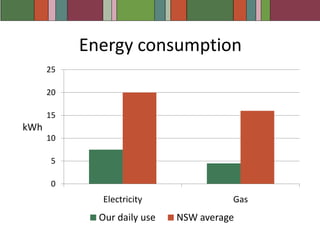
We consume around 7.5 kWh of electricity per day. (The  NSW average is 19-20 per household)Some of the reasons we have lower than average electricity consumption include: Energy efficient appliances – fridge, washing machine, dishwasherOnly 1 fridgeNo air conditionerWe wear warm clothes in winterHeatpump hot water systemEnergy efficient lighting
Only 1 TV (and a daggy old CRT at that!)No Playstation, Wii, Xbox etcVery little on standbyLaptop computers rather than desktopsDon’t use a clothes dryerVery conscious of turning off lights and equipment when not being usedWe insulated our hot water pipes (but we haven’t really noticed any difference)
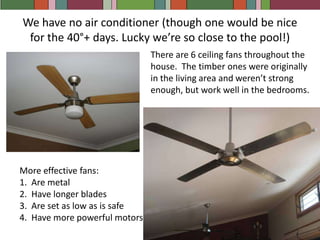
We have no air conditioner (though one would be nice for the 40°+ days. Lucky we’re so close to the pool!)There are 6 ceiling fans throughout the house.  The timber ones were originally in the living area and weren’t strong enough, but work well in the bedrooms.More effective fans:1.  Are metal2.  Have longer blades3.  Are set as low as is safe4.  Have more powerful motors
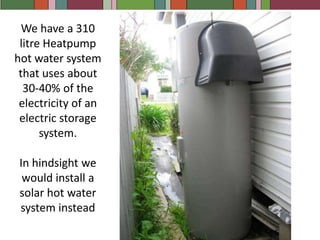
We have a 310 litreHeatpump hot water system that uses about 30-40% of the electricity of an electric storage system.In hindsight we would install a solar hot water system instead
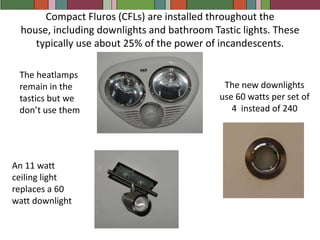
Compact Fluros (CFLs) are installed throughout the house, including downlights and bathroom Tastic lights. These typically use about 25% of the power of incandescents.The heatlamps remain in the tastics but we don’t use themThe new downlights use 60 watts per set of 4  instead of 240An 11 watt ceiling light replaces a 60 watt downlight
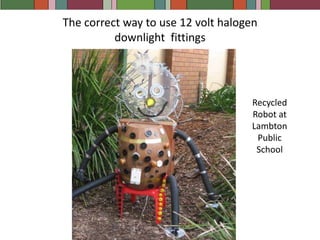
The correct way to use 12 volt halogen downlight  fittingsRecycled Robot at  Lambton Public School
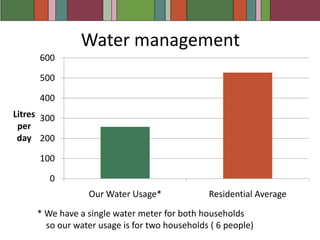
Water management* We have a single water meter for both households     so our water usage is for two households ( 6 people)
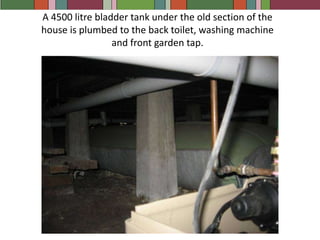
A 4500 litre bladder tank under the old section of the house is plumbed to the back toilet, washing machine and front garden tap.
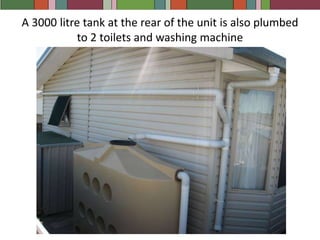
A 3000 litre tank at the rear of the unit is also plumbed to 2 toilets and washing machine
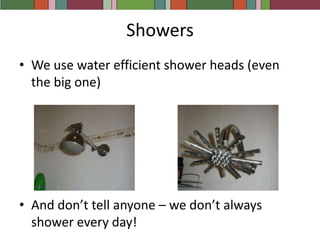
ShowersWe use water efficient shower heads (even the big one)And don’t tell anyone – we don’t always shower every day!
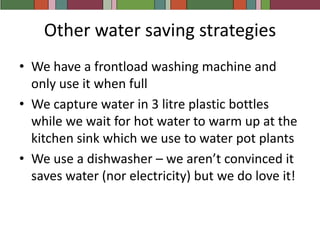
Other water saving strategiesWe have a frontload washing machine and only use it when fullWe capture water in 3 litre plastic bottles while we wait for hot water to warm up at the kitchen sink which we use to water pot plantsWe use a dishwasher – we aren’t convinced it saves water (nor electricity) but we do love it!
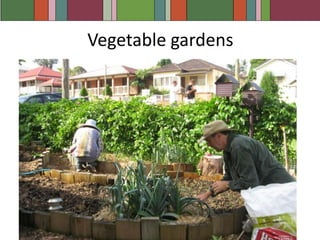
Vegetable gardens
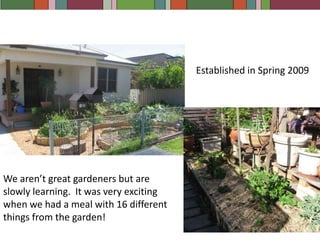
Established in Spring 2009We aren’t great gardeners but are slowly learning.  It was very exciting when we had a meal with 16 different things from the garden!
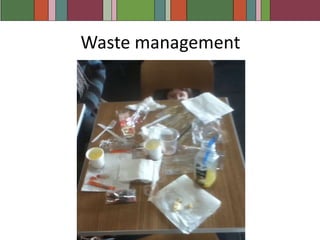
Waste management
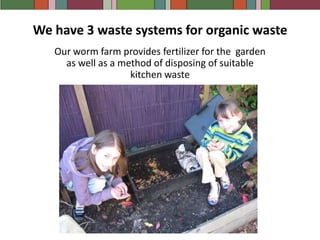
We have 3 waste systems for organic wasteOur worm farm provides fertilizer for the  garden as well as a method of disposing of suitable kitchen waste
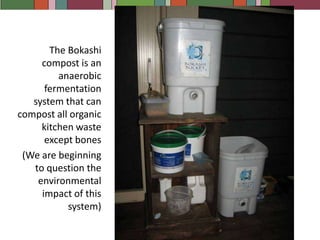
The Bokashi compost is an anaerobic fermentation system that can compost all organic kitchen waste except bones(We are beginning to question the environmental impact of this system)
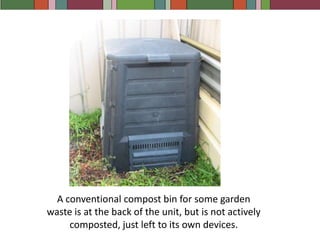
A conventional compost bin for some garden waste is at the back of the unit, but is not actively composted, just left to its own devices.
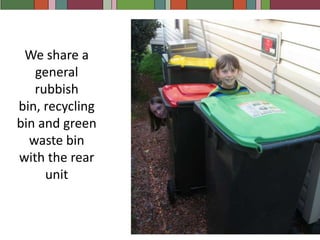
We share a general rubbish bin, recycling bin and green waste bin with the rear unit
Future Plans(Unfortunately very similar to last year)Paint roof of new section with reflective paintInstall external blinds on top louvre windowsInstall underfloor insulation under new sectionChange all blinds in old section to more thermally efficient onesInstall new roof on old section with solar powered ventilationContinue to explore ways of reducing our energy and resource use
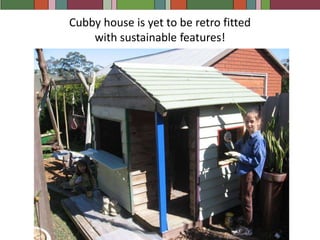
Cubby house is yet to be retro fitted with sustainable features!

Sustainable house day 2011

  • 1.
  • 2.
    Before we movedOurprevious home had lots of west facing windows (6 out of 13), heated up terribly in summer and then couldn’t be easily cooled when the easterly or southerly cool breezes arrived in the evening.It was also a very cold house in winter, with only one small room (a bedroom) having a north facing window for good access to sun.There had to be a better way of designing a home.So we moved!
  • 3.
    The house asit was in 2000 Originally built in the 50s.North As it was when we bought it in 2005The site plan as at 2005. The north facing boundary was a major reason for buying this property
  • 4.
    Plans with newextensionThe aim was to have a north facing living area with shaded glass and good cross ventilation. North
  • 5.
  • 6.
    The original backof the house had west facing windows that we wanted to eliminate as much as possible
  • 7.
    Old sheds atthe rear of the block were demolished by hand to salvage as much hardwood timber as possible.Some of this timber was used to build the table on the deck, which also included left over timber from the building of the pergola.
  • 8.
    At times itwas hard to keep the final vision in focus
  • 9.
    A relocatable home(for Graeme’s parents) being placed in the back yard
  • 11.
    The door inthe centre of the old house became a small bathroom window - the only west facing window in the house
  • 12.
    The door unitarriving. Looking at various options for higher performance glass, we settled on 4mm thick (standard glass is 3mm) tinted glass in a stackable sliding unit that allows a 4 metre opening.
  • 13.
    High louvre windowsvent hot summer air. Solar panels located on the old section of the house4500L Bladder tank under old section of the house
  • 14.
    Bamboo floorboards wereplaced over particle board. Left over floorboards were used as the kitchen splashback.
  • 15.
    Keeping cool insummerKeeping warm in winter
  • 16.
    Grapevines planted in2006 at northern side of deck now create dense shade over the deck during summer, while allowing sun in through winter.
  • 17.
    All insulation materialsare rated for their performance in restricting heat transfer. The R value is a guide to its performance as an insulator—the higher the R value, the greater the insulating effect.E.g., Recommended R values in Newcastle for bulk ceiling insulation are R3 to R3.5 and for wall insulation, R1.5 to R2.
  • 18.
    60mm Greenboard (polystyrenewith R value of 1.9) was fixed directly to the timber frame
  • 19.
    On the oldsection of the house, vinyl cladding was removed and 40 mm Greenboard (R value 1.4) was attached directly to the weatherboards
  • 20.
    Our house becamean esky! Mesh was applied over the Greenboard which was then cement rendered.
  • 21.
    In 2010 weinstalled underfloor polystyrene batts, R 1.4 in the old sectionWe also have bulk insulation (combination of fibreglassbatts and loose fill) of R 3.5 in the roof of the old section
  • 22.
    Draft proofing iscritical to reducing heat loss
  • 23.
    The curtain hashelped a great deal in retaining the heat downstairs when we have the heater on.
  • 24.
  • 25.
    Our photovoltaic systemwas first installed in June 2008
  • 26.
    .Expanded in March2010, it is now a 16 panel, 2.8 kW system, and produces just over 11 kWh per dayIt generates an income of around $2500 per year
  • 27.
    A 1 kWsystem was also installed on the unit
  • 28.
  • 29.
    We consume around7.5 kWh of electricity per day. (The NSW average is 19-20 per household)Some of the reasons we have lower than average electricity consumption include: Energy efficient appliances – fridge, washing machine, dishwasherOnly 1 fridgeNo air conditionerWe wear warm clothes in winterHeatpump hot water systemEnergy efficient lighting
  • 30.
    Only 1 TV(and a daggy old CRT at that!)No Playstation, Wii, Xbox etcVery little on standbyLaptop computers rather than desktopsDon’t use a clothes dryerVery conscious of turning off lights and equipment when not being usedWe insulated our hot water pipes (but we haven’t really noticed any difference)
  • 31.
    We have noair conditioner (though one would be nice for the 40°+ days. Lucky we’re so close to the pool!)There are 6 ceiling fans throughout the house. The timber ones were originally in the living area and weren’t strong enough, but work well in the bedrooms.More effective fans:1. Are metal2. Have longer blades3. Are set as low as is safe4. Have more powerful motors
  • 32.
    We have a310 litreHeatpump hot water system that uses about 30-40% of the electricity of an electric storage system.In hindsight we would install a solar hot water system instead
  • 33.
    Compact Fluros (CFLs)are installed throughout the house, including downlights and bathroom Tastic lights. These typically use about 25% of the power of incandescents.The heatlamps remain in the tastics but we don’t use themThe new downlights use 60 watts per set of 4 instead of 240An 11 watt ceiling light replaces a 60 watt downlight
  • 34.
    The correct wayto use 12 volt halogen downlight fittingsRecycled Robot at Lambton Public School
  • 35.
    Water management* Wehave a single water meter for both households so our water usage is for two households ( 6 people)
  • 36.
    A 4500 litrebladder tank under the old section of the house is plumbed to the back toilet, washing machine and front garden tap.
  • 37.
    A 3000 litretank at the rear of the unit is also plumbed to 2 toilets and washing machine
  • 38.
    ShowersWe use waterefficient shower heads (even the big one)And don’t tell anyone – we don’t always shower every day!
  • 39.
    Other water savingstrategiesWe have a frontload washing machine and only use it when fullWe capture water in 3 litre plastic bottles while we wait for hot water to warm up at the kitchen sink which we use to water pot plantsWe use a dishwasher – we aren’t convinced it saves water (nor electricity) but we do love it!
  • 40.
  • 41.
    Established in Spring2009We aren’t great gardeners but are slowly learning. It was very exciting when we had a meal with 16 different things from the garden!
  • 42.
  • 43.
    We have 3waste systems for organic wasteOur worm farm provides fertilizer for the garden as well as a method of disposing of suitable kitchen waste
  • 44.
    The Bokashi compostis an anaerobic fermentation system that can compost all organic kitchen waste except bones(We are beginning to question the environmental impact of this system)
  • 45.
    A conventional compostbin for some garden waste is at the back of the unit, but is not actively composted, just left to its own devices.
  • 46.
    We share ageneral rubbish bin, recycling bin and green waste bin with the rear unit
  • 47.
    Future Plans(Unfortunately verysimilar to last year)Paint roof of new section with reflective paintInstall external blinds on top louvre windowsInstall underfloor insulation under new sectionChange all blinds in old section to more thermally efficient onesInstall new roof on old section with solar powered ventilationContinue to explore ways of reducing our energy and resource use
  • 48.
    Cubby house isyet to be retro fitted with sustainable features!