SUSTAINABLE DEVELOPMENT AND
ENVIRONMENT POLLUTION
Presented by:
Md. Jamilur Rahman
ID#1611259
1
outline
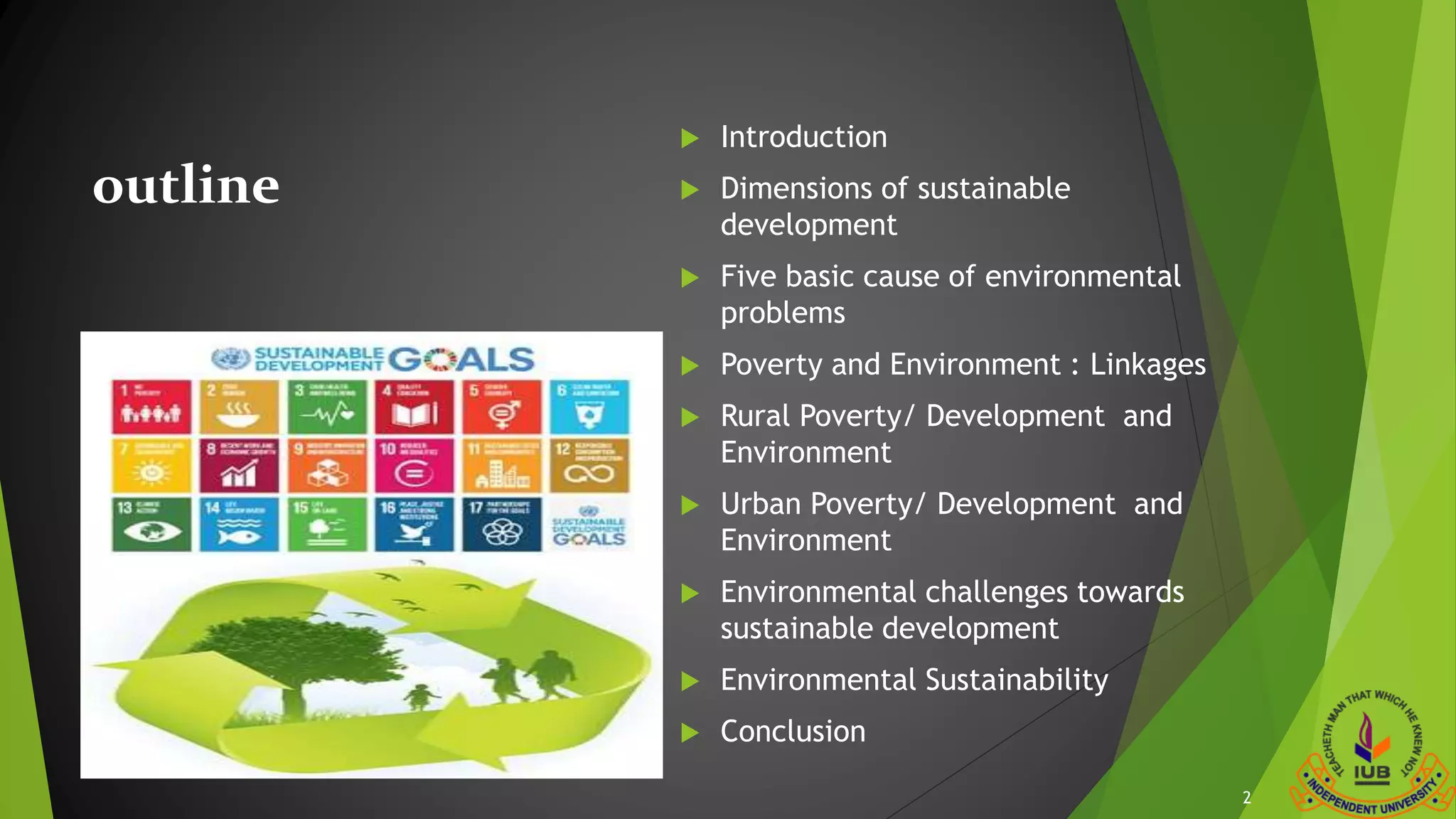
 Introduction
 Dimensions of sustainable
development
 Five basic cause of environmental
problems
 Poverty and Environment : Linkages
 Rural Poverty/ Development and
Environment
 Urban Poverty/ Development and
Environment
 Environmental challenges towards
sustainable development
 Environmental Sustainability
 Conclusion
2
Introduction
Sustainable Development
Sustainable development is development that meets the needs of the present,
without compromising the ability of future generations to meet their own needs.
Environmental Sustainability
Environmental sustainability is the process of making sure current processes of
interaction with the environment are pursued with the idea of keeping the
environment as pristine as naturally possible based on ideal-seeking behavior
3
Dimensions of Sustainable Development
 Social Dimension
 Economic Dimension
 Environmental Dimension
Reduced waste, effluent generation, emissions into environment.
Reduced impact on human health.
Use of renewable raw materials.
Elimination of toxic substances.
4
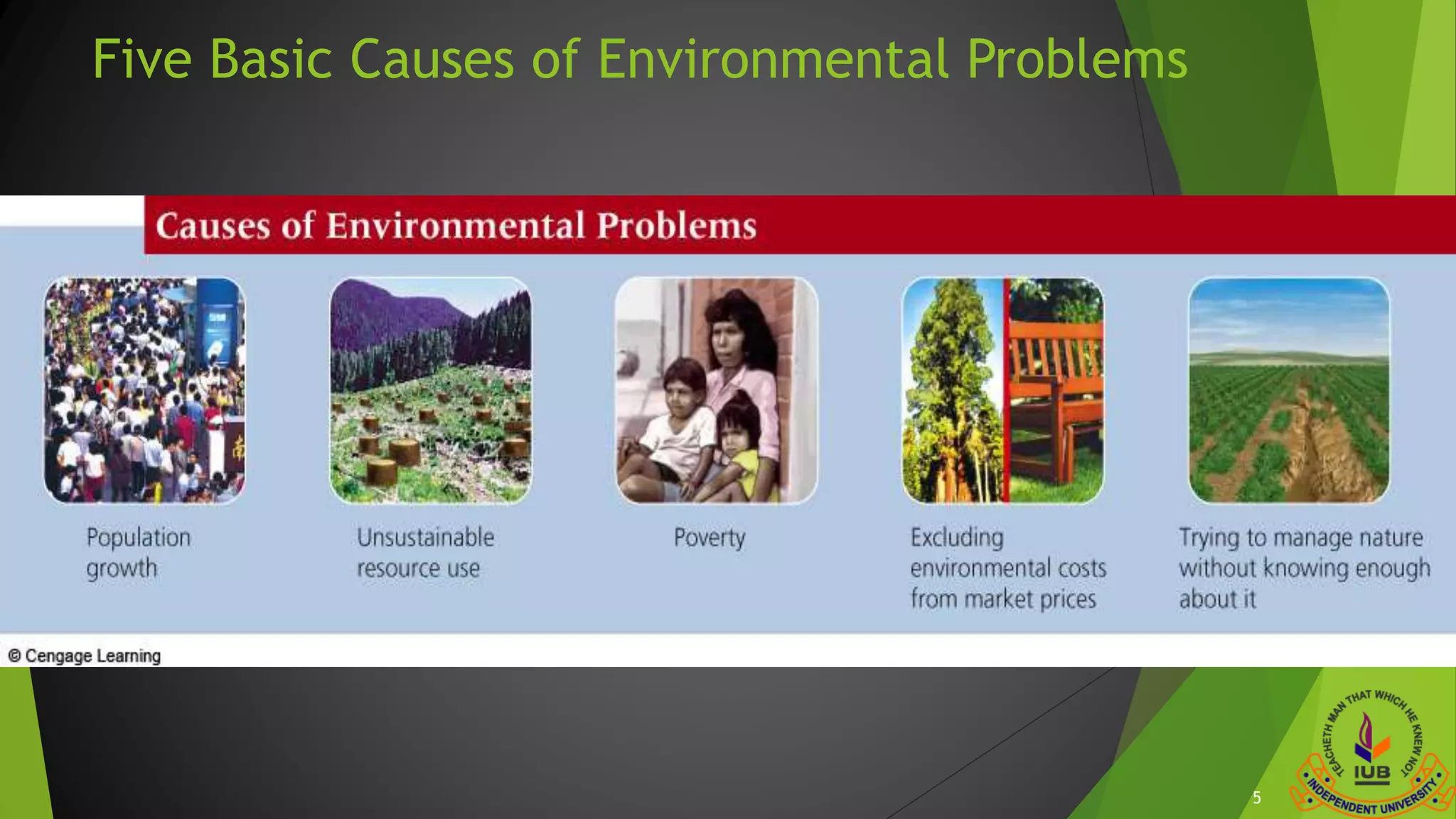
Five Basic Causes of Environmental Problems
5
Poverty and Environment : Linkages
 Poverty and environment linkages are dynamic and context-specific
 Rural poor are concerned with secure access to and the quality of natural
resources
 Urban poor are concerned with access to clean water, energy, sanitation, and
security of housing
 Poor women are concerned with safe and close access to potable water and
energy supplies
 Incomplete property rights reinforce the vicious poverty-environment circle.
 Population pressure exacerbates both poverty and environmental degradation.
6
Rural Poverty/ Development and Environment
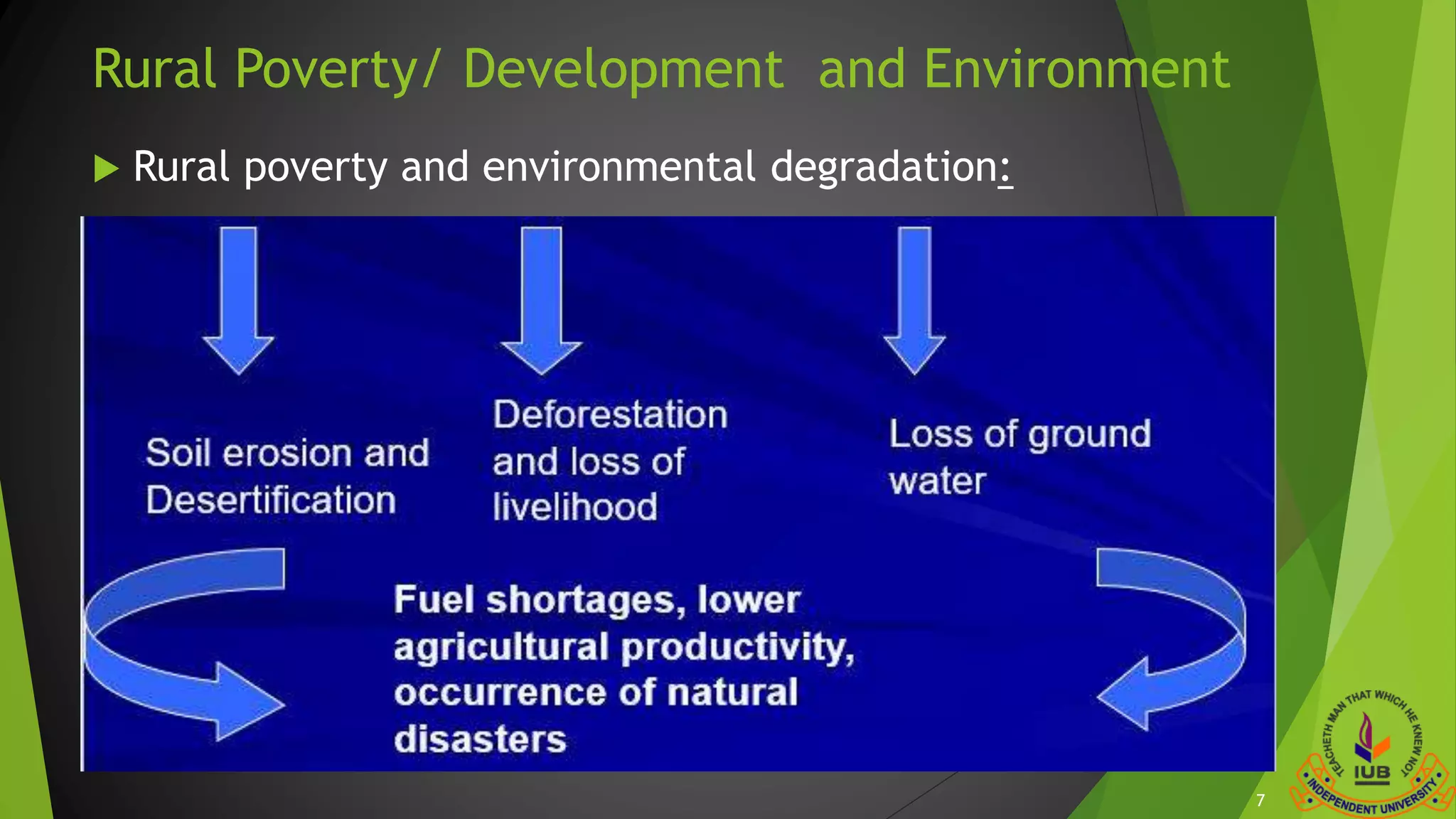
 Rural poverty and environmental degradation:
7
Urban Poverty/ Development and Environment
 Urban poverty causes environmental degradation in two ways:
1. Industrialization and urban air pollution
Environmental Kuznets curve
Role of taxation in controlling pollution externalities
2. Congestion and availability of clean water and sanitation
Productivity losses
Financial feasibility of providing clean drinking water and sanitation for
all
8
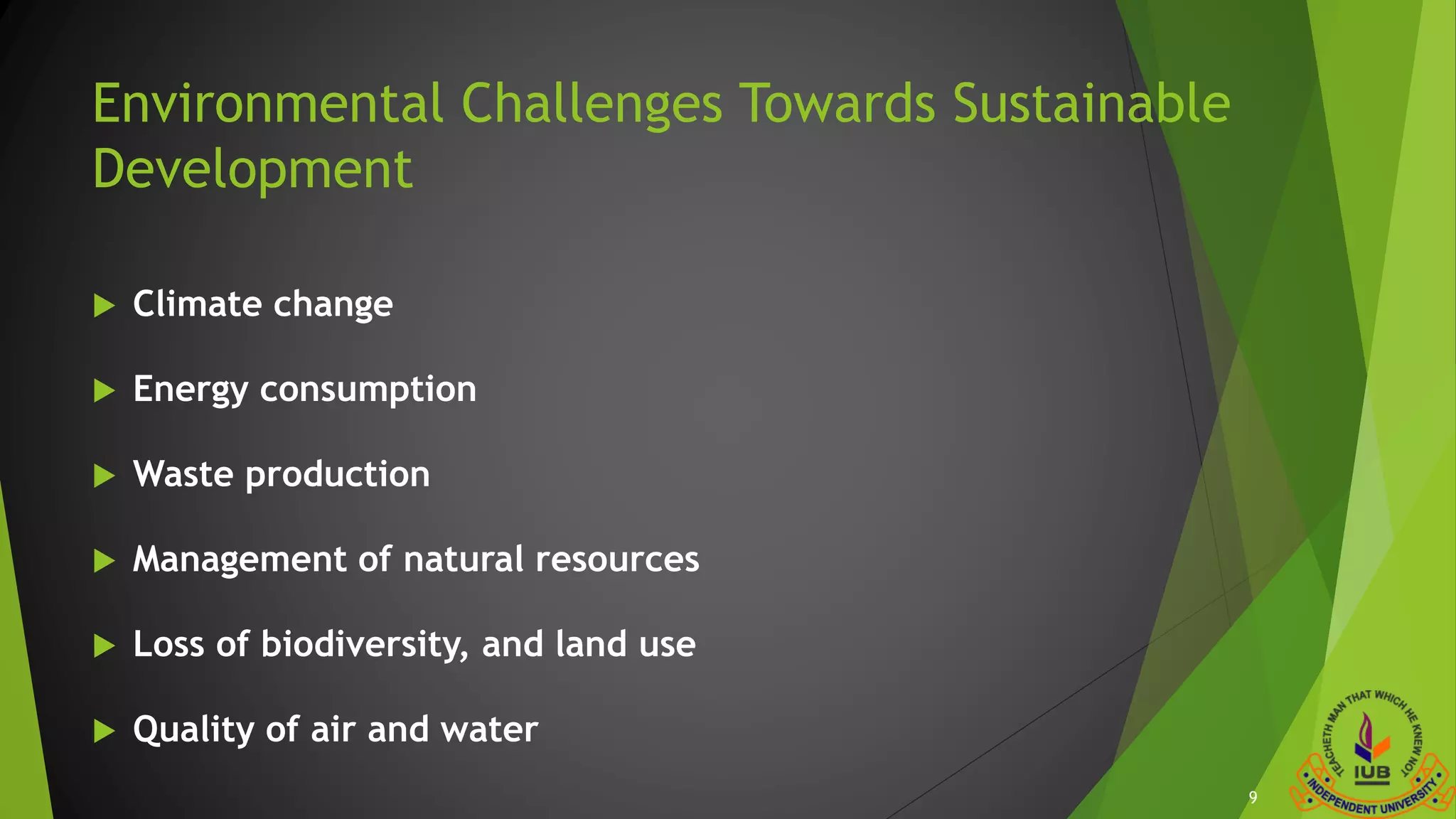
Environmental Challenges Towards Sustainable
Development
 Climate change
 Energy consumption
 Waste production
 Management of natural resources
 Loss of biodiversity, and land use
 Quality of air and water
9
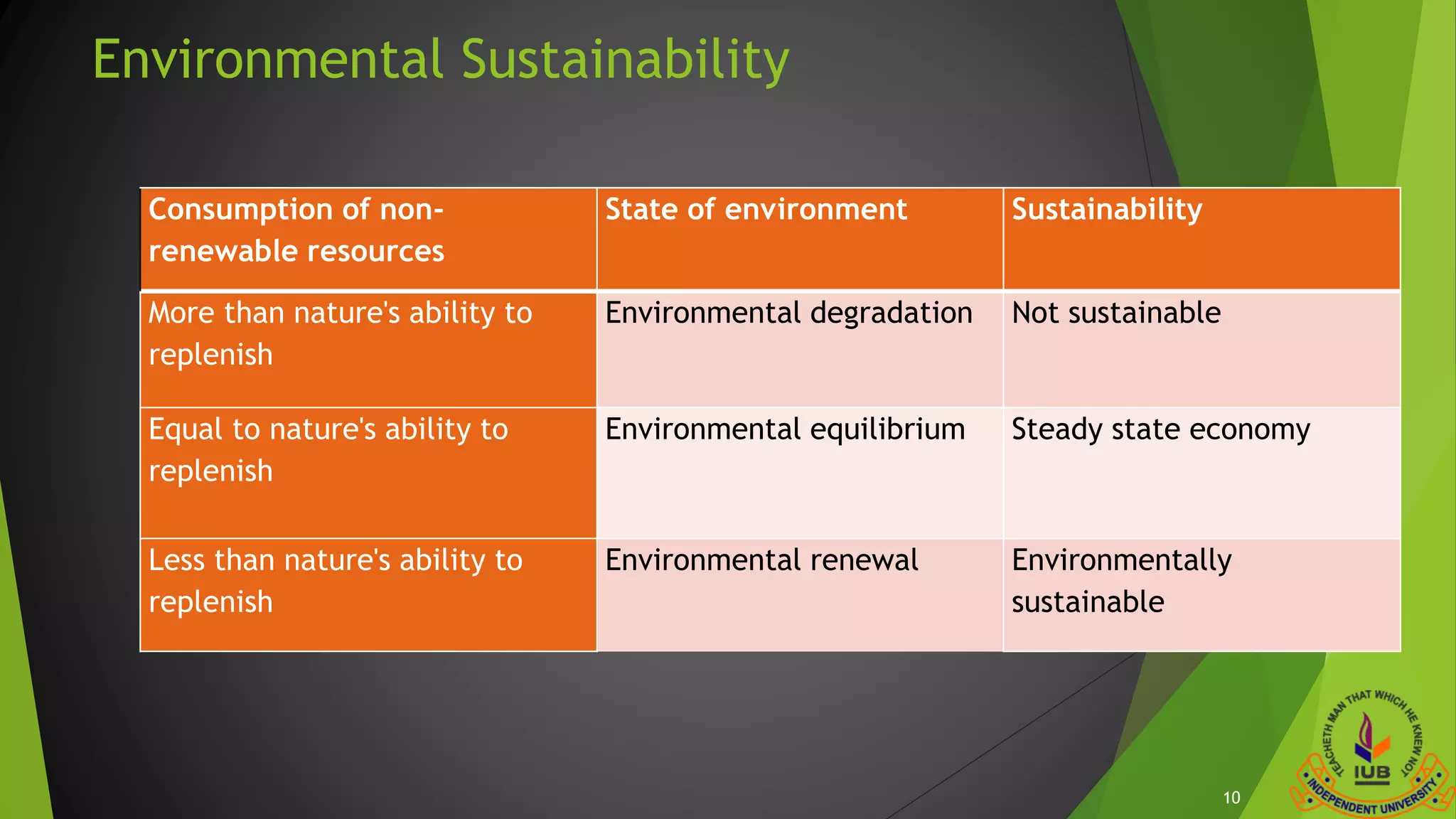
Environmental Sustainability
Consumption of non-
renewable resources
State of environment Sustainability
More than nature's ability to
replenish
Environmental degradation Not sustainable
Equal to nature's ability to
replenish
Environmental equilibrium Steady state economy
Less than nature's ability to
replenish
Environmental renewal Environmentally
sustainable
10
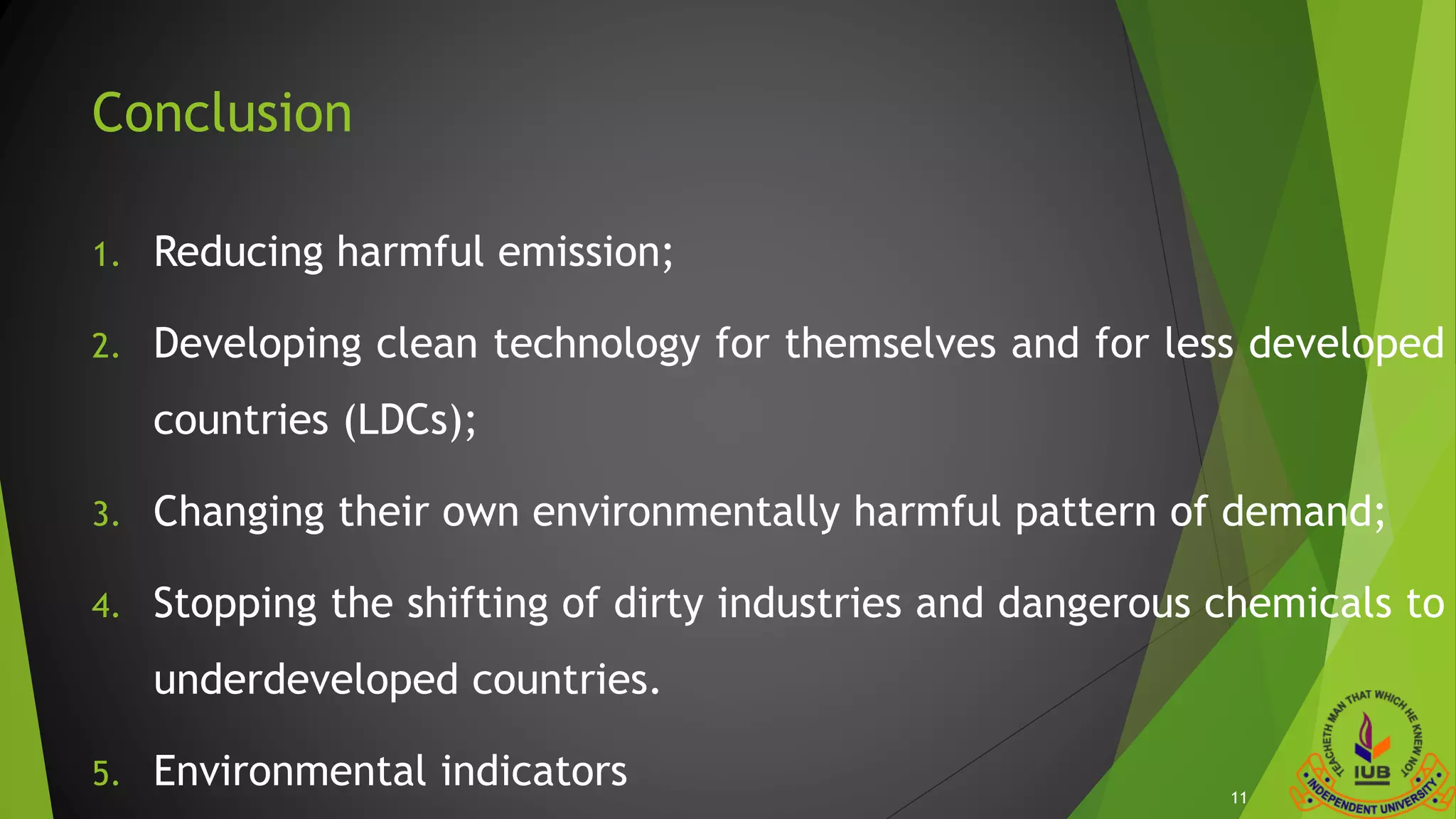
Conclusion
1. Reducing harmful emission;
2. Developing clean technology for themselves and for less developed
countries (LDCs);
3. Changing their own environmentally harmful pattern of demand;
4. Stopping the shifting of dirty industries and dangerous chemicals to
underdeveloped countries.
5. Environmental indicators 11

Sustainable development and environment pollution

  • 1.
    SUSTAINABLE DEVELOPMENT AND ENVIRONMENTPOLLUTION Presented by: Md. Jamilur Rahman ID#1611259 1
  • 2.
    outline  Introduction  Dimensionsof sustainable development  Five basic cause of environmental problems  Poverty and Environment : Linkages  Rural Poverty/ Development and Environment  Urban Poverty/ Development and Environment  Environmental challenges towards sustainable development  Environmental Sustainability  Conclusion 2
  • 3.
    Introduction Sustainable Development Sustainable developmentis development that meets the needs of the present, without compromising the ability of future generations to meet their own needs. Environmental Sustainability Environmental sustainability is the process of making sure current processes of interaction with the environment are pursued with the idea of keeping the environment as pristine as naturally possible based on ideal-seeking behavior 3
  • 4.
    Dimensions of SustainableDevelopment  Social Dimension  Economic Dimension  Environmental Dimension Reduced waste, effluent generation, emissions into environment. Reduced impact on human health. Use of renewable raw materials. Elimination of toxic substances. 4
  • 5.
    Five Basic Causesof Environmental Problems 5
  • 6.
    Poverty and Environment: Linkages  Poverty and environment linkages are dynamic and context-specific  Rural poor are concerned with secure access to and the quality of natural resources  Urban poor are concerned with access to clean water, energy, sanitation, and security of housing  Poor women are concerned with safe and close access to potable water and energy supplies  Incomplete property rights reinforce the vicious poverty-environment circle.  Population pressure exacerbates both poverty and environmental degradation. 6
  • 7.
    Rural Poverty/ Developmentand Environment  Rural poverty and environmental degradation: 7
  • 8.
    Urban Poverty/ Developmentand Environment  Urban poverty causes environmental degradation in two ways: 1. Industrialization and urban air pollution Environmental Kuznets curve Role of taxation in controlling pollution externalities 2. Congestion and availability of clean water and sanitation Productivity losses Financial feasibility of providing clean drinking water and sanitation for all 8
  • 9.
    Environmental Challenges TowardsSustainable Development  Climate change  Energy consumption  Waste production  Management of natural resources  Loss of biodiversity, and land use  Quality of air and water 9
  • 10.
    Environmental Sustainability Consumption ofnon- renewable resources State of environment Sustainability More than nature's ability to replenish Environmental degradation Not sustainable Equal to nature's ability to replenish Environmental equilibrium Steady state economy Less than nature's ability to replenish Environmental renewal Environmentally sustainable 10
  • 11.
    Conclusion 1. Reducing harmfulemission; 2. Developing clean technology for themselves and for less developed countries (LDCs); 3. Changing their own environmentally harmful pattern of demand; 4. Stopping the shifting of dirty industries and dangerous chemicals to underdeveloped countries. 5. Environmental indicators 11

Editor's Notes

  • #4 An "unsustainable situation" occurs when natural capital (the sum total of nature's resources) is used up faster than it can be replenished
  • #6 Population growth Wasteful and unsustainable resource use Poverty Failure to include environmental costs of goods and services in market prices Too little knowledge of how nature works Major causes of environmental problems are population growth, wasteful and unsustainable resource use, poverty, excluding the environmental costs of resource use from the market prices of goods and services, and trying to manage nature with insufficient knowledge.
  • #10 Over- exploitation of ground water has resulted in scarcity of fresh and clean drinking water in many cities. In coastal areas unscientific exploitation of groundwater has been the cause of sea water intrusion and Stalinization. Large scale deforestation has caused the loss of biodiversity including economically important plant and animal species. Massive loss of vegetation has led to soil erosion and degradation of soil quality in downhill regions. Increase in the rate of sedimentation in stagnant and flowing water bodies is another impact of deforestation. Industrialization has raised serious environmental issues such as eutrophication of aquatic systems, global warming, ozone depletion and climatic change.