Futureproofing: the
National Planning Policy
Framework – one year on
CPRE Sussex, March 2013


  Neil Sinden, Policy and
  Campaigns Director, CPRE
Futureproofing: the National Planning Policy
Framework – one year on

• land use planning system is key tool for ‘futureproofing’

• recent changes to planning law on policy

• CPRE’s campaign to influence these

• identify some of the improvements we helped secure

• focus on some key issues

• outline the findings and recommendations of a recent CPRE report

• introduce a new campaign we will be launching next week

                                         National Planning Policy Framework – one year on
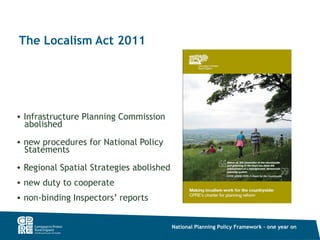
The Localism Act 2011


• Infrastructure Planning Commission
  abolished
• new procedures for National Policy
  Statements
• Regional Spatial Strategies abolished
• new duty to cooperate
• non-binding Inspectors’ reports


                                          National Planning Policy Framework – one year on
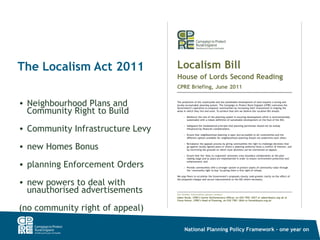
The Localism Act 2011

• Neighbourhood Plans and
  Community Right to Build
• Community Infrastructure Levy

• new Homes Bonus

• planning Enforcement Orders

• new powers to deal with
  unauthorised advertisements

(no community right of appeal)

                                  National Planning Policy Framework – one year on
The National Planning Policy Framework:
CPRE’s key asks

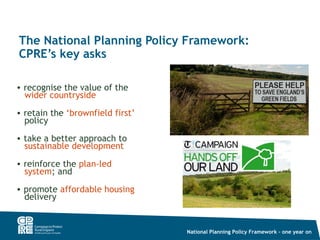
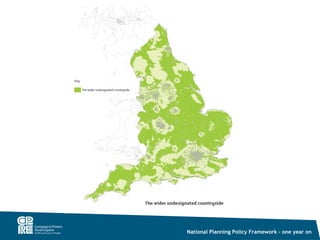
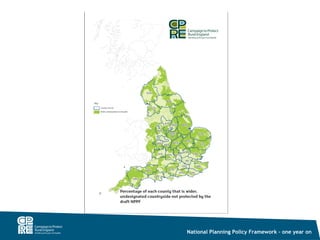
• recognise the value of the
  wider countryside
• retain the ‘brownfield first’
  policy
• take a better approach to
  sustainable development
• reinforce the plan-led
  system; and
• promote affordable housing
  delivery


                                  National Planning Policy Framework – one year on
National Planning Policy Framework – one year on
The NPPF campaign

• feeding the media with stories
• cooperating with National Trust

• reaching out to unusual partners
• leading Wildlife and Countryside
  Link’s work on the issue
• surveying local authority views

• researching brownfield and wider
  countryside issues
• specific projects with RSPB and NT

• working with MPs and Peers

                                       National Planning Policy Framework – one year on
The final NPPF:
significant improvements

• better definition of sustainable
 development

• core principles recognise:

 - intrinsic character and beauty of
 countryside;
 - need to use brownfield land; and
 - transport and land use integration

• stronger policies on town centre vitality


• Green Belt policy largely intact

                                              National Planning Policy Framework – one year on
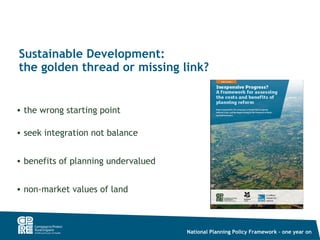
Sustainable Development:
the golden thread or missing link?


• the wrong starting point

• seek integration not balance


• benefits of planning undervalued


• non-market values of land


                                     National Planning Policy Framework – one year on
Sustainable Development:
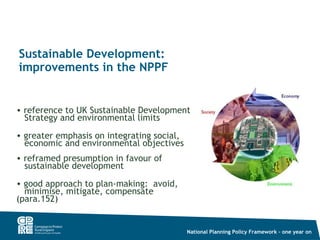
improvements in the NPPF


• reference to UK Sustainable Development
  Strategy and environmental limits
• greater emphasis on integrating social,
  economic and environmental objectives
• reframed presumption in favour of
  sustainable development
• good approach to plan-making: avoid,
  minimise, mitigate, compensate
(para.152)


                                            National Planning Policy Framework – one year on
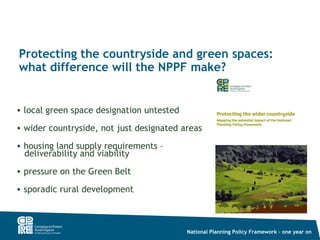
Protecting the countryside and green spaces:
what difference will the NPPF make?


• local green space designation untested

• wider countryside, not just designated areas

• housing land supply requirements –
  deliverability and viability
• pressure on the Green Belt

• sporadic rural development


                                           National Planning Policy Framework – one year on
Brownfield regeneration:
‘smart growth’or Garden Cities?


• reuse of previously developed land has
  been a big success
• will local brownfield/density targets be
  enough?
• design and density should go together

• low density, dispersed development is
 unsustainable
• more to be done – will Garden Cities help?


                                             National Planning Policy Framework – one year on
Countryside Promises,
Planning Realities

• transitional period of 12 months
  insufficient
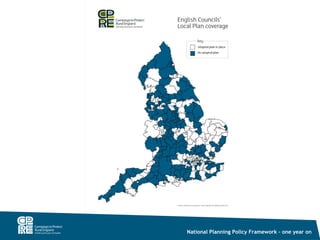
• plan-led system is being
  undermined
• valuable areas of countryside
  being lost to development
• five year ‘deliverable’ land
  supply requirement leading to
  more greenfield development
• role of neighbourhood plans less
  important than anticipated

                                     National Planning Policy Framework – one year on
National Planning Policy Framework – one year on
Recommendations

• More Government support for
  getting local plans in place
• Planning guidance to address
  areas of confusion and weakness
• Longer term, improve policy by:

 • a new approach to sustainable
   development
 • new measures to promote
   urban regeneration
 • stronger protections for the
   countryside

                                    National Planning Policy Framework – one year on
Save our Countryside:
how you can help

• briefing materials for branches/local groups

• use evidence to resist inappropriate devpt
• write to local MPs and ask them to raise
 concerns with the Planning Minister
• provide evidence of damaging decisions

• write to local newspapers

• encourage local authorities to get plans in
place


                                             National Planning Policy Framework – one year on

Sussex cpre march 2013

  • 1.
    Futureproofing: the National PlanningPolicy Framework – one year on CPRE Sussex, March 2013 Neil Sinden, Policy and Campaigns Director, CPRE
  • 2.
    Futureproofing: the NationalPlanning Policy Framework – one year on • land use planning system is key tool for ‘futureproofing’ • recent changes to planning law on policy • CPRE’s campaign to influence these • identify some of the improvements we helped secure • focus on some key issues • outline the findings and recommendations of a recent CPRE report • introduce a new campaign we will be launching next week National Planning Policy Framework – one year on
  • 3.
    The Localism Act2011 • Infrastructure Planning Commission abolished • new procedures for National Policy Statements • Regional Spatial Strategies abolished • new duty to cooperate • non-binding Inspectors’ reports National Planning Policy Framework – one year on
  • 4.
    The Localism Act2011 • Neighbourhood Plans and Community Right to Build • Community Infrastructure Levy • new Homes Bonus • planning Enforcement Orders • new powers to deal with unauthorised advertisements (no community right of appeal) National Planning Policy Framework – one year on
  • 5.
    The National PlanningPolicy Framework: CPRE’s key asks • recognise the value of the wider countryside • retain the ‘brownfield first’ policy • take a better approach to sustainable development • reinforce the plan-led system; and • promote affordable housing delivery National Planning Policy Framework – one year on
  • 6.
    National Planning PolicyFramework – one year on
  • 7.
    National Planning PolicyFramework – one year on
  • 8.
    National Planning PolicyFramework – one year on
  • 9.
    National Planning PolicyFramework – one year on
  • 10.
    The NPPF campaign •feeding the media with stories • cooperating with National Trust • reaching out to unusual partners • leading Wildlife and Countryside Link’s work on the issue • surveying local authority views • researching brownfield and wider countryside issues • specific projects with RSPB and NT • working with MPs and Peers National Planning Policy Framework – one year on
  • 11.
    The final NPPF: significantimprovements • better definition of sustainable development • core principles recognise: - intrinsic character and beauty of countryside; - need to use brownfield land; and - transport and land use integration • stronger policies on town centre vitality • Green Belt policy largely intact National Planning Policy Framework – one year on
  • 12.
    Sustainable Development: the goldenthread or missing link? • the wrong starting point • seek integration not balance • benefits of planning undervalued • non-market values of land National Planning Policy Framework – one year on
  • 13.
    Sustainable Development: improvements inthe NPPF • reference to UK Sustainable Development Strategy and environmental limits • greater emphasis on integrating social, economic and environmental objectives • reframed presumption in favour of sustainable development • good approach to plan-making: avoid, minimise, mitigate, compensate (para.152) National Planning Policy Framework – one year on
  • 14.
    Protecting the countrysideand green spaces: what difference will the NPPF make? • local green space designation untested • wider countryside, not just designated areas • housing land supply requirements – deliverability and viability • pressure on the Green Belt • sporadic rural development National Planning Policy Framework – one year on
  • 15.
    Brownfield regeneration: ‘smart growth’orGarden Cities? • reuse of previously developed land has been a big success • will local brownfield/density targets be enough? • design and density should go together • low density, dispersed development is unsustainable • more to be done – will Garden Cities help? National Planning Policy Framework – one year on
  • 16.
    Countryside Promises, Planning Realities •transitional period of 12 months insufficient • plan-led system is being undermined • valuable areas of countryside being lost to development • five year ‘deliverable’ land supply requirement leading to more greenfield development • role of neighbourhood plans less important than anticipated National Planning Policy Framework – one year on
  • 17.
    National Planning PolicyFramework – one year on
  • 18.
    Recommendations • More Governmentsupport for getting local plans in place • Planning guidance to address areas of confusion and weakness • Longer term, improve policy by: • a new approach to sustainable development • new measures to promote urban regeneration • stronger protections for the countryside National Planning Policy Framework – one year on
  • 19.
    Save our Countryside: howyou can help • briefing materials for branches/local groups • use evidence to resist inappropriate devpt • write to local MPs and ask them to raise concerns with the Planning Minister • provide evidence of damaging decisions • write to local newspapers • encourage local authorities to get plans in place National Planning Policy Framework – one year on

Editor's Notes

  • #4 Imp not to forget amid the furore which surrounded the NPPF over the last year that the Localism Act introduces some fundamental changes to planning legislation This slide identifies some of the key changes – but there are others including removing Inspectors powers to rewrite local plans Many of these changes CPRE supported but one key element we pushed for – CRA - was not finally adopted despite pre-election Manifesto commitments by both coalition parties Also Local Enterprise Partnerships – introduced in 2011 following abolition of RSS and problematic: democratic deficit and influence on planning
  • #6 But of course most controversy surrounded the accompanying NPPF. Substantial input before draft NPPF published in July last year. CPRE had a wide range of concerns about the draft NPPF - Boiled these down into 5 key asks – most of which as we shall see were addressed in the final version published in March As well as a detailed, 60 page submission, we called for the final NPPF to: recognise the intrinsic value of the wider countryside and give better protection to designated areas retain the ‘brownfield first’ policy to ensure previously developed land is used before greenfield sites define sustainable development so that environmental limits are respected and economic considerations are not given primacy reinforce the plan-led system , including through effective transitional arrangements, and promote the delivery of affordable housing in appropriate locations to meet identified needs. Mention media campaign??? Local lobbying/SC inquiries etc
  • #12 In particular, we saw these improvements:
  • #13 Sustainable development – a key issue Research found that, in summary: ‘ proposed reforms are likely to have little or no effect on growth and could even undermine public wellbeing’
  • #15 Research found that: ‘ 55 per cent of England’s countryside could be at increased risk from development’
  • #16 Research found that: ‘ More brownfield land is available and suitable for residential development – Enough for nearly 1.5 million new dwellings – than in 2001’
  • #20 So, to summarise, what are the key challenges moving forward? Up to date plans – 50% LPAs don’t have them and NT survery found 75% LAs had lost staff from planning department Will duty to cooperate work? Vision for places is key Countryside not just important for its own sake but also to make towns and cities work Above all, public confidence in planning key – opp to participate, local determination etc