Surviving In The Outback By Emerson and Hyder
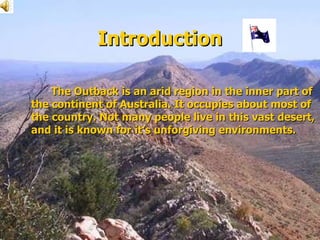
Introduction The Outback is an arid region in the inner part of the continent of Australia. It occupies about most of the country. Not many people live in this vast desert, and it is known for it’s unforgiving environments.
Scenario We will attempt to survive in the Australian Outback. We will not have help from any modern-day technology. Our starting point is approximately 140 degrees east by 25 degrees south. This location is near the Diamantina River. The journey will be long, rough, and treacherous.
Plan
END START Drawn by Hyder
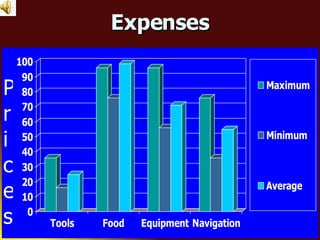
Expenses Prices
Wildlife/Plants
Animals Some animals of Australia are: Bandicoots, Bats, Flying Foxes, Bilbies, Dingoes, Dolphins, Dugongs, Echidnas, Gliders, Kangaroos, Koalas, Platypuses, Possums, Poturoos, Quolls, Seals, Tasmanian Devils, Wallabies, Whales, and Wombats.
Plants Some of Australia’s plants are: the Huon Pine, Deciduous trees, Beech, Oak, Birch, Spruce, Fur, Larch, Stone Pine, Edelweiss, Gentians, Primroses, Buttercups, Monksoons.
Terrain Australia's has a very varied terrain. The Outback is mainly flat and does not contain many large landforms or mountains. The Outback is mostly made up of low plateaus and deserts. The eastern part of Australia contains The Great Dividing Range. Northern Australia is mostly flat and rocky. This is also the same with the western side. Australia's southern expanse is rocky.
Statistics We will be arriving in the Australian Outback in July. The average temperature of Australia in this time is 75 to 85 degrees Fahrenheit. The average rainfall in the Outback is less than 10 inches annually. The weather is mostly dry and hot.
Terrain 3-D Animation
Native Peoples There are many native people who occupy Australia. Now, most of them have either fled or been wiped out. The remaining population now resides in various locations throughout their native lands. We will probably not come across any major tribes during our journey. If we by some chance do, the tribe could help us get more food, take us to shelter, or keep us away from enemies. But because we have no major way of contacting them, we can not presume that they are nice or kind.
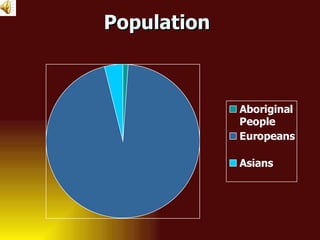
Population
Rivers and Bodies of Water There are many rivers and bodies of water in the Outback. We will be arriving in the Outback near the Diamantina River. South of our starting point is Lake Eyre and Lake Frome. We will also encounter some minor rivers and streams along our way. Near Adelaide, our destination, is the mouth of the Murray-Darling River. There are also some disadvantages of using the water from these sources. The water might be polluted, and we would have no way of testing the purity of the water. Even so, we will still be able to take advantage of all of the bodies of water we encounter on our journey.
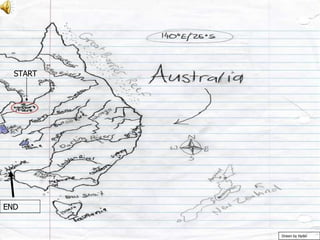
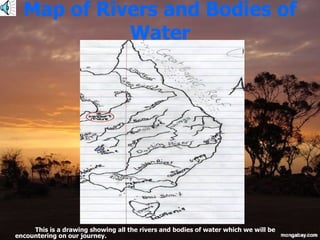
Map of Rivers and Bodies of Water This is a drawing showing all the rivers and bodies of water which we will be encountering on our journey.
Journey in the Outback This is a brief summary of how we are planning to survive in the Outback of Australia. We will be arriving in the Australian Outback in July. Our location will be 140 degrees east by 25 degrees south. This location is near the Diamantina River, which flows south to Lake Eyre. We will travel down this river until we reach Lake Eyre. At Lake Eyre, we will have time to pack provisions, get water, and plan ahead. From there we will travel eastward till we reach the Coopers River. We would need to cross this river and get on the other side. After crossing a small area of land, we should arrive at the Bulloo River. It will take us south to Lake Frome. From there, our next job to get us closer to our destination would be to travel south-east until we reach the Darling River. Once we board this infamous river system, it would not be long before we arrived at the end of the river. The last thing would be to travel a short distance west until we reach our primary destination, Adelaide, Australia.
Conclusion

Survivng In The Outback

  • 1.
    Surviving In TheOutback By Emerson and Hyder
  • 2.
    Introduction The Outbackis an arid region in the inner part of the continent of Australia. It occupies about most of the country. Not many people live in this vast desert, and it is known for it’s unforgiving environments.
  • 3.
    Scenario We willattempt to survive in the Australian Outback. We will not have help from any modern-day technology. Our starting point is approximately 140 degrees east by 25 degrees south. This location is near the Diamantina River. The journey will be long, rough, and treacherous.
  • 4.
  • 5.
  • 6.
  • 7.
  • 8.
    Animals Some animalsof Australia are: Bandicoots, Bats, Flying Foxes, Bilbies, Dingoes, Dolphins, Dugongs, Echidnas, Gliders, Kangaroos, Koalas, Platypuses, Possums, Poturoos, Quolls, Seals, Tasmanian Devils, Wallabies, Whales, and Wombats.
  • 9.
    Plants Some ofAustralia’s plants are: the Huon Pine, Deciduous trees, Beech, Oak, Birch, Spruce, Fur, Larch, Stone Pine, Edelweiss, Gentians, Primroses, Buttercups, Monksoons.
  • 10.
    Terrain Australia's hasa very varied terrain. The Outback is mainly flat and does not contain many large landforms or mountains. The Outback is mostly made up of low plateaus and deserts. The eastern part of Australia contains The Great Dividing Range. Northern Australia is mostly flat and rocky. This is also the same with the western side. Australia's southern expanse is rocky.
  • 11.
    Statistics We willbe arriving in the Australian Outback in July. The average temperature of Australia in this time is 75 to 85 degrees Fahrenheit. The average rainfall in the Outback is less than 10 inches annually. The weather is mostly dry and hot.
  • 12.
  • 13.
    Native Peoples Thereare many native people who occupy Australia. Now, most of them have either fled or been wiped out. The remaining population now resides in various locations throughout their native lands. We will probably not come across any major tribes during our journey. If we by some chance do, the tribe could help us get more food, take us to shelter, or keep us away from enemies. But because we have no major way of contacting them, we can not presume that they are nice or kind.
  • 14.
  • 15.
    Rivers and Bodiesof Water There are many rivers and bodies of water in the Outback. We will be arriving in the Outback near the Diamantina River. South of our starting point is Lake Eyre and Lake Frome. We will also encounter some minor rivers and streams along our way. Near Adelaide, our destination, is the mouth of the Murray-Darling River. There are also some disadvantages of using the water from these sources. The water might be polluted, and we would have no way of testing the purity of the water. Even so, we will still be able to take advantage of all of the bodies of water we encounter on our journey.
  • 16.
    Map of Riversand Bodies of Water This is a drawing showing all the rivers and bodies of water which we will be encountering on our journey.
  • 17.
    Journey in theOutback This is a brief summary of how we are planning to survive in the Outback of Australia. We will be arriving in the Australian Outback in July. Our location will be 140 degrees east by 25 degrees south. This location is near the Diamantina River, which flows south to Lake Eyre. We will travel down this river until we reach Lake Eyre. At Lake Eyre, we will have time to pack provisions, get water, and plan ahead. From there we will travel eastward till we reach the Coopers River. We would need to cross this river and get on the other side. After crossing a small area of land, we should arrive at the Bulloo River. It will take us south to Lake Frome. From there, our next job to get us closer to our destination would be to travel south-east until we reach the Darling River. Once we board this infamous river system, it would not be long before we arrived at the end of the river. The last thing would be to travel a short distance west until we reach our primary destination, Adelaide, Australia.
  • 18.