An- Naazi’aat
SURAH 79
Makkan Surah
BEST FOR You
O R G A N I C S C O M P A N Y
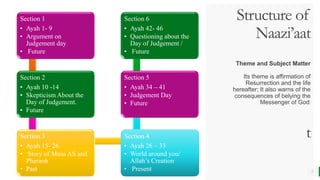
Section 1
• Ayah 1- 9
• Argument on
Judgement day
• Future
Section 2
• Ayah 10 -14
• Skepticism About the
Day of Judgement.
• Future
Section 3
• Ayah 15- 26
• Story of Musa AS and
Pharaoh
• Past
Section 4
• Ayah 26 – 33
• World around you/
Allah’s Creation
• Present
Section 5
• Ayah 34 – 41
• Judgement Day
• Future
Section 6
• Ayah 42- 46
• Questioning about the
Day of Judgement /
• Future
Structure of
Naazi’aat
Theme and Subject Matter
Its theme is affirmation of
Resurrection and the life
hereafter; It also warns of the
consequences of belying the
Messenger of God.
t
2
BEST FOR You
O R G A N I C S C O M P A N Y
3
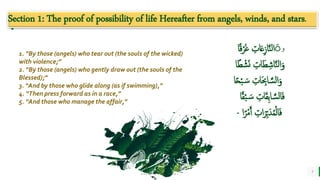
1. “By those (angels) who tear out (the souls of the wicked)
with violence;”
2. “By those (angels) who gently draw out (the souls of the
Blessed);”
3. “And by those who glide along (as if swimming),”
4. “Then press forward as in a race,”
5. “And those who manage the affair,”
Section 1: The proof of possibility of life Hereafter from angels, winds, and stars.
‫و‬
‫ق‬ْ‫ر‬َ‫غ‬ ِ
‫ات‬َ‫ع‬ِ‫ز‬‫ا‬َّ‫ن‬‫ل‬‫ا‬ ََ
‫ا‬
‫ط‬ ْ‫ش‬َ‫ن‬ ِ
‫ات‬َ‫ط‬ ِ‫اش‬َّ‫ن‬‫ل‬‫ا‬َ‫و‬
‫ا‬
ْ‫ب‬ َ‫س‬ ِ
‫ات‬َ ِ
‫اِب‬ َّ‫س‬‫ل‬‫ا‬َ‫و‬
‫ا‬‫ح‬
ْ‫ب‬ َ‫س‬ ِ
‫ات‬َ‫ق‬ِ‫ب‬‫ا‬ َّ‫س‬‫ل‬‫ا‬َ‫ف‬
‫ا‬‫ق‬
ْ‫م‬َ‫أ‬ ِ
‫ات‬َ‫ر‬ِ‫ب‬َ‫د‬ُ‫م‬ْ‫ل‬‫ا‬َ‫ف‬
‫ا‬‫ر‬
-
BEST FOR You
O R G A N I C S C O M P A N Y
4
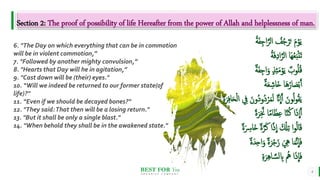
6. "The Day on which everything that can be in commotion
will be in violent commotion,”
7. "Followed by another mighty convulsion,”
8. "Hearts that Day will he in agitation,”
9. "Cast down will be (their) eyes."
10. “Will we indeed be returned to our former state(of
life)?"
11. “Even if we should be decayed bones?"
12. "They said:That then will be a losing return."
13. "But it shall be only a single blast."
14. "When behold they shall be in the awakened state."
Section 2: The proof of possibility of life Hereafter from the power of Allah and helplessness of man.
َ‫ف‬ِ‫اج‬َّ‫الر‬ ُ
‫ف‬ُ‫ج‬ْ‫ر‬َ‫ت‬ َ‫م‬ْ‫و‬َ‫ي‬
ُ‫ة‬
ُ‫ة‬َ‫ف‬ِ‫د‬‫ا‬َّ‫الر‬ ‫َا‬‫ه‬ُ‫ع‬َ‫ب‬ْ‫ت‬َ‫ت‬
َ‫ف‬ِ‫اج‬َ‫و‬ ٍ‫ذ‬ِ‫ئ‬َ‫م‬ْ‫و‬َ‫ي‬ ٌ‫وب‬ُ‫ل‬ُ‫ق‬
ٌ‫ة‬
ٌ‫ة‬َ‫ع‬ ِ‫َاش‬‫خ‬ ‫ا‬َ‫ه‬ُ‫ار‬ َ
‫ص‬ْ‫ب‬َ‫أ‬
ُ‫د‬ْ‫ر‬َ‫م‬َ‫ل‬ َّ‫َّن‬
ِ
‫ا‬َ‫أ‬ َ‫ون‬ُ‫ل‬‫و‬ُ‫ق‬َ‫ي‬
ِ‫ف‬‫ا‬َ‫ح‬ْ‫ل‬‫ا‬ ِ
ِ َ‫ُون‬‫د‬‫و‬
ِ‫ة‬َ‫ر‬
َِّ‫ّن‬ ‫ا‬‫ام‬َ‫ظ‬ِ‫ع‬ ‫ا‬َّ‫ن‬ُ‫ك‬ ‫ا‬َ‫ذ‬
ِ
‫ا‬َ‫أ‬
‫ة‬َ‫ر‬
ٌ‫ة‬َّ‫ر‬َ‫ك‬ ‫ا‬‫ذ‬
ِ
‫ا‬ َ ْ
‫ْل‬ِ‫ت‬ ‫ا‬‫و‬ُ‫ل‬‫ا‬َ‫ق‬
ٌ‫ة‬َ ِ
‫َاِس‬‫خ‬
َ‫و‬ ٌ‫ة‬َ‫ر‬ْ‫ج‬َ‫ز‬ َ ِ
‫ِه‬ ‫ا‬َ‫م‬َّ‫ن‬
ِ
‫ا‬َ‫ف‬
ٌ‫ة‬َ‫د‬ِِ‫ا‬
ِ‫ة‬َ‫ر‬ِ‫ه‬‫ا‬ َّ‫س‬‫ل‬ ِ
‫ِب‬ ُ
‫ُه‬ ‫ا‬َ‫ذ‬
ِ
‫ا‬َ‫ف‬
BEST FOR You
O R G A N I C S C O M P A N Y
5
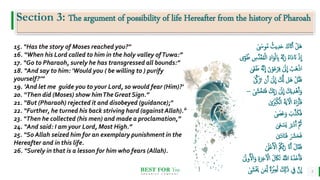
15. “Has the story of Moses reached you?"
16. “When his Lord called to him in the holy valley ofTuwa:”
17. “Go to Pharaoh, surely he has transgressed all bounds:”
18. “And say to him: 'Would you ( be willing to ) purify
yourself?’”
19. ‘And let me guide you to your Lord, so would fear (Him)?'
20. “Then did (Moses) show himThe Great Sign.”
21. “But (Pharaoh) rejected it and disobeyed (guidance);"
22. “Further, he turned his back striving hard (against Allah)."
23. “Then he collected (his men) and made a proclamation,”
24. “And said: I am your Lord, Most High.”
25. “So Allah seized him for an exemplary punishment in the
Hereafter and in this life.
26. “Surely in that is a lesson for him who fears (Allah).
Section 3: The argument of possibility of life Hereafter from the history of Pharoah
ٰ َ
‫وَس‬ُ‫م‬ ُ‫يث‬ِ‫د‬َِ َ‫ك‬ َ‫َت‬َ‫أ‬ ْ‫َل‬‫ه‬
ْ‫ل‬‫ا‬ ِ‫د‬‫ا‬َ‫و‬ْ‫ل‬ ِ
‫ِب‬ ُ‫ه‬ُّ‫ب‬َ‫ر‬ ُ‫ه‬‫َا‬‫د‬ َ‫َّن‬ ْ‫ذ‬
ِ
‫ا‬
‫و‬ُُ ِ
َِّ‫د‬َ‫ق‬ُ‫م‬
َّ‫ن‬
ِ
‫ا‬ َ‫ن‬ْ‫و‬َ‫ع‬ْ‫ر‬ِ‫ف‬ َٰ
‫َل‬
ِ
‫ا‬ ْ
‫َب‬‫ه‬ْ‫ذ‬‫ا‬
ٰ‫َى‬‫غ‬َُ ُ‫ه‬
َ‫ز‬َ‫ت‬ ‫ن‬َ‫أ‬ َٰ
‫َل‬
ِ
‫ا‬ َ َّ
‫َّل‬ ‫َل‬‫ه‬ ْ‫ل‬ُ‫ق‬َ‫ف‬
ٰ َّ
‫ّك‬
َ‫ف‬ َ‫ِك‬‫ب‬َ‫ر‬ َٰ
‫َل‬
ِ
‫ا‬ َ‫ك‬َ‫ي‬ِ‫د‬ْ‫ه‬َ‫أ‬َ‫و‬
ٰ َ
‫َْش‬‫خ‬َ‫ت‬
–
ٰ َ ْ
‫ْب‬ُ‫ك‬ْ‫ال‬ َ‫ة‬َ‫ي‬‫آ‬ ْ
‫ال‬ ُ‫ه‬‫ا‬َ‫ر‬َ‫أ‬َ‫ف‬
ٰ َ
‫َص‬َ‫ع‬َ‫و‬ َ
‫ب‬َّ‫ذ‬َ‫ك‬َ‫ف‬
ٰ‫ى‬َ‫ع‬ ْ
‫َس‬‫ي‬ َ‫ر‬َ‫ْب‬‫د‬َ‫أ‬ َّ ُ
‫ُث‬
ٰ َ‫د‬‫ا‬َ‫ن‬َ‫ف‬ َ َ
‫َش‬َ‫ح‬َ‫ف‬
ٰ َ
‫ل‬ْ‫ع‬َ ْ
‫ال‬ ُ ُ
‫ُك‬ُّ‫ب‬َ‫ر‬ َ‫َّن‬َ‫أ‬ َ‫ل‬‫ا‬َ‫ق‬َ‫ف‬
ِ‫خ‬‫آ‬ ْ
‫ال‬ َ‫ل‬ َ‫َك‬َ‫ن‬ َُّ
‫اَّلل‬ ُ‫ه‬َ‫ذ‬َ‫خ‬َ‫أ‬َ‫ف‬
َٰ
‫وَل‬ُ ْ
‫ال‬َ‫و‬ ِ‫ة‬َ‫ر‬
ِ‫ل‬ ‫ة‬َ ْ
‫ْب‬ِ‫ع‬َ‫ل‬ َ ِ
‫َّل‬ََٰ‫ذ‬ ِ
ِ َّ‫ن‬
ِ
‫ا‬
ٰ َ
‫َش‬ََْ َ‫م‬
BEST FOR You
O R G A N I C S C O M P A N Y
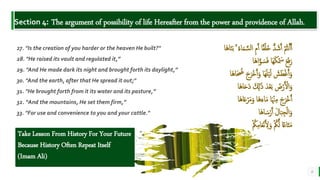
Section 4: The argument of possibility of life Hereafter from the power and providence of Allah.
6
27. "Is the creation of you harder or the heaven He built?"
28. "He raised its vault and regulated it,”
29. "And He made dark its night and brought forth its daylight,”
30. "And the earth, after that He spread it out;"
31. "He brought forth from it its water and its pasture,”
32. “And the mountains, He set them firm,”
33. "For use and convenience to you and your cattle."
‫َا‬‫ه‬‫ا‬َ‫ن‬َ‫ب‬ ۚ ُ‫ء‬‫ا‬َ‫م‬ َّ‫الس‬ ِ‫م‬َ‫أ‬ ‫ا‬‫ق‬ْ‫ل‬َ‫خ‬ ُّ‫د‬ َ‫ش‬َ‫أ‬ ْ ُ
‫نُت‬َ‫أ‬َ‫أ‬
‫َا‬‫ه‬‫ا‬َّ‫و‬ َ‫س‬َ‫ف‬ ‫َا‬‫ه‬َ‫ك‬ْ َ
‫َس‬ َ‫ع‬َ‫ف‬َ‫ر‬
‫َا‬‫ه‬‫ا‬َ ُ
‫ُض‬ َ‫ج‬َ‫ْر‬‫خ‬َ‫أ‬َ‫و‬ ‫َا‬‫ه‬َ‫ل‬ْ‫ي‬َ‫ل‬ َ
‫ش‬َ‫ط‬ْ‫غ‬َ‫أ‬َ‫و‬
‫َا‬‫ه‬‫ا‬ََِ‫د‬ َ ِ
‫َّل‬ََٰ‫ذ‬ َ‫د‬ْ‫ع‬َ‫ب‬ َ
‫ض‬ْ‫ر‬َ ْ
‫ال‬َ‫و‬
‫َا‬‫ه‬‫ا‬َ‫ع‬ْ‫ر‬َ‫م‬َ‫و‬ ‫َا‬‫ه‬َ‫اء‬َ‫م‬ ‫ا‬َ ْ‫ْن‬ِ‫م‬ َ‫ج‬َ‫ْر‬‫خ‬َ‫أ‬
‫َا‬‫ه‬‫ا‬ َ‫س‬ْ‫ر‬َ‫أ‬ َ‫ل‬‫ا‬َ‫ب‬ِ‫ج‬ْ‫ل‬‫ا‬َ‫و‬
ْ ُ
‫ُك‬ِ‫م‬‫ا‬َ‫ع‬ْ‫ن‬َ ِ
‫ل‬َ‫و‬ ْ ُ
‫ُك‬َّ‫ل‬ ‫ا‬‫اع‬َ‫ت‬َ‫م‬
Take Lesson From History For Your Future
Because History Often Repeat Itself
(Imam Ali)
BEST FOR You
O R G A N I C S C O M P A N Y
Judge Yourselves Before You Are Judged, Evaluate
Yourselves Before You Are Evaluated And Be Ready For
The Greatest Investigation , The Day Of Judgment”.
( Uman Ibn Khatab)
7
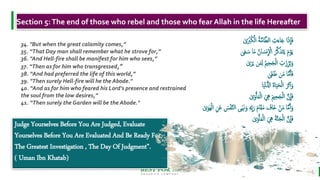
34. "But when the great calamity comes,”
35. “That Day man shall remember what he strove for,”
36. "And Hell-fire shall be manifest for him who sees,”
37. “Then as for him who transgressed,”
38. “And had preferred the life of this world,”
39. "Then surely Hell-fire will he the Abode."
40. “And as for him who feared his Lord's presence and restrained
the soul from the low desires,”
41. “Then surely the Garden will be the Abode."
Section 5:The end of those who rebel and those who fear Allah in the life Hereafter
َ ْ
‫ْب‬ُ‫ك‬ْ‫ال‬ ُ‫ة‬َّ‫م‬‫ا‬َّ‫الط‬ ِ
‫ت‬َ‫اء‬َ‫ج‬ ‫ا‬َ‫ذ‬
ِ
‫ا‬َ‫ف‬
ٰ
َ‫س‬ ‫ا‬َ‫م‬ ُ‫ان‬ َ‫نس‬
ِ
ْ
‫اْل‬ ُ‫ر‬َّ‫ك‬َ‫ذ‬َ‫ت‬َ‫ي‬ َ‫م‬ْ‫و‬َ‫ي‬
ٰ‫ى‬َ‫ع‬
ٰ َ‫ر‬َ‫ي‬ َ‫م‬ِ‫ل‬ ُ‫مي‬ِ‫ح‬َ‫ج‬ْ‫ل‬‫ا‬ ِ
‫ت‬َ‫ز‬ِ‫ر‬ُ‫ب‬َ‫و‬
ٰ‫َى‬‫غ‬َُ َ‫م‬ ‫ا‬َّ‫م‬َ‫أ‬َ‫ف‬
‫ا‬َ‫ي‬ْ‫ن‬ُّ‫ادل‬ َ‫ة‬‫ا‬َ‫ي‬َ‫ح‬ْ‫ل‬‫ا‬ َ‫َر‬‫ث‬‫آ‬‫أ‬َ‫و‬
ٰ َ‫و‬ْ‫أ‬َ‫م‬ْ‫ل‬‫ا‬ َ ِ
‫ِه‬ َ‫مي‬ِ‫ح‬َ‫ج‬ْ‫ل‬‫ا‬ َّ‫ن‬
ِ
‫ا‬َ‫ف‬
َ‫و‬ ِ‫ه‬ِ‫ب‬َ‫ر‬ َ‫م‬‫ا‬َ‫ق‬َ‫م‬ َ
‫َاف‬‫خ‬ ْ َ‫م‬ ‫ا‬َّ‫م‬َ‫أ‬َ‫و‬
َ‫ه‬ْ‫ل‬‫ا‬ ِ َ‫ع‬ َ
‫س‬ْ‫ف‬َّ‫ن‬‫ال‬ ‫ىى‬َ َ‫َن‬
ٰ َ‫و‬
ٰ َ‫و‬ْ‫أ‬َ‫م‬ْ‫ل‬‫ا‬ َ ِ
‫ِه‬ َ‫ة‬َّ‫ن‬َ‫ج‬ْ‫ل‬‫ا‬ َّ‫ن‬
ِ
‫ا‬َ‫ف‬
BEST FOR You
O R G A N I C S C O M P A N Y
8
42. “They ask you about the Hour,When will it come to pass?”
43. “In what [position] are you that you should mention it?”
44. “This matter is in the hands of your Lord”
45. “You are only a warner for those who fear such day.”
46. “It shall seem to them on the day when they behold it, as though
they tarried not (in their graves) but an evening or a forenoon.
Section 6: Those who fear Allah, prepare for the life Hereafter.
َّ‫ّي‬َ‫أ‬ ِ‫ة‬َ‫ع‬‫ا‬ َّ‫الس‬ ِ َ‫ع‬ َ‫َك‬‫ن‬‫و‬ُ‫ل‬َ‫أ‬ ْ
‫َس‬‫ي‬
‫َا‬‫ه‬‫ا‬ َ‫س‬ْ‫ر‬ُ‫م‬ َ‫ن‬
‫َا‬‫ه‬‫ا‬َ‫ر‬ْ‫ك‬ِ‫ذ‬ ِ‫م‬ َ
‫نت‬َ‫أ‬ َ‫مي‬ِ‫ف‬
‫َا‬‫ه‬‫ا‬َ َ‫نَت‬ُ‫م‬ َ‫ِك‬‫ب‬َ‫ر‬ َٰ
‫َل‬
ِ
‫ا‬
َ‫ه‬‫ا‬ َ‫ش‬ََْ َ‫م‬ ُ‫ر‬ِ‫ذ‬‫ن‬ُ‫م‬ َ
‫نت‬َ‫أ‬ ‫ا‬َ‫م‬َّ‫ن‬
ِ
‫ا‬
‫ا‬
ْ‫م‬َ‫ل‬ ‫ا‬َ َ‫َن‬ْ‫و‬َ‫ر‬َ‫ي‬ َ‫م‬ْ‫و‬َ‫ي‬ ْ‫م‬َُّ‫َن‬َ َ‫َك‬
َّ‫ي‬ ِ
‫َش‬‫ع‬ َّ‫ْل‬
ِ
‫ا‬ ‫ا‬‫و‬َُُ‫ب‬ْ‫ل‬َ‫ي‬
‫َا‬‫ه‬‫ا‬َ ُ
‫ُض‬ ْ‫و‬َ‫أ‬ ‫ة‬
Lesson Learn from Surah An- Naazi’aat
1. There is no escape from the Day of Judgment when all
souls will be held accountable
2. The battle between right and wrong has roots in history
from which we need to learn where to stand and how to
navigate.
3. We are surrounded by the signs of Allah and each sign can
lead us to a truth if we contemplate and reflect.
4. The Day of Judgment will be swift and easy for those who
purified themselves for their Lord.
5. Those who disobey will have a great chastisement in store
for them.
6. The Day of Judgment is a reality yet the time is hidden
from all knowledge.

Surah Al-Naziat Power point

  • 1.
  • 2.
    BEST FOR You OR G A N I C S C O M P A N Y Section 1 • Ayah 1- 9 • Argument on Judgement day • Future Section 2 • Ayah 10 -14 • Skepticism About the Day of Judgement. • Future Section 3 • Ayah 15- 26 • Story of Musa AS and Pharaoh • Past Section 4 • Ayah 26 – 33 • World around you/ Allah’s Creation • Present Section 5 • Ayah 34 – 41 • Judgement Day • Future Section 6 • Ayah 42- 46 • Questioning about the Day of Judgement / • Future Structure of Naazi’aat Theme and Subject Matter Its theme is affirmation of Resurrection and the life hereafter; It also warns of the consequences of belying the Messenger of God. t 2
  • 3.
    BEST FOR You OR G A N I C S C O M P A N Y 3 1. “By those (angels) who tear out (the souls of the wicked) with violence;” 2. “By those (angels) who gently draw out (the souls of the Blessed);” 3. “And by those who glide along (as if swimming),” 4. “Then press forward as in a race,” 5. “And those who manage the affair,” Section 1: The proof of possibility of life Hereafter from angels, winds, and stars. ‫و‬ ‫ق‬ْ‫ر‬َ‫غ‬ ِ ‫ات‬َ‫ع‬ِ‫ز‬‫ا‬َّ‫ن‬‫ل‬‫ا‬ ََ ‫ا‬ ‫ط‬ ْ‫ش‬َ‫ن‬ ِ ‫ات‬َ‫ط‬ ِ‫اش‬َّ‫ن‬‫ل‬‫ا‬َ‫و‬ ‫ا‬ ْ‫ب‬ َ‫س‬ ِ ‫ات‬َ ِ ‫اِب‬ َّ‫س‬‫ل‬‫ا‬َ‫و‬ ‫ا‬‫ح‬ ْ‫ب‬ َ‫س‬ ِ ‫ات‬َ‫ق‬ِ‫ب‬‫ا‬ َّ‫س‬‫ل‬‫ا‬َ‫ف‬ ‫ا‬‫ق‬ ْ‫م‬َ‫أ‬ ِ ‫ات‬َ‫ر‬ِ‫ب‬َ‫د‬ُ‫م‬ْ‫ل‬‫ا‬َ‫ف‬ ‫ا‬‫ر‬ -
  • 4.
    BEST FOR You OR G A N I C S C O M P A N Y 4 6. "The Day on which everything that can be in commotion will be in violent commotion,” 7. "Followed by another mighty convulsion,” 8. "Hearts that Day will he in agitation,” 9. "Cast down will be (their) eyes." 10. “Will we indeed be returned to our former state(of life)?" 11. “Even if we should be decayed bones?" 12. "They said:That then will be a losing return." 13. "But it shall be only a single blast." 14. "When behold they shall be in the awakened state." Section 2: The proof of possibility of life Hereafter from the power of Allah and helplessness of man. َ‫ف‬ِ‫اج‬َّ‫الر‬ ُ ‫ف‬ُ‫ج‬ْ‫ر‬َ‫ت‬ َ‫م‬ْ‫و‬َ‫ي‬ ُ‫ة‬ ُ‫ة‬َ‫ف‬ِ‫د‬‫ا‬َّ‫الر‬ ‫َا‬‫ه‬ُ‫ع‬َ‫ب‬ْ‫ت‬َ‫ت‬ َ‫ف‬ِ‫اج‬َ‫و‬ ٍ‫ذ‬ِ‫ئ‬َ‫م‬ْ‫و‬َ‫ي‬ ٌ‫وب‬ُ‫ل‬ُ‫ق‬ ٌ‫ة‬ ٌ‫ة‬َ‫ع‬ ِ‫َاش‬‫خ‬ ‫ا‬َ‫ه‬ُ‫ار‬ َ ‫ص‬ْ‫ب‬َ‫أ‬ ُ‫د‬ْ‫ر‬َ‫م‬َ‫ل‬ َّ‫َّن‬ ِ ‫ا‬َ‫أ‬ َ‫ون‬ُ‫ل‬‫و‬ُ‫ق‬َ‫ي‬ ِ‫ف‬‫ا‬َ‫ح‬ْ‫ل‬‫ا‬ ِ ِ َ‫ُون‬‫د‬‫و‬ ِ‫ة‬َ‫ر‬ َِّ‫ّن‬ ‫ا‬‫ام‬َ‫ظ‬ِ‫ع‬ ‫ا‬َّ‫ن‬ُ‫ك‬ ‫ا‬َ‫ذ‬ ِ ‫ا‬َ‫أ‬ ‫ة‬َ‫ر‬ ٌ‫ة‬َّ‫ر‬َ‫ك‬ ‫ا‬‫ذ‬ ِ ‫ا‬ َ ْ ‫ْل‬ِ‫ت‬ ‫ا‬‫و‬ُ‫ل‬‫ا‬َ‫ق‬ ٌ‫ة‬َ ِ ‫َاِس‬‫خ‬ َ‫و‬ ٌ‫ة‬َ‫ر‬ْ‫ج‬َ‫ز‬ َ ِ ‫ِه‬ ‫ا‬َ‫م‬َّ‫ن‬ ِ ‫ا‬َ‫ف‬ ٌ‫ة‬َ‫د‬ِِ‫ا‬ ِ‫ة‬َ‫ر‬ِ‫ه‬‫ا‬ َّ‫س‬‫ل‬ ِ ‫ِب‬ ُ ‫ُه‬ ‫ا‬َ‫ذ‬ ِ ‫ا‬َ‫ف‬
  • 5.
    BEST FOR You OR G A N I C S C O M P A N Y 5 15. “Has the story of Moses reached you?" 16. “When his Lord called to him in the holy valley ofTuwa:” 17. “Go to Pharaoh, surely he has transgressed all bounds:” 18. “And say to him: 'Would you ( be willing to ) purify yourself?’” 19. ‘And let me guide you to your Lord, so would fear (Him)?' 20. “Then did (Moses) show himThe Great Sign.” 21. “But (Pharaoh) rejected it and disobeyed (guidance);" 22. “Further, he turned his back striving hard (against Allah)." 23. “Then he collected (his men) and made a proclamation,” 24. “And said: I am your Lord, Most High.” 25. “So Allah seized him for an exemplary punishment in the Hereafter and in this life. 26. “Surely in that is a lesson for him who fears (Allah). Section 3: The argument of possibility of life Hereafter from the history of Pharoah ٰ َ ‫وَس‬ُ‫م‬ ُ‫يث‬ِ‫د‬َِ َ‫ك‬ َ‫َت‬َ‫أ‬ ْ‫َل‬‫ه‬ ْ‫ل‬‫ا‬ ِ‫د‬‫ا‬َ‫و‬ْ‫ل‬ ِ ‫ِب‬ ُ‫ه‬ُّ‫ب‬َ‫ر‬ ُ‫ه‬‫َا‬‫د‬ َ‫َّن‬ ْ‫ذ‬ ِ ‫ا‬ ‫و‬ُُ ِ َِّ‫د‬َ‫ق‬ُ‫م‬ َّ‫ن‬ ِ ‫ا‬ َ‫ن‬ْ‫و‬َ‫ع‬ْ‫ر‬ِ‫ف‬ َٰ ‫َل‬ ِ ‫ا‬ ْ ‫َب‬‫ه‬ْ‫ذ‬‫ا‬ ٰ‫َى‬‫غ‬َُ ُ‫ه‬ َ‫ز‬َ‫ت‬ ‫ن‬َ‫أ‬ َٰ ‫َل‬ ِ ‫ا‬ َ َّ ‫َّل‬ ‫َل‬‫ه‬ ْ‫ل‬ُ‫ق‬َ‫ف‬ ٰ َّ ‫ّك‬ َ‫ف‬ َ‫ِك‬‫ب‬َ‫ر‬ َٰ ‫َل‬ ِ ‫ا‬ َ‫ك‬َ‫ي‬ِ‫د‬ْ‫ه‬َ‫أ‬َ‫و‬ ٰ َ ‫َْش‬‫خ‬َ‫ت‬ – ٰ َ ْ ‫ْب‬ُ‫ك‬ْ‫ال‬ َ‫ة‬َ‫ي‬‫آ‬ ْ ‫ال‬ ُ‫ه‬‫ا‬َ‫ر‬َ‫أ‬َ‫ف‬ ٰ َ ‫َص‬َ‫ع‬َ‫و‬ َ ‫ب‬َّ‫ذ‬َ‫ك‬َ‫ف‬ ٰ‫ى‬َ‫ع‬ ْ ‫َس‬‫ي‬ َ‫ر‬َ‫ْب‬‫د‬َ‫أ‬ َّ ُ ‫ُث‬ ٰ َ‫د‬‫ا‬َ‫ن‬َ‫ف‬ َ َ ‫َش‬َ‫ح‬َ‫ف‬ ٰ َ ‫ل‬ْ‫ع‬َ ْ ‫ال‬ ُ ُ ‫ُك‬ُّ‫ب‬َ‫ر‬ َ‫َّن‬َ‫أ‬ َ‫ل‬‫ا‬َ‫ق‬َ‫ف‬ ِ‫خ‬‫آ‬ ْ ‫ال‬ َ‫ل‬ َ‫َك‬َ‫ن‬ َُّ ‫اَّلل‬ ُ‫ه‬َ‫ذ‬َ‫خ‬َ‫أ‬َ‫ف‬ َٰ ‫وَل‬ُ ْ ‫ال‬َ‫و‬ ِ‫ة‬َ‫ر‬ ِ‫ل‬ ‫ة‬َ ْ ‫ْب‬ِ‫ع‬َ‫ل‬ َ ِ ‫َّل‬ََٰ‫ذ‬ ِ ِ َّ‫ن‬ ِ ‫ا‬ ٰ َ ‫َش‬ََْ َ‫م‬
  • 6.
    BEST FOR You OR G A N I C S C O M P A N Y Section 4: The argument of possibility of life Hereafter from the power and providence of Allah. 6 27. "Is the creation of you harder or the heaven He built?" 28. "He raised its vault and regulated it,” 29. "And He made dark its night and brought forth its daylight,” 30. "And the earth, after that He spread it out;" 31. "He brought forth from it its water and its pasture,” 32. “And the mountains, He set them firm,” 33. "For use and convenience to you and your cattle." ‫َا‬‫ه‬‫ا‬َ‫ن‬َ‫ب‬ ۚ ُ‫ء‬‫ا‬َ‫م‬ َّ‫الس‬ ِ‫م‬َ‫أ‬ ‫ا‬‫ق‬ْ‫ل‬َ‫خ‬ ُّ‫د‬ َ‫ش‬َ‫أ‬ ْ ُ ‫نُت‬َ‫أ‬َ‫أ‬ ‫َا‬‫ه‬‫ا‬َّ‫و‬ َ‫س‬َ‫ف‬ ‫َا‬‫ه‬َ‫ك‬ْ َ ‫َس‬ َ‫ع‬َ‫ف‬َ‫ر‬ ‫َا‬‫ه‬‫ا‬َ ُ ‫ُض‬ َ‫ج‬َ‫ْر‬‫خ‬َ‫أ‬َ‫و‬ ‫َا‬‫ه‬َ‫ل‬ْ‫ي‬َ‫ل‬ َ ‫ش‬َ‫ط‬ْ‫غ‬َ‫أ‬َ‫و‬ ‫َا‬‫ه‬‫ا‬ََِ‫د‬ َ ِ ‫َّل‬ََٰ‫ذ‬ َ‫د‬ْ‫ع‬َ‫ب‬ َ ‫ض‬ْ‫ر‬َ ْ ‫ال‬َ‫و‬ ‫َا‬‫ه‬‫ا‬َ‫ع‬ْ‫ر‬َ‫م‬َ‫و‬ ‫َا‬‫ه‬َ‫اء‬َ‫م‬ ‫ا‬َ ْ‫ْن‬ِ‫م‬ َ‫ج‬َ‫ْر‬‫خ‬َ‫أ‬ ‫َا‬‫ه‬‫ا‬ َ‫س‬ْ‫ر‬َ‫أ‬ َ‫ل‬‫ا‬َ‫ب‬ِ‫ج‬ْ‫ل‬‫ا‬َ‫و‬ ْ ُ ‫ُك‬ِ‫م‬‫ا‬َ‫ع‬ْ‫ن‬َ ِ ‫ل‬َ‫و‬ ْ ُ ‫ُك‬َّ‫ل‬ ‫ا‬‫اع‬َ‫ت‬َ‫م‬ Take Lesson From History For Your Future Because History Often Repeat Itself (Imam Ali)
  • 7.
    BEST FOR You OR G A N I C S C O M P A N Y Judge Yourselves Before You Are Judged, Evaluate Yourselves Before You Are Evaluated And Be Ready For The Greatest Investigation , The Day Of Judgment”. ( Uman Ibn Khatab) 7 34. "But when the great calamity comes,” 35. “That Day man shall remember what he strove for,” 36. "And Hell-fire shall be manifest for him who sees,” 37. “Then as for him who transgressed,” 38. “And had preferred the life of this world,” 39. "Then surely Hell-fire will he the Abode." 40. “And as for him who feared his Lord's presence and restrained the soul from the low desires,” 41. “Then surely the Garden will be the Abode." Section 5:The end of those who rebel and those who fear Allah in the life Hereafter َ ْ ‫ْب‬ُ‫ك‬ْ‫ال‬ ُ‫ة‬َّ‫م‬‫ا‬َّ‫الط‬ ِ ‫ت‬َ‫اء‬َ‫ج‬ ‫ا‬َ‫ذ‬ ِ ‫ا‬َ‫ف‬ ٰ َ‫س‬ ‫ا‬َ‫م‬ ُ‫ان‬ َ‫نس‬ ِ ْ ‫اْل‬ ُ‫ر‬َّ‫ك‬َ‫ذ‬َ‫ت‬َ‫ي‬ َ‫م‬ْ‫و‬َ‫ي‬ ٰ‫ى‬َ‫ع‬ ٰ َ‫ر‬َ‫ي‬ َ‫م‬ِ‫ل‬ ُ‫مي‬ِ‫ح‬َ‫ج‬ْ‫ل‬‫ا‬ ِ ‫ت‬َ‫ز‬ِ‫ر‬ُ‫ب‬َ‫و‬ ٰ‫َى‬‫غ‬َُ َ‫م‬ ‫ا‬َّ‫م‬َ‫أ‬َ‫ف‬ ‫ا‬َ‫ي‬ْ‫ن‬ُّ‫ادل‬ َ‫ة‬‫ا‬َ‫ي‬َ‫ح‬ْ‫ل‬‫ا‬ َ‫َر‬‫ث‬‫آ‬‫أ‬َ‫و‬ ٰ َ‫و‬ْ‫أ‬َ‫م‬ْ‫ل‬‫ا‬ َ ِ ‫ِه‬ َ‫مي‬ِ‫ح‬َ‫ج‬ْ‫ل‬‫ا‬ َّ‫ن‬ ِ ‫ا‬َ‫ف‬ َ‫و‬ ِ‫ه‬ِ‫ب‬َ‫ر‬ َ‫م‬‫ا‬َ‫ق‬َ‫م‬ َ ‫َاف‬‫خ‬ ْ َ‫م‬ ‫ا‬َّ‫م‬َ‫أ‬َ‫و‬ َ‫ه‬ْ‫ل‬‫ا‬ ِ َ‫ع‬ َ ‫س‬ْ‫ف‬َّ‫ن‬‫ال‬ ‫ىى‬َ َ‫َن‬ ٰ َ‫و‬ ٰ َ‫و‬ْ‫أ‬َ‫م‬ْ‫ل‬‫ا‬ َ ِ ‫ِه‬ َ‫ة‬َّ‫ن‬َ‫ج‬ْ‫ل‬‫ا‬ َّ‫ن‬ ِ ‫ا‬َ‫ف‬
  • 8.
    BEST FOR You OR G A N I C S C O M P A N Y 8 42. “They ask you about the Hour,When will it come to pass?” 43. “In what [position] are you that you should mention it?” 44. “This matter is in the hands of your Lord” 45. “You are only a warner for those who fear such day.” 46. “It shall seem to them on the day when they behold it, as though they tarried not (in their graves) but an evening or a forenoon. Section 6: Those who fear Allah, prepare for the life Hereafter. َّ‫ّي‬َ‫أ‬ ِ‫ة‬َ‫ع‬‫ا‬ َّ‫الس‬ ِ َ‫ع‬ َ‫َك‬‫ن‬‫و‬ُ‫ل‬َ‫أ‬ ْ ‫َس‬‫ي‬ ‫َا‬‫ه‬‫ا‬ َ‫س‬ْ‫ر‬ُ‫م‬ َ‫ن‬ ‫َا‬‫ه‬‫ا‬َ‫ر‬ْ‫ك‬ِ‫ذ‬ ِ‫م‬ َ ‫نت‬َ‫أ‬ َ‫مي‬ِ‫ف‬ ‫َا‬‫ه‬‫ا‬َ َ‫نَت‬ُ‫م‬ َ‫ِك‬‫ب‬َ‫ر‬ َٰ ‫َل‬ ِ ‫ا‬ َ‫ه‬‫ا‬ َ‫ش‬ََْ َ‫م‬ ُ‫ر‬ِ‫ذ‬‫ن‬ُ‫م‬ َ ‫نت‬َ‫أ‬ ‫ا‬َ‫م‬َّ‫ن‬ ِ ‫ا‬ ‫ا‬ ْ‫م‬َ‫ل‬ ‫ا‬َ َ‫َن‬ْ‫و‬َ‫ر‬َ‫ي‬ َ‫م‬ْ‫و‬َ‫ي‬ ْ‫م‬َُّ‫َن‬َ َ‫َك‬ َّ‫ي‬ ِ ‫َش‬‫ع‬ َّ‫ْل‬ ِ ‫ا‬ ‫ا‬‫و‬َُُ‫ب‬ْ‫ل‬َ‫ي‬ ‫َا‬‫ه‬‫ا‬َ ُ ‫ُض‬ ْ‫و‬َ‫أ‬ ‫ة‬
  • 9.
    Lesson Learn fromSurah An- Naazi’aat 1. There is no escape from the Day of Judgment when all souls will be held accountable 2. The battle between right and wrong has roots in history from which we need to learn where to stand and how to navigate. 3. We are surrounded by the signs of Allah and each sign can lead us to a truth if we contemplate and reflect. 4. The Day of Judgment will be swift and easy for those who purified themselves for their Lord. 5. Those who disobey will have a great chastisement in store for them. 6. The Day of Judgment is a reality yet the time is hidden from all knowledge.

Editor's Notes

  • #3 Surah Begins with two part, judgement day and skepticism about the judgment day. In the end surah also mirroring the same concept in section 5 and 6. Section 1, 2, 5, 6 is all about future, center part which is Section 4 of this surah is all about the past and present. The theme in this Surah, like Surah Nabaa, is about Resurrection and The name Nazi’at is derived from the first verse of this Surah. This entire surah beautifully mentioned all three aspect of time, past , present and future.
  • #4 This first section emphasizes on the certainty of the Great Day and lays stress on its occurrence by emphatic statements, which relate to the Resurrection. Some Mufasireen refer these verses to angels who tear out the souls, other refer these to the stars and winds. But majority opinion refers it to the angels. According to Syed Qutub in his Tafseer of In the shade of Quran he wrote that “Perhaps it is better not to go into great details in trying to explain and discuss these verse. It is more fruitful to let these verses produce their effect naturally. The Quran Seeks to achive its obejective of awakening people’s heart in diffent ways. If we do this we simply follow the example of Umar bin Khatan RA. He ones read Surah Abbasa, when he reached the verse which read Wa fakihatan wa abba, he wondered, “ we know he fruit trees, fakihatan, but what is abba?” But then re reproached himself, saying “ You, Ibn al Khataab, are being really fussy today! What harm is there in your not knowing the meaning of word used in God’s book?” He basically encouraging people that don’t get tangle in the so much details where you lost the real message and start giving the meaning without having the complete knowledge of that matter. Ayah 1 and 2 refers to the angels who remove the souls from the Children of Adam. There are two types of soul, one is wicked soul and another is soul of the righteous people. When the angels pluck the souls of the disbelievers they go deep down to pluck them out. Such that there is no place for the soul to hide in the body. When the angels take the souls of the disbelievers, they take it out with great force. Why is it forceful and why is it deep? This is to indicate that soul of a disbeliever will not want to leave the body, their soul is so much attached to this world that don’t want to leave this temporary world because they know their reckoning. According to a hadith: The Angel of Death says to the disbelieving soul: ‘O you foul soul, come out to the anger and wrath of your Lord.’ The soul inside the disbeliever’s body is overcome by terrible fear and does not want to deliver itself up, whereupon the Angel of Death violently pulls it out like multi-pronged skewers being yanked out of wet wool – tearing with them the arteries and nerves. Where as the soul of righteous people are looking forward for the another world because they prepared in this world for the hereafter. So angels easily and gently draw out their soul. Angel of Death comes to the [dying] believer, sits at his head and says, “O you good soul, come out and receive your Lord’s forgiveness and pleasure.” Then the soul flows out effortlessly just as water flows from the mouth of a waterskin. Abu Hurayrah (ra) narrated that the Messenger of Allah (PBUH) said: “When the soul of a believer comes out [of its body], two angels receive it and rise with it towards the heavens, whereupon the inhabitants of the heavens say, ‘A good soul has come from the earth. Allah has blessed you and the body which you used to occupy.’ “ [Muslim] So this verse is speaking about the angles when they enter the body and smoothly take the soul out (of the believe) like a very lose knot or one who is freed from shackles (a very happy moment). So this verse is the opposite to the 1st verse. These five verses are the introduction of the angels that how they manage the affairs, given to them by Allah swt and how they try to compete with each other or having a race to perform those duties. There is a question that why is Allah subhanahu wa ta’ala swearing or taking an oath by the angels? We know that the fact that Makkans do denied the yumul Qiyamah; however, they did not deny the angels. They acknowledged that the angels take out the soul at the time of death. They also believed that the angels moved at tremendous speeds. Where they could reach any place between the earth and the heavens and promptly execute any matter entrusted to them. Therefore, the basis of the reasoning is that the angels who took the soul by the order of Allah subhanahu wa ta’ala, could also restore the soul by the order of the same God; and the angels who conducted the affairs of the universe by the order of Allah subhanahu wa ta’ala could also upset this universe by the order of the same God whenever He ordered them and could also bring about a new world order. The opening in the form of an oath is to confirm the coming of an great event.  
  • #5 Section 2 points to one part of the frightening and dreadful incidents of that Day. Ibn ‘Abbas radhiAllahu ‘anhu explained that these are the two blasts of the Trumpet – the first and the second. With the first blast the earth being overwhelmed by a violent quake will cause an upheaval scattering all of the creation. Then the second blast, Ar-Radifah [الرَّادِفَةُ], will occur and the creation will come back to life. 8-9 : After such a terrifying description Allah subhanahu wa ta’ala goes on to narrate the condition of humans, “Hearts, that Day will tremble, their eyes humbled,” [79: 8-9]. Such a condition is a combination of worry, fear, humiliation and breakdown. According to the Qur'an, only the disbelievers, the wicked people and the hypocrites will face this terror on the Resurrection Day, the righteous believers will remain secure from this pain. 10-12: That is, when they were told that they would surely be raised back to life after death, they started mocking it, saying to one another, "Well, if we have really to be restored to our former state of life, then we would certainly be doomed. “
  • #6 This section mentioned the story of Musa As and Phiroah and informed Muhammed SAW that who ever rejected the message of Allah swt will suffer with sever punishment. The word tagha [طَغَى] translated here as ‘exceed a limit, to transgress, exceed the bound, or deviate’. The transgression of the Pharaoh is not only against the Creator and but also against His creatures. As for his rebellion against the Creator, it is being mentioned in this section, when he gathered his people together and prolaimed: "I am your lord, the supreme." As against the creatures his rebellion was that he had divided his people into classes and he treated the weak classes unjustly and had reduced his entire nation to slavery. Does this sounds familiar? Do we have phiroah in our time? Divide and Rule/ In the ayaat above we learn that Allah subhanahu wa ta’ala not only instructs Prophet Musa to go to the tyrant but also guides him as to how to address the tyrant. Ayah 18:  “…say to him, ‘Would you [be willing to] purify yourself and let me guide you to your Lord so you would fear [Him]?’” Look at the way the question has been put: would you be willing to purify yourself. When a person is indulged in transgression his heart hardens and he loses his way. So the first question was whether or not the tyrant would like to purify himself of the stains of tyranny and and disobedience. Here is an important lesson that our goal should not be that the person listens to us and follows us but rather we should genuinely care for their well-being and work on their purification of soul. Alhamdulillah's that’s why we have designed this course with combination of Tafseer and Tazkis Nafs course because before planting the seeds of guidance we have to make sure that whether the soil is ready or not. As a parent we did this mistake quiet often that we bombarded our kids with lost of Quranic Ahkamat, dos and don’t’s, Halal and Haram without working on their heart and soul. Without building their connection with Allah swt, we cannot love or have fear of Allah swt without having a complete knowledge about Him. Musa ‘alayhi salaam conveyed the message in a warm, friendly manner but he could not win over a heart that had been hardened by disobedeince and ignorance, “And he showed him the greatest sign, but Pharaoh denied and disobeyed,” [79: 20-21]. After rejecting the message of Musa AS, he called all his men and made a proclamation to them, “I am your most exalted lord,” [79: 24]. Pharaoh’s declaration and corruption is showing his people’s ignorance and their submission to his authority. Nothing deceives tyrants more than the ignorance and submission of the masses. A tyrant Ruler is in fact an individual who has no real power or authority. The ignorant and the submissive people basically allow themselves to be tyrannized. The masses do all this because they are fail to admit and afraid at the same time.  No one can tyrannize a nation which is awake and held their ruler accountable, and knows its true Lord and refuses to submit to any creature who has no power over its destiny. According to Allama Iqbal Khuda ne aaj tak us qaum ki haalat nahiin badli, na ho jisko khyaal aap apni haalat ke badalne ka!”, which means that God has never changed the destiny of a nation that is not bothered about its fate. Who comprises on their freedom and rights. Sister we all know that election is coming and we all know very well the law of this land that our rights and freedom is depending on our votes. Whatever will be the result we should never stop working towards the reformation of the corrupt political system of this country. Pharaoh, however, found his people so ignorant, submissive and devoid of faith that he was able to make this, blasphemous declaration, “I am your most exalted lord!”. Allah subhanahu wa ta’ala seized him in exemplary punishment in this world and there is more to come in the Hereafter. Pharaoh had power, authority and glory, yet none of this will be of any use to him. We can only imagine what the fate will be faced by unbelievers who do not have similar power, authority or glory as compare to phiroah. “Indeed in that is a warning for whoever would fear [Allah],” [79: 26].
  • #7 Section 4 mentions a few of the countless Powers of Allah, which exist in the heavens and on the Earth; they are the evidences of the possibility of day of judgement and the new life after death. Now in this section, Allah swt leaving history aside and takes up the open book of this beautiful universe. The question these verses starts with, (27) which is stronger in constitution, you or the heaven He has built? How come someone think so highly of their own power ( like Phiroah and Quresh) when the making of heaven is much stronger. This question also carried forward in a different direction. Why do you think resurrection is impossible, when Allah has created heaven, whose creation required more power and strength. As we know that resurrection or day of judgment is the main theme of this surah or many other surahs of Juzz Amma. So all these evidenced from the past and present is basically informing us about the future. Allah swt mentioning the past and preparing us for our present and future so we wont repeat the same mistakes done by disbelievers and arrogant people.
  • #8 It describes another part of the horrible events, on that Great Day, and the painful end of the unbelievers in contrast to the rewards of the righteous. Meaning, When man will see that the same Day of accountability of which he was being warned in the world, has come, he will start remembering each one of his misdeeds done in the world. Here, in a few words, Allah swt is telling us briefly that what shall be the criterion of the final judgment in the Hereafter. One kind of the conduct of life in the world is that transgressing all bounds of service man should rebel against his God and should make up his mind that he would seek only the benefits and pleasures of this world in whatever way they could be sought and achieved. The other kind of conduct is that while man passes life in the world he should constantly keep in view the truth that ultimately one day he has to stand before his Allah swt, and should refrain from fulfilling the evil and low desires of the self only for the fear that if he earned an unlawful benefit in obedience to his self, or enjoyed an evil pleasure, what answer he would give to his Lord. The criterion of the judgment in the Hereafter will be which of the two kinds of conduct he adopted in the world. If he had adopted the first kind of conduct, his permanent abode would be Hell, and if he had adopted the second kind of conduct, his permanent home would be Paradise. Insha'Allah, lets judge our self before standing Infront of Allah swt that how our we among the first category or second. Quote of Umar ibn Khatab
  • #9 At the end of the Surah, it emphasizes on the fact that no one knows the date of that Day, however, it is certain that it is near. Every time the pagan Arabs heard a description of the fearful events of the Day of Judgment, and the reckoning which then takes place, they used to ask the Prophet salAllahu ‘alayhi wa sallam to specify its time: “when is its arrival?” [79: 42] By this they did not mean to know the time and date of the coming of resurrection but to make fun of it. Allah subhanahu wa ta’ala responds to this question, “In what [position] are you that you should mention it?” [79: 43] meaning its knowledge is not with the Prophet or with any other creature. Rather the knowledge of it is with Allah subhanahu wa ta’ala alone. He is the One Who knows the exact time that when it is happen. Once Jibreel ‘alayhi salaam asked the Messenger of Allah salAllahu ‘alayhi wa sallam about the time of the last Hour, he said: مَا الْمَسْؤُولُ عَنْهَا بِأَعْلَمَ مِنَ السَّائِل “The one questioned about it knows no more than the questioner.” It is so great that neither you nor anyone else should ask to be informed of its exact time.  “This matter is in the hands of your lord.” [79: 44] He is the Master of everything which relates to it. “You are only a warner for those who fear such day.” [79: 45] meaning, you were sent to warn mankind and caution them to beware of the torment and punishment of Allah subhanahu wa ta’ala. So whoever fears Allah subhanahu wa ta’ala, fears standing before Him, and His punishment, then he will follow you, and thus be successful and victorious. However, whoever denies you and opposes you, then he will only suffer loss and failure. “On the day when they see it, it will seem to them as though they had only lived in the world for a morning and an afternoon [79: 46] When people will stand up from their graves to go to the place of gathering, they will feel that the period of the worldly life was short. It will seem to them that it was only the afternoon of one day. The whole world, its centuries and generations will shrink to nothing longer than a morning or an evening. May Allah subhanahu wa ta’ala protect us from destruction and loss in the Hereafter, aameen. Here we ends with Surah Naziat and InshaAllah next week we will do surah Naba, so please just go over the tranaltion of this surah. Dua