Support sheet 7

Models/Tools of Delivery
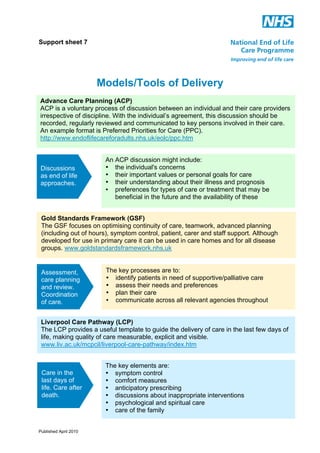
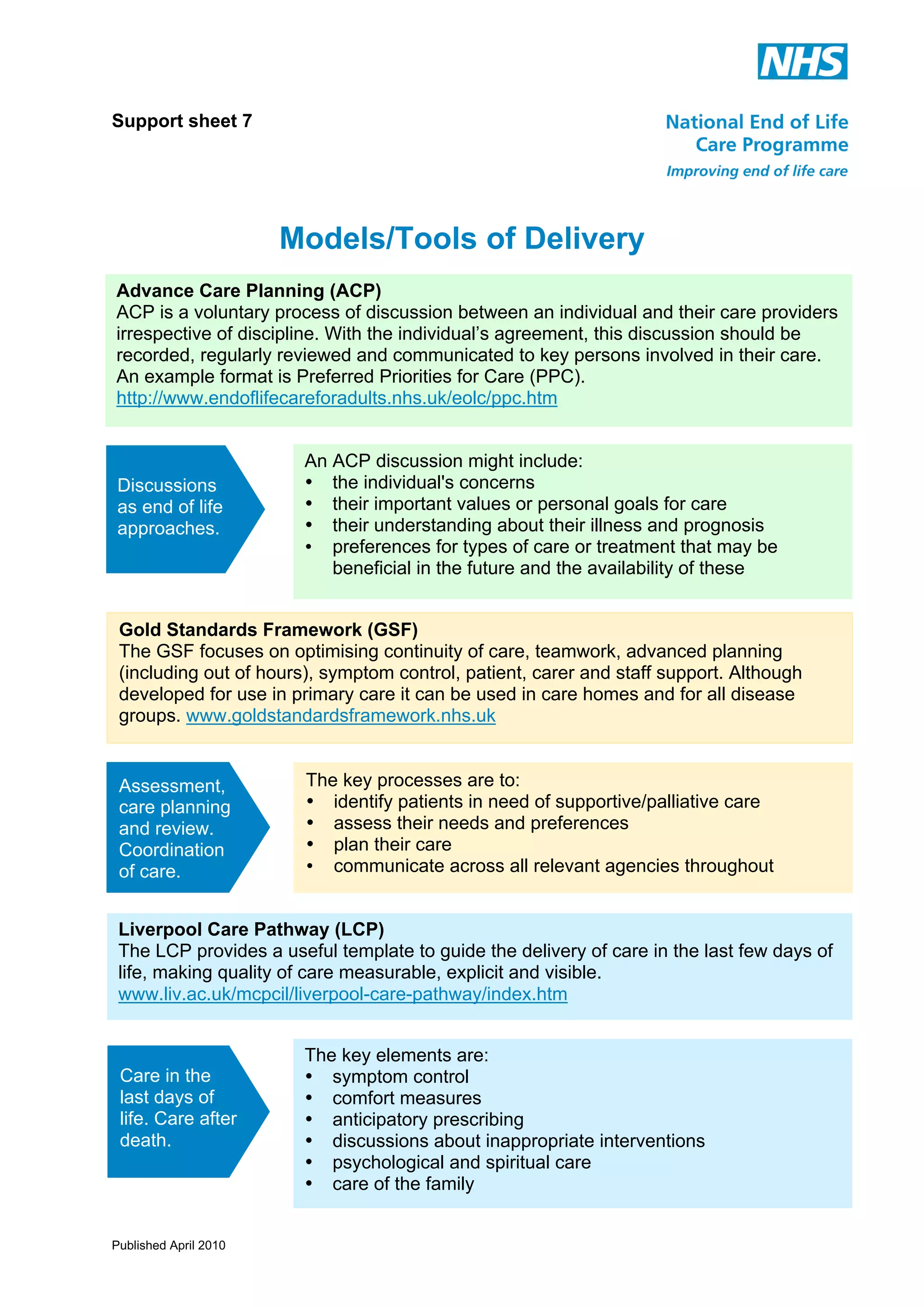
Advance Care Planning (ACP)
ACP is a voluntary process of discussion between an individual and their care providers
irrespective of discipline. With the individual’s agreement, this discussion should be
recorded, regularly reviewed and communicated to key persons involved in their care.
An example format is Preferred Priorities for Care (PPC).
http://www.endoflifecareforadults.nhs.uk/eolc/ppc.htm

Discussions
as end of life
approaches.

An ACP discussion might include:
• the individual's concerns
• their important values or personal goals for care
• their understanding about their illness and prognosis
• preferences for types of care or treatment that may be
beneficial in the future and the availability of these

Gold Standards Framework (GSF)
The GSF focuses on optimising continuity of care, teamwork, advanced planning
(including out of hours), symptom control, patient, carer and staff support. Although
developed for use in primary care it can be used in care homes and for all disease
groups. www.goldstandardsframework.nhs.uk

Assessment,
care planning
and review.
Coordination
of care.

The key processes are to:
• identify patients in need of supportive/palliative care
• assess their needs and preferences
• plan their care
• communicate across all relevant agencies throughout

Liverpool Care Pathway (LCP)
The LCP provides a useful template to guide the delivery of care in the last few days of
life, making quality of care measurable, explicit and visible.
www.liv.ac.uk/mcpcil/liverpool-care-pathway/index.htm

Care in the
last days of
life. Care after
death.

Published April 2010

The key elements are:
• symptom control
• comfort measures
• anticipatory prescribing
• discussions about inappropriate interventions
• psychological and spiritual care
• care of the family

Support Sheet 7: Models/Tools of Delivery

  • 1.
    Support sheet 7 Models/Toolsof Delivery Advance Care Planning (ACP) ACP is a voluntary process of discussion between an individual and their care providers irrespective of discipline. With the individual’s agreement, this discussion should be recorded, regularly reviewed and communicated to key persons involved in their care. An example format is Preferred Priorities for Care (PPC). http://www.endoflifecareforadults.nhs.uk/eolc/ppc.htm Discussions as end of life approaches. An ACP discussion might include: • the individual's concerns • their important values or personal goals for care • their understanding about their illness and prognosis • preferences for types of care or treatment that may be beneficial in the future and the availability of these Gold Standards Framework (GSF) The GSF focuses on optimising continuity of care, teamwork, advanced planning (including out of hours), symptom control, patient, carer and staff support. Although developed for use in primary care it can be used in care homes and for all disease groups. www.goldstandardsframework.nhs.uk Assessment, care planning and review. Coordination of care. The key processes are to: • identify patients in need of supportive/palliative care • assess their needs and preferences • plan their care • communicate across all relevant agencies throughout Liverpool Care Pathway (LCP) The LCP provides a useful template to guide the delivery of care in the last few days of life, making quality of care measurable, explicit and visible. www.liv.ac.uk/mcpcil/liverpool-care-pathway/index.htm Care in the last days of life. Care after death. Published April 2010 The key elements are: • symptom control • comfort measures • anticipatory prescribing • discussions about inappropriate interventions • psychological and spiritual care • care of the family