Support sheet 16

Holistic Assessment
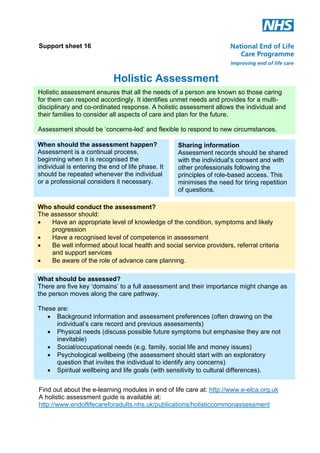
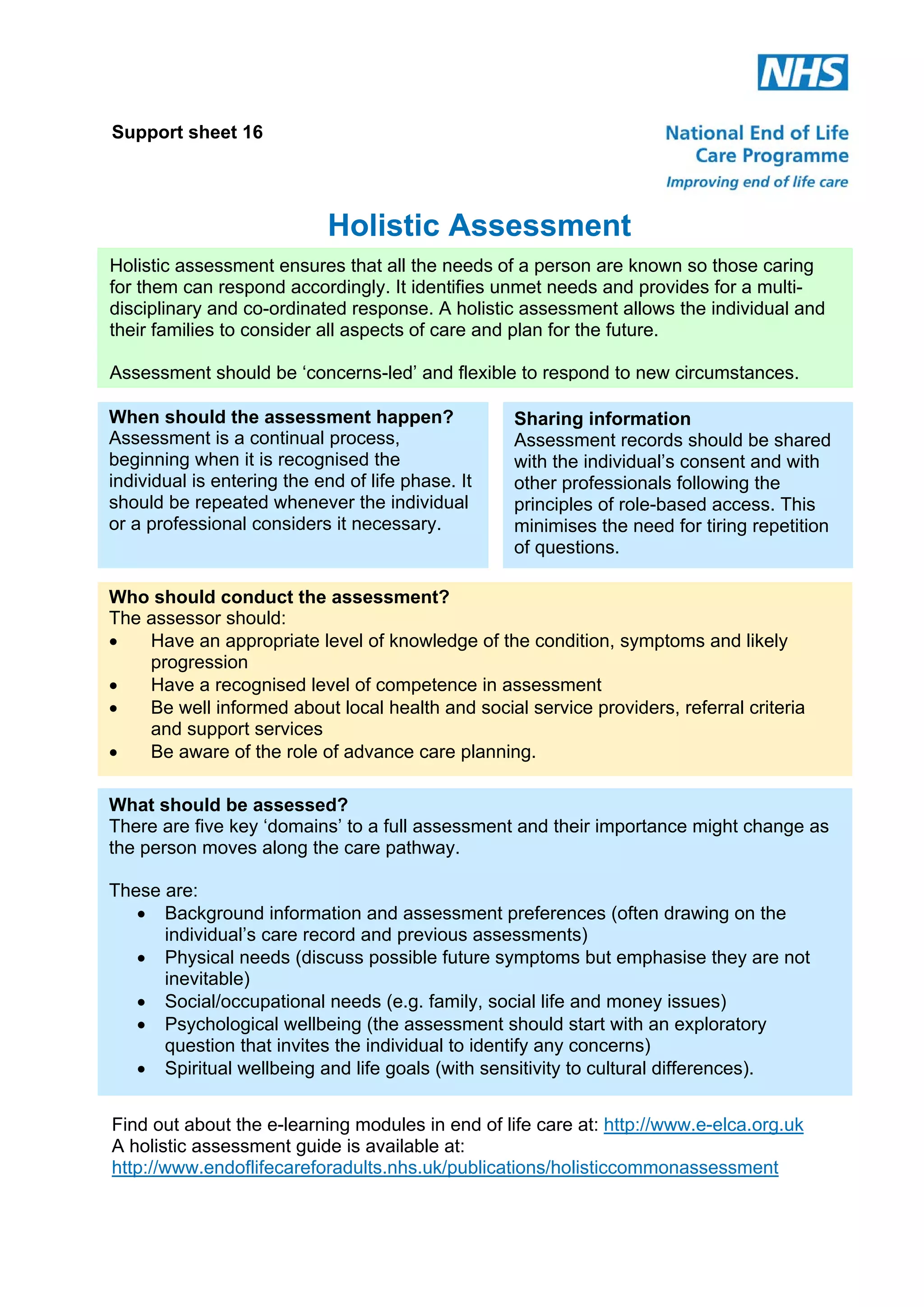
Holistic assessment ensures that all the needs of a person are known so those caring
for them can respond accordingly. It identifies unmet needs and provides for a multidisciplinary and co-ordinated response. A holistic assessment allows the individual and
their families to consider all aspects of care and plan for the future.
Assessment should be ‘concerns-led’ and flexible to respond to new circumstances.
When should the assessment happen?
Assessment is a continual process,
beginning when it is recognised the
individual is entering the end of life phase. It
should be repeated whenever the individual
or a professional considers it necessary.

Sharing information
Assessment records should be shared
with the individual’s consent and with
other professionals following the
principles of role-based access. This
minimises the need for tiring repetition
of questions.

Who should conduct the assessment?
The assessor should:
!
Have an appropriate level of knowledge of the condition, symptoms and likely
progression
!
Have a recognised level of competence in assessment
!
Be well informed about local health and social service providers, referral criteria
and support services
!
Be aware of the role of advance care planning.
What should be assessed?
There are five key ‘domains’ to a full assessment and their importance might change as
the person moves along the care pathway.
These are:
! Background information and assessment preferences (often drawing on the
individual’s care record and previous assessments)
! Physical needs (discuss possible future symptoms but emphasise they are not
inevitable)
! Social/occupational needs (e.g. family, social life and money issues)
! Psychological wellbeing (the assessment should start with an exploratory
question that invites the individual to identify any concerns)
! Spiritual wellbeing and life goals (with sensitivity to cultural differences).
Find out about the e-learning modules in end of life care at: http://www.e-elca.org.uk
A holistic assessment guide is available at:
http://www.endoflifecareforadults.nhs.uk/publications/holisticcommonassessment

Support Sheet 16: Holistic Assessment

  • 1.
    Support sheet 16 HolisticAssessment Holistic assessment ensures that all the needs of a person are known so those caring for them can respond accordingly. It identifies unmet needs and provides for a multidisciplinary and co-ordinated response. A holistic assessment allows the individual and their families to consider all aspects of care and plan for the future. Assessment should be ‘concerns-led’ and flexible to respond to new circumstances. When should the assessment happen? Assessment is a continual process, beginning when it is recognised the individual is entering the end of life phase. It should be repeated whenever the individual or a professional considers it necessary. Sharing information Assessment records should be shared with the individual’s consent and with other professionals following the principles of role-based access. This minimises the need for tiring repetition of questions. Who should conduct the assessment? The assessor should: ! Have an appropriate level of knowledge of the condition, symptoms and likely progression ! Have a recognised level of competence in assessment ! Be well informed about local health and social service providers, referral criteria and support services ! Be aware of the role of advance care planning. What should be assessed? There are five key ‘domains’ to a full assessment and their importance might change as the person moves along the care pathway. These are: ! Background information and assessment preferences (often drawing on the individual’s care record and previous assessments) ! Physical needs (discuss possible future symptoms but emphasise they are not inevitable) ! Social/occupational needs (e.g. family, social life and money issues) ! Psychological wellbeing (the assessment should start with an exploratory question that invites the individual to identify any concerns) ! Spiritual wellbeing and life goals (with sensitivity to cultural differences). Find out about the e-learning modules in end of life care at: http://www.e-elca.org.uk A holistic assessment guide is available at: http://www.endoflifecareforadults.nhs.uk/publications/holisticcommonassessment