Tess Wiskel, MD
EMRA Health Policy Committee
Substance Abuse in the
Emergency Department
Presented by
Emergency Medicine Residents’ Association, 2016
Learning Objectives
• Define substance abuse and significance
• Understand the burden of various substances
of abuse in the Emergency Department
• Learn basics of prescription opiate crisis and
new guidelines for prescribers
Hospital Based Emergency Care: At
the Breaking Point
• EMTALA requires treatment of all patients
• Substance abuse patients are frequent ED
users and require intensive resource use
Institute of Medicine, 2006
Burden of Drug Visits
in Emergency Department
• Over 5 million ED visits related to drugs
annually
– total 125 million visits in 2011
• Increase of 100 % from 2004
Drug Abuse Warning Network, 2011
Substance Abuse Defined
• WHO definition
– “the harmful or hazardous use of psychoactive
substances, including alcohol and illicit drugs”
• DSM-5 definition
– 10 classes of drugs, range mild to severe, fit within
11 criteria of: impaired control, social impairment,
risky use, and pharmacological criteria
World Health Organization, 2016
Drug Misuse/Abuse ED Visits
• Total 2.5 million ED visits for drug
abuse/misuse
– 1.25 million involved illicit drugs
– 1.24 million involved nonmedical use of
pharmaceuticals
– 0.61 million involved drugs combined with alcohol
• Between 2009 and 2011 visits
– increased by 19 % for all drugs misuse/abuse
Drug Abuse Warning Network, 2011
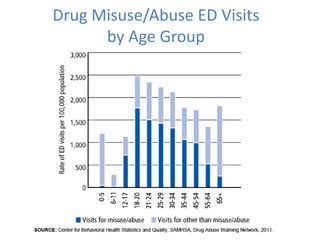
Drug Misuse/Abuse ED Visits
by Age Group
• Over 1% ED visits annually primary diagnosis
• Three times more in men than women
• Increasing rates of hospitalization for alcohol
dependence syndrome
• Comorbid conditions: psychoses and drug
dependence, injury
Alcohol
NATIONWIDE EMERGENCY DEPARTMENT SAMPLE (NEDS) AND NATIONWIDE INPATIENT SAMPLE (NIS), 2013
Alcohol
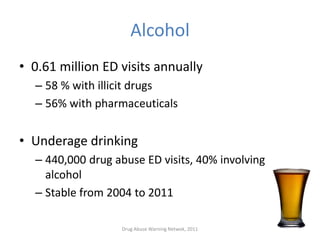
• 0.61 million ED visits annually
– 58 % with illicit drugs
– 56% with pharmaceuticals
• Underage drinking
– 440,000 drug abuse ED visits, 40% involving
alcohol
– Stable from 2004 to 2011
Drug Abuse Warning Netwok, 2011
Illicit Drugs
• 1.25 million ED visits annually
• Highest rates for cocaine and marijuana abuse
• Increased by 29% from 2009 to 2011
Drug Abuse Warning Network, 2011
Non Medical Use of
Pharmaceutical Drugs
• 1.2 million ED visits annually
• 46 percent pain relievers
– 29 percent opiate pain relievers
• Increase 132 % from 2004 to 2011
– Opiate involvement increased 183 %
Drug Abuse Warning Network, 2011
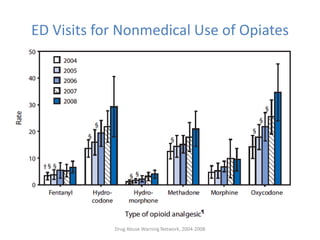
ED Visits for Nonmedical Use of Opiates
Drug Abuse Warning Network, 2004-2008
Opiate Public Health Crisis
• Opiate prescribing increasing
• Death rates from opiates increasing
• New guidelines released by CDC for
prescribers
MMWR / March 18, 2016 / Vol. 65 / No. 1
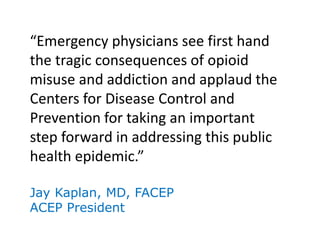
“Emergency physicians see first hand
the tragic consequences of opioid
misuse and addiction and applaud the
Centers for Disease Control and
Prevention for taking an important
step forward in addressing this public
health epidemic.”
Jay Kaplan, MD, FACEP
ACEP President
CDC Opiate Prescription Guidelines
• Chronic pain treatment determining initiation
and continuation
• Selection, dosage,
follow-up and
discontinuation
• Assessing risk and
harms throughout
treatment
MMWR / March 18, 2016 / Vol. 65 / No. 1
Combatting the Opiate Crisis
• Educating patients, providers
• Prescription drug monitoring programs
• Screening, Brief Intervention and Referral to
Treatment programs
• Proper medication disposal
• Enforcement
Office of National Drug Control Policy, 2011
Response to Opiate Crisis
• Given increase in use of opioid medications and
increasing deaths, many above interventions
implemented
• Rates of prescription opioid deaths and abuse
increased from 2002 to 2010 but decreased from
2011 to 2013
• Illicit opiate use increasing: heroin death rates
increasing over same time period
N Engl J Med 2015;372:241-8.
Resources
• CDC opiate prescription guidelines MMWR / March 18,
2016 / Vol. 65 / No. 1 .
http://www.cdc.gov/mmwr/volumes/65/rr/rr6501e1.h
tm
• CDC drug and addiction resources:
http://www.cdc.gov/pwud/addiction.html
• Drug Abuse Warning Network, 2011. Estimates of
Drug-Related Emergency Visits.
http://www.samhsa.gov/data/sites/default/files/DAW
N2k11ED/DAWN2k11ED/DAWN2k11ED.pdf
Thank You!
www.emra.org
Questions?
Presenter’s Name Here
Presenter’s Email Address Here

Substance Abuse and the ED

  • 1.
    Tess Wiskel, MD EMRAHealth Policy Committee Substance Abuse in the Emergency Department Presented by Emergency Medicine Residents’ Association, 2016
  • 2.
    Learning Objectives • Definesubstance abuse and significance • Understand the burden of various substances of abuse in the Emergency Department • Learn basics of prescription opiate crisis and new guidelines for prescribers
  • 3.
    Hospital Based EmergencyCare: At the Breaking Point • EMTALA requires treatment of all patients • Substance abuse patients are frequent ED users and require intensive resource use Institute of Medicine, 2006
  • 4.
    Burden of DrugVisits in Emergency Department • Over 5 million ED visits related to drugs annually – total 125 million visits in 2011 • Increase of 100 % from 2004 Drug Abuse Warning Network, 2011
  • 5.
    Substance Abuse Defined •WHO definition – “the harmful or hazardous use of psychoactive substances, including alcohol and illicit drugs” • DSM-5 definition – 10 classes of drugs, range mild to severe, fit within 11 criteria of: impaired control, social impairment, risky use, and pharmacological criteria World Health Organization, 2016
  • 6.
    Drug Misuse/Abuse EDVisits • Total 2.5 million ED visits for drug abuse/misuse – 1.25 million involved illicit drugs – 1.24 million involved nonmedical use of pharmaceuticals – 0.61 million involved drugs combined with alcohol • Between 2009 and 2011 visits – increased by 19 % for all drugs misuse/abuse Drug Abuse Warning Network, 2011
  • 7.
    Drug Misuse/Abuse EDVisits by Age Group
  • 8.
    • Over 1%ED visits annually primary diagnosis • Three times more in men than women • Increasing rates of hospitalization for alcohol dependence syndrome • Comorbid conditions: psychoses and drug dependence, injury Alcohol NATIONWIDE EMERGENCY DEPARTMENT SAMPLE (NEDS) AND NATIONWIDE INPATIENT SAMPLE (NIS), 2013
  • 9.
    Alcohol • 0.61 millionED visits annually – 58 % with illicit drugs – 56% with pharmaceuticals • Underage drinking – 440,000 drug abuse ED visits, 40% involving alcohol – Stable from 2004 to 2011 Drug Abuse Warning Netwok, 2011
  • 10.
    Illicit Drugs • 1.25million ED visits annually • Highest rates for cocaine and marijuana abuse • Increased by 29% from 2009 to 2011 Drug Abuse Warning Network, 2011
  • 11.
    Non Medical Useof Pharmaceutical Drugs • 1.2 million ED visits annually • 46 percent pain relievers – 29 percent opiate pain relievers • Increase 132 % from 2004 to 2011 – Opiate involvement increased 183 % Drug Abuse Warning Network, 2011
  • 12.
    ED Visits forNonmedical Use of Opiates Drug Abuse Warning Network, 2004-2008
  • 13.
    Opiate Public HealthCrisis • Opiate prescribing increasing • Death rates from opiates increasing • New guidelines released by CDC for prescribers MMWR / March 18, 2016 / Vol. 65 / No. 1
  • 14.
    “Emergency physicians seefirst hand the tragic consequences of opioid misuse and addiction and applaud the Centers for Disease Control and Prevention for taking an important step forward in addressing this public health epidemic.” Jay Kaplan, MD, FACEP ACEP President
  • 15.
    CDC Opiate PrescriptionGuidelines • Chronic pain treatment determining initiation and continuation • Selection, dosage, follow-up and discontinuation • Assessing risk and harms throughout treatment MMWR / March 18, 2016 / Vol. 65 / No. 1
  • 16.
    Combatting the OpiateCrisis • Educating patients, providers • Prescription drug monitoring programs • Screening, Brief Intervention and Referral to Treatment programs • Proper medication disposal • Enforcement Office of National Drug Control Policy, 2011
  • 17.
    Response to OpiateCrisis • Given increase in use of opioid medications and increasing deaths, many above interventions implemented • Rates of prescription opioid deaths and abuse increased from 2002 to 2010 but decreased from 2011 to 2013 • Illicit opiate use increasing: heroin death rates increasing over same time period N Engl J Med 2015;372:241-8.
  • 18.
    Resources • CDC opiateprescription guidelines MMWR / March 18, 2016 / Vol. 65 / No. 1 . http://www.cdc.gov/mmwr/volumes/65/rr/rr6501e1.h tm • CDC drug and addiction resources: http://www.cdc.gov/pwud/addiction.html • Drug Abuse Warning Network, 2011. Estimates of Drug-Related Emergency Visits. http://www.samhsa.gov/data/sites/default/files/DAW N2k11ED/DAWN2k11ED/DAWN2k11ED.pdf
  • 19.
    Thank You! www.emra.org Questions? Presenter’s NameHere Presenter’s Email Address Here

Editor's Notes

  • #2 Notes here
  • #4 Per the institute of medicine report in 2006, stating Eds are “at a breaking point”, one component is resource use. EMTALA law passed in 1986, emergency physicians have a requirement to treat all patients, but are also strained to do so with overcrowding, and under-reimbursement. Substance users are frequent users of the ED , and high use of resources, including inpatient admissions, and frequently uninsured. They also tend to require more resources in the ED and frequently have unmet treatment needs, such as referrals for behavior change and continued care. Also all numbers tend to be underestimates, as separate studies indicate higher prevalence of substance abuse and no diagnosis recorded. (AHRQ HCUP, IOM report). Coffey RM, Houchens R, Chu BC, Barrett M, Owens P, Stocks C, Vandivort-Warren R, Buck J, Emergency Department Use for Mental and Substance Use Disorders. Online August 23, 2010, U.S. Agency for Healthcare Research and Quality (AHRQ). Available: http://www.hcup-us.ahrq.gov/reports.jsp Hospital-based emergency care : at the breaking point / Committee on the Future of Emergency Care in the United States Health System, Board on Health Care Services. Copyright 2007 by the National Academy of Sciences. Institute of Medicine.
  • #5 data from DAWN- drug abuse warning network that is a public health surveillance system of the substance abuse and mental health services administration; ended in 2011, new systems replacing, last data 2011; Emphasize importance of drug related visits to emergency medicine; this is all drugs, not just abuse/misuse (includes adverse effects, seeking detox, abuse of all drugs, etc). Sheer number of visits related to drugs; over 5 million, or 1,626 ED visits per 100,000 population, which is increasing; a 100 percent increase since 2004. Substance Abuse and Mental Health Services Administration, Drug Abuse Warning Network, 2011: National Estimates of Drug-Related Emergency Department Visits . HHS Publication No. (SMA) 13-4760 , DAWN Series D-39 . Rockville, MD: Substance Abuse and Mental Health Services Administration, 2013.
  • #6 WHO definition World Health Organization; http://www.who.int/topics/substance_abuse/en/ DSM definition includes 10 classes of drugs: alcohol, caffeine, cannabis, hallucinogens, inhalants, opioids, sedatives hypnotics and anxiolytics, stimulants, tobacco, other Fit within at least two of 11 criteria in above four categories: impaired control : 1) increasing amounts of use 2) desire to cut down 3) time obtaining/using substance 4) craving Social impairment 5) failure to fulfill obligations 6) social or interpersonal problems 7) give up activities Risky use 8) physically hazardous situations using 9) continued use despite knowledge of risks Pharmacological 10) tolerance 11) withdrawal Different definition of substance abuse than substance induced disorder which includes intoxication, withdrawal and other induced mental disorders DSM-5. 2013 American Psychiatric Association; http://www.dsm5.org/Pages/Default.aspx;
  • #7 Of the 5 million drug visits, approximately half were for drug misuse/abuse. -2011 had 2.5 million ED visits resulted from drug misuse or abuse, which is 790 ED visits per 100,000 population Drug misuse/abuse defined as visits from the following four analytic groups: illicit drug visits, nonmedical use of pharmaceuticals, alcohol-related visits, and underage drinking. A visit can appear in multiple sub groups but is only counted for once in the main group of all drug misuse/abuse; includes visits requesting detox or suicide attempts related to these categories Of all drug abuse/misuse ED visits; approximately 51% of involved illicits and nonmedical pharmaceuticals; 25% drugs combined with alcohol Substance Abuse and Mental Health Services Administration, Drug Abuse Warning Network, 2011: National Estimates of Drug-Related Emergency Department Visits . HHS Publication No. (SMA) 13-4760 , DAWN Series D-39 . Rockville, MD: Substance Abuse and Mental Health Services Administration, 2013.
  • #8 Splitting the data by age group and drug misuse/abuse (dark blue) versus all drug visits (light blue); data from DAWN 2011 “In 2011, drug-related visits range from a low of 288 visits per 100,000 population aged 6 to 11 to a high of 2,477 visits per 100,000 population aged 18 to 20. “ Substance Abuse and Mental Health Services Administration, Drug Abuse Warning Network, 2011: National Estimates of Drug-Related Emergency Department Visits . HHS Publication No. (SMA) 13-4760 , DAWN Series D-39 . Rockville, MD: Substance Abuse and Mental Health Services Administration, 2013.
  • #9 Data based on nationwide emergency department sample- NEDS 2006-2010, largest ED nationwide database, however has inherent limitations, data based on ICD codes for diagnosis. Specifically looking at alcohol listed as first diagnosis : 1.1276 percent of ED visits in 2010 for those ages 12 and older had a first-listed diagnosis of alcohol-related conditions. More in men males (1.8767) was about 3 times as high as that of females (0.5629). Increasing rates of hospitalization, impact on ED? “the number of hospitalizations among male patients ages 12 and older with a diagnosis of alcohol dependence syndrome increased from 625,651 in 2006 to 739,813 in 2010. The number of hospitalizations among female patients with a diagnosis of nondependent abuse of alcohol increased from 193,942 in 2006 to 220,499 in 2010.” Many with comorbid drug and mental health conditions: “ED visits by patients ages 12–20 with a first-listed diagnosis of alcohol-related conditions in 2009, 10.4149 percent also had a drug related diagnosis. The percentage increased in the 21–24 age group (11.7141) and the 25–44 age group (13.7157), then dropped in the 45–64 age group (9.2758) and was lowest (2.8101) in the 65+ age group.” “2010, among hospitalizations of patients ages 12 and older, 46.6544 percent of those with an all-listed diagnosis of alcohol dependence syndrome also had a co-occurring mental health-related diagnosis.” Comorbid injury diagnosis as well by age group: “2010, among ED visits by patients ages 12– 20, 28.9635 percent of those with an all-listed diagnosis of nondependent abuse of alcohol also had any injury-related diagnosis. The percentage increased in the 21–24 age group (38.7219), -28-then dropped in the 25–44 and 45–64 age groups (30.3525 and 23.4314, respectively) and increased slightly in the 65+ age group (26.3012). Notably, the percentages of co-occurring injuries declined significantly between 2006 and 2010 for the two youngest groups (12–20 and 21–24) but remained almost unchanged for the older age groups.” ALCOHOL-RELATED EMERGENCY DEPARTMENT VISITS AND HOSPITALIZATIONS AND THEIR CO-OCCURRING DRUG-RELATED, MENTAL HEALTH, AND INJURY CONDITIONS IN THE UNITED STATES: FINDINGS FROM THE 2006–2010 NATIONWIDE EMERGENCY DEPARTMENT SAMPLE (NEDS) AND NATIONWIDE INPATIENT SAMPLE (NIS). September 2013. NIH
  • #10 Of the total alcohol related visits, the majority also involved other drugs. “ Among all visits involving illicit drugs, about 30 percent also involved alcohol; higher levels of alcohol involvement were found for visits involving ketamine (72%). Among all visits involving pharmaceuticals, 25 percent also involved alcohol. Alcohol was present in 38.6 percent of visits involving penicillin, 38 percent of visits involving CNS stimulants, and 31 percent of visits involving antidepressants. Just under half of the patients received follow-up care.” “The rate of medical emergencies involving alcohol was 287 visits per 100,000 population aged 12 to 17 and 858 per 100,000 population aged 18 to 20, almost a threefold difference.” by age for underage drinking. Substance Abuse and Mental Health Services Administration, Drug Abuse Warning Network, 2011: National Estimates of Drug-Related Emergency Department Visits . HHS Publication No. (SMA) 13-4760 , DAWN Series D-39 . Rockville, MD: Substance Abuse and Mental Health Services Administration, 2013.
  • #11  Illicits includes: “limited or no therapeutic value and are generally illegal if taken without a prescription. These substances include cocaine, heroin, marijuana, synthetic cannabinoids, amphetamines, methamphetamine, MDMA (Ecstasy), GHB (gamma-Hydroxybutyric acid), flunitrazepam (Rohypnol® ), ketamine, LSD, PCP, and hallucinogens. Visits involving the inhalation of substances for their psychoactive properties (e.g., sniffing model airplane glue) are included. Cocaine and marijuana rates: 162 and 146 ED visits per 100,000 population, respectively Visits ended in admission to the hospital (24%), transfer to another health care facility (10%), or referral to a drug detox/dependency program (6%). Substance Abuse and Mental Health Services Administration, Drug Abuse Warning Network, 2011: National Estimates of Drug-Related Emergency Department Visits . HHS Publication No. (SMA) 13-4760 ,DAWN Series D-39 . Rockville, MD: Substance Abuse and Mental Health Services Administration, 2013.
  • #12 Any type of nonmedical use included, including taking more than prescribed, another individuals drug, taking a drug obtained illegally, poisoning, etc. Drugs include: pain relievers= opiate- oxycodone, hydrocodone, methadone, Tylenol, NSAIDs; also anxiolytics, sedatives, hypnotics, psychotherapeutics, CV drugs, muscle relaxants, and anticonvulsants. The highest percentage of drugs were pain relievers and also had the highest rise. Largest rise in opiate pain relievers, up 183%. Increase in CNS stimulants as well (ADHD drugs) 85% from 2009 to 2011. Follow up for 40 % visits. Substance Abuse and Mental Health Services Administration, Drug Abuse Warning Network, 2011:National Estimates of Drug-Related Emergency Department Visits . HHS Publication No. (SMA) 13-4760 ,DAWN Series D-39 . Rockville, MD: Substance Abuse and Mental Health Services Administration, 2013.
  • #13 Showing the specific types of opiate prescription drugs, which were the highest increasing category of non medical use of pharmaceuticals, most in oxycodone, hydrocodone and methadone. DAWN and CDC analyzed increasing nonmedical use of select prescription drugs. Rates of opioid analgesics increasing over the years at 111%, more than doubling; at the end of this time period in 2008 were equal to the amount of ED visits for illicit drugs. Of note, the rates of nonmedical benzodiazepine use were also increasing, though at slower rates, by 89% from 2004-2008. Emergency Department Visits Involving Nonmedical Use of Selected Prescription Drugs- United States 2004-2008. MMWR / June 18, 2010 / Vol. 59 / No. 23 Substance Abuse and Mental Health Services Administration, Drug Abuse Warning Network, 2011: National Estimates of Drug-Related Emergency Department Visits . HHS Publication No. (SMA) 13-4760 , DAWN Series D-39 . Rockville, MD: Substance Abuse and Mental Health Services Administration, 2013.
  • #14 Per CDC, opiate prescriptions increased increased by 7.3% from 2007 to 2012. “From 1999 to 2014, more than 165,000 persons died from overdose related to opioid pain medication in the United States. In the past decade, while the death rates for the top leading causes of death such as heart disease and cancer have decreased substantially, the death rate associated with opioid pain medication has increased markedly “ - CDC released primary doctor prescribing guidelines to help battle the pain reliever crisis Dowell et al. CDC Guidelines for Prescribing Opioids for Chronic Pain – United States 2016. MMWR / March 18, 2016 / Vol. 65 / No. 1 US Department of Health and Human Services/Centers for Disease Control and Prevention
  • #15 President of ACEP on March 2016 in response to the CDC release of opiate prescription guidelines for primary care doctors. Agrees with new step in addressing the epidemic, as well as restricting acute pain rx to less than 7 days, supporting drug monitoring programs and balancing risks and benefits of immediate needs and long term risk of opiate dependence. Source: American College of Emergency Physicians | News Room “Nation’s Emergency Physicians Applaud CDC Opioid Guidelines” Mar 16, 2016
  • #16 Basic tenets of the CDC opiate prescription guidelines- does not apply to active cancer, palliative and end of life care: start with non-opiates, discuss treatment goals, risks v. benefits; immediate acting over long acting; lowest effective dose; in acute pain should prescribe for 3-7 days at most; evaluate benefits and harms of increasing dosage or duration of treatment for originally acute pain; mitigate risks, by prescribing naloxone, review drug monitoring programs, use urine drug testing, avoid concomitant benzodiazepine prescriptions, offer treatment (such as buprenorphine) for opioid use disorder. Dowell et al. CDC Guidelines for Prescribing Opioids for Chronic Pain – United States 2016. MMWR / March 18, 2016 / Vol. 65 / No. 1 US Department of Health and Human Services/Centers for Disease Control and Prevention
  • #17 A summary from the Office of National Drug Control Policy of the programs underway to combat the prescription drug crisis with the prescription drug abuse prevention plan: -education: educating providers who request DEA registration, curricula in school, clinical guidelines; educate parents and youth through the Opioid Risk Evaluation and Mitigation Strategy -prescription drug monitoring programs detect and avert abuse of prescription drugs; track controlled substances -SBIRTs: help healthcare providers identify and prevent prescription drug abuse problems in primary healthcare settings by working with healthcare providers to increase awareness and training -proper medication disposal: 70% people using pharmaceuticals nonmedicallly received from friends or family -enforcement: stop illegal prescribing and doctor shopping Epidemic: Responding to America’s Prescription Drug Abuse Crisis. Office of National Drug Control Policy, 2011; http://www.cdc.gov/pwud/addiction.html
  • #18 Data from Researched Abuse, Diversion, and Addiction-Related Surveillance (RADARS)- measures rates from drug diversion investigators, poison centers, substance treatment centers and college students. Interventions include prescription monitoring programs being legislated in 49 states and new abuse programs with decreasing prescribing rates. Rates of availability of prescription drugs increased from 90s to 2010 and then began decreasing with resultant decrease in abuse and adverse outcomes. Dart et al. Trends in Opioid Analgesic Abuse and Mortalitiy in the United States. N Engl J Med 2015;372:241-8. DOI: 10.1056/NEJMsa1406143
  • #20 Closing slide