

The verb agrees with the subject!
We have finally signed the contract.
Abide with me wherever I go . . . . .
I do ! ! !
takes
take
Depending on the Subject or Antecedent
take/s
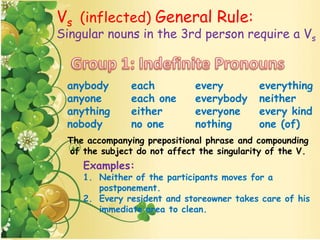
Vs (inflected) General Rule:
Singular nouns in the 3rd person require a Vs
anybody each every everything
anyone each one everybody neither
anything either everyone every kind
nobody no one nothing one (of)
The accompanying prepositional phrase and compounding
of the subject do not affect the singularity of the V.
Examples:
1. Neither of the participants moves for a
postponement.
2. Every resident and storeowner takes care of his
immediate area to clean.
Examples:
1. 12 c.c. of sulfuric acid was poured.
2. Ten years is a considerable time to
wait.
Examples:
1. The statistics (data) prove that
women outlive men.
2. Statistics is a research-oriented
subject.
civics mumps acoustics molasses
economics physics gymnastics athletics
linguistics aerobics politics humanities
measles mathematics
Examples:
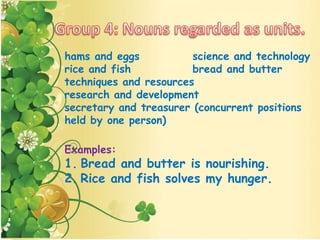
1. Bread and butter is nourishing.
2. Rice and fish solves my hunger.
hams and eggs science and technology
rice and fish bread and butter
techniques and resources
research and development
secretary and treasurer (concurrent positions
held by one person)
Examples:
1. Much sugar is added in my coffee.
2. A great quantity of rice is hoarded.
a great quantity (of) a great deal (of)
a large quantity (of) a good deal (of)
a little
Examples:
1. The number of students is absent.
2. The number of teachers grows each
year.
Examples:
1. A few workers knows the way.
2. A couple of days is enough to finish
the project.
Examples:
1. A series of experiments serves as a
good evidence.
2. A substantial portion of the
proceeeds goes to charity.
Example:
1. What they want is demonstrations
nationwide.
2. That we did it surprises him.
Example:
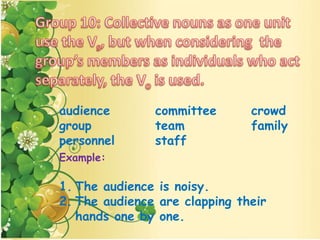
1. The audience is noisy.
2. The audience are clapping their
hands one by one.
audience committee crowd
group team family
personnel staff
Example:
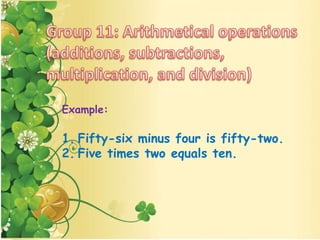
1. Fifty-six minus four is fifty-two.
2. Five times two equals ten.
Examples:
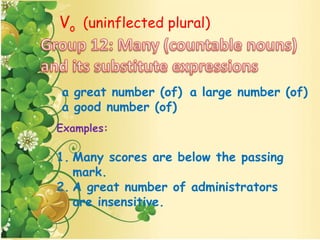
1. Many scores are below the passing
mark.
2. A great number of administrators
are insensitive.
Vo (uninflected plural)
a great number (of) a large number (of)
a good number (of)
Example:
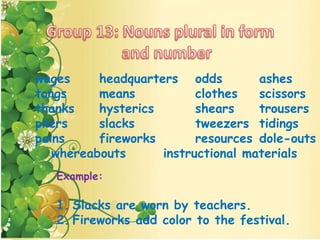
1. Slacks are worn by teachers.
2. Fireworks add color to the festival.
wages headquarters odds ashes
tongs means clothes scissors
thanks hysterics shears trousers
pliers slacks tweezers tidings
pains fireworks resources dole-outs
whereabouts instructional materials
Example:
1. Several have reported for duty.
2. Both are gays.
several people various both
couple numerous few some (of)
Examples:
1. A number of students are absent.
2. A number of teachers grow each
year.
Example:
1. The working force is three men, and
four women.
2. His sole support is his mother and
father.
Vs or Vo Depending on the Subject
or Antecedent
Examples:
1. Two thirds of the apple is rotten.
2. Two thirds of the apples are rotten.
two thirds more/most a lot of
lots of any all
plenty of a fraction a percent
none (used more with Vo for people)
Examples:
1. Either Ester or I am to chair the
committee.
2. Neither the teacher nor the
students are late.
either – or neither – nor
or nor
Examples:
1. There comes a time when boredom
sets in.
2. Here are the keys to the rooms in
the dorm.
Examples:
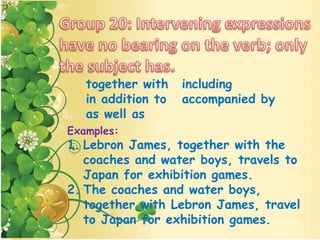
1. Lebron James, together with the
coaches and water boys, travels to
Japan for exhibition games.
2. The coaches and water boys,
together with Lebron James, travel
to Japan for exhibition games.
together with including
in addition to accompanied by
as well as
Examples:
1. The students, not the adviser, are
responsible for the schedule of the
activities.
2. The adviser, not the students, is
responsible for the schedule of the
activities.
Examples:
1. That woman who sits beside them is
my sister.
2. One of the committee members
notes the candidate’s smoking
habit.
3. My friend is one of the committee
members who are observing the
candidates.
Subject verb

Subject verb

  • 2.
    The verb agreeswith the subject! We have finally signed the contract. Abide with me wherever I go . . . . . I do ! ! !
  • 3.
  • 4.
  • 5.
    Depending on theSubject or Antecedent take/s
  • 6.
    Vs (inflected) GeneralRule: Singular nouns in the 3rd person require a Vs anybody each every everything anyone each one everybody neither anything either everyone every kind nobody no one nothing one (of) The accompanying prepositional phrase and compounding of the subject do not affect the singularity of the V. Examples: 1. Neither of the participants moves for a postponement. 2. Every resident and storeowner takes care of his immediate area to clean.
  • 7.
    Examples: 1. 12 c.c.of sulfuric acid was poured. 2. Ten years is a considerable time to wait.
  • 8.
    Examples: 1. The statistics(data) prove that women outlive men. 2. Statistics is a research-oriented subject. civics mumps acoustics molasses economics physics gymnastics athletics linguistics aerobics politics humanities measles mathematics
  • 9.
    Examples: 1. Bread andbutter is nourishing. 2. Rice and fish solves my hunger. hams and eggs science and technology rice and fish bread and butter techniques and resources research and development secretary and treasurer (concurrent positions held by one person)
  • 10.
    Examples: 1. Much sugaris added in my coffee. 2. A great quantity of rice is hoarded. a great quantity (of) a great deal (of) a large quantity (of) a good deal (of) a little
  • 11.
    Examples: 1. The numberof students is absent. 2. The number of teachers grows each year. Examples: 1. A few workers knows the way. 2. A couple of days is enough to finish the project.
  • 12.
    Examples: 1. A seriesof experiments serves as a good evidence. 2. A substantial portion of the proceeeds goes to charity.
  • 13.
    Example: 1. What theywant is demonstrations nationwide. 2. That we did it surprises him.
  • 14.
    Example: 1. The audienceis noisy. 2. The audience are clapping their hands one by one. audience committee crowd group team family personnel staff
  • 15.
    Example: 1. Fifty-six minusfour is fifty-two. 2. Five times two equals ten.
  • 16.
    Examples: 1. Many scoresare below the passing mark. 2. A great number of administrators are insensitive. Vo (uninflected plural) a great number (of) a large number (of) a good number (of)
  • 17.
    Example: 1. Slacks areworn by teachers. 2. Fireworks add color to the festival. wages headquarters odds ashes tongs means clothes scissors thanks hysterics shears trousers pliers slacks tweezers tidings pains fireworks resources dole-outs whereabouts instructional materials
  • 18.
    Example: 1. Several havereported for duty. 2. Both are gays. several people various both couple numerous few some (of) Examples: 1. A number of students are absent. 2. A number of teachers grow each year.
  • 19.
    Example: 1. The workingforce is three men, and four women. 2. His sole support is his mother and father. Vs or Vo Depending on the Subject or Antecedent
  • 20.
    Examples: 1. Two thirdsof the apple is rotten. 2. Two thirds of the apples are rotten. two thirds more/most a lot of lots of any all plenty of a fraction a percent none (used more with Vo for people)
  • 21.
    Examples: 1. Either Esteror I am to chair the committee. 2. Neither the teacher nor the students are late. either – or neither – nor or nor
  • 22.
    Examples: 1. There comesa time when boredom sets in. 2. Here are the keys to the rooms in the dorm.
  • 23.
    Examples: 1. Lebron James,together with the coaches and water boys, travels to Japan for exhibition games. 2. The coaches and water boys, together with Lebron James, travel to Japan for exhibition games. together with including in addition to accompanied by as well as
  • 24.
    Examples: 1. The students,not the adviser, are responsible for the schedule of the activities. 2. The adviser, not the students, is responsible for the schedule of the activities.
  • 25.
    Examples: 1. That womanwho sits beside them is my sister. 2. One of the committee members notes the candidate’s smoking habit. 3. My friend is one of the committee members who are observing the candidates.