Gabrielle Richards
(HOD of Visual Arts)
&
Juli-Anne Norton
(DSG Visual Arts)
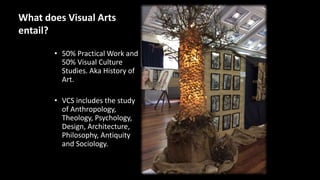
What does Visual Arts
entail?
• 50% Practical Work and
50% Visual Culture
Studies. Aka History of
Art.
• VCS includes the study
of Anthropology,
Theology, Psychology,
Design, Architecture,
Philosophy, Antiquity
and Sociology.
Skills that will help
you in future life:
• Research
Methodology.
• Problem Solving.
• Social and
Environmental
Awareness.
• Visual Literacy.
• Self-awareness.
• Synthesis of Learning;
Visual Arts is a platform for
all other learning areas.
Practical
Component:
• Visual Journal; researching
your own interests, what is
happening in the world
around you and artists that
influence your work.
• Drawing; which is an
extension/summary of your
process work in your journal.
• Final artwork; painting,
photography, sculpture,
ceramics, printmaking, digital
media etc…
You should consider
taking this subject if
you are:
• Curious about life.
• You have an interest in people,
culture and current affairs.
• You enjoy the act of creating,
whether that is drawing, taking
photographs etc.
• You want to make people look at
the world differently.
• You have a good work ethic.
Myth: “Art is too much work!”
All practical subjects require work after hours. If you
intend on doing well in this subject you must anticipate
that you will have to practice your skills.
This is one of the few subjects where you
have the freedom to be yourself and grow
intellectually as well as emotionally.
A Level vs. IEB- Both systems have their merits.
IEB
• Extensive History of Art component that is focused on
individual interests as well as actual movements taught in
chronological order. Grade 12s write an essay, a series of tests
and examinations.
• Practical work is more centred around the exploration of the
candidates personal relevance. The journal is required to
include more written information that pertains to the
candidate’s response to the theme as well as the artists that
have influenced their work. There is also more opportunity for
candidates to work towards their strengths as they can start
to specialise in their chosen medium from Grade 11. Grade 10
is used to develop all round technical skill.
• The standard of assessment is on average 20% higher than
the NSC.
CAMBRIDGE
• Minimal History of Art component that is more focused on
studies that relate to the individual’s interests. Candidates are
required to write an essay that divulges their findings.
• Practical work is focused on intense thematic studies. Some
are dictated and some are chosen by the candidate. The
nature of these studies is geared towards the development of
showing creative process visually as apposed to written
accounts. The system also requires the extensive honing of
observational skills using a multitude of different media.
• The standard of assessment is on average 20% higher than the
IEB.
IF YOUR CHILD
TAKES ART AS A
SUBJECT AT
SCHOOL WHATS
THE WORST THAT
COULD HAPPEN?
What automatically flashes through your mind?
What is the reality? A qualification in any field of
study does not guarantee success and a big pay
check every month. Work after varsity is scarce…
• Academic qualifications play a vital
role in most professional careers. But
these qualifications are only the
'admission tickets' - they do not
guarantee success in any given field. It
is the driven individual who does not
stop picking themselves up after the
knocks that life hands out that actually
succeeds. And those people are the
ones who are passionate about what
they are doing because they love it!
JUST KIDDING…
ACTUALLY THERE IS
GOOD NEWS…
What you can do with an Art Degree… Over 209 possible jobs.
• Accessory
Designer
• Advertising
Director
• Aerial
Photographer
• Airbrush Artist
• Antique Specialist
• Appliqué Artist
• Archaeologist
• Architect
• Architectural
Graphic Artist
• Architectural
Writer/Critic
• Architecture
Teacher
• Art Activity Writer
• Art Appraiser
• Art Book Editor
• Art Consultant
• Art Coordinator
• Art Critic
• Art Dealer
• Art Director
• Art Distributor
• Art Historian
• Art Insurance
Agent
• Art Librarian
• Art Magazine
Editor
• Art Researcher
• Art Restorer
• Art Specialist
• Art Supervisor
• Art Teacher
• Art Teacher
Assistant
• Art Therapist
• Artist in Residence
• Artists' Agent
• Audio/Visual
Designer
• Automobile
Designer
• Background Artist
(TV)
• Bank Note
Designer
• Basket Maker
• Block Engraver
• Book Jacket
Designer

Subject Choice: Visual Arts

  • 1.
    Gabrielle Richards (HOD ofVisual Arts) & Juli-Anne Norton (DSG Visual Arts)
  • 3.
    What does VisualArts entail? • 50% Practical Work and 50% Visual Culture Studies. Aka History of Art. • VCS includes the study of Anthropology, Theology, Psychology, Design, Architecture, Philosophy, Antiquity and Sociology.
  • 4.
    Skills that willhelp you in future life: • Research Methodology. • Problem Solving. • Social and Environmental Awareness. • Visual Literacy. • Self-awareness. • Synthesis of Learning; Visual Arts is a platform for all other learning areas.
  • 5.
    Practical Component: • Visual Journal;researching your own interests, what is happening in the world around you and artists that influence your work. • Drawing; which is an extension/summary of your process work in your journal. • Final artwork; painting, photography, sculpture, ceramics, printmaking, digital media etc…
  • 6.
    You should consider takingthis subject if you are: • Curious about life. • You have an interest in people, culture and current affairs. • You enjoy the act of creating, whether that is drawing, taking photographs etc. • You want to make people look at the world differently. • You have a good work ethic.
  • 7.
    Myth: “Art istoo much work!” All practical subjects require work after hours. If you intend on doing well in this subject you must anticipate that you will have to practice your skills. This is one of the few subjects where you have the freedom to be yourself and grow intellectually as well as emotionally.
  • 8.
    A Level vs.IEB- Both systems have their merits. IEB • Extensive History of Art component that is focused on individual interests as well as actual movements taught in chronological order. Grade 12s write an essay, a series of tests and examinations. • Practical work is more centred around the exploration of the candidates personal relevance. The journal is required to include more written information that pertains to the candidate’s response to the theme as well as the artists that have influenced their work. There is also more opportunity for candidates to work towards their strengths as they can start to specialise in their chosen medium from Grade 11. Grade 10 is used to develop all round technical skill. • The standard of assessment is on average 20% higher than the NSC.
  • 9.
    CAMBRIDGE • Minimal Historyof Art component that is more focused on studies that relate to the individual’s interests. Candidates are required to write an essay that divulges their findings. • Practical work is focused on intense thematic studies. Some are dictated and some are chosen by the candidate. The nature of these studies is geared towards the development of showing creative process visually as apposed to written accounts. The system also requires the extensive honing of observational skills using a multitude of different media. • The standard of assessment is on average 20% higher than the IEB.
  • 10.
    IF YOUR CHILD TAKESART AS A SUBJECT AT SCHOOL WHATS THE WORST THAT COULD HAPPEN?
  • 11.
    What automatically flashesthrough your mind?
  • 12.
    What is thereality? A qualification in any field of study does not guarantee success and a big pay check every month. Work after varsity is scarce… • Academic qualifications play a vital role in most professional careers. But these qualifications are only the 'admission tickets' - they do not guarantee success in any given field. It is the driven individual who does not stop picking themselves up after the knocks that life hands out that actually succeeds. And those people are the ones who are passionate about what they are doing because they love it!
  • 16.
  • 17.
    What you cando with an Art Degree… Over 209 possible jobs. • Accessory Designer • Advertising Director • Aerial Photographer • Airbrush Artist • Antique Specialist • Appliqué Artist • Archaeologist • Architect • Architectural Graphic Artist • Architectural Writer/Critic • Architecture Teacher • Art Activity Writer • Art Appraiser • Art Book Editor • Art Consultant • Art Coordinator • Art Critic • Art Dealer • Art Director • Art Distributor • Art Historian • Art Insurance Agent • Art Librarian • Art Magazine Editor • Art Researcher • Art Restorer • Art Specialist • Art Supervisor • Art Teacher • Art Teacher Assistant • Art Therapist • Artist in Residence • Artists' Agent • Audio/Visual Designer • Automobile Designer • Background Artist (TV) • Bank Note Designer • Basket Maker • Block Engraver • Book Jacket Designer