PRESENTED BY;-
DR AYESHA ANWER ALI
STROKE AND REHABILITATION
OUTLINE
 Definition
 Pathophysiology
 Types
 Causes
 Signs and symptoms
 Diagnosis
 Treatment
INTRODUCTION
INTRODUCTION
 Discovery of stroke by
Hippocrates .
 Stroke is the 5 th leading cause
of death in the US ,with one
person dying every 4 minutes .
 For black people, stroke is the
3rd leading cause of death.
 It is the second leading cause of
death in the world.
DEFINITION
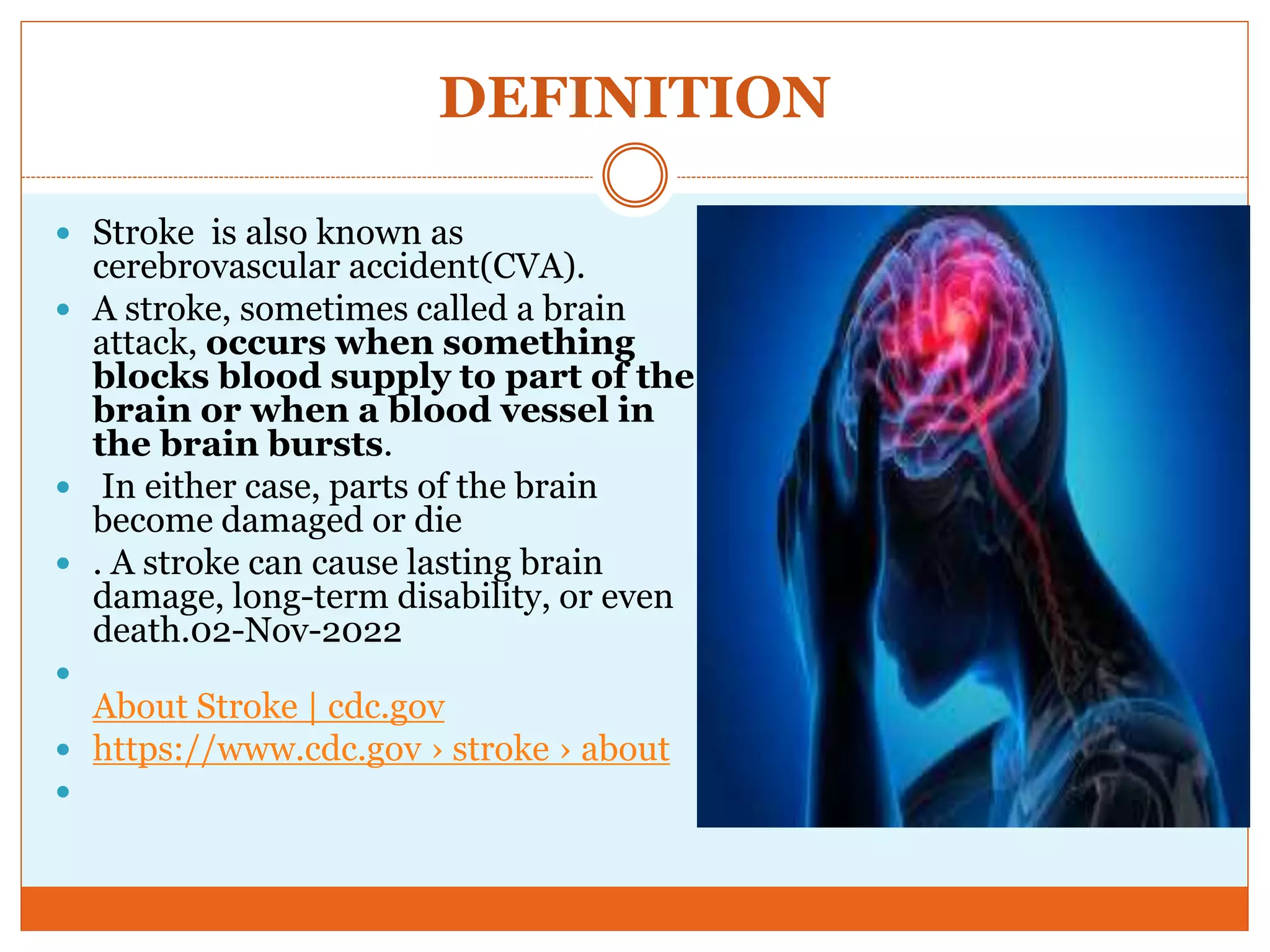
 Stroke is also known as
cerebrovascular accident(CVA).
 A stroke, sometimes called a brain
attack, occurs when something
blocks blood supply to part of the
brain or when a blood vessel in
the brain bursts.
 In either case, parts of the brain
become damaged or die
 . A stroke can cause lasting brain
damage, long-term disability, or even
death.02-Nov-2022

About Stroke | cdc.gov
 https://www.cdc.gov › stroke › about

PATHOPHYSIOLOGY AND
TYPES
PATHOPHYSIOLOGY
 Thrombus Embolus


 Obstruction of cerebral blood vessels Nerve cell unable

 Dec blood flow to the brain depolarize

 Dec; 02 level inc co2 Diminished


 Aerobic convert to anaerobic respiration

 Production of lactic acid
 ATP Production dec dead brain tissue

TYPES OF STROKE
 There are 3 types of
stroke
 (1) Ischemic stroke
 (2) Hemorrhagic stroke
 (3) Transient ischemic
stroke
ISCHEMIC STROKE
 Ischemic stroke is the most
common form of stroke,
accounting for arround 85%
of strokes.
 This type of stroke is caused
by blockages or narrowing of
the arteries that provide
blood to the brain,resulting
in ischemia -severely
reduced blood flow.
HEMORRHAGIC STROKE
 Hemorrhagic stroke are
caused by arteries in the brain
either leaking blood or
bursting open.
 The ruptures can be caused by
conditions such as
hypertension, trauma ,blood –
thinning medications and
aneurysms (weakness in the
blood vessel walls).
 Intra cerebral hemorrhage
 Subarachnoid hemorrhage
TRANSIENT ISCHEMIC ATTACK
 TIA are different from
the aforementioned
kinds of stroke because
the flow of blood to the
brain is only briefly
interrupted.
 TIAs are similar to
ischemic strokes in that
they are often caused by
blood clots or other
debris.
CAUSES AND SYMPTOMS
Causes
 Hypertension
 Stress
 Heart disease
 Diabetes
 Smoking/Tabacco
 Cholesterol imbalance
Singn /Symptoms .
 Sudden numbness or weakness in the
face, arm, or leg, especially on one side of
the body.
 Sudden confusion, trouble speaking, or
difficulty understanding speech
 Sudden trouble seeing in one or both
eyes. Sudden trouble walking, dizziness,
loss of balance, or lack of coordination.
 Usually on one side of the body.
 Trouble speaking or understanding.
 Problems with vision, such as dimness or
loss of vision in one or both eyes.
 Dizziness or problems with balance or
coordination.
 Problems with movement or walking.
 Fainting or seizure.
NON-MODIFIABLE MODIFIABLE
 Age
 Gender
 Heredity
 Previous vascular
event such as MI,
Stroke.
 Hypertension
 Cigarette smoking
 Diabetes Mellitus
 Physical inactivity
 Obesity
 Dyslipidemia
RISK FACTORS
DIAGNOSIS AND
MEDICAL MANAGEMENT
Diagnosis:
 Strokes happen fast and will often
occur before an individual can be
seen by a doctor for a proper
diagnosis.
 The acronym F.A.S.T. is a way to
remember the signs of stroke and
can help identify the onset of
stroke more quickly:
 :

 History collection
 Physical examination;
 CT scan
 MRI
 Blood Tests
 Carotid us
 Cerebral angiogram
 Echocardiogram
Presented by
Samreen Laghari
REDUCING TONE
 A goal of stroke physical therapy
interventions has been to “normalize tone to
normalize movement.”
 Therapy modalities for reducing the
muscle tone include streching,prolonged
Streching, passive manipulation by
therapists, weight bearing, ice, contraction
of muscles antagonistic to spastic muscles,
splinting, and casting.
STROKE AND REHAB-1.pptx

STROKE AND REHAB-1.pptx

  • 2.
    PRESENTED BY;- DR AYESHAANWER ALI STROKE AND REHABILITATION
  • 3.
    OUTLINE  Definition  Pathophysiology Types  Causes  Signs and symptoms  Diagnosis  Treatment
  • 4.
  • 5.
    INTRODUCTION  Discovery ofstroke by Hippocrates .  Stroke is the 5 th leading cause of death in the US ,with one person dying every 4 minutes .  For black people, stroke is the 3rd leading cause of death.  It is the second leading cause of death in the world.
  • 6.
    DEFINITION  Stroke isalso known as cerebrovascular accident(CVA).  A stroke, sometimes called a brain attack, occurs when something blocks blood supply to part of the brain or when a blood vessel in the brain bursts.  In either case, parts of the brain become damaged or die  . A stroke can cause lasting brain damage, long-term disability, or even death.02-Nov-2022  About Stroke | cdc.gov  https://www.cdc.gov › stroke › about 
  • 7.
  • 8.
    PATHOPHYSIOLOGY  Thrombus Embolus   Obstruction of cerebral blood vessels Nerve cell unable   Dec blood flow to the brain depolarize   Dec; 02 level inc co2 Diminished    Aerobic convert to anaerobic respiration   Production of lactic acid  ATP Production dec dead brain tissue 
  • 9.
    TYPES OF STROKE There are 3 types of stroke  (1) Ischemic stroke  (2) Hemorrhagic stroke  (3) Transient ischemic stroke
  • 10.
    ISCHEMIC STROKE  Ischemicstroke is the most common form of stroke, accounting for arround 85% of strokes.  This type of stroke is caused by blockages or narrowing of the arteries that provide blood to the brain,resulting in ischemia -severely reduced blood flow.
  • 12.
    HEMORRHAGIC STROKE  Hemorrhagicstroke are caused by arteries in the brain either leaking blood or bursting open.  The ruptures can be caused by conditions such as hypertension, trauma ,blood – thinning medications and aneurysms (weakness in the blood vessel walls).  Intra cerebral hemorrhage  Subarachnoid hemorrhage
  • 16.
    TRANSIENT ISCHEMIC ATTACK TIA are different from the aforementioned kinds of stroke because the flow of blood to the brain is only briefly interrupted.  TIAs are similar to ischemic strokes in that they are often caused by blood clots or other debris.
  • 17.
  • 18.
    Causes  Hypertension  Stress Heart disease  Diabetes  Smoking/Tabacco  Cholesterol imbalance
  • 19.
    Singn /Symptoms . Sudden numbness or weakness in the face, arm, or leg, especially on one side of the body.  Sudden confusion, trouble speaking, or difficulty understanding speech  Sudden trouble seeing in one or both eyes. Sudden trouble walking, dizziness, loss of balance, or lack of coordination.  Usually on one side of the body.  Trouble speaking or understanding.  Problems with vision, such as dimness or loss of vision in one or both eyes.  Dizziness or problems with balance or coordination.  Problems with movement or walking.  Fainting or seizure.
  • 20.
    NON-MODIFIABLE MODIFIABLE  Age Gender  Heredity  Previous vascular event such as MI, Stroke.  Hypertension  Cigarette smoking  Diabetes Mellitus  Physical inactivity  Obesity  Dyslipidemia RISK FACTORS
  • 22.
  • 23.
    Diagnosis:  Strokes happenfast and will often occur before an individual can be seen by a doctor for a proper diagnosis.  The acronym F.A.S.T. is a way to remember the signs of stroke and can help identify the onset of stroke more quickly:
  • 26.
     :   Historycollection  Physical examination;  CT scan  MRI  Blood Tests  Carotid us  Cerebral angiogram  Echocardiogram
  • 29.
  • 41.
    REDUCING TONE  Agoal of stroke physical therapy interventions has been to “normalize tone to normalize movement.”  Therapy modalities for reducing the muscle tone include streching,prolonged Streching, passive manipulation by therapists, weight bearing, ice, contraction of muscles antagonistic to spastic muscles, splinting, and casting.