STRESS MANAGEMENT
Fitness for Life
Presented By
Shahnawaz
Shaikh
PSYCHOLOGIST
8898999871
thepsychicorra@gmail.com
Stress Management
OBJECTIVE:
OBJECTIVES FOR THIS UNIT:
Students will:
1) Define stress.
2) Describe the difference between eustress and
distress.
3) Identify many causes of stress.
4) Understand the different types of stressors.
5) Describe and understand how stress can effect the
body.
6) Learn some methods that individuals use to deal
with stress.
Stress
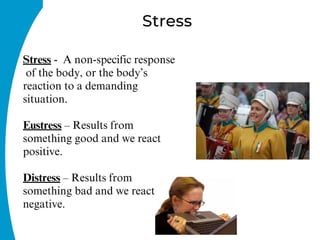
Stress - A non-specific response
of the body, or the body’s
reaction to a demanding
situation.
Eustress – Results from
something good and we react
positive.
Distress – Results from
something bad and we react
negative.
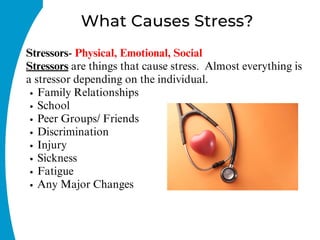
Family Relationships
School
Peer Groups/ Friends
Discrimination
Injury
Sickness
Fatigue
Any Major Changes
Stressors- Physical, Emotional, Social
Stressors are things that cause stress. Almost everything is
a stressor depending on the individual.
What Causes Stress?
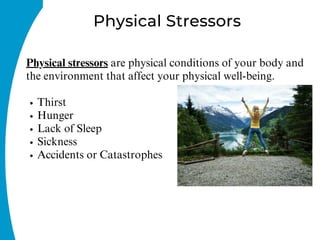
Thirst
Hunger
Lack of Sleep
Sickness
Accidents or Catastrophes
Physical stressors are physical conditions of your body and
the environment that affect your physical well-being.
Physical Stressors
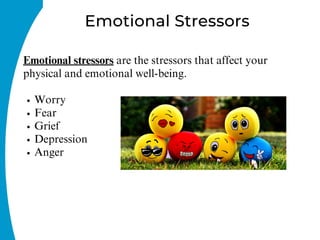
Worry
Fear
Grief
Depression
Anger
Emotional stressors are the stressors that affect your
physical and emotional well-being.
Emotional Stressors
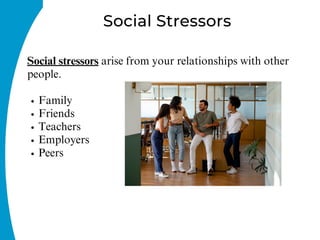
Family
Friends
Teachers
Employers
Peers
Social stressors arise from your relationships with other
people.
Social Stressors
How Do We React?
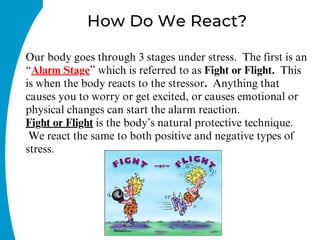
Our body goes through 3 stages under stress. The first is an
“Alarm Stage” which is referred to as Fight or Flight. This
is when the body reacts to the stressor. Anything that
causes you to worry or get excited, or causes emotional or
physical changes can start the alarm reaction.
Fight or Flight is the body’s natural protective technique.
We react the same to both positive and negative types of
stress.
Alarm Phase
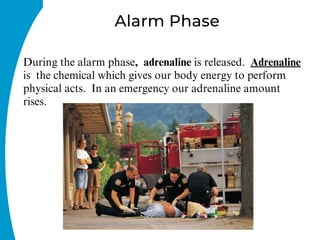
During the alarm phase, adrenaline is released. Adrenaline
is the chemical which gives our body energy to perform
physical acts. In an emergency our adrenaline amount
rises.
Stage 2 - Resistance
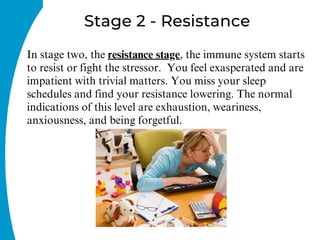
In stage two, the resistance stage, the immune system starts
to resist or fight the stressor. You feel exasperated and are
impatient with trivial matters. You miss your sleep
schedules and find your resistance lowering. The normal
indications of this level are exhaustion, weariness,
anxiousness, and being forgetful.
Stage 3 - Exhaustion
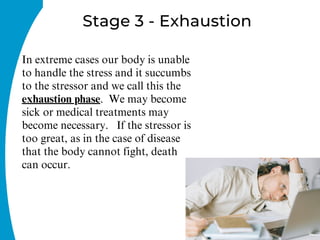
In extreme cases our body is unable
to handle the stress and it succumbs
to the stressor and we call this the
exhaustion phase. We may become
sick or medical treatments may
become necessary. If the stressor is
too great, as in the case of disease
that the body cannot fight, death
can occur.
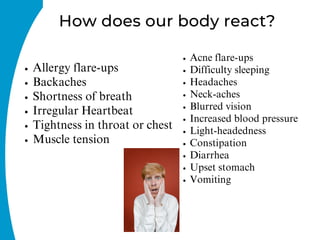
How does our body react?
Allergy flare-ups
Backaches
Shortness of breath
Irregular Heartbeat
Tightness in throat or chest
Muscle tension
Acne flare-ups
Difficulty sleeping
Headaches
Neck-aches
Blurred vision
Increased blood pressure
Light-headedness
Constipation
Diarrhea
Upset stomach
Vomiting
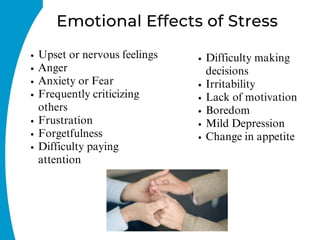
Emotional Effects of Stress
Upset or nervous feelings
Anger
Anxiety or Fear
Frequently criticizing
others
Frustration
Forgetfulness
Difficulty paying
attention
Difficulty making
decisions
Irritability
Lack of motivation
Boredom
Mild Depression
Change in appetite
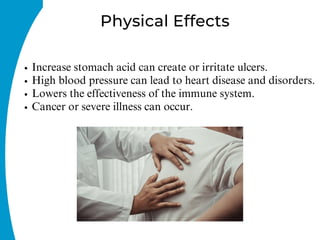
Physical Effects
Increase stomach acid can create or irritate ulcers.
High blood pressure can lead to heart disease and disorders.
Lowers the effectiveness of the immune system.
Cancer or severe illness can occur.
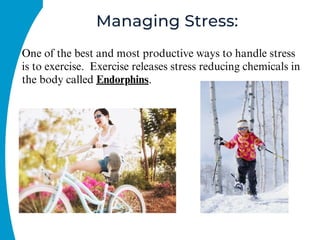
Managing Stress:
One of the best and most productive ways to handle stress
is to exercise. Exercise releases stress reducing chemicals in
the body called Endorphins.
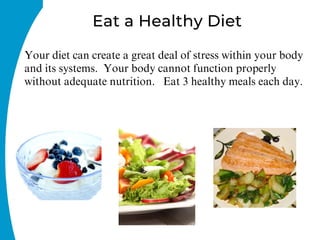
Eat a Healthy Diet
Your diet can create a great deal of stress within your body
and its systems. Your body cannot function properly
without adequate nutrition. Eat 3 healthy meals each day.
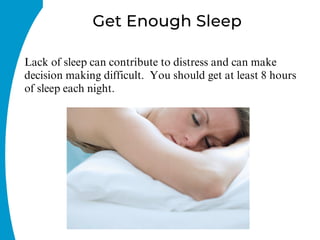
Get Enough Sleep
Lack of sleep can contribute to distress and can make
decision making difficult. You should get at least 8 hours
of sleep each night.
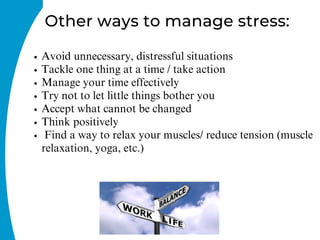
Other ways to manage stress:
Avoid unnecessary, distressful situations
Tackle one thing at a time / take action
Manage your time effectively
Try not to let little things bother you
Accept what cannot be changed
Think positively
Find a way to relax your muscles/ reduce tension (muscle
relaxation, yoga, etc.)
Explore a variety of stress reducing strategies and do what
works best for you. The better you become at handling
stress, and stressful situations, the healthier you will
become.
Find What Works for You!

Stress ppt.pptx.pdf

  • 1.
    STRESS MANAGEMENT Fitness forLife Presented By Shahnawaz Shaikh PSYCHOLOGIST 8898999871 thepsychicorra@gmail.com
  • 2.
  • 3.
    OBJECTIVE: OBJECTIVES FOR THISUNIT: Students will: 1) Define stress. 2) Describe the difference between eustress and distress. 3) Identify many causes of stress. 4) Understand the different types of stressors. 5) Describe and understand how stress can effect the body. 6) Learn some methods that individuals use to deal with stress.
  • 4.
    Stress Stress - Anon-specific response of the body, or the body’s reaction to a demanding situation. Eustress – Results from something good and we react positive. Distress – Results from something bad and we react negative.
  • 5.
    Family Relationships School Peer Groups/Friends Discrimination Injury Sickness Fatigue Any Major Changes Stressors- Physical, Emotional, Social Stressors are things that cause stress. Almost everything is a stressor depending on the individual. What Causes Stress?
  • 6.
    Thirst Hunger Lack of Sleep Sickness Accidentsor Catastrophes Physical stressors are physical conditions of your body and the environment that affect your physical well-being. Physical Stressors
  • 7.
    Worry Fear Grief Depression Anger Emotional stressors arethe stressors that affect your physical and emotional well-being. Emotional Stressors
  • 8.
    Family Friends Teachers Employers Peers Social stressors arisefrom your relationships with other people. Social Stressors
  • 9.
    How Do WeReact? Our body goes through 3 stages under stress. The first is an “Alarm Stage” which is referred to as Fight or Flight. This is when the body reacts to the stressor. Anything that causes you to worry or get excited, or causes emotional or physical changes can start the alarm reaction. Fight or Flight is the body’s natural protective technique. We react the same to both positive and negative types of stress.
  • 10.
    Alarm Phase During thealarm phase, adrenaline is released. Adrenaline is the chemical which gives our body energy to perform physical acts. In an emergency our adrenaline amount rises.
  • 11.
    Stage 2 -Resistance In stage two, the resistance stage, the immune system starts to resist or fight the stressor. You feel exasperated and are impatient with trivial matters. You miss your sleep schedules and find your resistance lowering. The normal indications of this level are exhaustion, weariness, anxiousness, and being forgetful.
  • 12.
    Stage 3 -Exhaustion In extreme cases our body is unable to handle the stress and it succumbs to the stressor and we call this the exhaustion phase. We may become sick or medical treatments may become necessary. If the stressor is too great, as in the case of disease that the body cannot fight, death can occur.
  • 13.
    How does ourbody react? Allergy flare-ups Backaches Shortness of breath Irregular Heartbeat Tightness in throat or chest Muscle tension Acne flare-ups Difficulty sleeping Headaches Neck-aches Blurred vision Increased blood pressure Light-headedness Constipation Diarrhea Upset stomach Vomiting
  • 15.
    Emotional Effects ofStress Upset or nervous feelings Anger Anxiety or Fear Frequently criticizing others Frustration Forgetfulness Difficulty paying attention Difficulty making decisions Irritability Lack of motivation Boredom Mild Depression Change in appetite
  • 16.
    Physical Effects Increase stomachacid can create or irritate ulcers. High blood pressure can lead to heart disease and disorders. Lowers the effectiveness of the immune system. Cancer or severe illness can occur.
  • 17.
    Managing Stress: One ofthe best and most productive ways to handle stress is to exercise. Exercise releases stress reducing chemicals in the body called Endorphins.
  • 18.
    Eat a HealthyDiet Your diet can create a great deal of stress within your body and its systems. Your body cannot function properly without adequate nutrition. Eat 3 healthy meals each day.
  • 19.
    Get Enough Sleep Lackof sleep can contribute to distress and can make decision making difficult. You should get at least 8 hours of sleep each night.
  • 20.
    Other ways tomanage stress: Avoid unnecessary, distressful situations Tackle one thing at a time / take action Manage your time effectively Try not to let little things bother you Accept what cannot be changed Think positively Find a way to relax your muscles/ reduce tension (muscle relaxation, yoga, etc.)
  • 21.
    Explore a varietyof stress reducing strategies and do what works best for you. The better you become at handling stress, and stressful situations, the healthier you will become. Find What Works for You!