Stress Management
What Is Stress ?
Stress is the reaction you have to excessive pressures or
other types of demand placed upon you. It happens
when you worry that you can’t cope with a current or
future situation.
Sometimes the worry may be about something that
happened in the past and what you should have done
differently.
What is Stress ?(cont.)
Stress is the “wear and tear” your mind and body
experience as you attempt to cope with your
continually changing environment.
The Stress of Negative Self–Talk
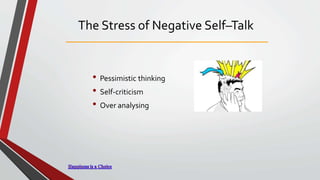
• Pessimistic thinking
• Self-criticism
• Over analysing
Negative Stress
Negative stress can contribute to minor ailments such as
headaches, digestive problems, skin complaints, insomnia
and ulcers, to name just a few.
Excessive, prolonged and unrelieved stress can have a
devastatingly harmful and prolonged effect on mental,
physical and spiritual health.
Positive Stress
While the word stress has a negative connotation, stress can
also have a positive effect. Positive stress can motivate and
create awareness thus providing the stimulation to cope with
challenging situations.
Positive stress also provides the sense of urgency and
alertness needed for survival when confronting threatening
situations.
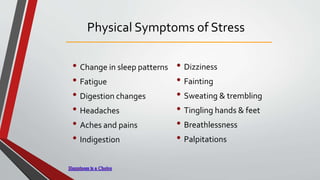
Physical Symptoms of Stress
• Change in sleep patterns
• Fatigue
• Digestion changes
• Headaches
• Aches and pains
• Indigestion
• Dizziness
• Fainting
• Sweating & trembling
• Tingling hands & feet
• Breathlessness
• Palpitations
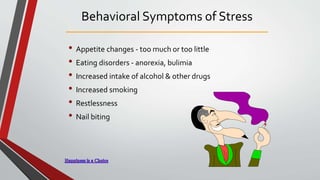
Behavioral Symptoms of Stress
• Appetite changes - too much or too little
• Eating disorders - anorexia, bulimia
• Increased intake of alcohol & other drugs
• Increased smoking
• Restlessness
• Nail biting
Job Stress
• The definition of job stress is the harmful emotional and
physical responses that occur when the requirements of
the job do not match the capabilities, resources, or needs
of the worker. Job stress is one of the leading causes of
poor health for an individual.
• Job stress is often confused with the normal challenges of
the job, but these concepts are not the same.
Job challenges energize you psychologically and
physically, and it motivates you to learn new skills and
master your job. When a job challenge is met, you feel
relaxed and satisfied.
However, job stress is different. The challenge of the job
has turned into job demands that cannot be realistically
met, relaxation has turned to exhaustion, and that sense
of satisfaction has turned into feelings of stress.
In short, the stage is set for illness, injury, and job failure.
Not all the stress you experience
happens at work
What Causes Stress
• External Stressors
• Internal Stressors
Learn more about the various
forms of stress and how to
eliminate them by following this
link:

Stress management

  • 1.
  • 2.
    What Is Stress? Stress is the reaction you have to excessive pressures or other types of demand placed upon you. It happens when you worry that you can’t cope with a current or future situation. Sometimes the worry may be about something that happened in the past and what you should have done differently.
  • 3.
    What is Stress?(cont.) Stress is the “wear and tear” your mind and body experience as you attempt to cope with your continually changing environment.
  • 4.
    The Stress ofNegative Self–Talk • Pessimistic thinking • Self-criticism • Over analysing
  • 5.
    Negative Stress Negative stresscan contribute to minor ailments such as headaches, digestive problems, skin complaints, insomnia and ulcers, to name just a few. Excessive, prolonged and unrelieved stress can have a devastatingly harmful and prolonged effect on mental, physical and spiritual health.
  • 6.
    Positive Stress While theword stress has a negative connotation, stress can also have a positive effect. Positive stress can motivate and create awareness thus providing the stimulation to cope with challenging situations. Positive stress also provides the sense of urgency and alertness needed for survival when confronting threatening situations.
  • 7.
    Physical Symptoms ofStress • Change in sleep patterns • Fatigue • Digestion changes • Headaches • Aches and pains • Indigestion • Dizziness • Fainting • Sweating & trembling • Tingling hands & feet • Breathlessness • Palpitations
  • 8.
    Behavioral Symptoms ofStress • Appetite changes - too much or too little • Eating disorders - anorexia, bulimia • Increased intake of alcohol & other drugs • Increased smoking • Restlessness • Nail biting
  • 9.
    Job Stress • Thedefinition of job stress is the harmful emotional and physical responses that occur when the requirements of the job do not match the capabilities, resources, or needs of the worker. Job stress is one of the leading causes of poor health for an individual. • Job stress is often confused with the normal challenges of the job, but these concepts are not the same. Job challenges energize you psychologically and physically, and it motivates you to learn new skills and master your job. When a job challenge is met, you feel relaxed and satisfied. However, job stress is different. The challenge of the job has turned into job demands that cannot be realistically met, relaxation has turned to exhaustion, and that sense of satisfaction has turned into feelings of stress. In short, the stage is set for illness, injury, and job failure.
  • 10.
    Not all thestress you experience happens at work
  • 11.
    What Causes Stress •External Stressors • Internal Stressors
  • 12.
    Learn more aboutthe various forms of stress and how to eliminate them by following this link:

Editor's Notes

  • #3 People’s reaction to pressure
  • #4 Stress is related to mind and body
  • #5 When you talk negatively to yourself.
  • #6 Health problems
  • #7 Stress also motivates. You are able to meet the deadline when you are stressed