STRATEGIES
FOR
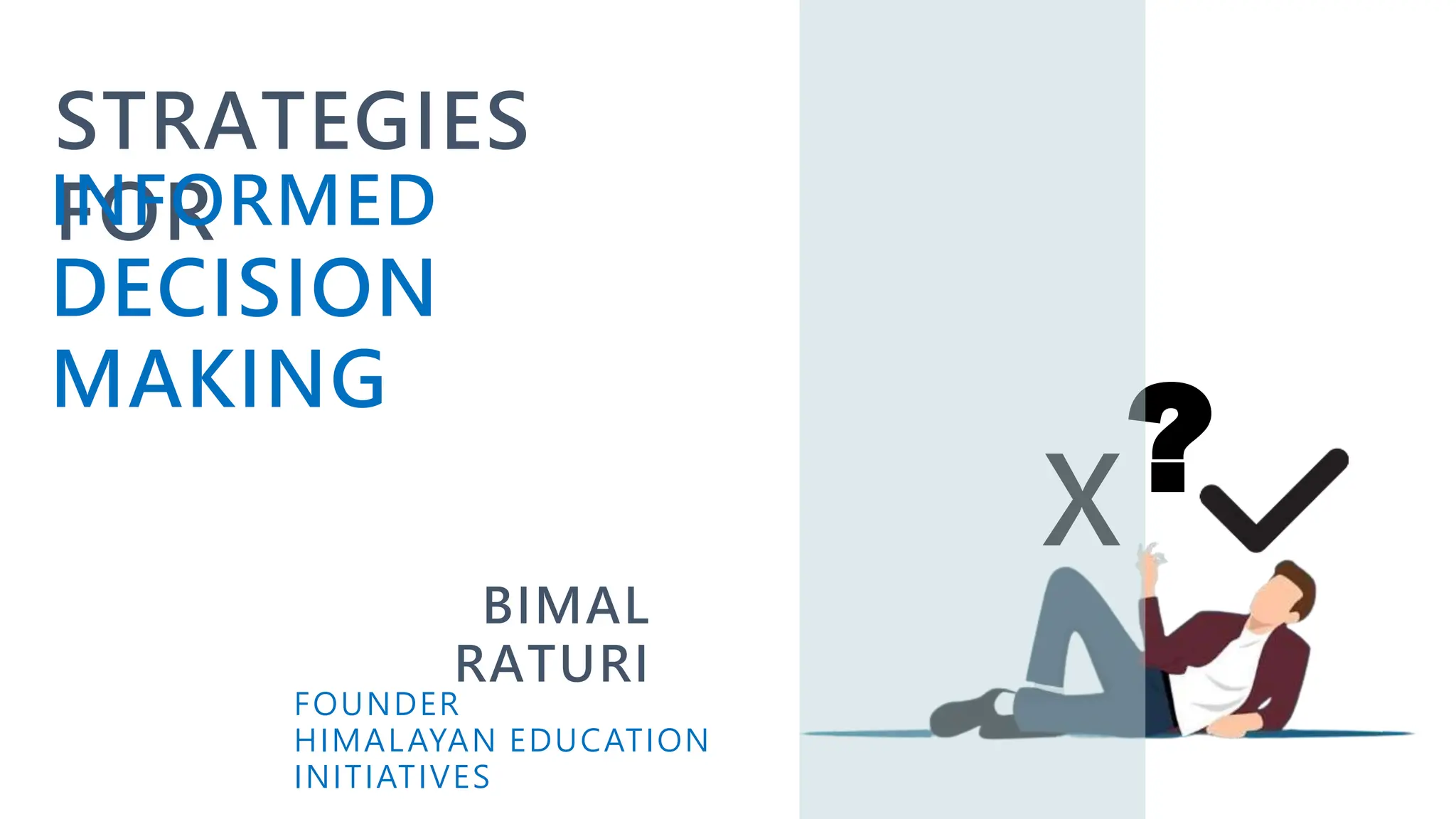
X?
INFORMED
DECISION
MAKING
BIMAL
RATURI
FOUNDER
HIMALAYAN EDUCATION
INITIATIVES
AGENDA
• Decision
• Process of Decision Making
• Common challenges in first job interview
• Common challenges faced in first job
• When to switch job?
• Q & A
2
WHAT IS
DECISION ?
3
A CHOICE THAT YOU
MAKE ABOUT
SOMETHING AFTER
THINKING ABOUT
SEVERAL
POSSIBILITIES.
4
PROCESS OF
DECISION
MAKING
PRESENT A TI O N TITLE 5
DECISION-MAKING PROCESS
6
Identify the
Decision
Gather
Information
Evaluate
Options
Consider
Consequences
Make the
Decision
Take Action
Review and
Adjust
7
DECISION-MAKING PROCESS
1. Identify the Decision: Clearly define the decision that needs to be made and
understand its significance.
2. Gather Information: Collect relevant data and information that will help you
understand the situation and potential outcomes.
3. Evaluate Options: Generate a list of possible choices or solutions and
assess their pros and cons.
4. Consider Consequences: Analyze the potential consequences of each
option, both positive and negative, in order to make an informed decision.
8
DECISION-MAKING PROCESS
5. Make the Decision: Select the best option based on the information gathered
and the evaluation of potential outcomes.
6. Take Action: Implement the decision by putting the chosen option into effect.
7. Review and Adjust: Reflect on the outcomes of the decision and adjust if
necessary. Learn from the experience to improve future decision-making
processes.
I WANT TO START MY CAREER IN
THE DEVELOPMENT SECTOR. HOW
SHOULD I MAKE THIS DECISION?
9
10
Identify Career Goals and Interests:
1. What specific area within the development sector interests the individual the
most (e.g., education, healthcare, environmental conservation)?
2. What are the individual's long-term career aspirations in the development
field?
3. How does working in the development sector align with the individual's
personal values and beliefs?
11
Research Development Organizations and Opportunities:
1. What are the different types of development organizations (e.g., NGOs,
government agencies, international organizations) and their respective
missions and focus areas?
2. What job roles and positions are available within the development sector, and
what are their responsibilities and requirements?
3. Are there any specific skills or qualifications needed for the desired roles, and
how can the individual acquire or strengthen them?
12
Assess Skills and Qualifications
1. What relevant skills, knowledge, and experience does the individual currently
possess?
2. Are there any gaps in skills or qualifications that need to be addressed in order
to be competitive in the job market?
3. How can the individual leverage their existing strengths and experiences to
transition into a career in the development sector?
13
Network and Seek Advice
1. Who are the professionals currently working in the development sector that the
individual can connect with for advice and guidance?
2. What networking events, conferences, or online communities can the individual
participate in to expand their professional network?
3. How can the individual effectively communicate their passion and commitment
to potential employers or mentors in the development field?
14
Identify Job Opportunities
1. What job openings or internships are available in the development sector that
match the individual's skills and interests?
2. How can the individual proactively search for job opportunities through online
job boards, recruitment agencies, or professional networks?
3. Are there any specific organizations or projects that the individual is
particularly interested in working for, and how can they tailor their job search
accordingly?
15
Prepare Application Materials
1. How can the individual tailor their resume and cover letter to highlight relevant
experiences and skills for positions in the development sector?
2. What additional materials, such as writing samples or portfolio projects, can
the individual include to strengthen their application?
3. Are there any specific application deadlines or requirements that the individual
needs to be aware of when applying for jobs in the development sector?
16
Evaluate Offers and Make a Decision
1. What factors are most important to the individual when considering job offers in
the development sector (e.g., salary, location, organizational culture)?
2. How do the job responsibilities and opportunities for growth align with the
individual's career goals and interests?
3. What additional benefits or opportunities for professional development are
offered by each potential employer, and how do they factor into the decision-
making process?
COMMON
CHALLENGES IN
FIRST JOB
INTERVIEW
17
18
Nervousness and anxiety
Lack of experience
Uncertainty about interview format
Difficulty showcasing skills
Answering difficult questions
Limited knowledge about the Org
Pressure to perform well
COMMON
CHALLENGES
FACED IN
FIRST JOB
19
20
Adapting to the Work Environment
Overload Of Information
Time Management
Feedback and Criticism
Building Professional Relationships
Handling Stress and Pressure
Career Direction
IT'S TIME TO
SWITCH JOB?
21
1. Lack of Growth Opportunities
2. Unsatisfactory Work Environment
3. Financial Reasons
4. Lack of Alignment with Values and Goals
5. Feeling Bored or Unchallenged
6. Changes in Personal Circumstances
7. Lack of Recognition or Appreciation
8. Organization Instability
23

Strategies for Informed Decision Making.pptx

  • 1.
  • 2.
    AGENDA • Decision • Processof Decision Making • Common challenges in first job interview • Common challenges faced in first job • When to switch job? • Q & A 2
  • 3.
  • 4.
    A CHOICE THATYOU MAKE ABOUT SOMETHING AFTER THINKING ABOUT SEVERAL POSSIBILITIES. 4
  • 5.
  • 6.
  • 7.
    7 DECISION-MAKING PROCESS 1. Identifythe Decision: Clearly define the decision that needs to be made and understand its significance. 2. Gather Information: Collect relevant data and information that will help you understand the situation and potential outcomes. 3. Evaluate Options: Generate a list of possible choices or solutions and assess their pros and cons. 4. Consider Consequences: Analyze the potential consequences of each option, both positive and negative, in order to make an informed decision.
  • 8.
    8 DECISION-MAKING PROCESS 5. Makethe Decision: Select the best option based on the information gathered and the evaluation of potential outcomes. 6. Take Action: Implement the decision by putting the chosen option into effect. 7. Review and Adjust: Reflect on the outcomes of the decision and adjust if necessary. Learn from the experience to improve future decision-making processes.
  • 9.
    I WANT TOSTART MY CAREER IN THE DEVELOPMENT SECTOR. HOW SHOULD I MAKE THIS DECISION? 9
  • 10.
    10 Identify Career Goalsand Interests: 1. What specific area within the development sector interests the individual the most (e.g., education, healthcare, environmental conservation)? 2. What are the individual's long-term career aspirations in the development field? 3. How does working in the development sector align with the individual's personal values and beliefs?
  • 11.
    11 Research Development Organizationsand Opportunities: 1. What are the different types of development organizations (e.g., NGOs, government agencies, international organizations) and their respective missions and focus areas? 2. What job roles and positions are available within the development sector, and what are their responsibilities and requirements? 3. Are there any specific skills or qualifications needed for the desired roles, and how can the individual acquire or strengthen them?
  • 12.
    12 Assess Skills andQualifications 1. What relevant skills, knowledge, and experience does the individual currently possess? 2. Are there any gaps in skills or qualifications that need to be addressed in order to be competitive in the job market? 3. How can the individual leverage their existing strengths and experiences to transition into a career in the development sector?
  • 13.
    13 Network and SeekAdvice 1. Who are the professionals currently working in the development sector that the individual can connect with for advice and guidance? 2. What networking events, conferences, or online communities can the individual participate in to expand their professional network? 3. How can the individual effectively communicate their passion and commitment to potential employers or mentors in the development field?
  • 14.
    14 Identify Job Opportunities 1.What job openings or internships are available in the development sector that match the individual's skills and interests? 2. How can the individual proactively search for job opportunities through online job boards, recruitment agencies, or professional networks? 3. Are there any specific organizations or projects that the individual is particularly interested in working for, and how can they tailor their job search accordingly?
  • 15.
    15 Prepare Application Materials 1.How can the individual tailor their resume and cover letter to highlight relevant experiences and skills for positions in the development sector? 2. What additional materials, such as writing samples or portfolio projects, can the individual include to strengthen their application? 3. Are there any specific application deadlines or requirements that the individual needs to be aware of when applying for jobs in the development sector?
  • 16.
    16 Evaluate Offers andMake a Decision 1. What factors are most important to the individual when considering job offers in the development sector (e.g., salary, location, organizational culture)? 2. How do the job responsibilities and opportunities for growth align with the individual's career goals and interests? 3. What additional benefits or opportunities for professional development are offered by each potential employer, and how do they factor into the decision- making process?
  • 17.
  • 18.
    18 Nervousness and anxiety Lackof experience Uncertainty about interview format Difficulty showcasing skills Answering difficult questions Limited knowledge about the Org Pressure to perform well
  • 19.
  • 20.
    20 Adapting to theWork Environment Overload Of Information Time Management Feedback and Criticism Building Professional Relationships Handling Stress and Pressure Career Direction
  • 21.
  • 22.
    1. Lack ofGrowth Opportunities 2. Unsatisfactory Work Environment 3. Financial Reasons 4. Lack of Alignment with Values and Goals 5. Feeling Bored or Unchallenged 6. Changes in Personal Circumstances 7. Lack of Recognition or Appreciation 8. Organization Instability
  • 23.