
GOVERNANCE ETHICS AND ANTI-
CORRUPTION REFORMS
26 – 30 MAY 2014
Facilitator
Tonderayi Chikanda
COURSE OBJECTIVES
This programme has been designed in the wake of
the growing recognition of the need to
systematically combat corruption and enhance
integrity and values in public service as part of the
strategy for better or good governance. The
programme is designed to help participants to:
Understand and appreciate the
complexity of corruption and its causes
Design and implement workable
strategies for detecting, investigating
and preventing corruption in
public, private, and voluntary sectors.
Understand the relationship
between anti-corruption reforms,
ethics, and governance.
Design codes of conduct and
strategies for improving the
infrastructure for managing ethics
in the sectors
GOVERNANCE ETHICS AND ANTI-
CORRUPTION REFORMS
Strategies for
Combating Corruption
WHAT IS A STRATEGY?
 A well-thought and intelligible plan or approach to
carry out a task or solve a problem.
 At the core of the conception of a strategy is the
factor of relevance, effectiveness, efficiency and
excellence of a strategy to bring forth the
predetermined results.
 Strategies to combat corruption should therefore be
holistic, sufficiently practical and reflect an earnest
intent to weed-out the scourge of corruption.
 The strategies should clearly spell out specific,
measurable, achievable, realistic and time-scaled
objectivity.
 They should also spell out the manner and extent of
involving the stakeholders in implementation of the
strategies and formulating different forms and levels
of monitory systems.
THE STRATEGIES
1. Increased support for nationally-owned Anti-Corruption
efforts, backing government, civil society, media and
private sector initiatives to combat corruption and
ensure accountability in the use of public resources
2. Greater political dialogue with the government on
corruption issues, and agreement of robust targets on
tackling corruption.
3. Assisting local citizens and communities to hold
community meetings, track budgets and engage officials
at local and national level to monitor the use of public and
donor resources, and where corruption or misuse of funds
is found, to hold public officials to account
4. Supporting the Police and local farmer’s associations to
monitor the distribution of agricultural inputs, such as
seeds and fertiliser, to identify any corruption and arrest
those responsible
5. Supporting the Anti-Corruption Bureau or
Commissions to investigate and prosecute cases of
corruption transparently and openly, sanctioning
those responsible.
6. Giving a voice to the masses to express their views
and constructive opinions on corruption issues
through use of methods such as the Community
Radio Station and Free Community Press that
should present an open forum where corruption
issues are exposed and discussed.
7. Strengthening national public financial management
capacity, including in particular the capacity of
National Audit Office to scrutinise government
expenditure.
8. Setting up independent co-monitoring structures on
government expenditure, tendering procedure and
systems audit to augment the National Audit Office and
present better premises of transparency and reliability of
the role of a national audit system.
9. Development of a special curriculum for all levels of
education from primary to tertiary that diligently inculcate
moral excellence, integrity and ethics that resist the
scourge of corruption and related abuses of power for
private gain.
10. Assisting government departments to be more
transparent with the use of resources and the manner in
which employees are hired or promoted through use of
periodic publications that can be authenticated by a
report from an independent audit institution such as the
one cited in (8) above.
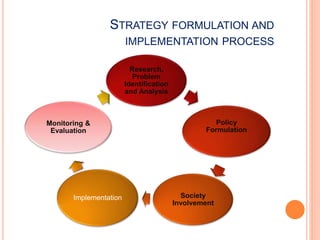
STRATEGY FORMULATION AND
IMPLEMENTATION PROCESS
Research,
Problem
Identification
and Analysis
Policy
Formulation
Society
Involvement
Implementation
Monitoring &
Evaluation
QUESTIONS ?
__________________________________________
_____
THANK YOU
_______________________
__

Strategies for combating corruption

  • 1.
    GOVERNANCE ETHICS ANDANTI- CORRUPTION REFORMS 26 – 30 MAY 2014 Facilitator Tonderayi Chikanda
  • 2.
    COURSE OBJECTIVES This programmehas been designed in the wake of the growing recognition of the need to systematically combat corruption and enhance integrity and values in public service as part of the strategy for better or good governance. The programme is designed to help participants to:
  • 3.
    Understand and appreciatethe complexity of corruption and its causes Design and implement workable strategies for detecting, investigating and preventing corruption in public, private, and voluntary sectors.
  • 4.
    Understand the relationship betweenanti-corruption reforms, ethics, and governance. Design codes of conduct and strategies for improving the infrastructure for managing ethics in the sectors
  • 5.
    GOVERNANCE ETHICS ANDANTI- CORRUPTION REFORMS Strategies for Combating Corruption
  • 6.
    WHAT IS ASTRATEGY?  A well-thought and intelligible plan or approach to carry out a task or solve a problem.  At the core of the conception of a strategy is the factor of relevance, effectiveness, efficiency and excellence of a strategy to bring forth the predetermined results.
  • 7.
     Strategies tocombat corruption should therefore be holistic, sufficiently practical and reflect an earnest intent to weed-out the scourge of corruption.  The strategies should clearly spell out specific, measurable, achievable, realistic and time-scaled objectivity.  They should also spell out the manner and extent of involving the stakeholders in implementation of the strategies and formulating different forms and levels of monitory systems.
  • 8.
    THE STRATEGIES 1. Increasedsupport for nationally-owned Anti-Corruption efforts, backing government, civil society, media and private sector initiatives to combat corruption and ensure accountability in the use of public resources 2. Greater political dialogue with the government on corruption issues, and agreement of robust targets on tackling corruption.
  • 9.
    3. Assisting localcitizens and communities to hold community meetings, track budgets and engage officials at local and national level to monitor the use of public and donor resources, and where corruption or misuse of funds is found, to hold public officials to account 4. Supporting the Police and local farmer’s associations to monitor the distribution of agricultural inputs, such as seeds and fertiliser, to identify any corruption and arrest those responsible
  • 10.
    5. Supporting theAnti-Corruption Bureau or Commissions to investigate and prosecute cases of corruption transparently and openly, sanctioning those responsible. 6. Giving a voice to the masses to express their views and constructive opinions on corruption issues through use of methods such as the Community Radio Station and Free Community Press that should present an open forum where corruption issues are exposed and discussed. 7. Strengthening national public financial management capacity, including in particular the capacity of National Audit Office to scrutinise government expenditure.
  • 11.
    8. Setting upindependent co-monitoring structures on government expenditure, tendering procedure and systems audit to augment the National Audit Office and present better premises of transparency and reliability of the role of a national audit system. 9. Development of a special curriculum for all levels of education from primary to tertiary that diligently inculcate moral excellence, integrity and ethics that resist the scourge of corruption and related abuses of power for private gain. 10. Assisting government departments to be more transparent with the use of resources and the manner in which employees are hired or promoted through use of periodic publications that can be authenticated by a report from an independent audit institution such as the one cited in (8) above.
  • 12.
    STRATEGY FORMULATION AND IMPLEMENTATIONPROCESS Research, Problem Identification and Analysis Policy Formulation Society Involvement Implementation Monitoring & Evaluation
  • 13.
  • 14.