Developing an Effective
Anti-Corruption Program
Practical Tools for Myanmar Businesses
Vicky Bowman
Director, Myanmar Centre for Responsible Businesss
Six Step Anti-Corruption Programme
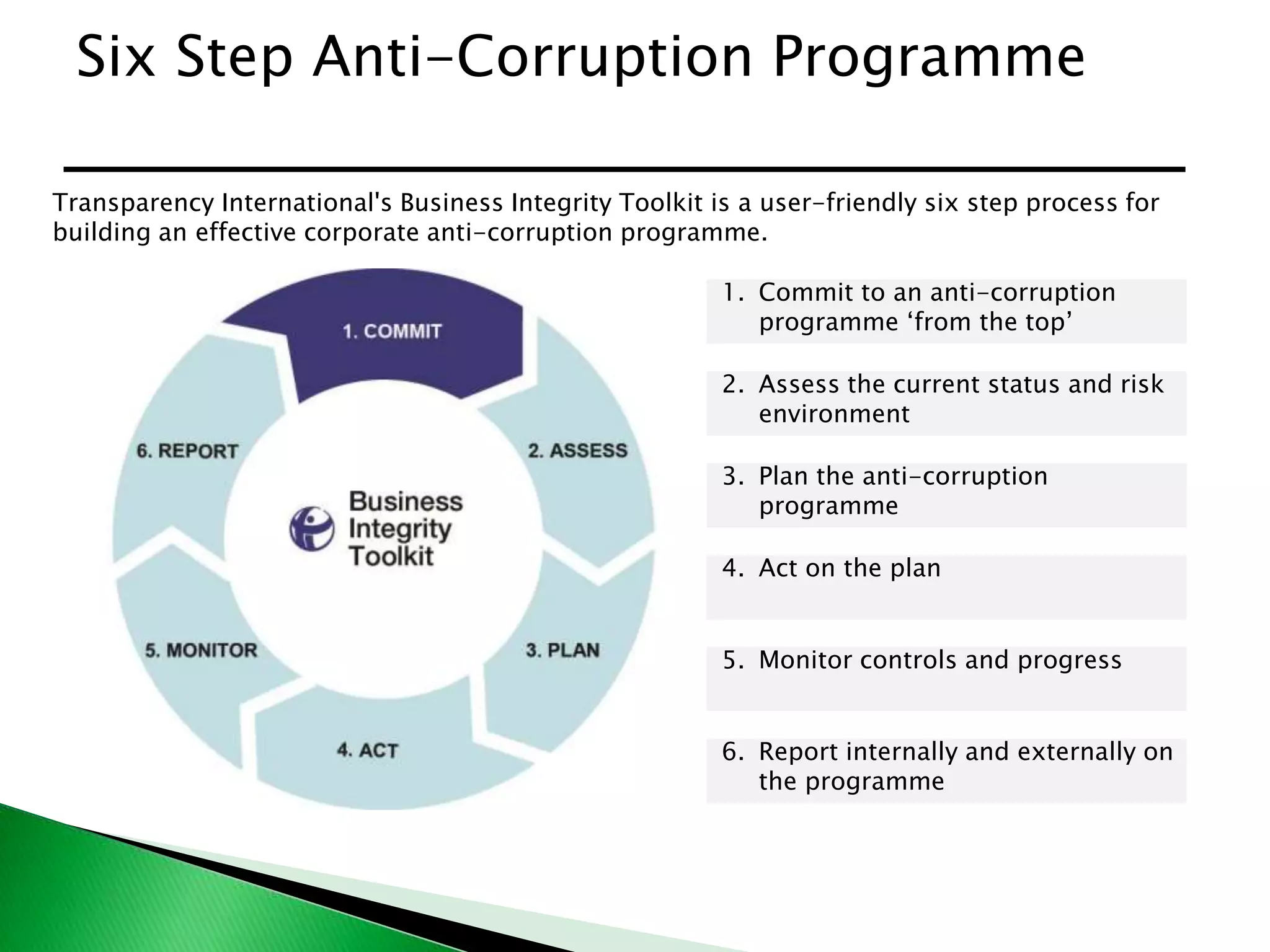
Transparency International's Business Integrity Toolkit is a user-friendly six step process for
building an effective corporate anti-corruption programme.
1. Commit to an anti-corruption
programme ‘from the top’
4. Act on the plan
5. Monitor controls and progress
6. Report internally and externally on
the programme
3. Plan the anti-corruption
programme
2. Assess the current status and risk
environment
Step One: Commit
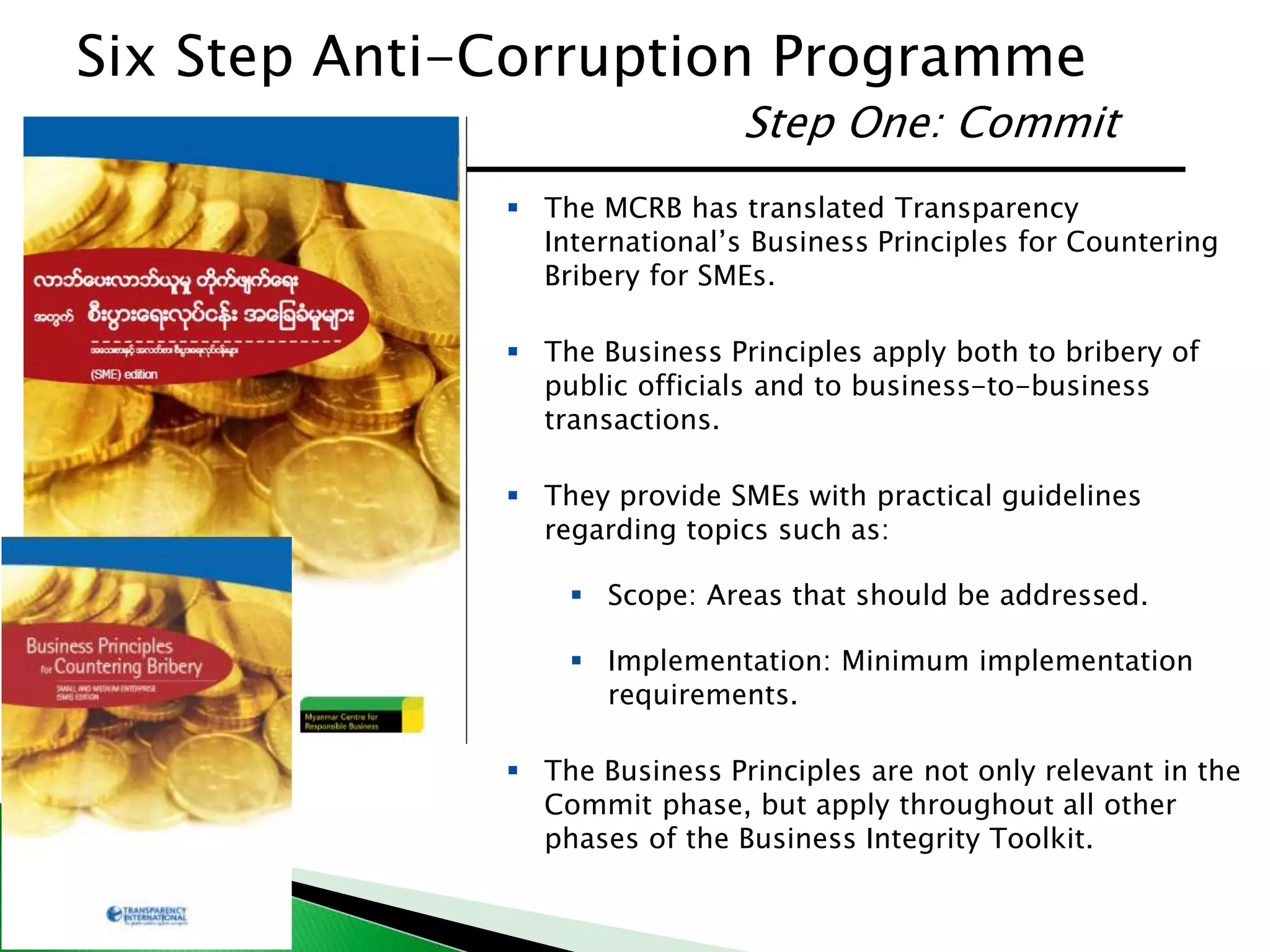
 The MCRB has translated Transparency
International’s Business Principles for Countering
Bribery for SMEs.
 The Business Principles apply both to bribery of
public officials and to business-to-business
transactions.
 They provide SMEs with practical guidelines
regarding topics such as:
 Scope: Areas that should be addressed.
 Implementation: Minimum implementation
requirements.
 The Business Principles are not only relevant in the
Commit phase, but apply throughout all other
phases of the Business Integrity Toolkit.
Six Step Anti-Corruption Programme
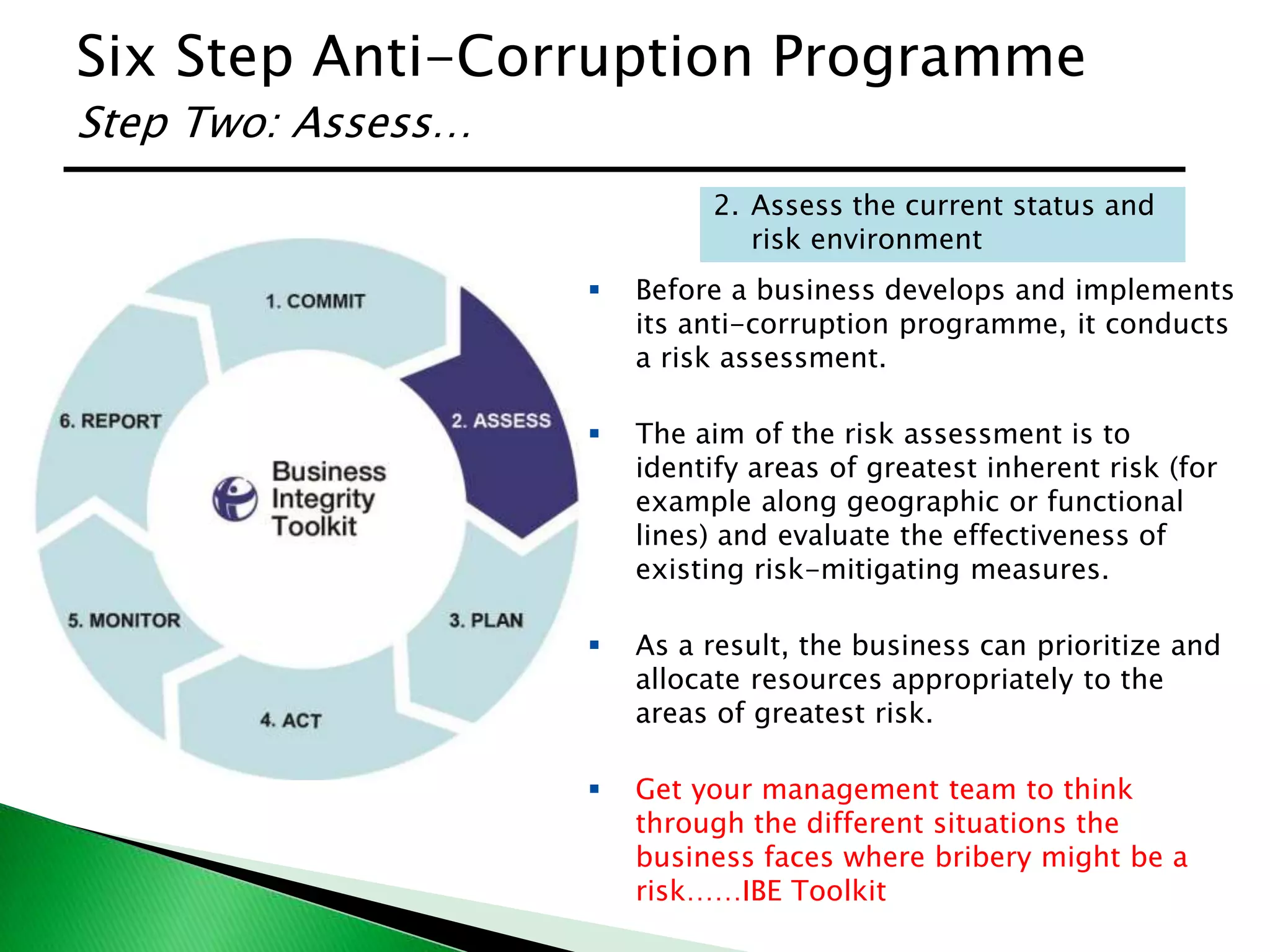
2. Assess the current status and
risk environment
 Before a business develops and implements
its anti-corruption programme, it conducts
a risk assessment.
 The aim of the risk assessment is to
identify areas of greatest inherent risk (for
example along geographic or functional
lines) and evaluate the effectiveness of
existing risk-mitigating measures.
 As a result, the business can prioritize and
allocate resources appropriately to the
areas of greatest risk.
 Get your management team to think
through the different situations the
business faces where bribery might be a
risk……IBE Toolkit
Step Two: Assess…
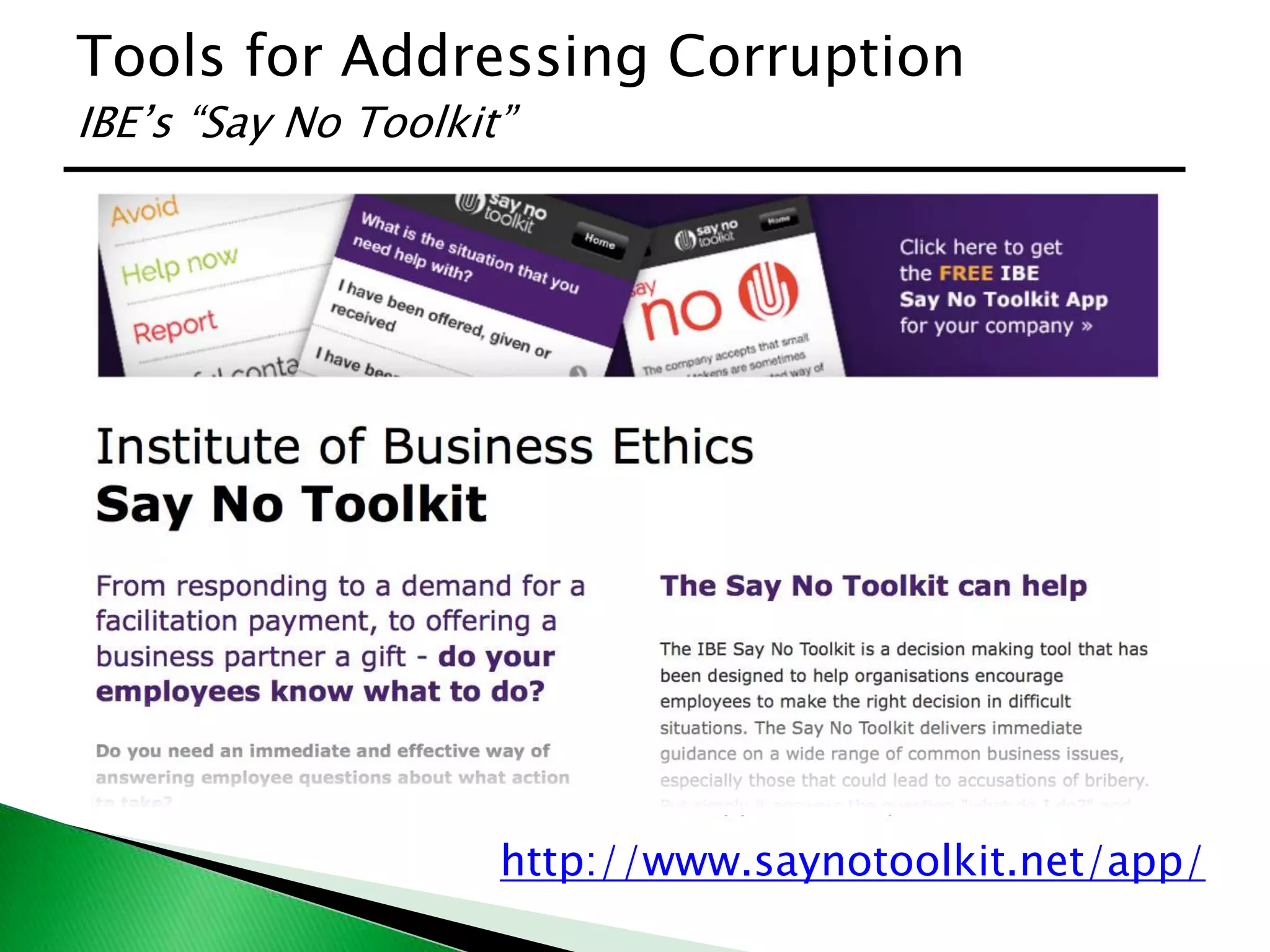
Tools for Addressing Corruption
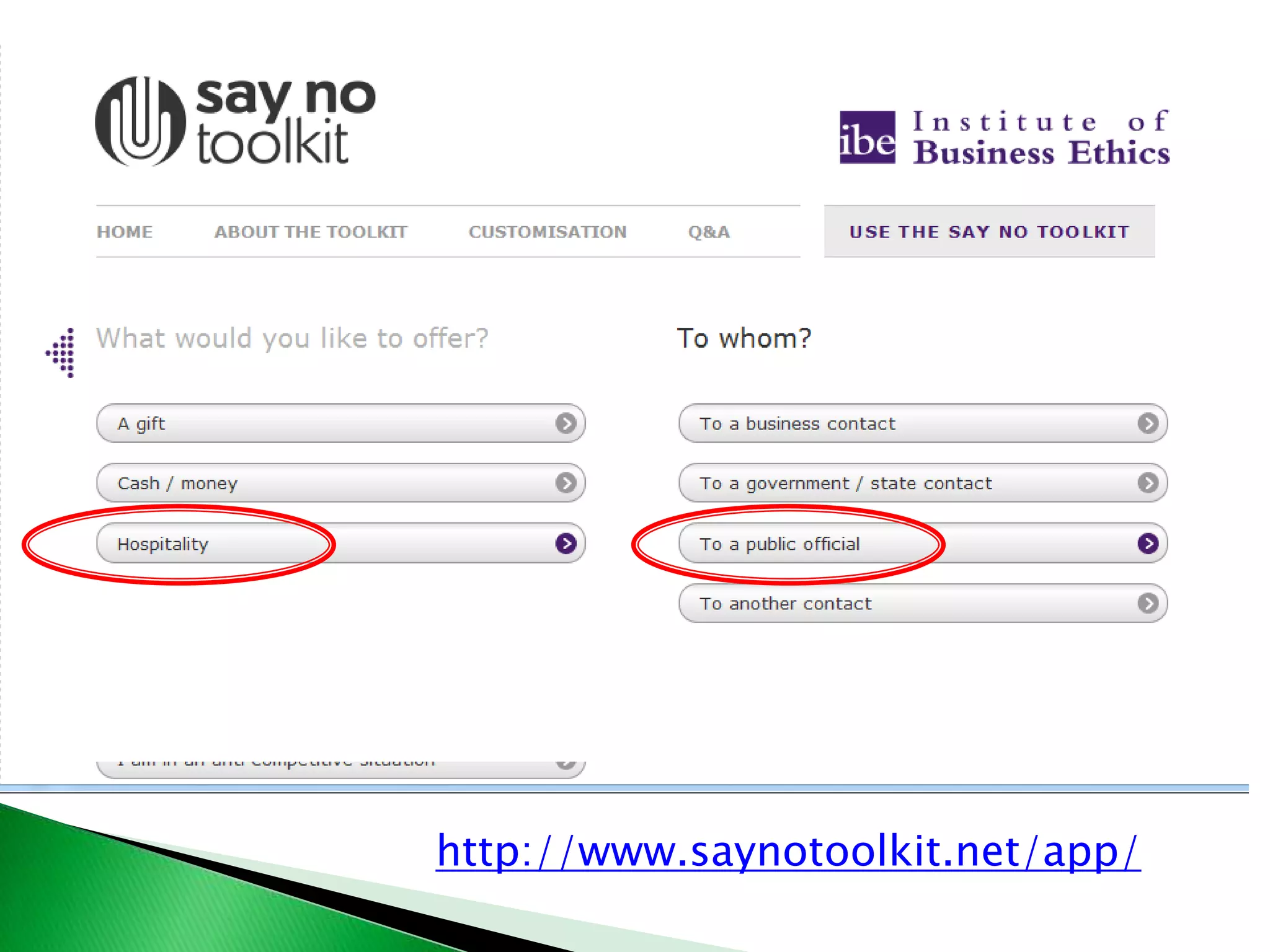
IBE’s “Say No Toolkit”
http://www.saynotoolkit.net/app/
Tools for Addressing Corruption
IBE’s “Say No Toolkit”
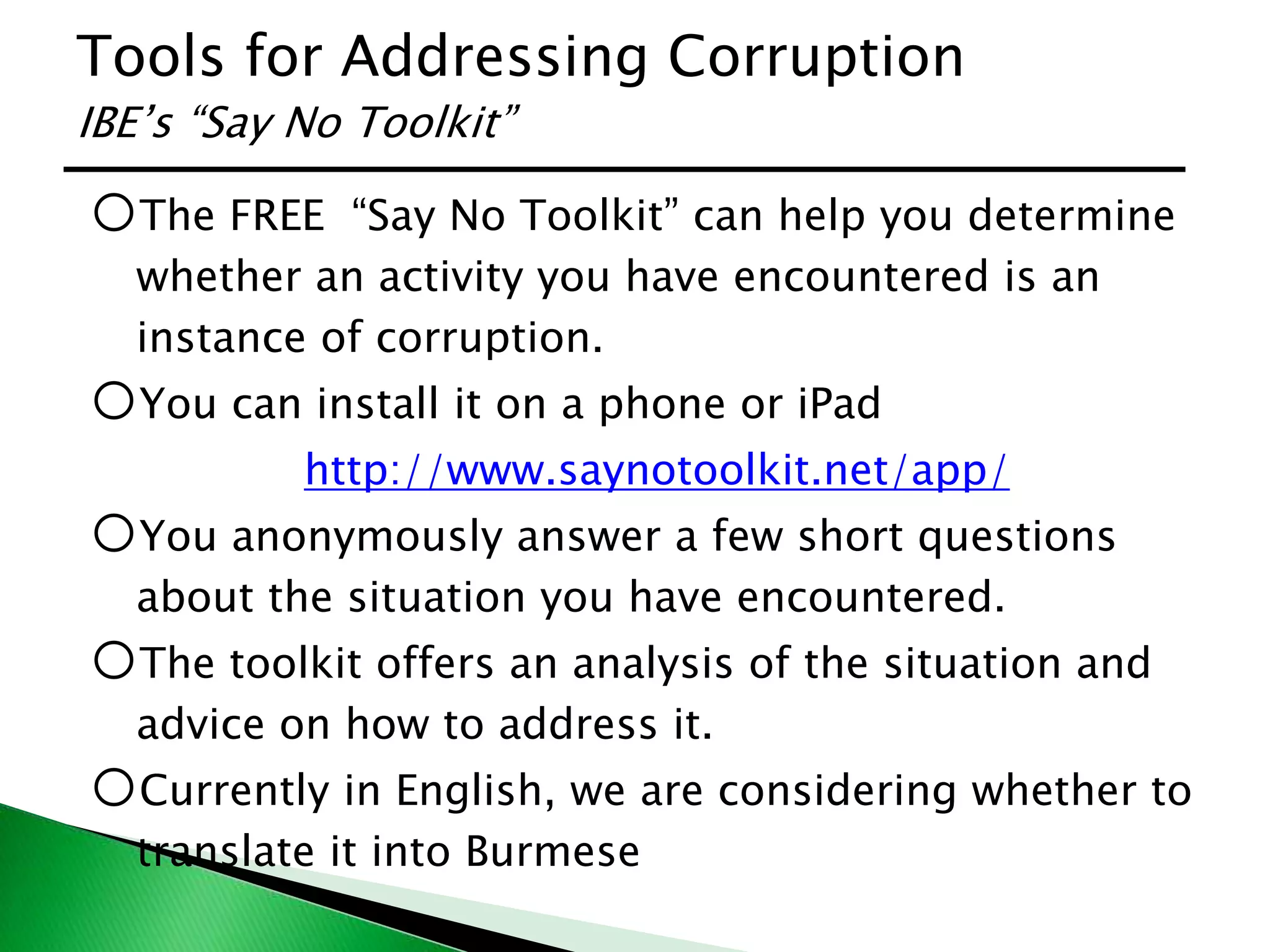
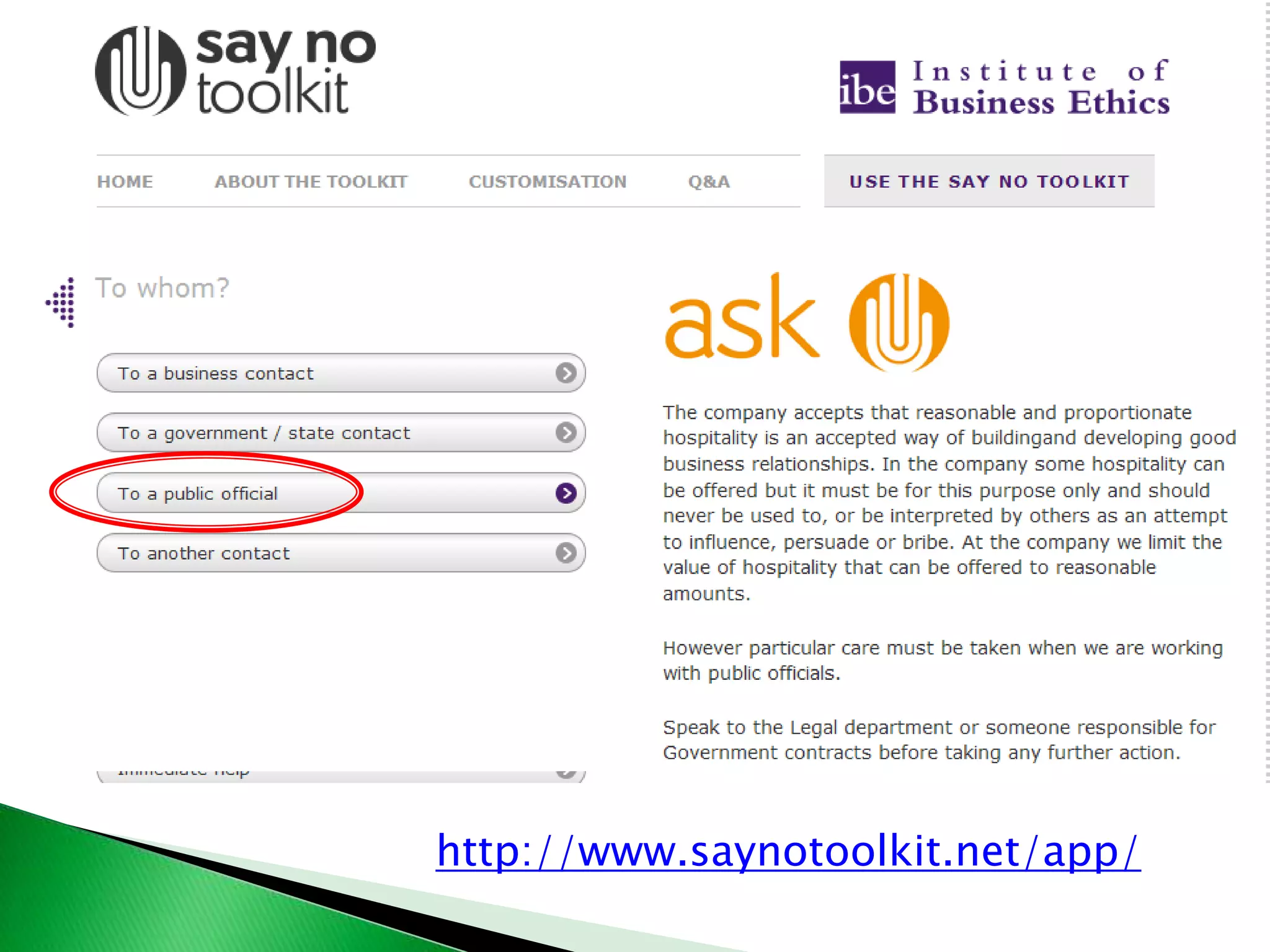
oThe FREE “Say No Toolkit” can help you determine
whether an activity you have encountered is an
instance of corruption.
oYou can install it on a phone or iPad
http://www.saynotoolkit.net/app/
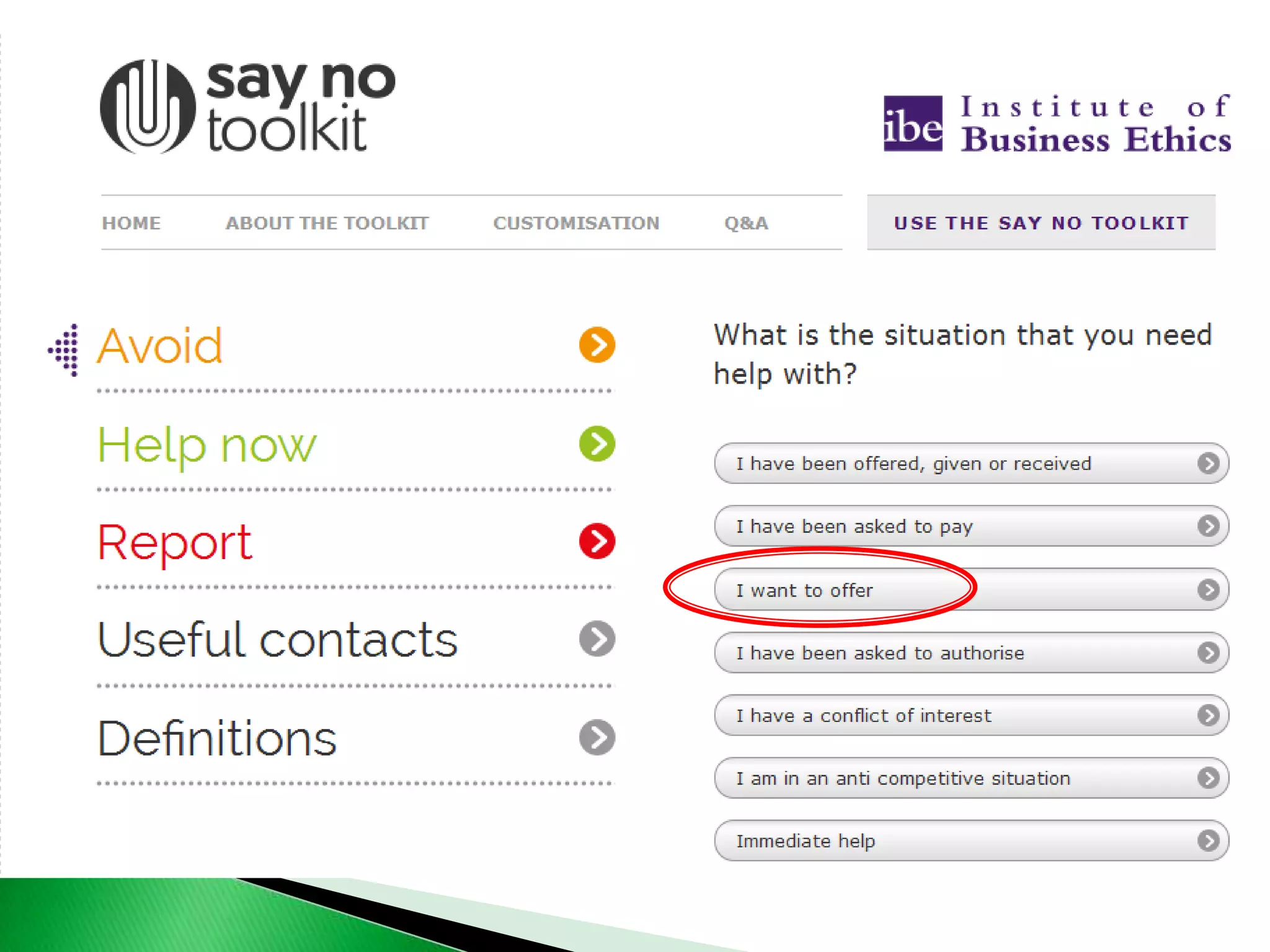
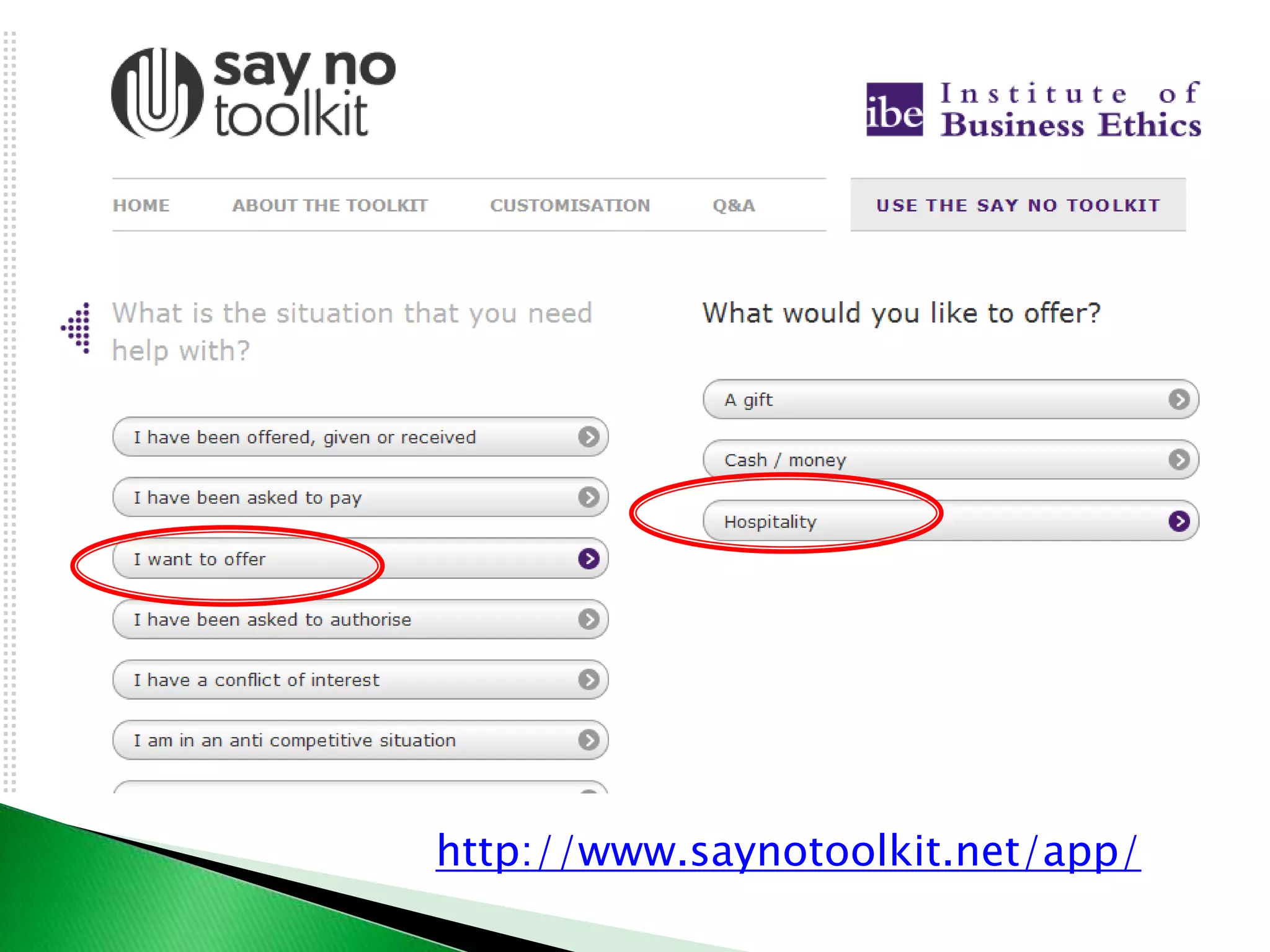
oYou anonymously answer a few short questions
about the situation you have encountered.
oThe toolkit offers an analysis of the situation and
advice on how to address it.
oCurrently in English, we are considering whether to
translate it into Burmese
http://www.saynotoolkit.net/app/
www.mcrb.org.mm
myanmar.responsible.business

Developing an Effective Anti-Corruption Program

  • 1.
    Developing an Effective Anti-CorruptionProgram Practical Tools for Myanmar Businesses Vicky Bowman Director, Myanmar Centre for Responsible Businesss
  • 2.
    Six Step Anti-CorruptionProgramme Transparency International's Business Integrity Toolkit is a user-friendly six step process for building an effective corporate anti-corruption programme. 1. Commit to an anti-corruption programme ‘from the top’ 4. Act on the plan 5. Monitor controls and progress 6. Report internally and externally on the programme 3. Plan the anti-corruption programme 2. Assess the current status and risk environment
  • 3.
    Step One: Commit The MCRB has translated Transparency International’s Business Principles for Countering Bribery for SMEs.  The Business Principles apply both to bribery of public officials and to business-to-business transactions.  They provide SMEs with practical guidelines regarding topics such as:  Scope: Areas that should be addressed.  Implementation: Minimum implementation requirements.  The Business Principles are not only relevant in the Commit phase, but apply throughout all other phases of the Business Integrity Toolkit. Six Step Anti-Corruption Programme
  • 4.
    Six Step Anti-CorruptionProgramme 2. Assess the current status and risk environment  Before a business develops and implements its anti-corruption programme, it conducts a risk assessment.  The aim of the risk assessment is to identify areas of greatest inherent risk (for example along geographic or functional lines) and evaluate the effectiveness of existing risk-mitigating measures.  As a result, the business can prioritize and allocate resources appropriately to the areas of greatest risk.  Get your management team to think through the different situations the business faces where bribery might be a risk……IBE Toolkit Step Two: Assess…
  • 5.
    Tools for AddressingCorruption IBE’s “Say No Toolkit” http://www.saynotoolkit.net/app/
  • 6.
    Tools for AddressingCorruption IBE’s “Say No Toolkit” oThe FREE “Say No Toolkit” can help you determine whether an activity you have encountered is an instance of corruption. oYou can install it on a phone or iPad http://www.saynotoolkit.net/app/ oYou anonymously answer a few short questions about the situation you have encountered. oThe toolkit offers an analysis of the situation and advice on how to address it. oCurrently in English, we are considering whether to translate it into Burmese
  • 8.
  • 9.
  • 10.
  • 11.