McGraw-Hill/Irwin © 2007 The McGraw-Hill Companies, Inc. All rights reserved.
1
Chapter Title
15/e PPT
What Is Strategy
and Why Is
It Important?
Screen graphics created by:
Jana F. Kuzmicki, Ph.D.
Troy University-Florida Region
1-2
Thinking Strategically:
The Three Big Strategic Questions
1. What’s the company’s present situation?
2. Where does the company need to go from here?
Business(es) to be in and market positions to stake out
Buyer needs and groups to serve
Direction to head
3. How should it get there?
A company’s answer to “how
will we get there?” is its strategy
1-3
What Do We Mean By “Strategy”?
 Consists of competitive moves and business
approaches used by managers to run the
company
 Management’s “action plan” to
 Grow the business
 Attract and please customers
 Compete successfully
 Conduct operations
 Achieve target levels of
organizational performance
1-4
Strategy and the Quest for
Competitive Advantage
 The heart and soul of any strategy are the actions
and moves in the marketplace that a company
makes to strengthen its competitive position and
gain a competitive advantage over rivals
 A creative distinctive strategy that sets a company
apart from rivals and yields a competitive
advantage is a company’s most reliable ticket to
above average profitability
 Competing with a competitive advantage is more
profitable than competing with no advantage
 Competing with a competitive disadvantage nearly
always results in below-average profitability
1-5
Four “Best” Strategic Approaches to
Building Sustainable Competitive Advantage
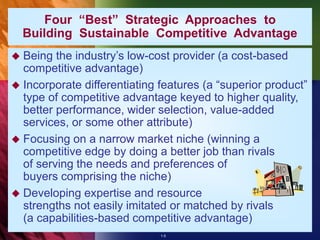
 Being the industry’s low-cost provider (a cost-based
competitive advantage)
 Incorporate differentiating features (a “superior product”
type of competitive advantage keyed to higher quality,
better performance, wider selection, value-added
services, or some other attribute)
 Focusing on a narrow market niche (winning a
competitive edge by doing a better job than rivals
of serving the needs and preferences of
buyers comprising the niche)
 Developing expertise and resource
strengths not easily imitated or matched by rivals
(a capabilities-based competitive advantage)
1-6
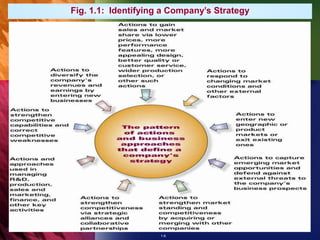
Fig. 1.1: Identifying a Company’s Strategy
1-7
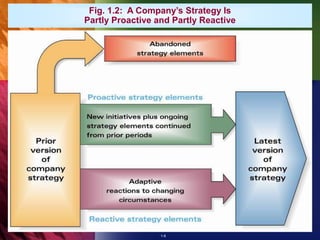
Why Do Strategies Evolve?
A company’s strategy is a work in progress
Changes may be necessary to react to
 Shifting market conditions
 Technological breakthroughs
 Fresh moves of competitors
 Evolving customer preferences
 Emerging market opportunities
 New ideas to improve strategy
 Crisis situations
1-8
Fig. 1.2: A Company’s Strategy Is
Partly Proactive and Partly Reactive
1-9
Linking Strategy With Ethics
 Ethical and moral standards go beyond
 Prohibitions of law and the language of “thou shalt not”
 to issues of
 Duty and “right” vs. “wrong”
 Ethical and moral standards address
“What is the right thing to do?”
 Two criteria of an ethical strategy:
 Does not entail actions and behaviors that cross the line
from “should do” to “should not do” and “unsavory” or
“shady” and
 Allows management to fulfill its ethical duties to all
stakeholders
1-10
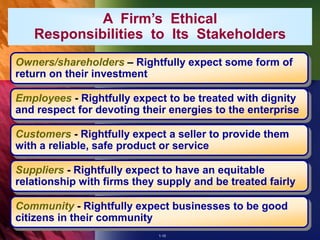
A Firm’s Ethical
Responsibilities to Its Stakeholders
Owners/shareholders – Rightfully expect some form of
return on their investment
Employees - Rightfully expect to be treated with dignity
and respect for devoting their energies to the enterprise
Customers - Rightfully expect a seller to provide them
with a reliable, safe product or service
Suppliers - Rightfully expect to have an equitable
relationship with firms they supply and be treated fairly
Community - Rightfully expect businesses to be good
citizens in their community
1-11
What Is a Business Model?
 A business model addresses “How do we make
money in this business?”
 Is the strategy capable of delivering
good bottom-line results?
 Do the revenue-cost-profit economics
of the strategy make good business sense?
 Look at revenue streams the strategy is expected to
produce
 Look at associated cost structure and potential profit
margins
 Do resulting earnings streams and ROI indicate the
strategy makes sense and the company has a viable
business model for making money?
1-12
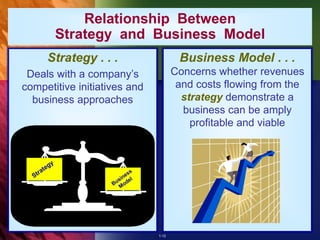
Relationship Between
Strategy and Business Model
Strategy . . .
Deals with a company’s
competitive initiatives and
business approaches
Business Model . . .
Concerns whether revenues
and costs flowing from the
strategy demonstrate a
business can be amply
profitable and viable
1-13
Tests of a Winning Strategy
 GOODNESS OF FIT TEST
 How well does strategy fit
the firm’s situation?
 COMPETITIVE ADVANTAGE TEST
 Does strategy lead to sustainable
competitive advantage?
 PERFORMANCE TEST
 Does strategy boost firm performance?
1-14
Why Is Strategy Important?
A compelling need exists for managers
to proactively shape how a firm’s
business will be conducted
A strategy-focused firm is more likely
to be a strong bottom-line performer
than one that views strategy as secondary

Strategic Management, Crafting and Executing Strategy_Ch001.ppt

  • 1.
    McGraw-Hill/Irwin © 2007The McGraw-Hill Companies, Inc. All rights reserved. 1 Chapter Title 15/e PPT What Is Strategy and Why Is It Important? Screen graphics created by: Jana F. Kuzmicki, Ph.D. Troy University-Florida Region
  • 2.
    1-2 Thinking Strategically: The ThreeBig Strategic Questions 1. What’s the company’s present situation? 2. Where does the company need to go from here? Business(es) to be in and market positions to stake out Buyer needs and groups to serve Direction to head 3. How should it get there? A company’s answer to “how will we get there?” is its strategy
  • 3.
    1-3 What Do WeMean By “Strategy”?  Consists of competitive moves and business approaches used by managers to run the company  Management’s “action plan” to  Grow the business  Attract and please customers  Compete successfully  Conduct operations  Achieve target levels of organizational performance
  • 4.
    1-4 Strategy and theQuest for Competitive Advantage  The heart and soul of any strategy are the actions and moves in the marketplace that a company makes to strengthen its competitive position and gain a competitive advantage over rivals  A creative distinctive strategy that sets a company apart from rivals and yields a competitive advantage is a company’s most reliable ticket to above average profitability  Competing with a competitive advantage is more profitable than competing with no advantage  Competing with a competitive disadvantage nearly always results in below-average profitability
  • 5.
    1-5 Four “Best” StrategicApproaches to Building Sustainable Competitive Advantage  Being the industry’s low-cost provider (a cost-based competitive advantage)  Incorporate differentiating features (a “superior product” type of competitive advantage keyed to higher quality, better performance, wider selection, value-added services, or some other attribute)  Focusing on a narrow market niche (winning a competitive edge by doing a better job than rivals of serving the needs and preferences of buyers comprising the niche)  Developing expertise and resource strengths not easily imitated or matched by rivals (a capabilities-based competitive advantage)
  • 6.
    1-6 Fig. 1.1: Identifyinga Company’s Strategy
  • 7.
    1-7 Why Do StrategiesEvolve? A company’s strategy is a work in progress Changes may be necessary to react to  Shifting market conditions  Technological breakthroughs  Fresh moves of competitors  Evolving customer preferences  Emerging market opportunities  New ideas to improve strategy  Crisis situations
  • 8.
    1-8 Fig. 1.2: ACompany’s Strategy Is Partly Proactive and Partly Reactive
  • 9.
    1-9 Linking Strategy WithEthics  Ethical and moral standards go beyond  Prohibitions of law and the language of “thou shalt not”  to issues of  Duty and “right” vs. “wrong”  Ethical and moral standards address “What is the right thing to do?”  Two criteria of an ethical strategy:  Does not entail actions and behaviors that cross the line from “should do” to “should not do” and “unsavory” or “shady” and  Allows management to fulfill its ethical duties to all stakeholders
  • 10.
    1-10 A Firm’s Ethical Responsibilitiesto Its Stakeholders Owners/shareholders – Rightfully expect some form of return on their investment Employees - Rightfully expect to be treated with dignity and respect for devoting their energies to the enterprise Customers - Rightfully expect a seller to provide them with a reliable, safe product or service Suppliers - Rightfully expect to have an equitable relationship with firms they supply and be treated fairly Community - Rightfully expect businesses to be good citizens in their community
  • 11.
    1-11 What Is aBusiness Model?  A business model addresses “How do we make money in this business?”  Is the strategy capable of delivering good bottom-line results?  Do the revenue-cost-profit economics of the strategy make good business sense?  Look at revenue streams the strategy is expected to produce  Look at associated cost structure and potential profit margins  Do resulting earnings streams and ROI indicate the strategy makes sense and the company has a viable business model for making money?
  • 12.
    1-12 Relationship Between Strategy andBusiness Model Strategy . . . Deals with a company’s competitive initiatives and business approaches Business Model . . . Concerns whether revenues and costs flowing from the strategy demonstrate a business can be amply profitable and viable
  • 13.
    1-13 Tests of aWinning Strategy  GOODNESS OF FIT TEST  How well does strategy fit the firm’s situation?  COMPETITIVE ADVANTAGE TEST  Does strategy lead to sustainable competitive advantage?  PERFORMANCE TEST  Does strategy boost firm performance?
  • 14.
    1-14 Why Is StrategyImportant? A compelling need exists for managers to proactively shape how a firm’s business will be conducted A strategy-focused firm is more likely to be a strong bottom-line performer than one that views strategy as secondary