Developing Compensation,
Benefits, & Job Design to Achieve
Strategic HR Goals
Edward B. Villanueva
Dr. Paul Brower
Strategic Human Resource Management
June 16, 2013
Human Resource Strategy and
Compensation Choice:
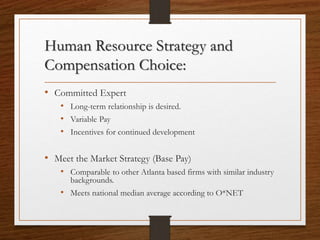
• Committed Expert
• Long-term relationship is desired.
• Variable Pay
• Incentives for continued development
• Meet the Market Strategy (Base Pay)
• Comparable to other Atlanta based firms with similar industry
backgrounds.
• Meets national median average according to O*NET
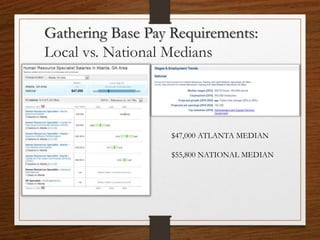
Gathering Base Pay Requirements:
Local vs. National Medians
$47,000 ATLANTA MEDIAN
$55,800 NATIONAL MEDIAN
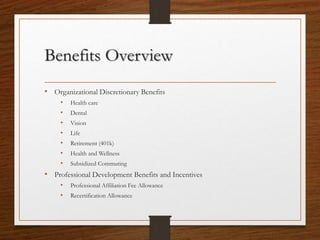
Benefits Overview
• Organizational Discretionary Benefits
• Health care
• Dental
• Vision
• Life
• Retirement (401k)
• Health and Wellness
• Subsidized Commuting
• Professional Development Benefits and Incentives
• Professional Affiliation Fee Allowance
• Recertification Allowance
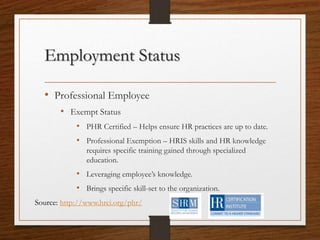
Employment Status
• Professional Employee
• Exempt Status
• PHR Certified – Helps ensure HR practices are up to date.
• Professional Exemption – HRIS skills and HR knowledge
requires specific training gained through specialized
education.
• Leveraging employee’s knowledge.
• Brings specific skill-set to the organization.
Source: http://www.hrci.org/phr/
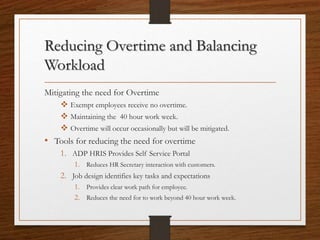
Reducing Overtime and Balancing
Workload
Mitigating the need for Overtime
 Exempt employees receive no overtime.
 Maintaining the 40 hour work week.
 Overtime will occur occasionally but will be mitigated.
• Tools for reducing the need for overtime
1. ADP HRIS Provides Self Service Portal
1. Reduces HR Secretary interaction with customers.
2. Job design identifies key tasks and expectations
1. Provides clear work path for employee.
2. Reduces the need for to work beyond 40 hour work week.
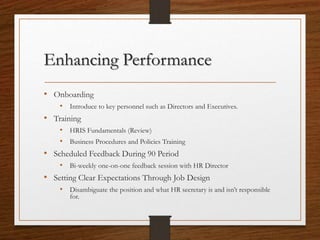
Enhancing Performance
• Onboarding
• Introduce to key personnel such as Directors and Executives.
• Training
• HRIS Fundamentals (Review)
• Business Procedures and Policies Training
• Scheduled Feedback During 90 Period
• Bi-weekly one-on-one feedback session with HR Director
• Setting Clear Expectations Through Job Design
• Disambiguate the position and what HR secretary is and isn’t responsible
for.
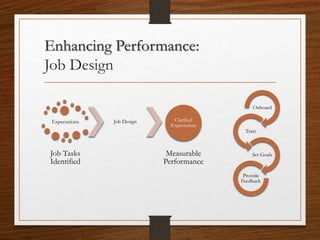
Enhancing Performance:
Job Design
Onboard
Train
Set Goals
Provide
Feedback
Expectations
Job Tasks
Identified
Job Design Clarified
Expectation
Measurable
Performance
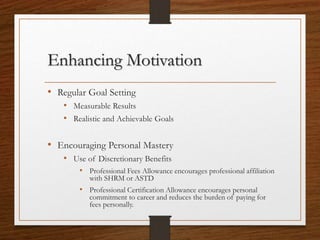
Enhancing Motivation
• Regular Goal Setting
• Measurable Results
• Realistic and Achievable Goals
• Encouraging Personal Mastery
• Use of Discretionary Benefits
• Professional Fees Allowance encourages professional affiliation
with SHRM or ASTD
• Professional Certification Allowance encourages personal
commitment to career and reduces the burden of paying for
fees personally.
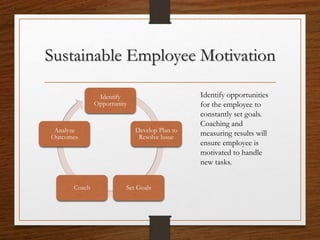
Sustainable Employee Motivation
Identify
Opportunity
Develop Plan to
Resolve Issue
Set GoalsCoach
Analyze
Outcomes
Identify opportunities
for the employee to
constantly set goals.
Coaching and
measuring results will
ensure employee is
motivated to handle
new tasks.
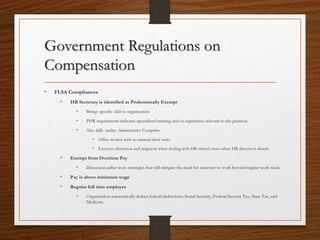
Government Regulations on
Compensation
• FLSA Compliances
• HR Secretary is identified as Professionally Exempt
• Brings specific skill to organization
• PHR requirement indicates specialized training and or experience relevant to the position.
• Also falls under Administrative Exemption
• Office worker with no manual labor tasks.
• Exercises discretion and judgment when dealing with HR related issues when HR director is absent.
• Exempt from Overtime Pay
• Discussed earlier were strategies that will mitigate the need for secretary to work beyond regular work week.
• Pay is above minimum wage
• Regular full time employee
• Organization automatically deduct federal deductions: Social Security, Federal Income Tax, State Tax, and
Medicare.
Industry
Comparable
Packages
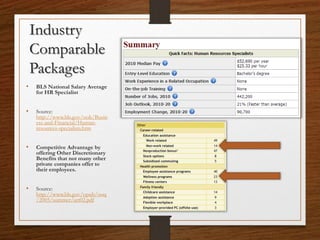
• BLS National Salary Average
for HR Specialist
• Source:
http://www.bls.gov/ooh/Busin
ess-and-Financial/Human-
resources-specialists.htm
• Competitive Advantage by
offering Other Discretionary
Benefits that not many other
private companies offer to
their employees.
• Source:
http://www.bls.gov/opub/ooq
/2005/summer/art02.pdf
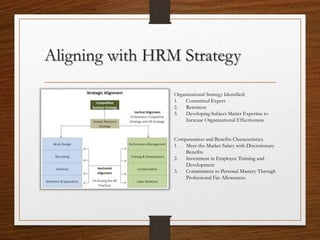
Aligning with HRM Strategy
Organizational Strategy Identified:
1. Committed Expert
2. Retention
3. Developing Subject Matter Expertise to
Increase Organizational Effectiveness
Compensation and Benefits Characteristics.
1. Meet-the-Market Salary with Discretionary
Benefits
2. Investment in Employee Training and
Development
3. Commitment to Personal Mastery Through
Professional Fee Allowances.
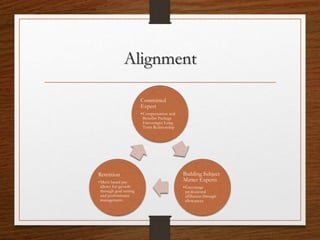
Alignment
Committed
Expert
•Compensation and
Benefits Package
Encourages Long
Term Relationship
Building Subject
Matter Experts
•Encourage
professional
affiliation through
allowances
Retention
•Merit based pay
allows for growth
through goal setting
and performance
management.
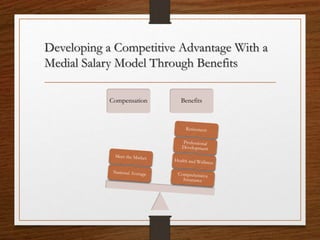
Developing a Competitive Advantage With a
Medial Salary Model Through Benefits
Compensation Benefits

Strategic HRM: Developing compensation, benefits and job designs.

  • 1.
    Developing Compensation, Benefits, &Job Design to Achieve Strategic HR Goals Edward B. Villanueva Dr. Paul Brower Strategic Human Resource Management June 16, 2013
  • 2.
    Human Resource Strategyand Compensation Choice: • Committed Expert • Long-term relationship is desired. • Variable Pay • Incentives for continued development • Meet the Market Strategy (Base Pay) • Comparable to other Atlanta based firms with similar industry backgrounds. • Meets national median average according to O*NET
  • 3.
    Gathering Base PayRequirements: Local vs. National Medians $47,000 ATLANTA MEDIAN $55,800 NATIONAL MEDIAN
  • 4.
    Benefits Overview • OrganizationalDiscretionary Benefits • Health care • Dental • Vision • Life • Retirement (401k) • Health and Wellness • Subsidized Commuting • Professional Development Benefits and Incentives • Professional Affiliation Fee Allowance • Recertification Allowance
  • 5.
    Employment Status • ProfessionalEmployee • Exempt Status • PHR Certified – Helps ensure HR practices are up to date. • Professional Exemption – HRIS skills and HR knowledge requires specific training gained through specialized education. • Leveraging employee’s knowledge. • Brings specific skill-set to the organization. Source: http://www.hrci.org/phr/
  • 6.
    Reducing Overtime andBalancing Workload Mitigating the need for Overtime  Exempt employees receive no overtime.  Maintaining the 40 hour work week.  Overtime will occur occasionally but will be mitigated. • Tools for reducing the need for overtime 1. ADP HRIS Provides Self Service Portal 1. Reduces HR Secretary interaction with customers. 2. Job design identifies key tasks and expectations 1. Provides clear work path for employee. 2. Reduces the need for to work beyond 40 hour work week.
  • 7.
    Enhancing Performance • Onboarding •Introduce to key personnel such as Directors and Executives. • Training • HRIS Fundamentals (Review) • Business Procedures and Policies Training • Scheduled Feedback During 90 Period • Bi-weekly one-on-one feedback session with HR Director • Setting Clear Expectations Through Job Design • Disambiguate the position and what HR secretary is and isn’t responsible for.
  • 8.
    Enhancing Performance: Job Design Onboard Train SetGoals Provide Feedback Expectations Job Tasks Identified Job Design Clarified Expectation Measurable Performance
  • 9.
    Enhancing Motivation • RegularGoal Setting • Measurable Results • Realistic and Achievable Goals • Encouraging Personal Mastery • Use of Discretionary Benefits • Professional Fees Allowance encourages professional affiliation with SHRM or ASTD • Professional Certification Allowance encourages personal commitment to career and reduces the burden of paying for fees personally.
  • 10.
    Sustainable Employee Motivation Identify Opportunity DevelopPlan to Resolve Issue Set GoalsCoach Analyze Outcomes Identify opportunities for the employee to constantly set goals. Coaching and measuring results will ensure employee is motivated to handle new tasks.
  • 11.
    Government Regulations on Compensation •FLSA Compliances • HR Secretary is identified as Professionally Exempt • Brings specific skill to organization • PHR requirement indicates specialized training and or experience relevant to the position. • Also falls under Administrative Exemption • Office worker with no manual labor tasks. • Exercises discretion and judgment when dealing with HR related issues when HR director is absent. • Exempt from Overtime Pay • Discussed earlier were strategies that will mitigate the need for secretary to work beyond regular work week. • Pay is above minimum wage • Regular full time employee • Organization automatically deduct federal deductions: Social Security, Federal Income Tax, State Tax, and Medicare.
  • 12.
    Industry Comparable Packages • BLS NationalSalary Average for HR Specialist • Source: http://www.bls.gov/ooh/Busin ess-and-Financial/Human- resources-specialists.htm • Competitive Advantage by offering Other Discretionary Benefits that not many other private companies offer to their employees. • Source: http://www.bls.gov/opub/ooq /2005/summer/art02.pdf
  • 13.
    Aligning with HRMStrategy Organizational Strategy Identified: 1. Committed Expert 2. Retention 3. Developing Subject Matter Expertise to Increase Organizational Effectiveness Compensation and Benefits Characteristics. 1. Meet-the-Market Salary with Discretionary Benefits 2. Investment in Employee Training and Development 3. Commitment to Personal Mastery Through Professional Fee Allowances.
  • 14.
    Alignment Committed Expert •Compensation and Benefits Package EncouragesLong Term Relationship Building Subject Matter Experts •Encourage professional affiliation through allowances Retention •Merit based pay allows for growth through goal setting and performance management.
  • 15.
    Developing a CompetitiveAdvantage With a Medial Salary Model Through Benefits Compensation Benefits