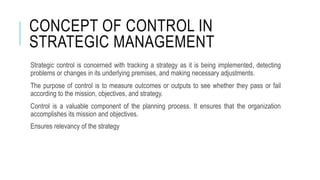
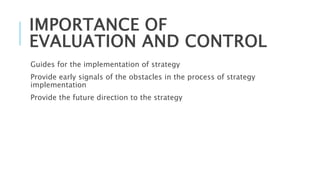
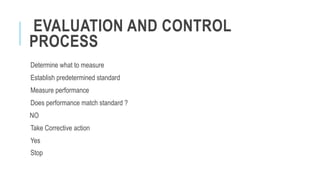
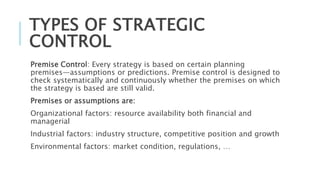
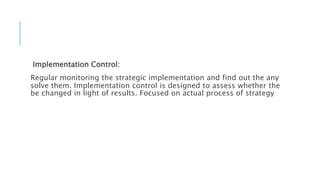
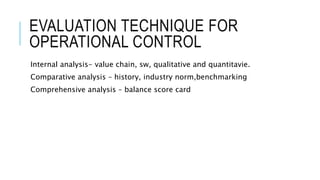
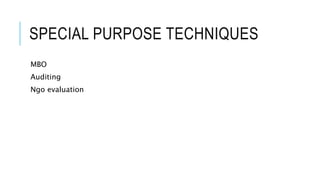
Strategic control involves tracking strategy implementation, detecting problems, and making adjustments. It ensures the organization accomplishes its mission and objectives. The control process determines what to measure, establishes standards, measures performance, and takes corrective action if needed. There are several types of strategic control, including premise control to check assumptions, implementation control to assess strategy execution, and strategic surveillance to monitor internal and external events. Benefits of strategic evaluation include providing direction, maintaining a continuous focus on key performance, and orienting the organization towards the future.