Created by
Team
It refer to the specific tasks, duties, and outcomes that an individual is
accountable for in their role within an organization. These areas clearly outline
what is expected from an employee and are closely tied to their performance
evaluation. KRAs help ensure that each team member is focused on the critical
functions that directly contribute to the organization's success. By aligning
KRAs with broader team and company goals, organizations can foster a sense
of direction, accountability, and efficiency.
Key Responsibility Areas (KRAs)
Introduction
Boosted Productivity and Efficiency
By aligning team goals with KRAs, you are
creating a roadmap for success. Every team
member knows where they are headed and
what is expected of them, minimizing time
spent on non-productive tasks. This clarity
leads to streamlined operations and fewer
misunderstandings, allowing everyone to
focus on high-priority items.
Enhanced Accountability
Defining each team member’s role and linking it
to broader goals also fosters accountability.
When Key Responsibility Areas (KRAs) are
clearly outlined, it becomes easier to assess
individual performance. If team members know
exactly what they’re responsible for, they can
hold themselves accountable, and management
can track progress with precision.
Why Aligning Team Goals with KRAs
Matters
Created by
Team
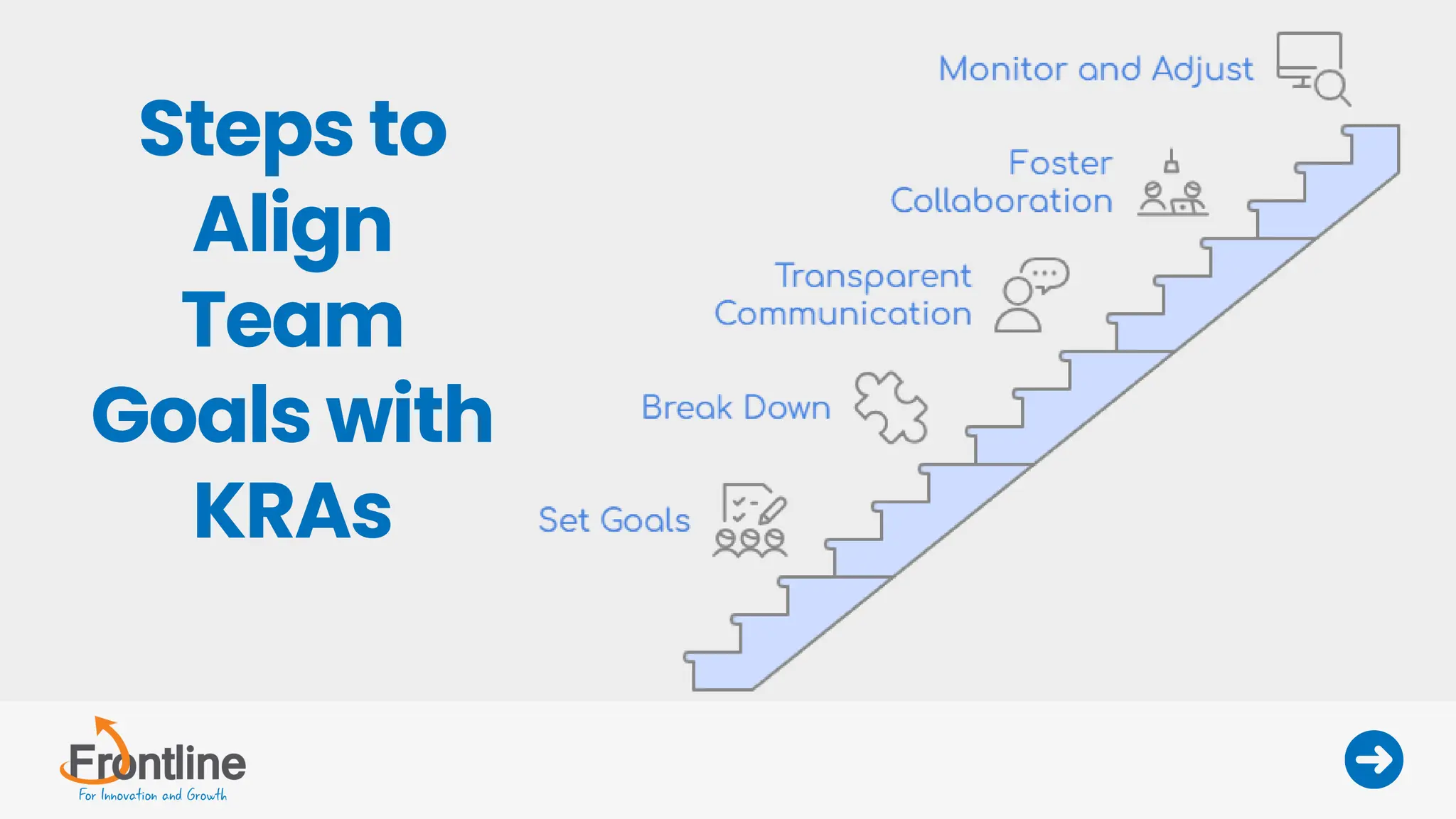
Steps to
Align
Team
Goals with
KRAs
Created by
Team
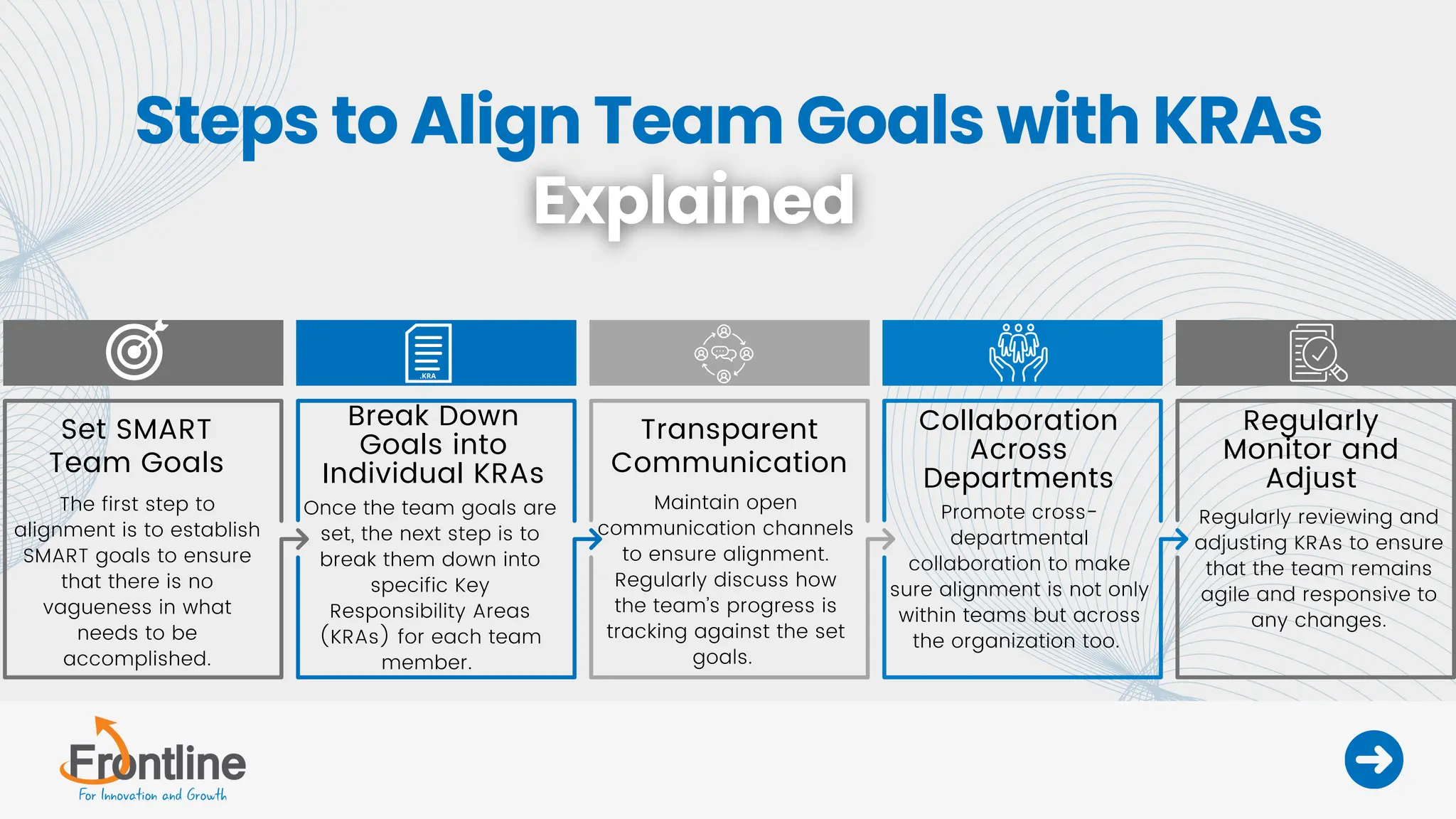
Steps to Align Team Goals with KRAs
The first step to
alignment is to establish
SMART goals to ensure
that there is no
vagueness in what
needs to be
accomplished.
Break Down
Goals into
Individual KRAs
Once the team goals are
set, the next step is to
break them down into
specific Key
Responsibility Areas
(KRAs) for each team
member.
Transparent
Communication
Collaboration
Across
Departments
Regularly
Monitor and
Adjust
Maintain open
communication channels
to ensure alignment.
Regularly discuss how
the team’s progress is
tracking against the set
goals.
Promote cross-
departmental
collaboration to make
sure alignment is not only
within teams but across
the organization too.
Regularly reviewing and
adjusting KRAs to ensure
that the team remains
agile and responsive to
any changes.
Set SMART
Team Goals
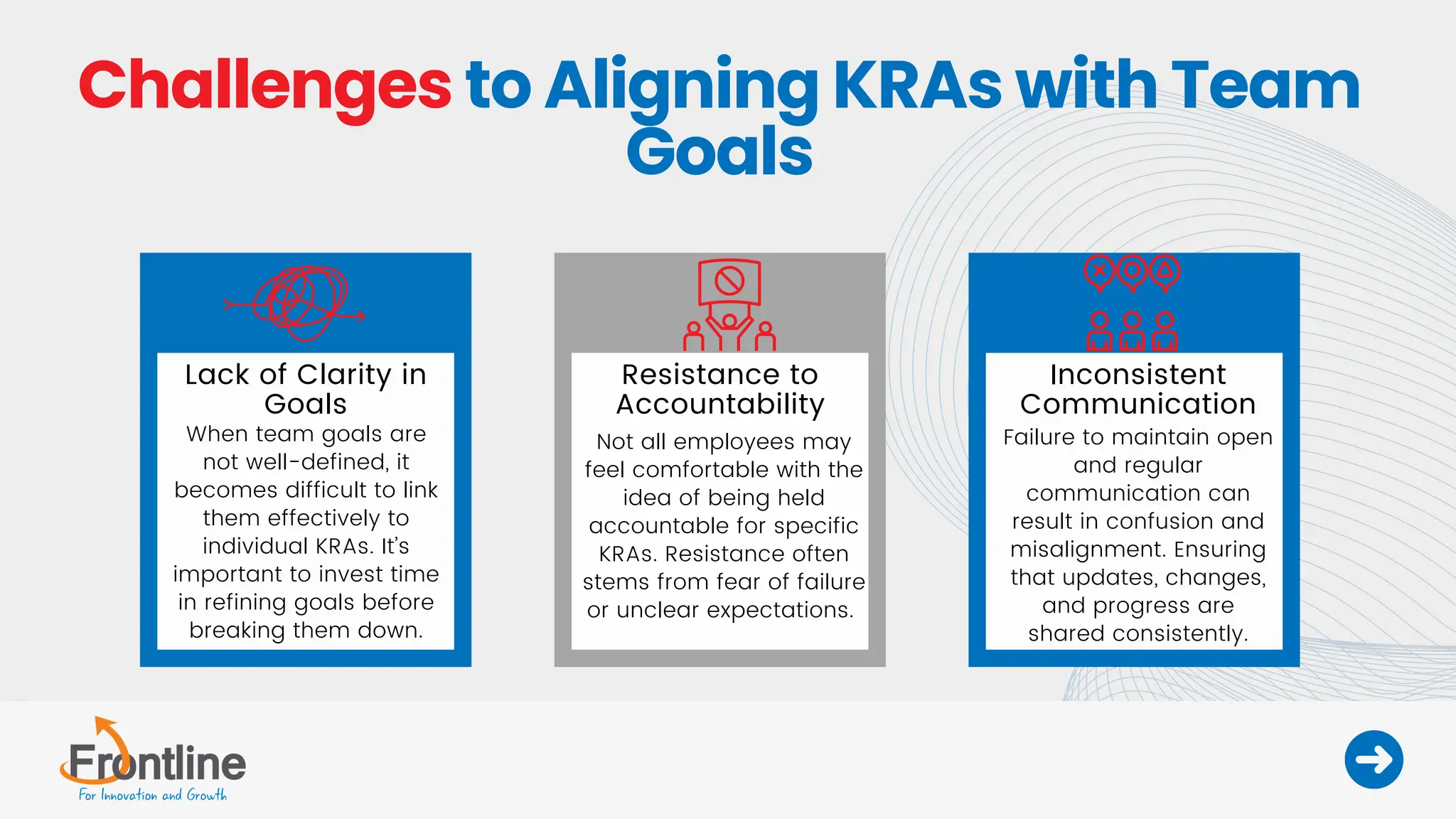
Challenges to Aligning KRAs with Team
Goals
When team goals are
not well-defined, it
becomes difficult to link
them effectively to
individual KRAs. It’s
important to invest time
in refining goals before
breaking them down.
Lack of Clarity in
Goals
Resistance to
Accountability
Not all employees may
feel comfortable with the
idea of being held
accountable for specific
KRAs. Resistance often
stems from fear of failure
or unclear expectations.
Inconsistent
Communication
Failure to maintain open
and regular
communication can
result in confusion and
misalignment. Ensuring
that updates, changes,
and progress are
shared consistently.
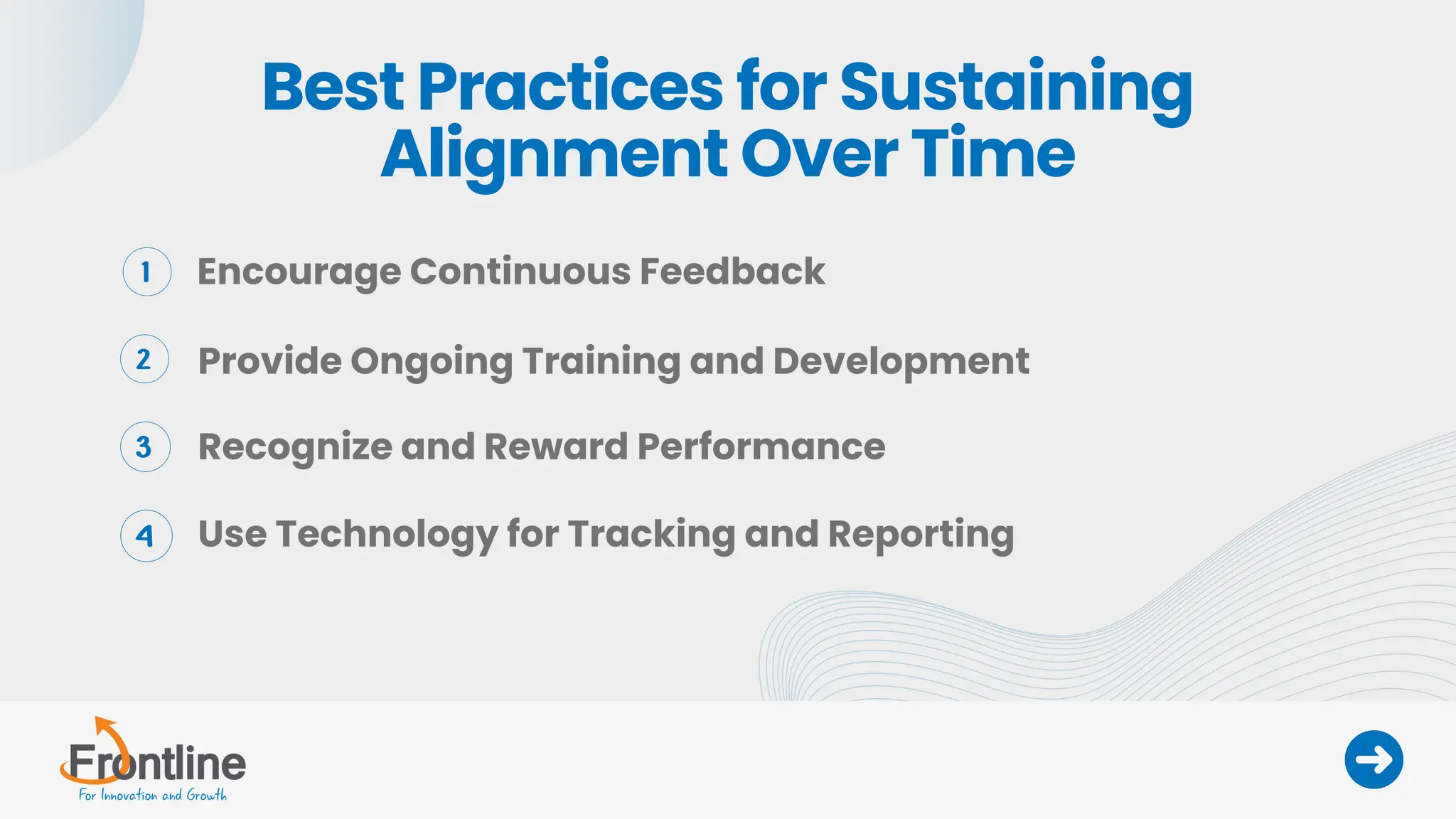
Best Practices for Sustaining
Alignment Over Time
Encourage Continuous Feedback
Provide Ongoing Training and Development
Recognize and Reward Performance
Use Technology for Tracking and Reporting
Let's Transform Your
Organization
Contact Us:
Email: info@frontlineconsult.com
Phone: +977-9801898004/ 01-5706314
Website: www.frontline.com.np
Business Strategy Team
Thank You

Steps to Align Team Goals with Key Responsibility Areas

  • 1.
  • 2.
    It refer tothe specific tasks, duties, and outcomes that an individual is accountable for in their role within an organization. These areas clearly outline what is expected from an employee and are closely tied to their performance evaluation. KRAs help ensure that each team member is focused on the critical functions that directly contribute to the organization's success. By aligning KRAs with broader team and company goals, organizations can foster a sense of direction, accountability, and efficiency. Key Responsibility Areas (KRAs) Introduction
  • 3.
    Boosted Productivity andEfficiency By aligning team goals with KRAs, you are creating a roadmap for success. Every team member knows where they are headed and what is expected of them, minimizing time spent on non-productive tasks. This clarity leads to streamlined operations and fewer misunderstandings, allowing everyone to focus on high-priority items. Enhanced Accountability Defining each team member’s role and linking it to broader goals also fosters accountability. When Key Responsibility Areas (KRAs) are clearly outlined, it becomes easier to assess individual performance. If team members know exactly what they’re responsible for, they can hold themselves accountable, and management can track progress with precision. Why Aligning Team Goals with KRAs Matters
  • 4.
  • 5.
    Created by Team Steps toAlign Team Goals with KRAs The first step to alignment is to establish SMART goals to ensure that there is no vagueness in what needs to be accomplished. Break Down Goals into Individual KRAs Once the team goals are set, the next step is to break them down into specific Key Responsibility Areas (KRAs) for each team member. Transparent Communication Collaboration Across Departments Regularly Monitor and Adjust Maintain open communication channels to ensure alignment. Regularly discuss how the team’s progress is tracking against the set goals. Promote cross- departmental collaboration to make sure alignment is not only within teams but across the organization too. Regularly reviewing and adjusting KRAs to ensure that the team remains agile and responsive to any changes. Set SMART Team Goals
  • 6.
    Challenges to AligningKRAs with Team Goals When team goals are not well-defined, it becomes difficult to link them effectively to individual KRAs. It’s important to invest time in refining goals before breaking them down. Lack of Clarity in Goals Resistance to Accountability Not all employees may feel comfortable with the idea of being held accountable for specific KRAs. Resistance often stems from fear of failure or unclear expectations. Inconsistent Communication Failure to maintain open and regular communication can result in confusion and misalignment. Ensuring that updates, changes, and progress are shared consistently.
  • 7.
    Best Practices forSustaining Alignment Over Time Encourage Continuous Feedback Provide Ongoing Training and Development Recognize and Reward Performance Use Technology for Tracking and Reporting
  • 8.
    Let's Transform Your Organization ContactUs: Email: info@frontlineconsult.com Phone: +977-9801898004/ 01-5706314 Website: www.frontline.com.np
  • 9.