CYBERBULLYING
Cyberbullying is bullying that takes
place over digital devices like cell
phones, computers, and tablets.
Cyberbullying can occur through SMS,
Text, and apps, or online in social
media, forums, or gaming where
people can view, participate in, or
share content.
Cyberbullying includes sending,
posting, or sharing negative, harmful,
false, or mean content about someone
else. It can include sharing personal or
private information about someone
else causing embarrassment or
humiliation. Some cyberbullying
crosses the line into unlawful or
criminal behavior.
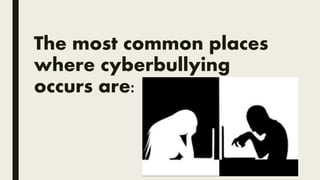
The most common places
where cyberbullying
occurs are:
Social Media, such as
Facebook, Instagram,
Snapchat, andTwitter
SMS (Short Message Service)
also known asText Message
sent through devices
Instant Message (via devices,
email provider services, apps,
and social media messaging
features)
With the prevalence of social
media and digital forums,
comments, photos, posts, and
content shared by individuals
can often be viewed by
strangers as well as
acquaintances.
The content an individual shares
online – both their personal
content as well as any negative,
mean, or hurtful content –
creates a kind of permanent
public record of their views,
activities, and behavior.
This public record can be
thought of as an online
reputation, which may be
accessible to schools,
employers, colleges, clubs, and
others who may be researching
an individual now or in the
future
Cyberbullying can harm the
online reputations of
everyone involved – not just
the person being bullied, but
those doing the bullying or
participating in it.
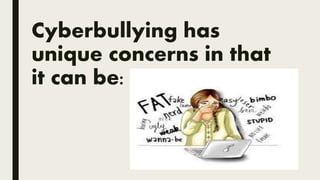
Cyberbullying has
unique concerns in that
it can be:
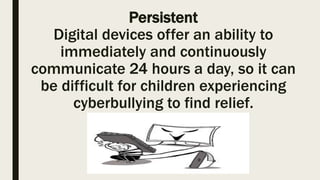
Persistent
Digital devices offer an ability to
immediately and continuously
communicate 24 hours a day, so it can
be difficult for children experiencing
cyberbullying to find relief.
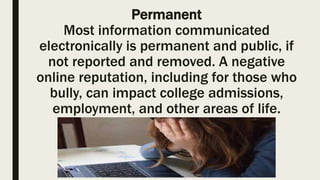
Permanent
Most information communicated
electronically is permanent and public, if
not reported and removed. A negative
online reputation, including for those who
bully, can impact college admissions,
employment, and other areas of life.
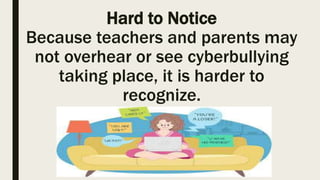
Hard to Notice
Because teachers and parents may
not overhear or see cyberbullying
taking place, it is harder to
recognize.
10 Forms of Cyberbullying
1. Exclusion
-is the deliberate act of
leaving you out.
-is the deliberate act of leaving
someone out.
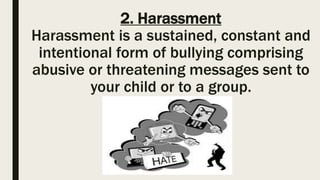
2. Harassment
Harassment is a sustained, constant and
intentional form of bullying comprising
abusive or threatening messages sent to
your child or to a group.
3. Outing
Outing is a deliberate act to embarrass or
publicly humiliate your child or a group
through the online posting of sensitive,
private or embarrassing information
without their consent.
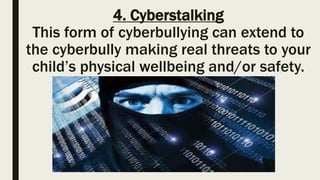
4. Cyberstalking
This form of cyberbullying can extend to
the cyberbully making real threats to your
child’s physical wellbeing and/or safety.
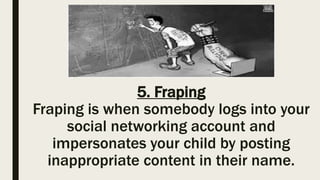
5. Fraping
Fraping is when somebody logs into your
social networking account and
impersonates your child by posting
inappropriate content in their name.
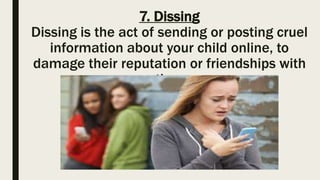
7. Dissing
Dissing is the act of sending or posting cruel
information about your child online, to
damage their reputation or friendships with
others.
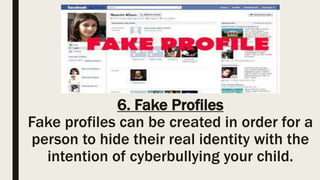
6. Fake Profiles
Fake profiles can be created in order for a
person to hide their real identity with the
intention of cyberbullying your child.
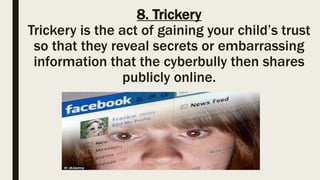
8. Trickery
Trickery is the act of gaining your child’s trust
so that they reveal secrets or embarrassing
information that the cyberbully then shares
publicly online.
9. Trolling
Tolling is the deliberate act of provoking a
response through the use of insults or bad
language on online forums and social
networking sites.
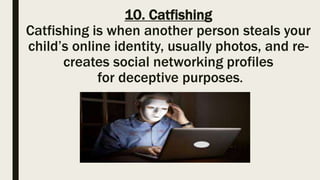
10. Catfishing
Catfishing is when another person steals your
child’s online identity, usually photos, and re-
creates social networking profiles
for deceptive purposes.
Stephanie nichole ho

Stephanie nichole ho

  • 1.
  • 3.
    Cyberbullying is bullyingthat takes place over digital devices like cell phones, computers, and tablets. Cyberbullying can occur through SMS, Text, and apps, or online in social media, forums, or gaming where people can view, participate in, or share content.
  • 4.
    Cyberbullying includes sending, posting,or sharing negative, harmful, false, or mean content about someone else. It can include sharing personal or private information about someone else causing embarrassment or humiliation. Some cyberbullying crosses the line into unlawful or criminal behavior.
  • 5.
    The most commonplaces where cyberbullying occurs are:
  • 6.
    Social Media, suchas Facebook, Instagram, Snapchat, andTwitter
  • 7.
    SMS (Short MessageService) also known asText Message sent through devices
  • 8.
    Instant Message (viadevices, email provider services, apps, and social media messaging features)
  • 9.
    With the prevalenceof social media and digital forums, comments, photos, posts, and content shared by individuals can often be viewed by strangers as well as acquaintances.
  • 10.
    The content anindividual shares online – both their personal content as well as any negative, mean, or hurtful content – creates a kind of permanent public record of their views, activities, and behavior.
  • 11.
    This public recordcan be thought of as an online reputation, which may be accessible to schools, employers, colleges, clubs, and others who may be researching an individual now or in the future
  • 12.
    Cyberbullying can harmthe online reputations of everyone involved – not just the person being bullied, but those doing the bullying or participating in it.
  • 13.
  • 14.
    Persistent Digital devices offeran ability to immediately and continuously communicate 24 hours a day, so it can be difficult for children experiencing cyberbullying to find relief.
  • 15.
    Permanent Most information communicated electronicallyis permanent and public, if not reported and removed. A negative online reputation, including for those who bully, can impact college admissions, employment, and other areas of life.
  • 16.
    Hard to Notice Becauseteachers and parents may not overhear or see cyberbullying taking place, it is harder to recognize.
  • 17.
    10 Forms ofCyberbullying
  • 18.
    1. Exclusion -is thedeliberate act of leaving you out. -is the deliberate act of leaving someone out.
  • 19.
    2. Harassment Harassment isa sustained, constant and intentional form of bullying comprising abusive or threatening messages sent to your child or to a group.
  • 20.
    3. Outing Outing isa deliberate act to embarrass or publicly humiliate your child or a group through the online posting of sensitive, private or embarrassing information without their consent.
  • 21.
    4. Cyberstalking This formof cyberbullying can extend to the cyberbully making real threats to your child’s physical wellbeing and/or safety.
  • 22.
    5. Fraping Fraping iswhen somebody logs into your social networking account and impersonates your child by posting inappropriate content in their name.
  • 23.
    7. Dissing Dissing isthe act of sending or posting cruel information about your child online, to damage their reputation or friendships with others.
  • 24.
    6. Fake Profiles Fakeprofiles can be created in order for a person to hide their real identity with the intention of cyberbullying your child.
  • 25.
    8. Trickery Trickery isthe act of gaining your child’s trust so that they reveal secrets or embarrassing information that the cyberbully then shares publicly online.
  • 26.
    9. Trolling Tolling isthe deliberate act of provoking a response through the use of insults or bad language on online forums and social networking sites.
  • 27.
    10. Catfishing Catfishing iswhen another person steals your child’s online identity, usually photos, and re- creates social networking profiles for deceptive purposes.