STEM + Literacy= Success!


  Jim Forde- jforde@ci.stamford.ct.us
    GEDF Grant Manager/STEM Professional
What is STEM?

• S- cience
• T- echnology
• E- ngineering
• M- ath
How is STEM learning different?
• A great STEM lesson, or unit, integrates all
  of the disciplines together.
• In some cases S, T, E and M are utilized
  simultaneously as student solve engaging
  real world problems.
• Problem solving, inventing, collaborating,
  innovating
Examples of STEM lessons
•   Barbie Bungee
•   The BIG CELL!
•   Designing and Eco-friendly knee brace
•   Paper airplane design
•   Popsicle stick bridges

•        …the potential ideas are endless
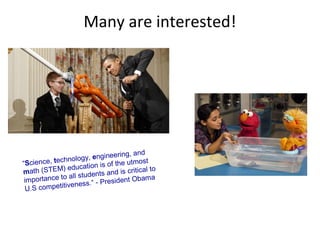
Many are interested!


                                  eering, and
              h nology, engin
“Science, tec           ation is of the
                                         utmost
             ) educ
math (STEM             tudents and
                                      is critical to
                 all s
 importance to                        ent Obama
                ven  ess.” - Presid
  U.S competiti
Why does STEM matter?
Almost all of the 30 fastest-growing
 occupations in the next decade will require at
  least some background in STEM.


     It helps us make critical decisions
     about our health care, our finances and
     our retirement.

A literate nation not only reads. It
computes, investigates and innovates.
                              http://www.changetheequation.org/why/why-stem/
STEM workers earn significantly more
than their non-STEM counterparts.

    Workers in STEM occupations on average
     experience lower unemployment rates than
     workers in other fields.

STEM jobs are the jobs of the future.

   STEM jobs are essential for developing
   our technological innovation and global
   competitiveness.
                       http://www.esa.doc.gov/sites/default/files/reports/documents/stemfinalyjuly14_1.pdf
Why does STEM + Literacy
       matter?
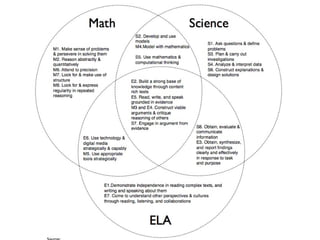
• Math and ELA standards adopted by 46
  states including CT
• Focused on preparing students for college
  and career readiness
• Have English/Literacy standards for Social
  Studies, Science and Technical Subjects
Speaking and Listening
• Expressing your ideas to others

• Integrating info from diverse sources

• Evaluating a speakers point of view, reasoning
  and evidence and or rhetoric
Writing
• Write arguments to support claims in an analysis of
  substantive topic using valid reasoning and relevant
  evidence
• Writing narratives to develop real or imagined
  experiences
• Writing informative or explanatory text
• Produce writing that is clear coherent and designed
  for a specific purpose or audience.
• Revising and Editing – Using technology – Assessing
  the credibility of sources
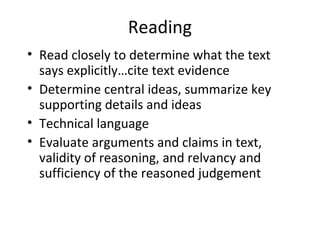
Reading
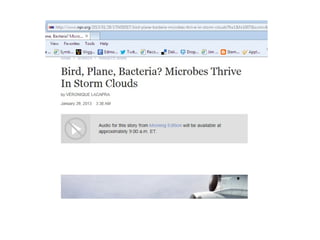
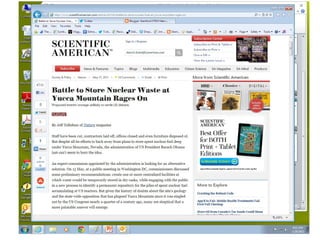
• Read closely to determine what the text
  says explicitly…cite text evidence
• Determine central ideas, summarize key
  supporting details and ideas
• Technical language
• Evaluate arguments and claims in text,
  validity of reasoning, and relvancy and
  sufficiency of the reasoned judgement
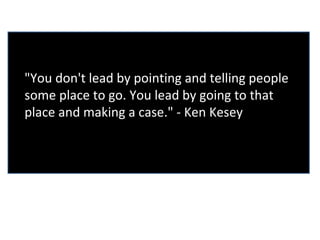
"You don't lead by pointing and telling people
some place to go. You lead by going to that
place and making a case." - Ken Kesey

Stem presentation cloonan 13 final

  • 1.
    STEM + Literacy=Success! Jim Forde- jforde@ci.stamford.ct.us GEDF Grant Manager/STEM Professional
  • 2.
    What is STEM? •S- cience • T- echnology • E- ngineering • M- ath
  • 3.
    How is STEMlearning different? • A great STEM lesson, or unit, integrates all of the disciplines together. • In some cases S, T, E and M are utilized simultaneously as student solve engaging real world problems. • Problem solving, inventing, collaborating, innovating
  • 4.
    Examples of STEMlessons • Barbie Bungee • The BIG CELL! • Designing and Eco-friendly knee brace • Paper airplane design • Popsicle stick bridges • …the potential ideas are endless
  • 5.
    Many are interested! eering, and h nology, engin “Science, tec ation is of the utmost ) educ math (STEM tudents and is critical to all s importance to ent Obama ven ess.” - Presid U.S competiti
  • 6.
  • 7.
    Almost all ofthe 30 fastest-growing occupations in the next decade will require at least some background in STEM. It helps us make critical decisions about our health care, our finances and our retirement. A literate nation not only reads. It computes, investigates and innovates. http://www.changetheequation.org/why/why-stem/
  • 8.
    STEM workers earnsignificantly more than their non-STEM counterparts. Workers in STEM occupations on average experience lower unemployment rates than workers in other fields. STEM jobs are the jobs of the future. STEM jobs are essential for developing our technological innovation and global competitiveness. http://www.esa.doc.gov/sites/default/files/reports/documents/stemfinalyjuly14_1.pdf
  • 9.
    Why does STEM+ Literacy matter?
  • 10.
    • Math andELA standards adopted by 46 states including CT • Focused on preparing students for college and career readiness • Have English/Literacy standards for Social Studies, Science and Technical Subjects
  • 12.
    Speaking and Listening •Expressing your ideas to others • Integrating info from diverse sources • Evaluating a speakers point of view, reasoning and evidence and or rhetoric
  • 15.
    Writing • Write argumentsto support claims in an analysis of substantive topic using valid reasoning and relevant evidence • Writing narratives to develop real or imagined experiences • Writing informative or explanatory text • Produce writing that is clear coherent and designed for a specific purpose or audience. • Revising and Editing – Using technology – Assessing the credibility of sources
  • 17.
    Reading • Read closelyto determine what the text says explicitly…cite text evidence • Determine central ideas, summarize key supporting details and ideas • Technical language • Evaluate arguments and claims in text, validity of reasoning, and relvancy and sufficiency of the reasoned judgement
  • 20.
    "You don't leadby pointing and telling people some place to go. You lead by going to that place and making a case." - Ken Kesey