MANAGEMENT
OF
STATUS
EPILEPTICUS
Speaker:
Dr. Sharanpreet Kaur
References
HARRISON’S principles of internal medicine - 22th Ed
E. Trinka et al.- Report of the ILAE Task Force on Classification
of Status Epilepticus, 2015
Neurocritical care society- Guidelines for the Evaluation and
Management of Status Epilepticus
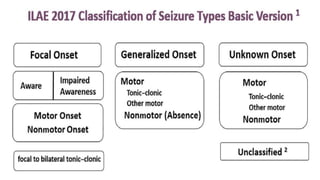
The 2017 ILAE Classification of Seizures
Status epilepticus: epidemiology and outcomes -
Neurosciences Unit, University College London Medical School
SEIZURE
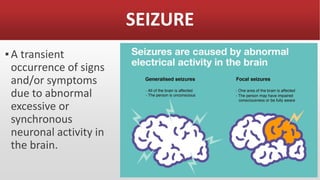
▪A transient
occurrence of signs
and/or symptoms
due to abnormal
excessive or
synchronous
neuronal activity in
the brain.
EPILEPSY
▪ At least two unprovoked/reflex (sensory evoked) seizures 24h
apart
OR
▪ One unprovoked seizure and brain demonstrating pathologic
or enduring tendency to have recurrent seizures with
probability of at least 60% of having another seizure in 10 years
OR
▪ An epilepsy syndrome is diagnosed : Cluster of seizure types,
EEG findings and imaging findings occurring together
STATUS EPILEPTICUS
▪5 min or more of continuous clinical (convulsive SE) and/or
electrographic (Non convulsive SE) seizure activity
OR
▪Recurrent seizure activity without recovery to baseline
between seizures
Medical emergency?
▪Irreversible neuronal injury after 20- 30 min of GCSE
▪Vigorous therapy if seizure > 5 minutes
▪Focal seizures with cognitive dysfunction > 10 min
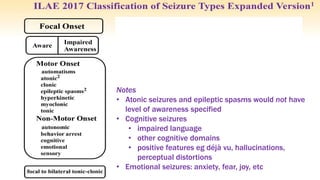
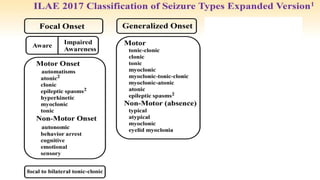
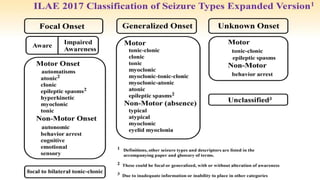
Notes
• Atonic seizures and epileptic spasms would not have
level of awareness specified
• Cognitive seizures
• impaired language
• other cognitive domains
• positive features eg déjà vu, hallucinations,
perceptual distortions
• Emotional seizures: anxiety, fear, joy, etc
Clinical Presentation (GCSE)
Generalized tonic-clonic movements of the extremities
Impaired mental status ( coma, lethargy, confusion)
Focal neurological deficits in post ictal period (eg:
Todd’s paralysis)
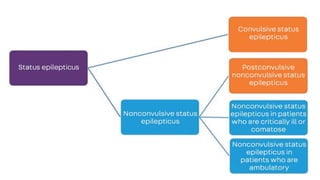
Clinical Presentation ( NCSE)
Seizure activity seen on electroencephalogram (EEG)
without clinical findings of GCSE
 2 Phenotypes :
a) “Wandering confused patient”
b) Acutely ill patient with severely impaired
mental status, with or without subtle
motor movements
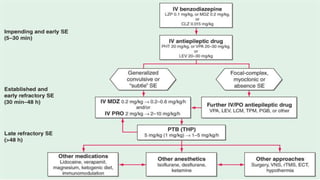
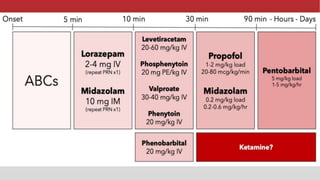
REFRACTORY SE
Continuation of seizures either clinically or
electrographically after receiving adequate dose of
initial benzodiazepine f/b second acceptable AED
New Onset Refractory SE (NORSE)
▪A rare clinical presentation, in a patient without active
epilepsy or other neurological disorder, with new onset
of refractory status epilepticus without a clear acute or
active structural, toxic, or metabolic cause.
▪(MC Cause VIRAL ENCEPHALITIES)
SUPER REFRACTORY SE
SE that continues or recurs 24hrs or more after the
onset of anesthetic therapy , including recurrence
of SE on reduction or withdrawal of anaesthesia
Causes
▪PRIMARY- Not associated with any identifiable brain lesion
▪SECONDARY-
▪Poor AED compliance
▪Alcohol/ other intoxications/ withdrawals
▪Traumatic
▪Stroke/ tumour
▪Metabolic- hypocalcemia/ hyponatremia/ hypoglycemia/
hyperglycemia
▪Encephalopathy- hepatic/ uremic
▪Sepsis
PHYSIOLOGICAL & SYSTEMIC CHANGES :
INITIAL COMPENSATORY PHASE
• Sympathetic activity –
Cardiac output
BP
RBS
Lactate levels
Pupillary dilatation
Increased Cerebral blood flow
DECOMPENSATION PHASE
•Cardiorespiratory collapse
•Electrolyte imbalance
•Rhabdomyolysis & delayed Tubular necrosis
•Hyperthermia
• Intracranial pressure & cerebral edema
•Multi organ failure
Goals:
Early termination of episode
Prevention of Recurrence
Management of Precipitating cause
Management of complications
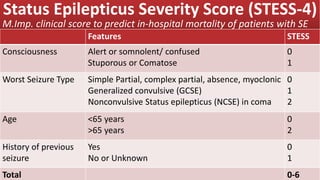
Status Epilepticus Severity Score (STESS-4)
M.Imp. clinical score to predict in-hospital mortality of patients with SE
STESS  high negative predictive value (NPV) for survival, while it had a low positive predictive value (PPV) for death identifies patients who will survive a SE episode while it fails, in the majority of cases, to identify patients who will die due to a SE episode.
(AO Rosetti et al, 2008)
Features STESS
Consciousness Alert or somnolent/ confused
Stuporous or Comatose
0
1
Worst Seizure Type Simple Partial, complex partial, absence, myoclonic
Generalized convulsive (GCSE)
Nonconvulsive Status epilepticus (NCSE) in coma
0
1
2
Age <65 years
>65 years
0
2
History of previous
seizure
Yes
No or Unknown
0
1
Total 0-6
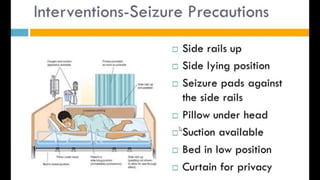
Best practices during seizures
▪Ineffective breathing pattern- maintain proper airway
▪Risk for injury
▪Protect the patient’s head
▪Place the patient in left lateral position
▪Loosen constrictive clothing
▪Do not restrain
▪Ease to the floor if patient is seated
▪Do not place anything in mouth/ hand
▪Record the time the seizure began and ended
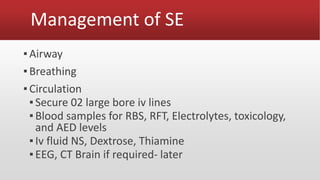
Management of SE
▪Airway
▪Breathing
▪Circulation
▪Secure 02 large bore iv lines
▪Blood samples for RBS, RFT, Electrolytes, toxicology,
and AED levels
▪Iv fluid NS, Dextrose, Thiamine
▪EEG, CT Brain if required- later
Factors associated with poor outcome in SE
▪Duration of seizures
▪Underlying etiology
▪De novo development in hospitalized patients
▪Older age
▪Focal neurological signs at onset
Better Prognosis-
• Symptomatic SE
• Young patient
• Low AED levels
Continuous EEG Monitoring
▪Started within 1 hour of onset of SE if there is suspicion of
ongoing seizure activity.
▪Duration- at least 48 hours
▪Need for Continuous EEG
▪15- 20 % may become NCSE
▪Difficult to differentiate post ictal vs NCSE
▪Electromechanical dissociation in subtle GCS
▪To titrate dose of IV anaesthetics
▪Decide when to taper AEDs
Important Points
▪After emergency control of SE- maintenance therapy should
be started to prevent recurrence of seizures
▪Known Epilepsy cases- usual AED can be continued depending
on serum AED levels.
▪In patients presenting for the first time as SE, drugs like
Phenytoin or Sodium Valproate used to control the status can
be continued as maintenance therapy.
What can the patient do?
▪Epilepsy health alert to be carried at all times
▪Drug compliance
▪Avoid alcohol and other drugs
▪Avoid driving/ high risk jobs
▪Apprise others of their condition
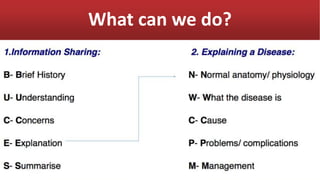
What can we do?
STATUS EPILEPTICUS.pptx

STATUS EPILEPTICUS.pptx

  • 1.
  • 2.
    References HARRISON’S principles ofinternal medicine - 22th Ed E. Trinka et al.- Report of the ILAE Task Force on Classification of Status Epilepticus, 2015 Neurocritical care society- Guidelines for the Evaluation and Management of Status Epilepticus The 2017 ILAE Classification of Seizures Status epilepticus: epidemiology and outcomes - Neurosciences Unit, University College London Medical School
  • 3.
    SEIZURE ▪A transient occurrence ofsigns and/or symptoms due to abnormal excessive or synchronous neuronal activity in the brain.
  • 4.
    EPILEPSY ▪ At leasttwo unprovoked/reflex (sensory evoked) seizures 24h apart OR ▪ One unprovoked seizure and brain demonstrating pathologic or enduring tendency to have recurrent seizures with probability of at least 60% of having another seizure in 10 years OR ▪ An epilepsy syndrome is diagnosed : Cluster of seizure types, EEG findings and imaging findings occurring together
  • 5.
    STATUS EPILEPTICUS ▪5 minor more of continuous clinical (convulsive SE) and/or electrographic (Non convulsive SE) seizure activity OR ▪Recurrent seizure activity without recovery to baseline between seizures
  • 6.
    Medical emergency? ▪Irreversible neuronalinjury after 20- 30 min of GCSE ▪Vigorous therapy if seizure > 5 minutes ▪Focal seizures with cognitive dysfunction > 10 min
  • 8.
    Notes • Atonic seizuresand epileptic spasms would not have level of awareness specified • Cognitive seizures • impaired language • other cognitive domains • positive features eg déjà vu, hallucinations, perceptual distortions • Emotional seizures: anxiety, fear, joy, etc
  • 12.
    Clinical Presentation (GCSE) Generalizedtonic-clonic movements of the extremities Impaired mental status ( coma, lethargy, confusion) Focal neurological deficits in post ictal period (eg: Todd’s paralysis)
  • 14.
    Clinical Presentation (NCSE) Seizure activity seen on electroencephalogram (EEG) without clinical findings of GCSE  2 Phenotypes : a) “Wandering confused patient” b) Acutely ill patient with severely impaired mental status, with or without subtle motor movements
  • 15.
    REFRACTORY SE Continuation ofseizures either clinically or electrographically after receiving adequate dose of initial benzodiazepine f/b second acceptable AED
  • 16.
    New Onset RefractorySE (NORSE) ▪A rare clinical presentation, in a patient without active epilepsy or other neurological disorder, with new onset of refractory status epilepticus without a clear acute or active structural, toxic, or metabolic cause. ▪(MC Cause VIRAL ENCEPHALITIES)
  • 17.
    SUPER REFRACTORY SE SEthat continues or recurs 24hrs or more after the onset of anesthetic therapy , including recurrence of SE on reduction or withdrawal of anaesthesia
  • 18.
    Causes ▪PRIMARY- Not associatedwith any identifiable brain lesion ▪SECONDARY- ▪Poor AED compliance ▪Alcohol/ other intoxications/ withdrawals ▪Traumatic ▪Stroke/ tumour ▪Metabolic- hypocalcemia/ hyponatremia/ hypoglycemia/ hyperglycemia ▪Encephalopathy- hepatic/ uremic ▪Sepsis
  • 19.
    PHYSIOLOGICAL & SYSTEMICCHANGES : INITIAL COMPENSATORY PHASE • Sympathetic activity – Cardiac output BP RBS Lactate levels Pupillary dilatation Increased Cerebral blood flow
  • 20.
    DECOMPENSATION PHASE •Cardiorespiratory collapse •Electrolyteimbalance •Rhabdomyolysis & delayed Tubular necrosis •Hyperthermia • Intracranial pressure & cerebral edema •Multi organ failure
  • 21.
    Goals: Early termination ofepisode Prevention of Recurrence Management of Precipitating cause Management of complications
  • 24.
    Status Epilepticus SeverityScore (STESS-4) M.Imp. clinical score to predict in-hospital mortality of patients with SE STESS  high negative predictive value (NPV) for survival, while it had a low positive predictive value (PPV) for death identifies patients who will survive a SE episode while it fails, in the majority of cases, to identify patients who will die due to a SE episode. (AO Rosetti et al, 2008) Features STESS Consciousness Alert or somnolent/ confused Stuporous or Comatose 0 1 Worst Seizure Type Simple Partial, complex partial, absence, myoclonic Generalized convulsive (GCSE) Nonconvulsive Status epilepticus (NCSE) in coma 0 1 2 Age <65 years >65 years 0 2 History of previous seizure Yes No or Unknown 0 1 Total 0-6
  • 25.
    Best practices duringseizures ▪Ineffective breathing pattern- maintain proper airway ▪Risk for injury ▪Protect the patient’s head ▪Place the patient in left lateral position ▪Loosen constrictive clothing ▪Do not restrain ▪Ease to the floor if patient is seated ▪Do not place anything in mouth/ hand ▪Record the time the seizure began and ended
  • 27.
    Management of SE ▪Airway ▪Breathing ▪Circulation ▪Secure02 large bore iv lines ▪Blood samples for RBS, RFT, Electrolytes, toxicology, and AED levels ▪Iv fluid NS, Dextrose, Thiamine ▪EEG, CT Brain if required- later
  • 30.
    Factors associated withpoor outcome in SE ▪Duration of seizures ▪Underlying etiology ▪De novo development in hospitalized patients ▪Older age ▪Focal neurological signs at onset Better Prognosis- • Symptomatic SE • Young patient • Low AED levels
  • 31.
    Continuous EEG Monitoring ▪Startedwithin 1 hour of onset of SE if there is suspicion of ongoing seizure activity. ▪Duration- at least 48 hours ▪Need for Continuous EEG ▪15- 20 % may become NCSE ▪Difficult to differentiate post ictal vs NCSE ▪Electromechanical dissociation in subtle GCS ▪To titrate dose of IV anaesthetics ▪Decide when to taper AEDs
  • 32.
    Important Points ▪After emergencycontrol of SE- maintenance therapy should be started to prevent recurrence of seizures ▪Known Epilepsy cases- usual AED can be continued depending on serum AED levels. ▪In patients presenting for the first time as SE, drugs like Phenytoin or Sodium Valproate used to control the status can be continued as maintenance therapy.
  • 33.
    What can thepatient do? ▪Epilepsy health alert to be carried at all times ▪Drug compliance ▪Avoid alcohol and other drugs ▪Avoid driving/ high risk jobs ▪Apprise others of their condition
  • 34.