Boris Krstović, me@bocc.io


Building Product 101
- What are you building?
- How to build a product from Balkans
- Process of building product
- Importance of engineering culture
- Taking product outside the building
What I‟m NOT going to
paraphrase/retell today:


 “10 Golden Principles of Successful Web Apps” –> go and
  watch Fred Wilson.

 “Startup Metrics for Pirates” -> go watch Dave McClure

 Customer discovery / validation –> buy and read Steve Blank


…I expect you to do your homework 
What are you really building?

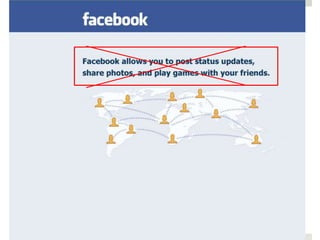
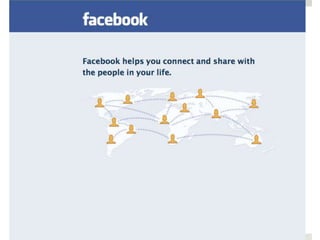
You might think that you make things (build interfaces
and features); but in reality, what you do is enable
certain human activities.
What are you really building?

 What are the core activities that you are pursuing?

 The product strategy and goals should always be
  defined by what activities you enable (rather than
  what your product does).
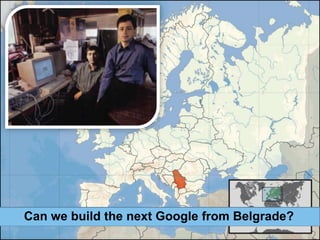
Can we build the next Google from Belgrade?
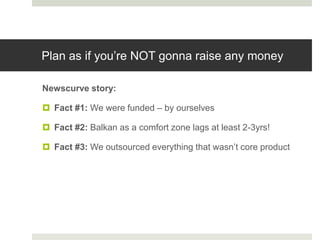
Plan as if you‟re NOT gonna raise any money

Newscurve story:

 Fact #1: We were funded – by ourselves

 Fact #2: Balkan as a comfort zone lags at least 2-3yrs!

 Fact #3: We outsourced everything that wasn‟t core product
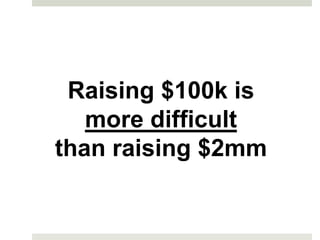
Raising $100k is
   more difficult
than raising $2mm
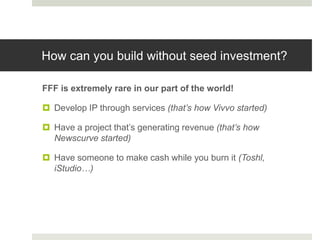
How can you build without seed investment?

FFF is extremely rare in our part of the world!

 Develop IP through services (that’s how Vivvo started)

 Have a project that‟s generating revenue (that’s how
  Newscurve started)

 Have someone to make cash while you burn it (Toshl,
  iStudio…)
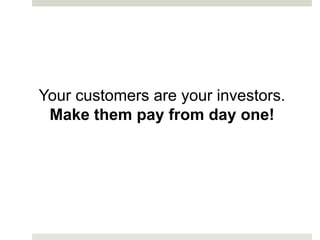
Your customers are your investors.
 Make them pay from day one!
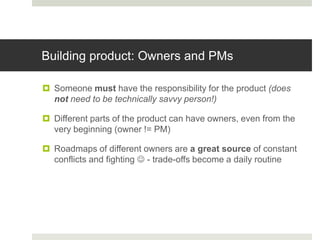
Building product: Owners and PMs

 Someone must have the responsibility for the product (does
  not need to be technically savvy person!)

 Different parts of the product can have owners, even from the
  very beginning (owner != PM)

 Roadmaps of different owners are a great source of constant
  conflicts and fighting  - trade-offs become a daily routine
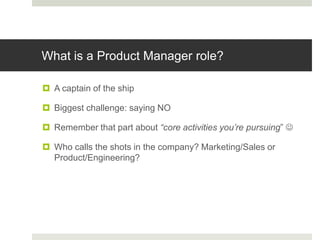
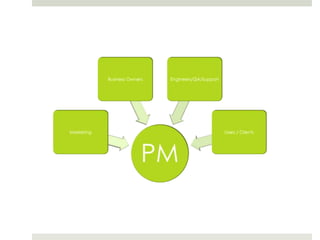
What is a Product Manager role?

 A captain of the ship

 Biggest challenge: saying NO

 Remember that part about “core activities you’re pursuing” 

 Who calls the shots in the company? Marketing/Sales or
  Product/Engineering?
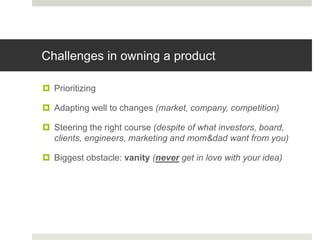
Challenges in owning a product

 Prioritizing

 Adapting well to changes (market, company, competition)

 Steering the right course (despite of what investors, board,
  clients, engineers, marketing and mom&dad want from you)

 Biggest obstacle: vanity (never get in love with your idea)
Keep the minimal process
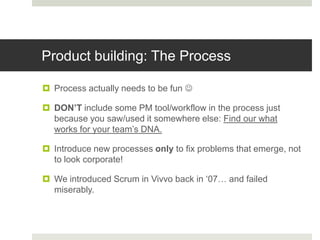
Product building: The Process

 Process actually needs to be fun 

 DON’T include some PM tool/workflow in the process just
  because you saw/used it somewhere else: Find our what
  works for your team‟s DNA.

 Introduce new processes only to fix problems that emerge, not
  to look corporate!

 We introduced Scrum in Vivvo back in „07… and failed
  miserably.
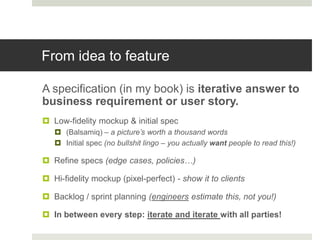
From idea to feature

A specification (in my book) is iterative answer to
business requirement or user story.
 Low-fidelity mockup & initial spec
    (Balsamiq) – a picture’s worth a thousand words
    Initial spec (no bullshit lingo – you actually want people to read this!)

 Refine specs (edge cases, policies…)

 Hi-fidelity mockup (pixel-perfect) - show it to clients

 Backlog / sprint planning (engineers estimate this, not you!)

 In between every step: iterate and iterate with all parties!
Tip #1:

User story: Do NOT explain/suggest
       solution to a problem!

   Describe the need instead.
Tip #2:

         Never instruct developers
         what you want them to do.

Explain them what problem they
         need to solve*!

* This doesn‟t apply to Indians, n00bs and freelancers
Importance of engineering culture

Three things you can do to make a great product:

1. Let engineers do their job

2. Let engineers do their job

3. Just get out of the way and let engineers do their job
Fact #1:

Engineers have own standards
   for writing quality code.

        (hint: peer reviews)
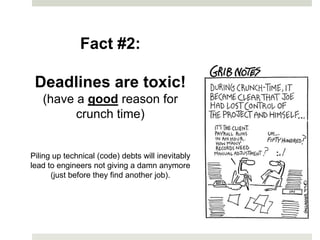
Fact #2:

 Deadlines are toxic!
   (have a good reason for
         crunch time)


Piling up technical (code) debts will inevitably
lead to engineers not giving a damn anymore
      (just before they find another job).
Getting outside the building

 Feedback
   Remember the most important thing about “user stories”?
   Typically, users don‟t care what‟s good for product

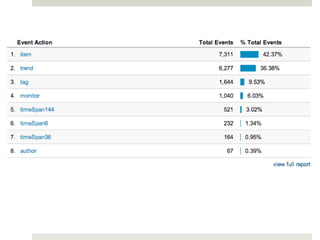
 Metrics
   Understand how people actually use your product!
    (you may be veeeeery surprised)
That‟s all folks!

Boris Krstović,
@bkrstovic | me@bocc.io

Boris Krstović - Building Product 101

  • 1.
    Boris Krstović, me@bocc.io BuildingProduct 101 - What are you building? - How to build a product from Balkans - Process of building product - Importance of engineering culture - Taking product outside the building
  • 2.
    What I‟m NOTgoing to paraphrase/retell today:  “10 Golden Principles of Successful Web Apps” –> go and watch Fred Wilson.  “Startup Metrics for Pirates” -> go watch Dave McClure  Customer discovery / validation –> buy and read Steve Blank …I expect you to do your homework 
  • 3.
    What are youreally building? You might think that you make things (build interfaces and features); but in reality, what you do is enable certain human activities.
  • 6.
    What are youreally building?  What are the core activities that you are pursuing?  The product strategy and goals should always be defined by what activities you enable (rather than what your product does).
  • 9.
    Can we buildthe next Google from Belgrade?
  • 10.
    Plan as ifyou‟re NOT gonna raise any money Newscurve story:  Fact #1: We were funded – by ourselves  Fact #2: Balkan as a comfort zone lags at least 2-3yrs!  Fact #3: We outsourced everything that wasn‟t core product
  • 11.
    Raising $100k is more difficult than raising $2mm
  • 12.
    How can youbuild without seed investment? FFF is extremely rare in our part of the world!  Develop IP through services (that’s how Vivvo started)  Have a project that‟s generating revenue (that’s how Newscurve started)  Have someone to make cash while you burn it (Toshl, iStudio…)
  • 13.
    Your customers areyour investors. Make them pay from day one!
  • 14.
    Building product: Ownersand PMs  Someone must have the responsibility for the product (does not need to be technically savvy person!)  Different parts of the product can have owners, even from the very beginning (owner != PM)  Roadmaps of different owners are a great source of constant conflicts and fighting  - trade-offs become a daily routine
  • 15.
    What is aProduct Manager role?  A captain of the ship  Biggest challenge: saying NO  Remember that part about “core activities you’re pursuing”   Who calls the shots in the company? Marketing/Sales or Product/Engineering?
  • 17.
    Challenges in owninga product  Prioritizing  Adapting well to changes (market, company, competition)  Steering the right course (despite of what investors, board, clients, engineers, marketing and mom&dad want from you)  Biggest obstacle: vanity (never get in love with your idea)
  • 18.
  • 19.
    Product building: TheProcess  Process actually needs to be fun   DON’T include some PM tool/workflow in the process just because you saw/used it somewhere else: Find our what works for your team‟s DNA.  Introduce new processes only to fix problems that emerge, not to look corporate!  We introduced Scrum in Vivvo back in „07… and failed miserably.
  • 20.
    From idea tofeature A specification (in my book) is iterative answer to business requirement or user story.  Low-fidelity mockup & initial spec  (Balsamiq) – a picture’s worth a thousand words  Initial spec (no bullshit lingo – you actually want people to read this!)  Refine specs (edge cases, policies…)  Hi-fidelity mockup (pixel-perfect) - show it to clients  Backlog / sprint planning (engineers estimate this, not you!)  In between every step: iterate and iterate with all parties!
  • 21.
    Tip #1: User story:Do NOT explain/suggest solution to a problem! Describe the need instead.
  • 22.
    Tip #2: Never instruct developers what you want them to do. Explain them what problem they need to solve*! * This doesn‟t apply to Indians, n00bs and freelancers
  • 24.
    Importance of engineeringculture Three things you can do to make a great product: 1. Let engineers do their job 2. Let engineers do their job 3. Just get out of the way and let engineers do their job
  • 25.
    Fact #1: Engineers haveown standards for writing quality code. (hint: peer reviews)
  • 26.
    Fact #2: Deadlinesare toxic! (have a good reason for crunch time) Piling up technical (code) debts will inevitably lead to engineers not giving a damn anymore (just before they find another job).
  • 27.
    Getting outside thebuilding  Feedback  Remember the most important thing about “user stories”?  Typically, users don‟t care what‟s good for product  Metrics  Understand how people actually use your product! (you may be veeeeery surprised)
  • 29.
    That‟s all folks! BorisKrstović, @bkrstovic | me@bocc.io