Standards based approach for smart
cities, where do we stand and what
next
Omar Elloumi, AIOTI and Nokia
Bell-Labs Distinguished Member of Technical Staff
2
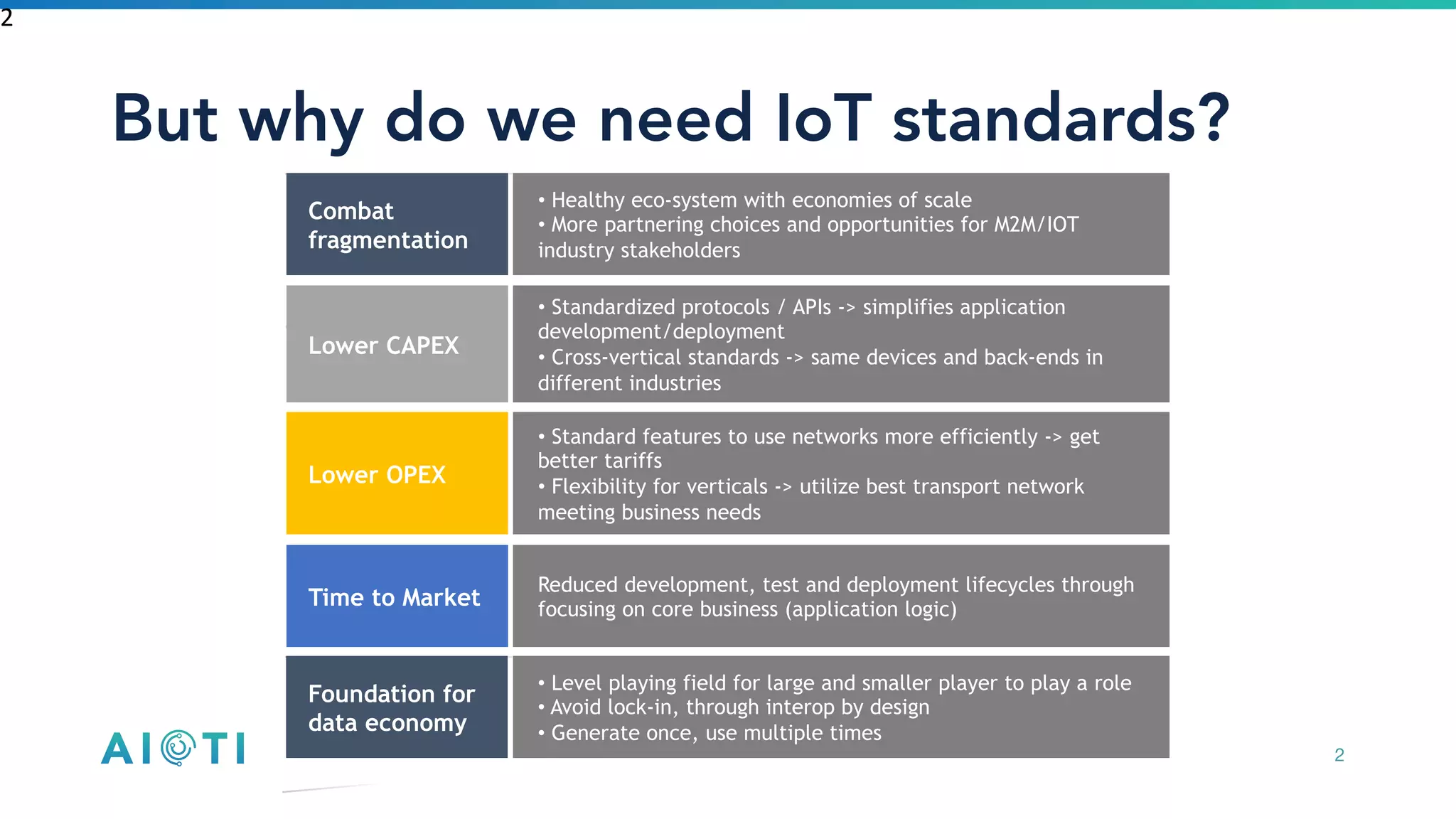
• Healthy eco-system with economies of scale
• More partnering choices and opportunities for M2M/IOT
industry stakeholders
Combat
fragmentation
• Standardized protocols / APIs -> simplifies application
development/deployment
• Cross-vertical standards -> same devices and back-ends in
different industries
Lower CAPEX
• Standard features to use networks more efficiently -> get
better tariffs
• Flexibility for verticals -> utilize best transport network
meeting business needs
Lower OPEX
Reduced development, test and deployment lifecycles through
focusing on core business (application logic)Time to Market
• Level playing field for large and smaller player to play a role
• Avoid lock-in, through interop by design
• Generate once, use multiple times
Foundation for
data economy
But why do we need IoT standards?
2
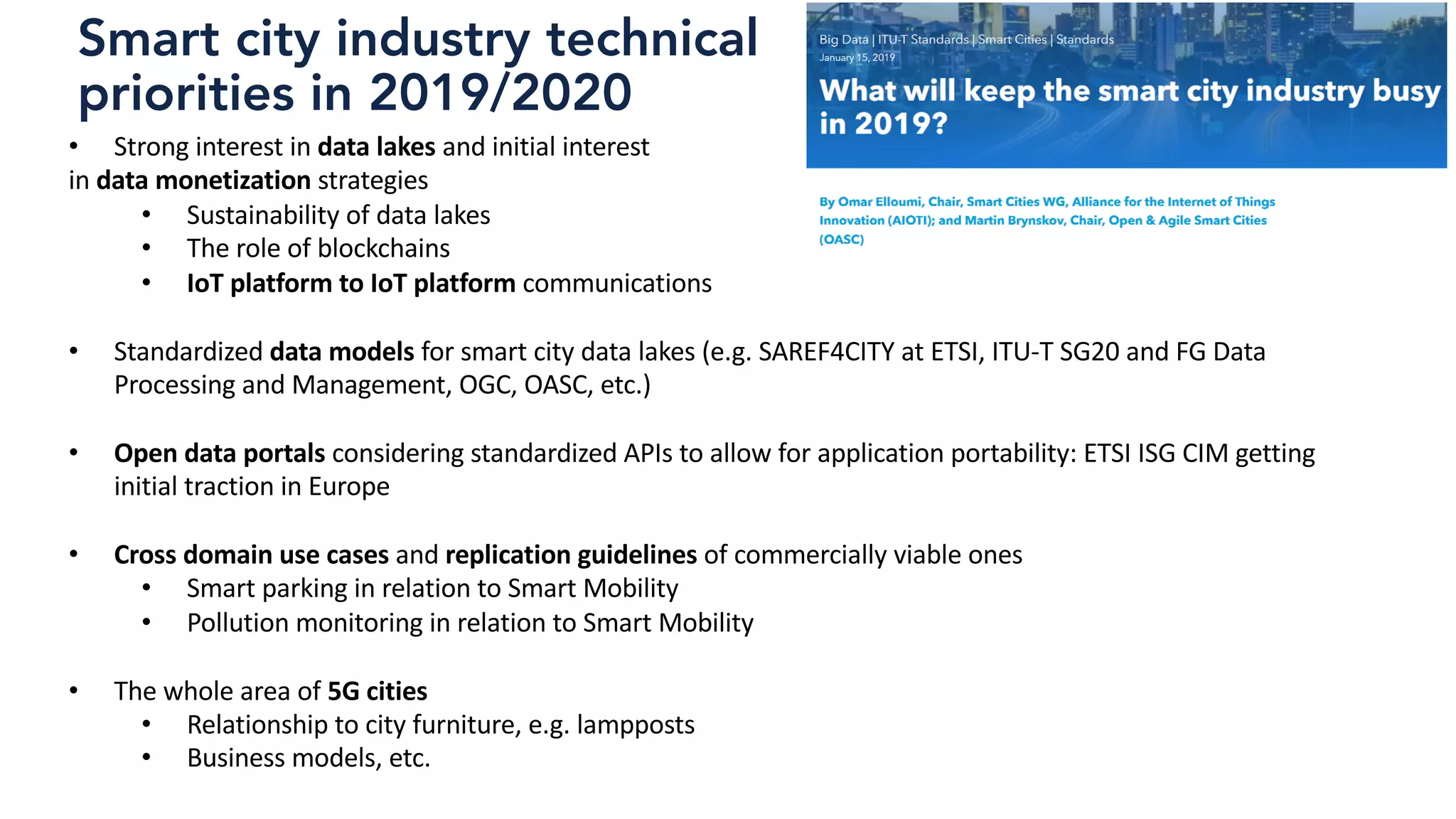
Smart city industry technical
priorities in 2019/2020
• Strong interest in data lakes and initial interest
in data monetization strategies
• Sustainability of data lakes
• The role of blockchains
• IoT platform to IoT platform communications
• Standardized data models for smart city data lakes (e.g. SAREF4CITY at ETSI, ITU-T SG20 and FG Data
Processing and Management, OGC, OASC, etc.)
• Open data portals considering standardized APIs to allow for application portability: ETSI ISG CIM getting
initial traction in Europe
• Cross domain use cases and replication guidelines of commercially viable ones
• Smart parking in relation to Smart Mobility
• Pollution monitoring in relation to Smart Mobility
• The whole area of 5G cities
• Relationship to city furniture, e.g. lampposts
• Business models, etc.
4
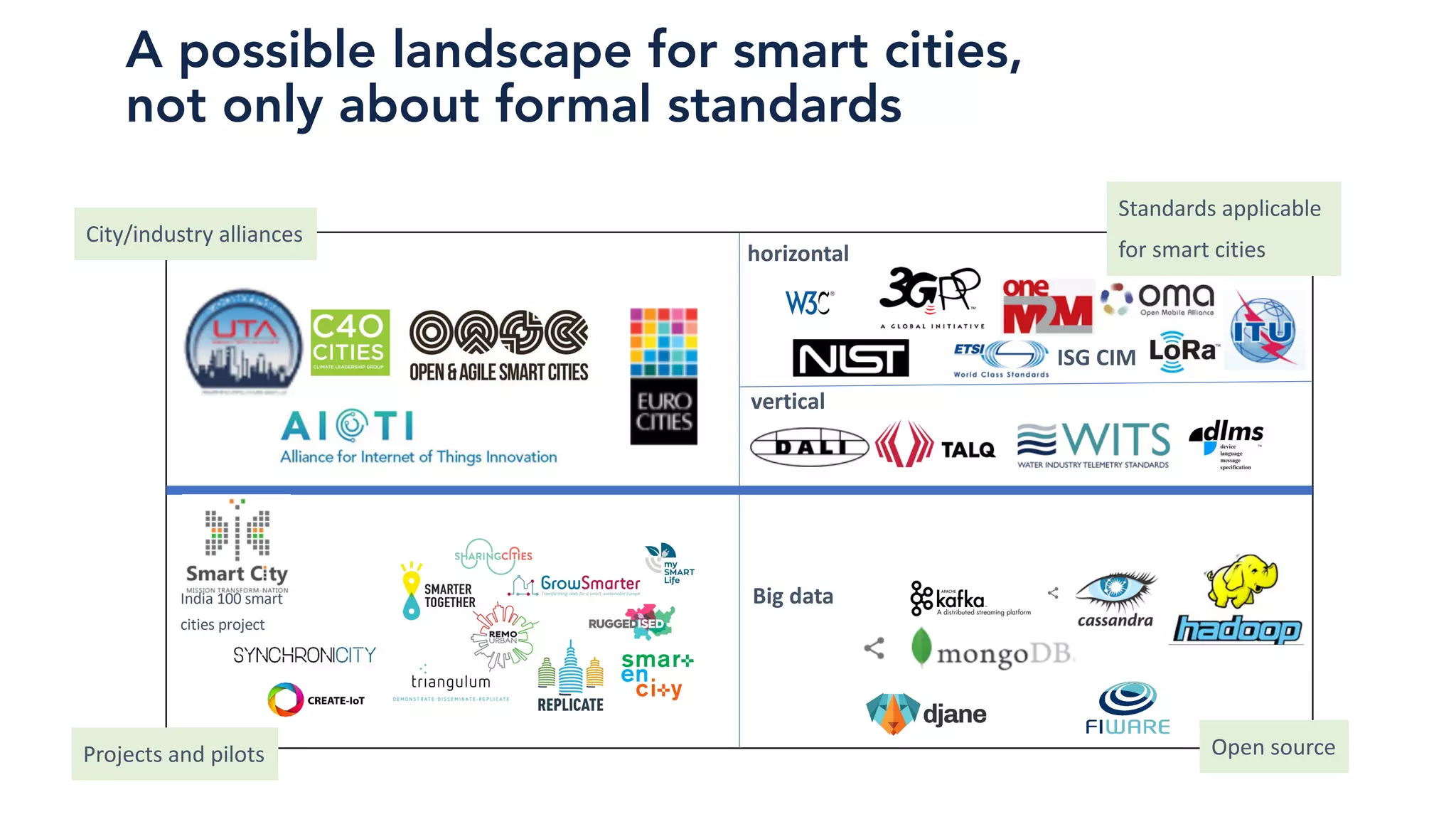
Standards applicable
for smart cities
City/industry alliances
horizontal
vertical
Projects and pilots Open source
Big data
ISG CIM
India 100 smart
cities project
A possible landscape for smart cities,
not only about formal standards
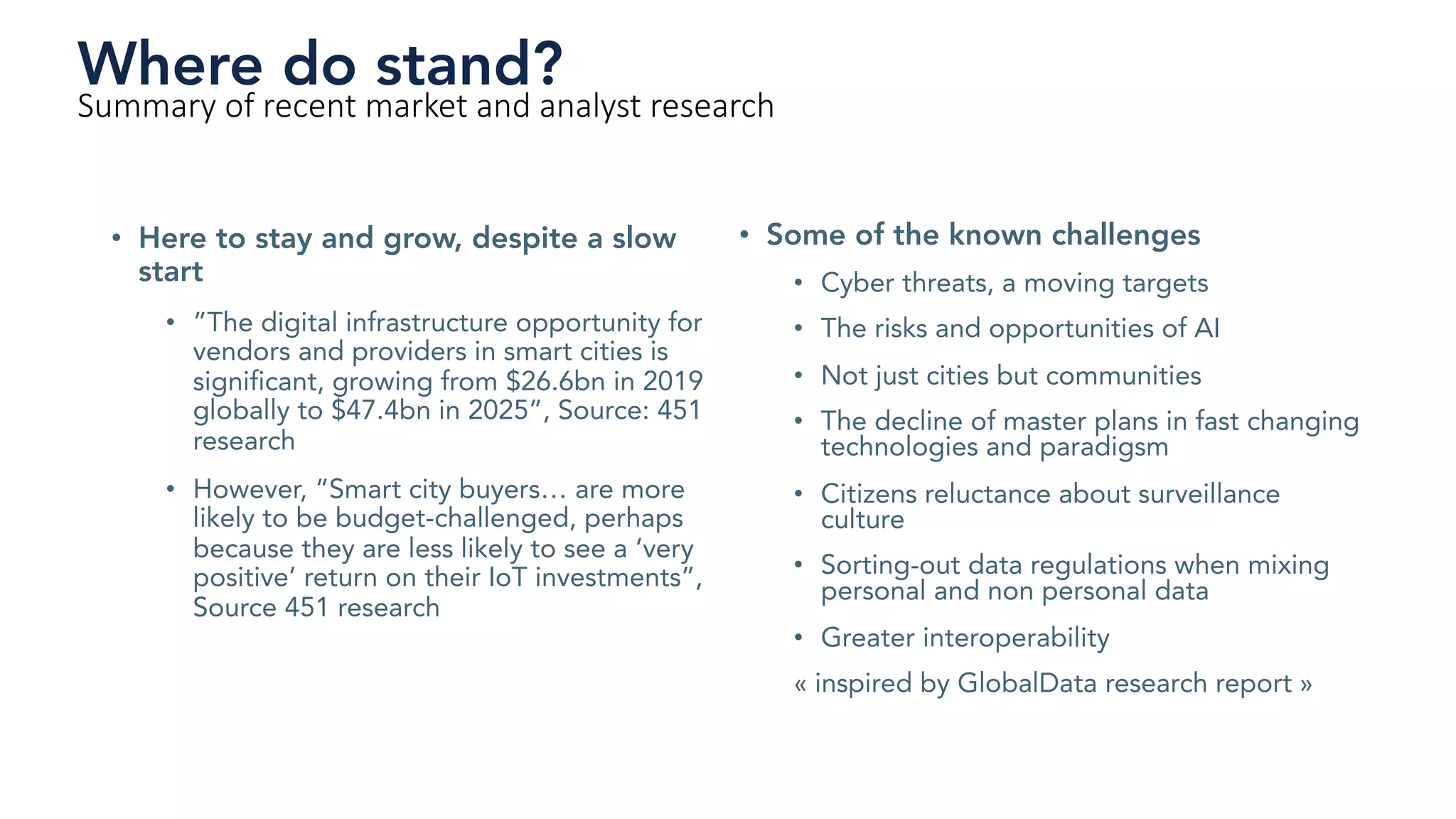
• Here to stay and grow, despite a slow
start
• ”The digital infrastructure opportunity for
vendors and providers in smart cities is
significant, growing from $26.6bn in 2019
globally to $47.4bn in 2025”, Source: 451
research
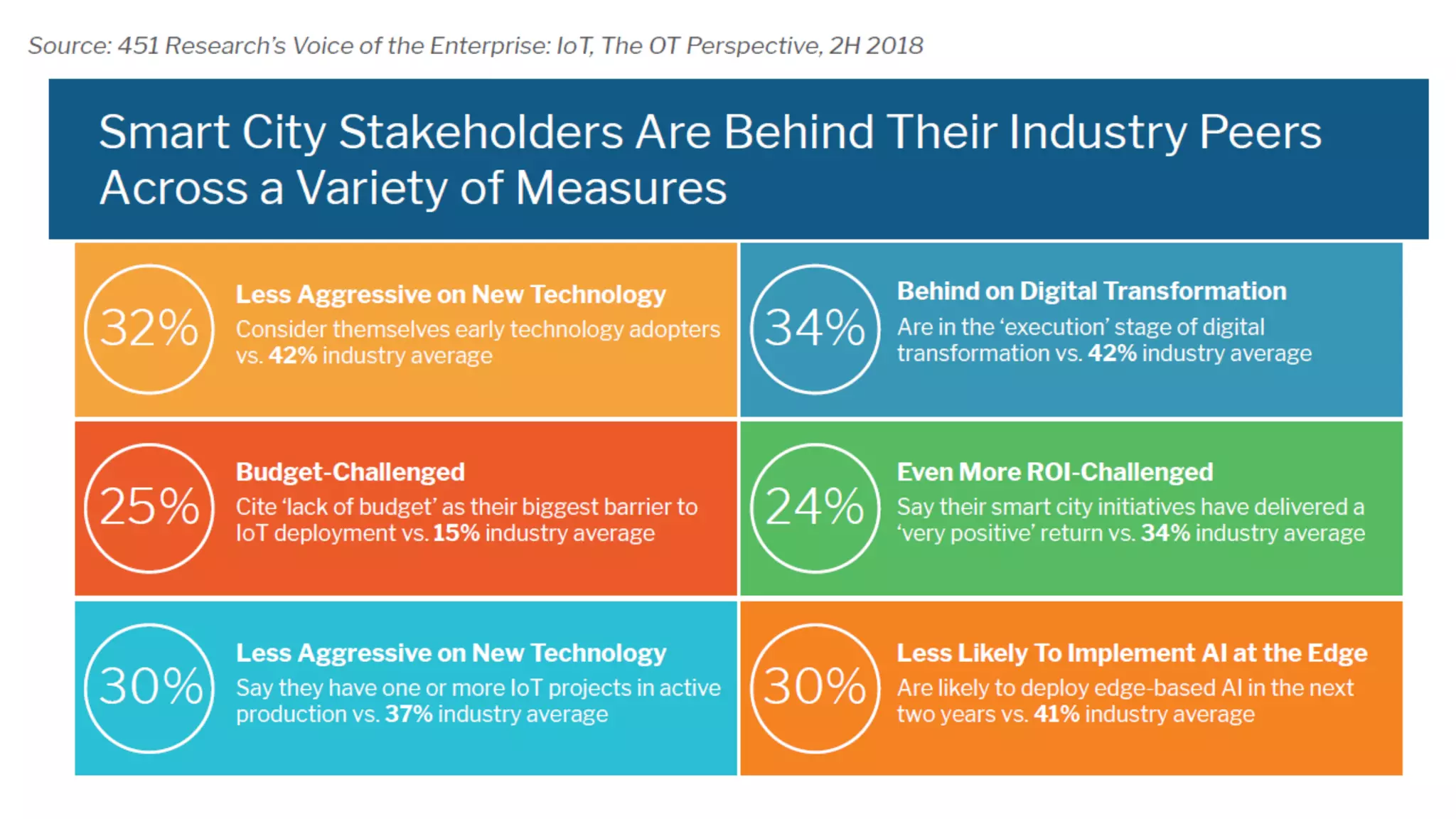
• However, “Smart city buyers… are more
likely to be budget-challenged, perhaps
because they are less likely to see a ‘very
positive’ return on their IoT investments”,
Source 451 research
Where do stand?
Summary of recent market and analyst research
• Some of the known challenges
• Cyber threats, a moving targets
• The risks and opportunities of AI
• Not just cities but communities
• The decline of master plans in fast changing
technologies and paradigsm
• Citizens reluctance about surveillance
culture
• Sorting-out data regulations when mixing
personal and non personal data
• Greater interoperability
« inspired by GlobalData research report »
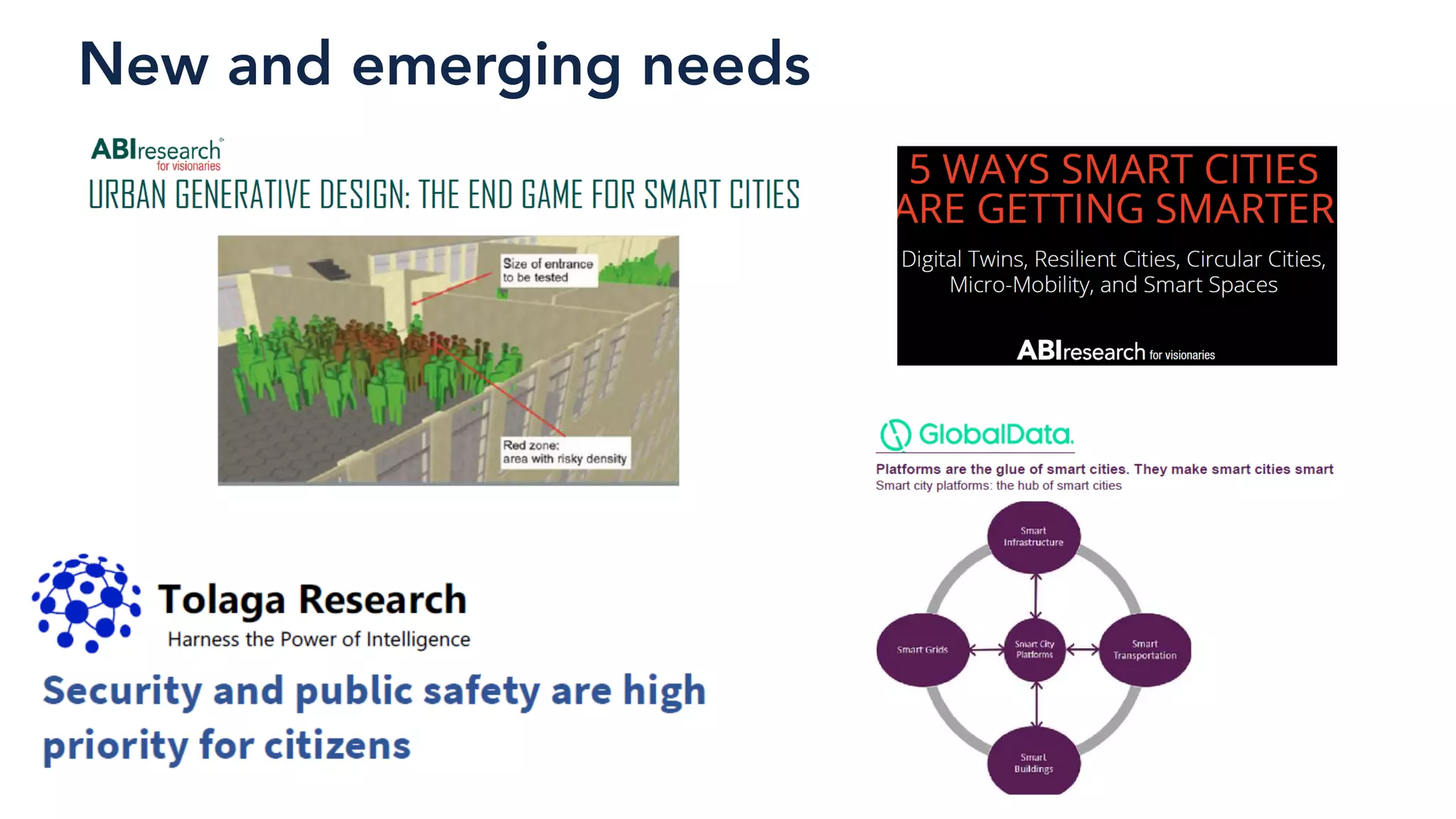
New and emerging needs
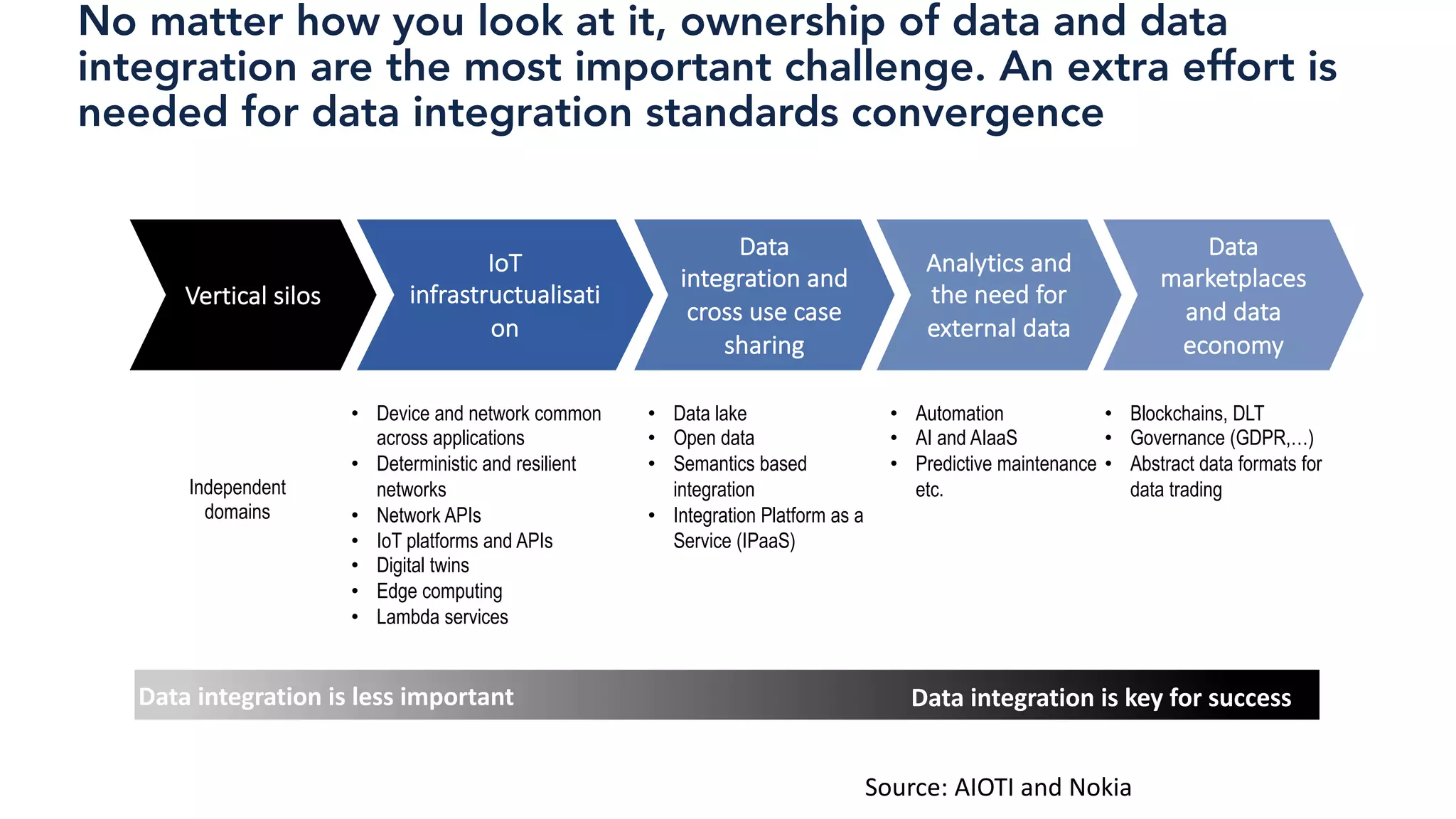
No matter how you look at it, ownership of data and data
integration are the most important challenge. An extra effort is
needed for data integration standards convergence
Vertical silos
IoT
infrastructualisati
on
Data
integration and
cross use case
sharing
Analytics and
the need for
external data
Data
marketplaces
and data
economy
Independent
domains
• Device and network common
across applications
• Deterministic and resilient
networks
• Network APIs
• IoT platforms and APIs
• Digital twins
• Edge computing
• Lambda services
• Data lake
• Open data
• Semantics based
integration
• Integration Platform as a
Service (IPaaS)
• Automation
• AI and AIaaS
• Predictive maintenance
etc.
• Blockchains, DLT
• Governance (GDPR,…)
• Abstract data formats for
data trading
Data integration is key for successData integration is less important
Source: AIOTI and Nokia

Standards based approach for smart cities, where do we stand and what next

  • 1.
    Standards based approachfor smart cities, where do we stand and what next Omar Elloumi, AIOTI and Nokia Bell-Labs Distinguished Member of Technical Staff
  • 2.
    2 • Healthy eco-systemwith economies of scale • More partnering choices and opportunities for M2M/IOT industry stakeholders Combat fragmentation • Standardized protocols / APIs -> simplifies application development/deployment • Cross-vertical standards -> same devices and back-ends in different industries Lower CAPEX • Standard features to use networks more efficiently -> get better tariffs • Flexibility for verticals -> utilize best transport network meeting business needs Lower OPEX Reduced development, test and deployment lifecycles through focusing on core business (application logic)Time to Market • Level playing field for large and smaller player to play a role • Avoid lock-in, through interop by design • Generate once, use multiple times Foundation for data economy But why do we need IoT standards? 2
  • 3.
    Smart city industrytechnical priorities in 2019/2020 • Strong interest in data lakes and initial interest in data monetization strategies • Sustainability of data lakes • The role of blockchains • IoT platform to IoT platform communications • Standardized data models for smart city data lakes (e.g. SAREF4CITY at ETSI, ITU-T SG20 and FG Data Processing and Management, OGC, OASC, etc.) • Open data portals considering standardized APIs to allow for application portability: ETSI ISG CIM getting initial traction in Europe • Cross domain use cases and replication guidelines of commercially viable ones • Smart parking in relation to Smart Mobility • Pollution monitoring in relation to Smart Mobility • The whole area of 5G cities • Relationship to city furniture, e.g. lampposts • Business models, etc.
  • 4.
    4 Standards applicable for smartcities City/industry alliances horizontal vertical Projects and pilots Open source Big data ISG CIM India 100 smart cities project A possible landscape for smart cities, not only about formal standards
  • 5.
    • Here tostay and grow, despite a slow start • ”The digital infrastructure opportunity for vendors and providers in smart cities is significant, growing from $26.6bn in 2019 globally to $47.4bn in 2025”, Source: 451 research • However, “Smart city buyers… are more likely to be budget-challenged, perhaps because they are less likely to see a ‘very positive’ return on their IoT investments”, Source 451 research Where do stand? Summary of recent market and analyst research • Some of the known challenges • Cyber threats, a moving targets • The risks and opportunities of AI • Not just cities but communities • The decline of master plans in fast changing technologies and paradigsm • Citizens reluctance about surveillance culture • Sorting-out data regulations when mixing personal and non personal data • Greater interoperability « inspired by GlobalData research report »
  • 7.
  • 8.
    No matter howyou look at it, ownership of data and data integration are the most important challenge. An extra effort is needed for data integration standards convergence Vertical silos IoT infrastructualisati on Data integration and cross use case sharing Analytics and the need for external data Data marketplaces and data economy Independent domains • Device and network common across applications • Deterministic and resilient networks • Network APIs • IoT platforms and APIs • Digital twins • Edge computing • Lambda services • Data lake • Open data • Semantics based integration • Integration Platform as a Service (IPaaS) • Automation • AI and AIaaS • Predictive maintenance etc. • Blockchains, DLT • Governance (GDPR,…) • Abstract data formats for data trading Data integration is key for successData integration is less important Source: AIOTI and Nokia