Understanding Depression
Presentation Objectives Define depressionIdentify the warning signs of depressionIdentify some coping strategies for depression
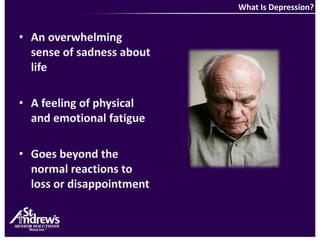
What Is Depression? An overwhelming sense of sadness about lifeA feeling of physical and emotional fatigue Goes beyond the normal reactions to loss or disappointment
Facts About DepressionMajor depression is extreme and persistent and can interfere with an individual’s ability to functionWomen are in fact twice as likely as men to develop depression
Facts About Depression Cont.Many people experience depression later in life, and frequently, symptoms are attributed to the aging process However, depression is NOT a normal part of aging and is highly treatable
Warning Signs of DepressionFeelings of self-blame, guilt, or worthlessnessComplaints of slowed thinking, in-ability to concentratePreoccupation with death and dying; actual suicide attemptPoor appetite or significant weight loss Sleep disturbances ListlessnessLoss of interest or pleasure in usual activitiesLoss of interest in sexLoss of energy
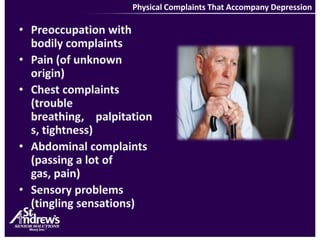
Physical Complaints That Accompany DepressionPreoccupation with bodily complaintsPain (of unknown origin)Chest complaints (trouble breathing,    palpitations, tightness)Abdominal complaints (passing a lot of gas, pain)Sensory problems (tingling sensations)
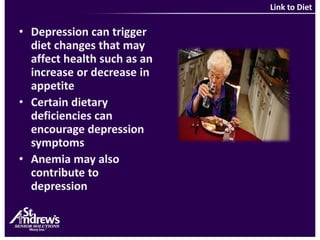
Link to Diet Depression can trigger diet changes that may affect health such as an increase or decrease in appetiteCertain dietary deficiencies can encourage depression symptomsAnemia may also contribute to depression
How to Help YourselfGet help! Mental health professionals such as counselors, social workers, nurses, psychiatrists, and psychologists may be able to assist you. Older people tend not to seek psychological help on their own.
 How to Help Yourself cont.Do not take any over-the-counter supplements to treat depression without discussing it with your health care provider firstAvoid isolation or separation
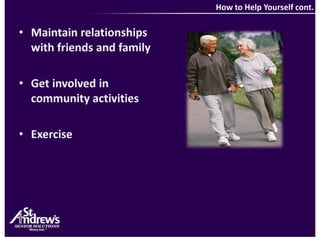
How to Help Yourself cont.Maintain relationships with friends and familyGet involved in community activitiesExercise
How Others Can HelpReview medications taken by the older adult with the physician to check for those that may promote depression as a side effect.Do not take physical complaints lightly. Be aware of the onset of these complaints, what particular time of day they are worse and what causes them.
How Others Can Help cont.Encourage the older adult to participate in social activities to decrease his/her sense of isolation and increasing self-esteem.Pay attention to the elderly person’s nutrition. Depressed people tend to ignore food or personal hygiene. Small but frequent, well-balanced meals should be made available.
 How Others Can Help cont.Encourage the older adult to take care of personal hygiene. Praise every small effort to do so.Involve the older adult in simple exercises. Exercises can be done while sitting down. Short walks are also helpful.Whenever possible, involve the older adult in simple household chores like folding laundry or wiping tables.
How Others Can Help cont.Provide emotional support, genuine concern, and caring.Taking medication at night maximizes the effects of natural and medicinal drowsiness, often providing the older adult with a sound night’s sleep.Be vigilant for any suicidal gestures or signs of helplessness or hopelessness
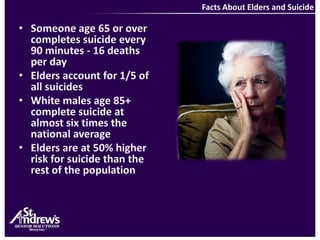
Facts About Elders and SuicideSomeone age 65 or over completes suicide every 90 minutes - 16 deaths per dayElders account for 1/5 of all suicidesWhite males age 85+ complete suicide at almost six times the national averageElders are at 50% higher risk for suicide than the rest of the population
Warning Signs of Suicide in EldersFeeling hopeless and/or helplessFeeling worthless (“Who needs me?”)Loss of interest in activities that are usually found enjoyableCutting on social interaction, self-care and groomingExperiencing of expecting a significant personal loss (e.g. spouse)
Warning Signs of Suicide in Elders cont. Putting affairs in order, giving things away, making changes in willsScheduling an appointment with physician for no apparent physical cause, or very shortly after last visit to doctorExpression of fears and anxieties with any reason
Warning Signs of Suicide in Elders cont. Preoccupation with death or lack of personal safetySudden interest or disinterest in church and religionStock-piling medication or obtaining other lethal meansSuspicious behaviors like waving good-bye or kissing good-bye if not characteristic
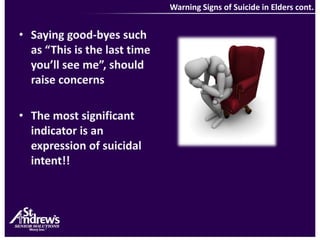
Warning Signs of Suicide in Elders cont. Saying good-byes such as “This is the last time you’ll see me”, should raise concernsThe most significant indicator is an expression of suicidal intent!!
Finding HelpIf Suicidal Call:St. Andrews Senior Solutions is here to help! Call one of our Care Managers today!BHR Crisis Hotline(314) 469-6644Or a mental health professional - psychologist, Social worker,  counselor, psychiatrist, etc.CONTACTLocal: (314) 726-5766Toll-Free: (888) 388-1930caringinfo@standrews1.comwww.standrews1.com

St. Andrews Understanding Depression

  • 1.
  • 2.
    Presentation Objectives DefinedepressionIdentify the warning signs of depressionIdentify some coping strategies for depression
  • 3.
    What Is Depression?An overwhelming sense of sadness about lifeA feeling of physical and emotional fatigue Goes beyond the normal reactions to loss or disappointment
  • 4.
    Facts About DepressionMajordepression is extreme and persistent and can interfere with an individual’s ability to functionWomen are in fact twice as likely as men to develop depression
  • 5.
    Facts About DepressionCont.Many people experience depression later in life, and frequently, symptoms are attributed to the aging process However, depression is NOT a normal part of aging and is highly treatable
  • 6.
    Warning Signs ofDepressionFeelings of self-blame, guilt, or worthlessnessComplaints of slowed thinking, in-ability to concentratePreoccupation with death and dying; actual suicide attemptPoor appetite or significant weight loss Sleep disturbances ListlessnessLoss of interest or pleasure in usual activitiesLoss of interest in sexLoss of energy
  • 7.
    Physical Complaints ThatAccompany DepressionPreoccupation with bodily complaintsPain (of unknown origin)Chest complaints (trouble breathing, palpitations, tightness)Abdominal complaints (passing a lot of gas, pain)Sensory problems (tingling sensations)
  • 8.
    Link to DietDepression can trigger diet changes that may affect health such as an increase or decrease in appetiteCertain dietary deficiencies can encourage depression symptomsAnemia may also contribute to depression
  • 9.
    How to HelpYourselfGet help! Mental health professionals such as counselors, social workers, nurses, psychiatrists, and psychologists may be able to assist you. Older people tend not to seek psychological help on their own.
  • 10.
    How toHelp Yourself cont.Do not take any over-the-counter supplements to treat depression without discussing it with your health care provider firstAvoid isolation or separation
  • 11.
    How to HelpYourself cont.Maintain relationships with friends and familyGet involved in community activitiesExercise
  • 12.
    How Others CanHelpReview medications taken by the older adult with the physician to check for those that may promote depression as a side effect.Do not take physical complaints lightly. Be aware of the onset of these complaints, what particular time of day they are worse and what causes them.
  • 13.
    How Others CanHelp cont.Encourage the older adult to participate in social activities to decrease his/her sense of isolation and increasing self-esteem.Pay attention to the elderly person’s nutrition. Depressed people tend to ignore food or personal hygiene. Small but frequent, well-balanced meals should be made available.
  • 14.
    How OthersCan Help cont.Encourage the older adult to take care of personal hygiene. Praise every small effort to do so.Involve the older adult in simple exercises. Exercises can be done while sitting down. Short walks are also helpful.Whenever possible, involve the older adult in simple household chores like folding laundry or wiping tables.
  • 15.
    How Others CanHelp cont.Provide emotional support, genuine concern, and caring.Taking medication at night maximizes the effects of natural and medicinal drowsiness, often providing the older adult with a sound night’s sleep.Be vigilant for any suicidal gestures or signs of helplessness or hopelessness
  • 16.
    Facts About Eldersand SuicideSomeone age 65 or over completes suicide every 90 minutes - 16 deaths per dayElders account for 1/5 of all suicidesWhite males age 85+ complete suicide at almost six times the national averageElders are at 50% higher risk for suicide than the rest of the population
  • 17.
    Warning Signs ofSuicide in EldersFeeling hopeless and/or helplessFeeling worthless (“Who needs me?”)Loss of interest in activities that are usually found enjoyableCutting on social interaction, self-care and groomingExperiencing of expecting a significant personal loss (e.g. spouse)
  • 18.
    Warning Signs ofSuicide in Elders cont. Putting affairs in order, giving things away, making changes in willsScheduling an appointment with physician for no apparent physical cause, or very shortly after last visit to doctorExpression of fears and anxieties with any reason
  • 19.
    Warning Signs ofSuicide in Elders cont. Preoccupation with death or lack of personal safetySudden interest or disinterest in church and religionStock-piling medication or obtaining other lethal meansSuspicious behaviors like waving good-bye or kissing good-bye if not characteristic
  • 20.
    Warning Signs ofSuicide in Elders cont. Saying good-byes such as “This is the last time you’ll see me”, should raise concernsThe most significant indicator is an expression of suicidal intent!!
  • 21.
    Finding HelpIf SuicidalCall:St. Andrews Senior Solutions is here to help! Call one of our Care Managers today!BHR Crisis Hotline(314) 469-6644Or a mental health professional - psychologist, Social worker, counselor, psychiatrist, etc.CONTACTLocal: (314) 726-5766Toll-Free: (888) 388-1930caringinfo@standrews1.comwww.standrews1.com