Download as PDF, PPTX


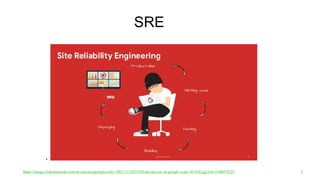

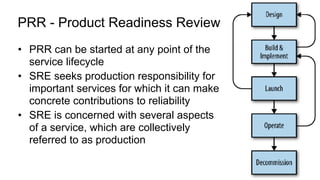
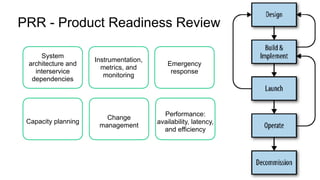

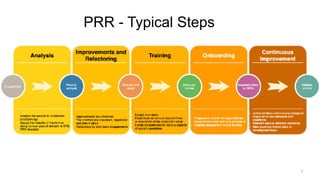
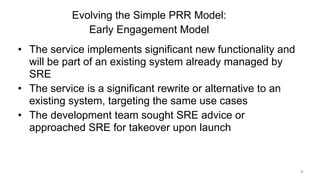
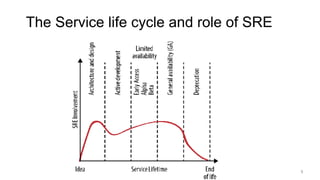


The document outlines the SRE (Site Reliability Engineering) engagement model, focusing on the Product Readiness Review (PRR) process throughout the service lifecycle. It emphasizes the importance of verifying service readiness, improving production reliability, and minimizing incidents while detailing the roles of SRE in managing services. Various aspects of production such as system architecture, metrics, monitoring, and change management are highlighted as critical to the PRR objectives.


![Site-Reliability-Engineering-v2[6241].pdf](https://cdn.slidesharecdn.com/ss_thumbnails/site-reliability-engineering-v26241-221023035909-82e9559b-thumbnail.jpg?width=640&height=640&fit=bounds)


![Getting Started with Apache Spark: Big Data Made Simple [Free Meetup]](https://cdn.slidesharecdn.com/ss_thumbnails/apachesparkgettingstarted-260203175547-8361bcc3-thumbnail.jpg?width=640&height=640&fit=bounds)