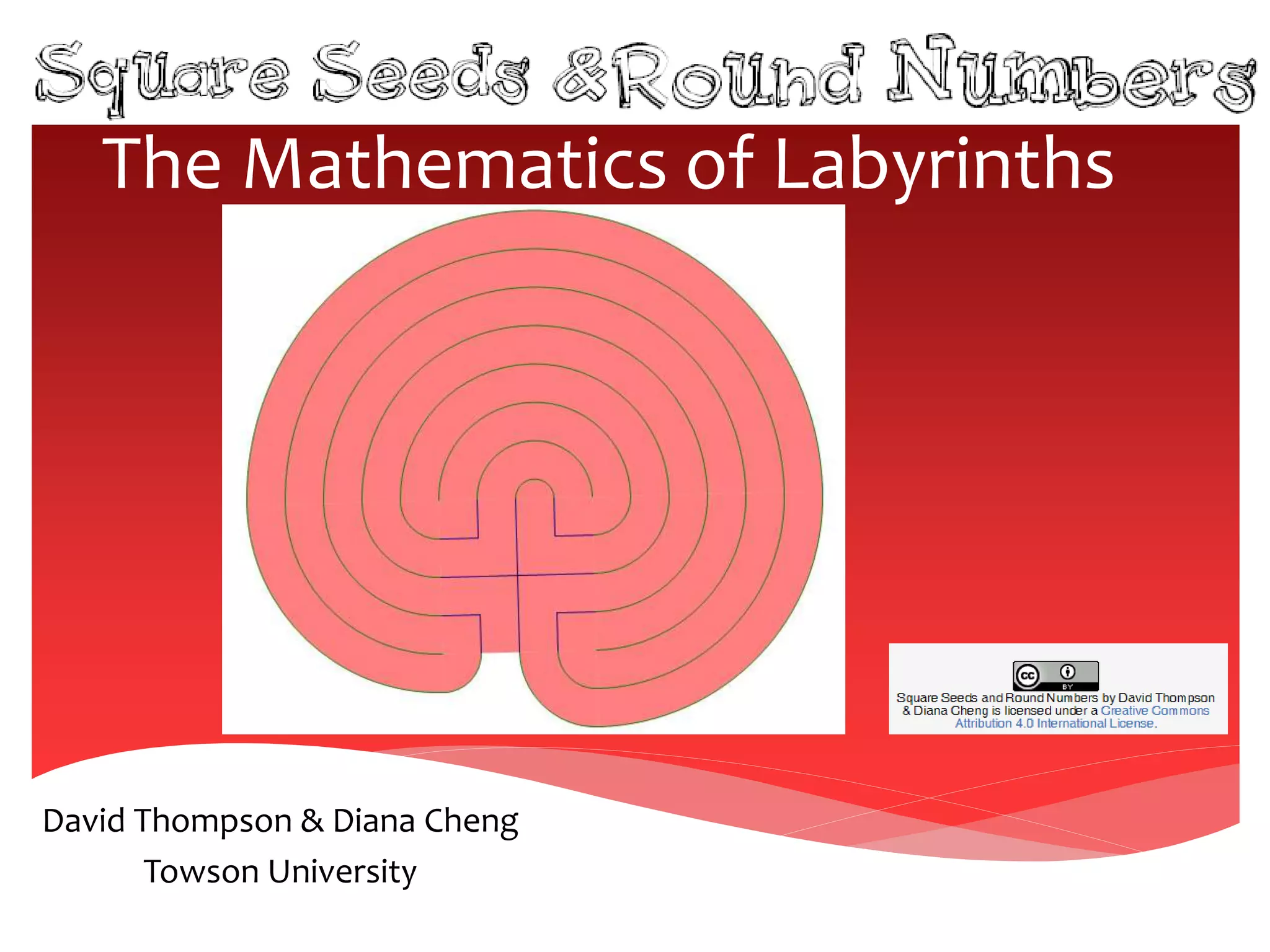
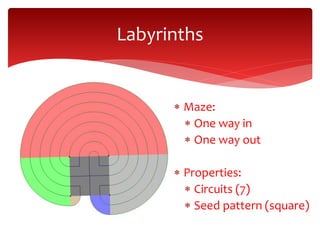
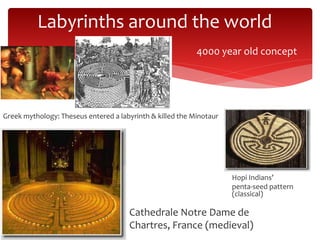
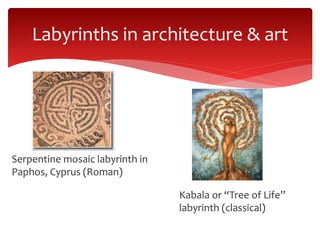
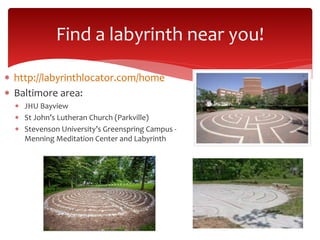
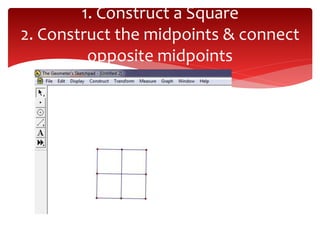
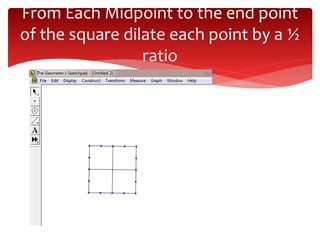
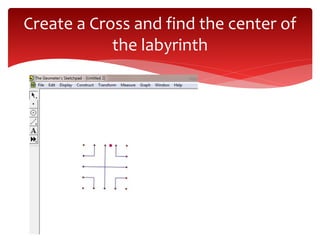
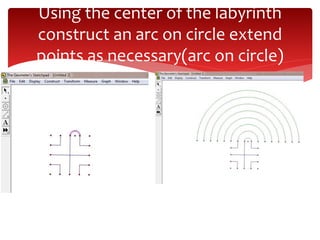
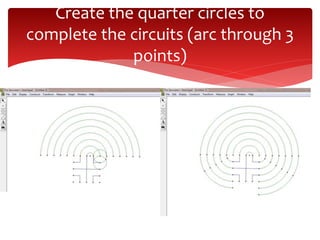
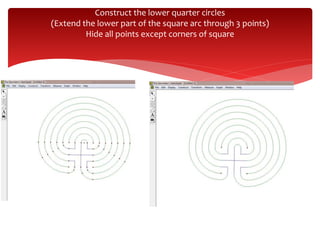
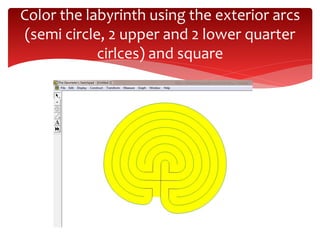
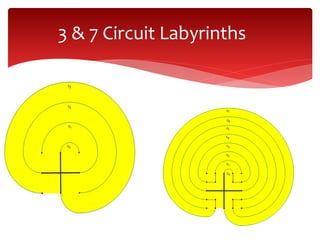
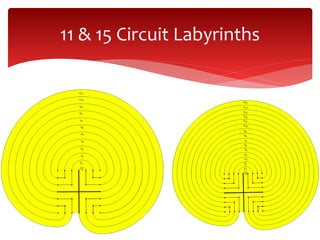
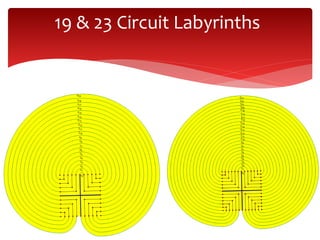
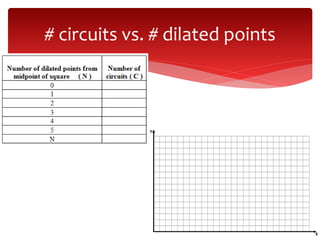
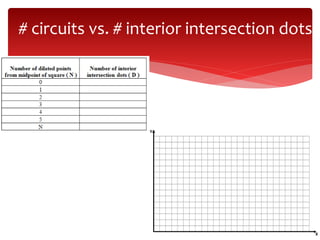
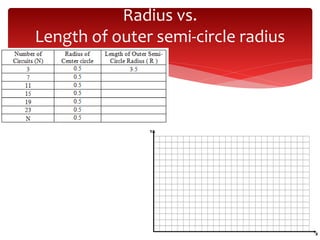
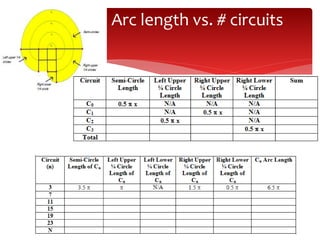
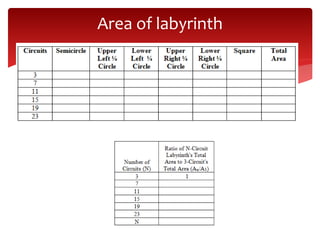
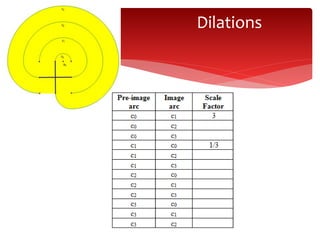
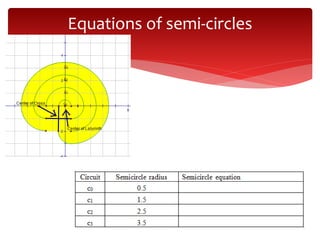
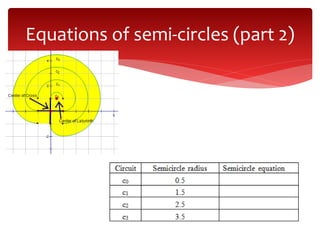
This document discusses the mathematics behind labyrinths. It begins by defining labyrinths and mazes, and provides examples of historical and contemporary labyrinths around the world. It then explains how classical labyrinths are constructed using a compass and straightedge by starting with a square and dilating points to form concentric circuits. The document analyzes various mathematical properties of labyrinths, such as the relationship between the number of circuits and other features. It presents labyrinth examples with different numbers of circuits. In conclusion, labyrinth construction and analysis provides opportunities to explore mathematical concepts.