SQL Server DBA Online Training
Glory IT Technologies
SQL SERVER ADMINISTRATION
1. Introduction to Microsoft SQL Server
 What is a Database?
 Why to use database?
 What is RDBMS?
 Types of RDBMS
 Advantages of SQL Server
 Requirements and scope of SQL Server
2. Roles and Responsibilities of DBA
 What is Administration?
 Roles of DBA
 Licensing and Pricing of SQL Server
3. System Design and Architecture
• RAID Configuration
• Capacity Planning
• Installation
• Upgrades and Backward Compatibility
4. SQL Server Database Design
Logical and Physical architecture of database
Creating Database
Modifying structure of Database
Files and File Groups
Data Placement and Audit Placement
5. SQL Server Objects
 Data Types
 Tables
 Constraints
 Views
 Indexes and performance Considerations
 Triggers
 Stored Procedures
 User Defined Functions
 Cursors
 Synonyms
6. Transactions
o ACID Properties
o Commit Modes and Rollbacks
o Save points
o Transaction Locks and Locking Mechanism
o Isolation Levels
o Blocking and Deadlocks
7. Database Snapshots
 What is a DB Snapshot
 Why we use Snapshots
 How to design Snapshots
 Advantages and disadvantages
 Precautions when designing Snapshots
8. SQL Server Partitions
Partitioning Fundamentals
Designing Partitions
Creating Partitions
Viewing Partition Information
Maintaining Partitions
9. Backup Fundamentals
• System Failures and need of Backups
• Use of Transaction Log
• Microsoft SQL Server Automatic Recovery
Recovery Models
i. Simple Recovery Model
ii. Full Recovery Model
iii. Bulk – Logged Recovery Model
9. Backup Fundamentals
Types of Backups
i. Data (Full) Backups
ii. Differential Backups
iii. Log Backups
iv. Copy-Only Backups
v. Full-Text Catalog Backups
 Media Devices and Media Sets
 Overview of Backup History Tables
 Real world Backup Strategy
10. Restoring Data
• Restore and Recovery Concepts
• Restoring Data from Backups
i. Complete, Differential and Log Restores
ii. Point-In-Time Restores
iii. File and File Group Restores
iv. Page Restores
v. Piecemeal and Online Restores
vi. Reverting to Database Snapshots
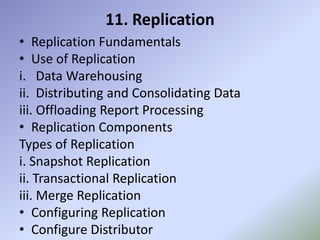
11. Replication
• Replication Fundamentals
• Use of Replication
i. Data Warehousing
ii. Distributing and Consolidating Data
iii. Offloading Report Processing
• Replication Components
Types of Replication
i. Snapshot Replication
ii. Transactional Replication
iii. Merge Replication
• Configuring Replication
• Configure Distributor
Contact us for free Demo
We stay with you until you get the results you
want.
If you really interested, please let me know .
We will arrange the Demo Session.
 Feel Free to call us any time
Thanks & Regards
Srinivas
GloryITTechnologies
Email:Info@gloryittechnologies.com
Phone:+91-9032813456/+91-9160177789
Skype ID : gloryittechnologies
THANK YOU

Sql server dba online training

  • 1.
    SQL Server DBAOnline Training Glory IT Technologies
  • 2.
    SQL SERVER ADMINISTRATION 1.Introduction to Microsoft SQL Server  What is a Database?  Why to use database?  What is RDBMS?  Types of RDBMS  Advantages of SQL Server  Requirements and scope of SQL Server
  • 3.
    2. Roles andResponsibilities of DBA  What is Administration?  Roles of DBA  Licensing and Pricing of SQL Server
  • 4.
    3. System Designand Architecture • RAID Configuration • Capacity Planning • Installation • Upgrades and Backward Compatibility
  • 5.
    4. SQL ServerDatabase Design Logical and Physical architecture of database Creating Database Modifying structure of Database Files and File Groups Data Placement and Audit Placement
  • 6.
    5. SQL ServerObjects  Data Types  Tables  Constraints  Views  Indexes and performance Considerations  Triggers  Stored Procedures  User Defined Functions  Cursors  Synonyms
  • 7.
    6. Transactions o ACIDProperties o Commit Modes and Rollbacks o Save points o Transaction Locks and Locking Mechanism o Isolation Levels o Blocking and Deadlocks
  • 8.
    7. Database Snapshots What is a DB Snapshot  Why we use Snapshots  How to design Snapshots  Advantages and disadvantages  Precautions when designing Snapshots
  • 9.
    8. SQL ServerPartitions Partitioning Fundamentals Designing Partitions Creating Partitions Viewing Partition Information Maintaining Partitions
  • 10.
    9. Backup Fundamentals •System Failures and need of Backups • Use of Transaction Log • Microsoft SQL Server Automatic Recovery Recovery Models i. Simple Recovery Model ii. Full Recovery Model iii. Bulk – Logged Recovery Model
  • 11.
    9. Backup Fundamentals Typesof Backups i. Data (Full) Backups ii. Differential Backups iii. Log Backups iv. Copy-Only Backups v. Full-Text Catalog Backups  Media Devices and Media Sets  Overview of Backup History Tables  Real world Backup Strategy
  • 12.
    10. Restoring Data •Restore and Recovery Concepts • Restoring Data from Backups i. Complete, Differential and Log Restores ii. Point-In-Time Restores iii. File and File Group Restores iv. Page Restores v. Piecemeal and Online Restores vi. Reverting to Database Snapshots
  • 13.
    11. Replication • ReplicationFundamentals • Use of Replication i. Data Warehousing ii. Distributing and Consolidating Data iii. Offloading Report Processing • Replication Components Types of Replication i. Snapshot Replication ii. Transactional Replication iii. Merge Replication • Configuring Replication • Configure Distributor
  • 14.
    Contact us forfree Demo We stay with you until you get the results you want. If you really interested, please let me know . We will arrange the Demo Session.  Feel Free to call us any time Thanks & Regards Srinivas GloryITTechnologies Email:Info@gloryittechnologies.com Phone:+91-9032813456/+91-9160177789 Skype ID : gloryittechnologies
  • 15.