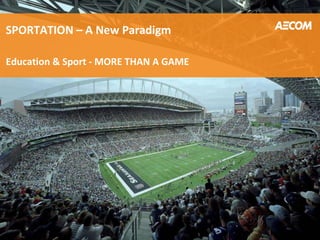
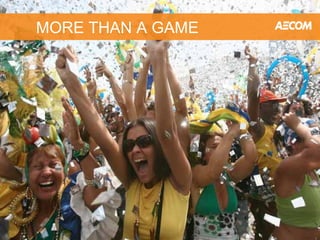
SPORTATION – A New Paradigm Education & Sport - MORE THAN A GAME
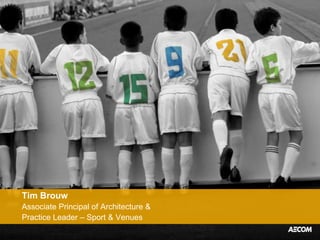
Tim Brouw Associate Principal of Architecture &  Practice Leader – Sport & Venues
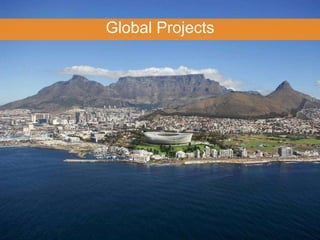
Global Projects
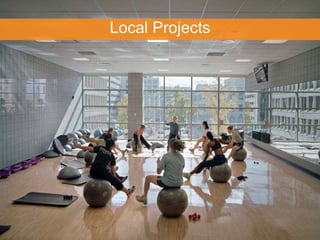
Local Projects
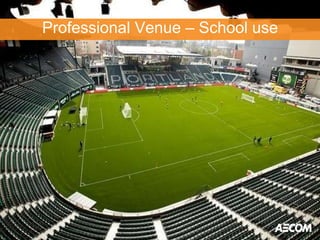
Professional Venue – School use
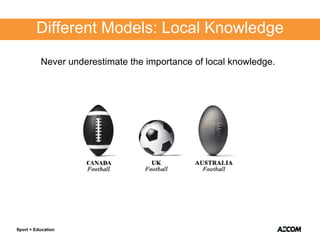
Sport + Education Different Models: Local Knowledge
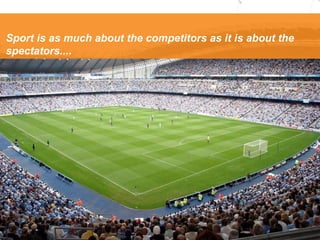
Sport is as much about the competitors as it is about the spectators....
Key Issues: WHO reports 70% of the UAE population are over weight & Obese Diabetes is the 2 nd  highest levels in the world  Is expected to double by 2030 It starts at home but is supported and educated at school . Sport + Venue Sport/Health & Education
Social Schools Initiative
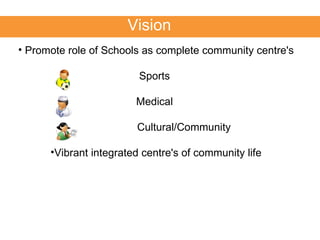
Promote role of Schools as complete community centre's Sports  Medical    Cultural/Community Vibrant integrated centre's of community life Vision
Provide better level of medical, sports & social services to Rural communities  Create central community focal points Utilise existing infrastructure to minimise costs and maximise land use efficiency Intent
Bring compatible land uses together to maximize synergies Maximise public use of school facilities wherever possible Where public access to school not possible, other facilities located adjacent to school Create activity around central community nodes Maximise efficiencies in building costs, management & maintenance   Strategies
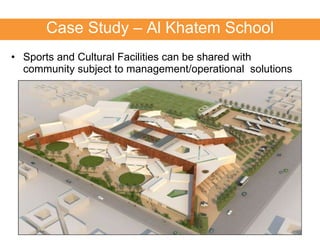
Sports and Cultural Facilities can be shared with community subject to management/operational  solutions Case Study – Al Khatem School
Key emerging concepts & approaches
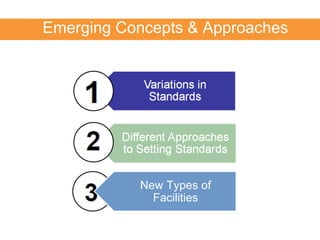
Emerging Concepts & Approaches New Types of Facilities
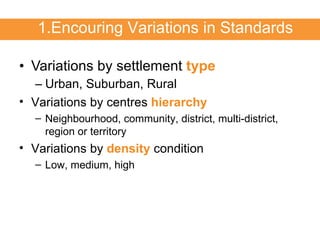
Variations by settlement  type Urban, Suburban, Rural Variations by centres  hierarchy Neighbourhood, community, district, multi-district, region or territory Variations by  density  condition Low, medium, high 1.Encouring Variations in Standards
Per capita standards X sq.m per person Maintaining current per capita provision People to part of a facility People per swimming pool lane People per sports court People per doctor 2. Investigating different approaches to  setting standards
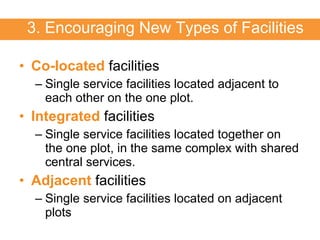
Co-located  facilities Single service facilities located adjacent to each other on the one plot. Integrated  facilities Single service facilities located together on the one plot, in the same complex with shared central services. Adjacent  facilities Single service facilities located on adjacent plots 3. Encouraging New Types of Facilities
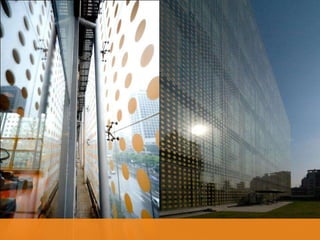
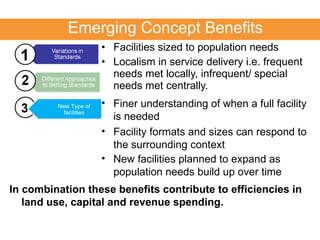
Facilities sized to population needs Localism in service delivery i.e. frequent needs met locally, infrequent/ special needs met centrally. New facilities planned to expand as population needs build up over time  Finer understanding of when a full facility is needed Facility formats and sizes can respond to the surrounding context In  combination these benefits  contribute  to efficiencies in land use, capital and revenue spending. Emerging Concept Benefits New Type of facilities
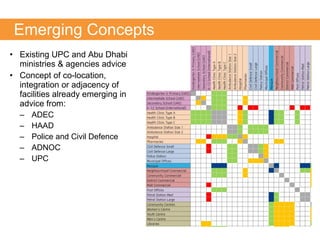
Existing UPC and Abu Dhabi ministries & agencies advice Concept of co-location, integration or adjacency of facilities already emerging in advice from:  ADEC HAAD Police and Civil Defence ADNOC  UPC Emerging Concepts
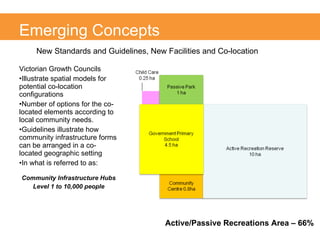
Victorian Growth Councils Illustrate spatial models for potential co-location configurations  Number of options for the co-located elements according to local community needs. Guidelines illustrate how community infrastructure forms can be arranged in a co-located geographic setting In what is referred to as: Community Infrastructure Hubs Level 1 to 10,000 people Emerging Concepts New Standards and Guidelines, New Facilities and Co-location Active/Passive Recreations Area – 66%
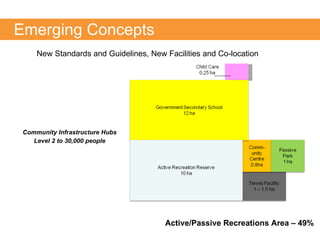
Community Infrastructure Hubs Level 2 to 30,000 people Emerging Concepts New Standards and Guidelines, New Facilities and Co-location Active/Passive Recreations Area – 49%
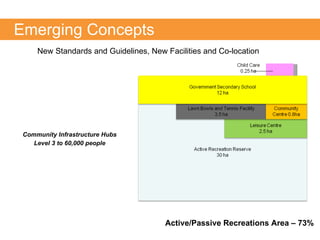
Community Infrastructure Hubs Level 3 to 60,000 people Emerging Concepts New Standards and Guidelines, New Facilities and Co-location Active/Passive Recreations Area – 73%
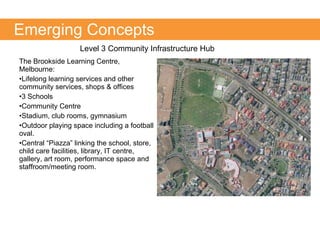
The Brookside Learning Centre, Melbourne: Lifelong learning services and other community services, shops & offices  3 Schools Community Centre Stadium, club rooms, gymnasium Outdoor playing space including a football oval. Central “Piazza” linking the school, store, child care facilities, library, IT centre, gallery, art room, performance space and staffroom/meeting room. Emerging Concepts Level 3 Community Infrastructure Hub
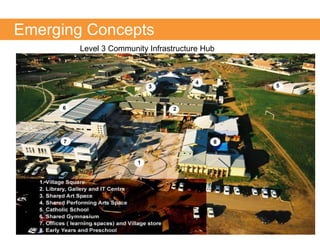
Emerging Concepts Level 3 Community Infrastructure Hub
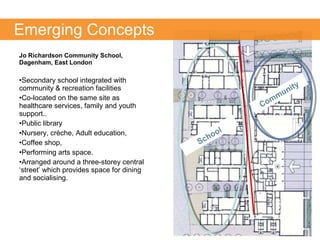
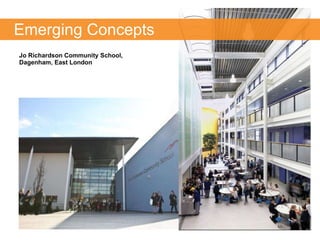
Jo Richardson Community School, Dagenham, East London Secondary school integrated with community & recreation facilities Co-located on the same site as healthcare services, family and youth support..  Public library  Nursery, crèche, Adult education,  Coffee shop,  Performing arts space.  Arranged around a three-storey central ‘street’ which provides space for dining and socialising. Emerging Concepts Community School
Jo Richardson Community School, Dagenham, East London Emerging Concepts
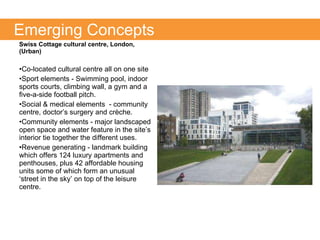
Swiss Cottage cultural centre, London, (Urban) Co-located cultural centre all on one site Sport elements - Swimming pool, indoor sports courts, climbing wall, a gym and a five-a-side football pitch. Social & medical elements  - community centre, doctor’s surgery and crèche.  Community elements - major landscaped open space and water feature in the site’s interior tie together the different uses. Revenue generating - landmark building which offers 124 luxury apartments and penthouses, plus 42 affordable housing units some of which form an unusual ‘street in the sky’ on top of the leisure centre. Emerging Concepts
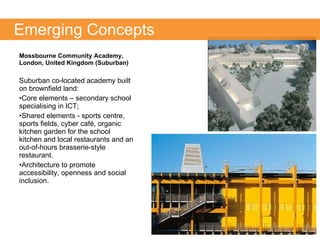
Mossbourne Community Academy, London, United Kingdom (Suburban) Suburban co-located academy built on brownfield land:  Core elements – secondary school specialising in ICT; Shared elements - sports centre, sports fields, cyber café, organic kitchen garden for the school kitchen and local restaurants and an out-of-hours brasserie-style restaurant.  Architecture to promote accessibility, openness and social inclusion.  Emerging Concepts
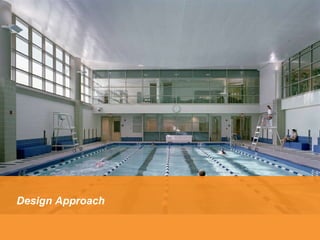
Design Approach
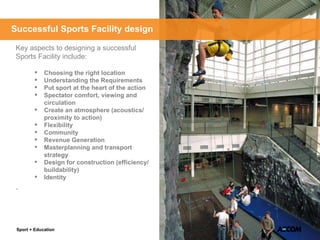
Key aspects to designing a successful Sports Facility include: Choosing the right location Understanding the Requirements Put sport at the heart of the action Spectator comfort, viewing and circulation Create an atmosphere (acoustics/ proximity to action) Flexibility Community  Revenue Generation Masterplanning and transport strategy Design for construction (efficiency/ buildability) Identity . Sport + Education Successful Sports Facility design
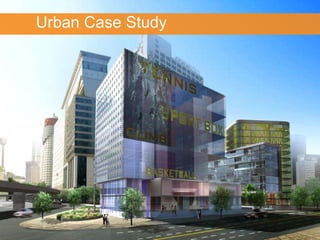
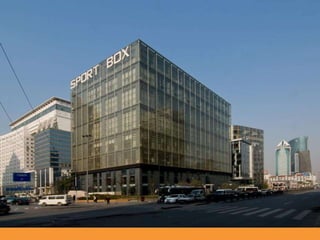
Urban Case Study


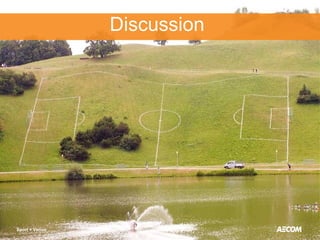
Discussion   Sport + Venue
MORE THAN A GAME

Sportation Aecom Bfe Mena 2011

  • 1.
    SPORTATION – ANew Paradigm Education & Sport - MORE THAN A GAME
  • 2.
    Tim Brouw AssociatePrincipal of Architecture & Practice Leader – Sport & Venues
  • 3.
  • 4.
  • 5.
  • 6.
    Sport + EducationDifferent Models: Local Knowledge
  • 7.
    Sport is asmuch about the competitors as it is about the spectators....
  • 8.
    Key Issues: WHOreports 70% of the UAE population are over weight & Obese Diabetes is the 2 nd highest levels in the world Is expected to double by 2030 It starts at home but is supported and educated at school . Sport + Venue Sport/Health & Education
  • 9.
  • 10.
    Promote role ofSchools as complete community centre's Sports Medical Cultural/Community Vibrant integrated centre's of community life Vision
  • 11.
    Provide better levelof medical, sports & social services to Rural communities Create central community focal points Utilise existing infrastructure to minimise costs and maximise land use efficiency Intent
  • 12.
    Bring compatible landuses together to maximize synergies Maximise public use of school facilities wherever possible Where public access to school not possible, other facilities located adjacent to school Create activity around central community nodes Maximise efficiencies in building costs, management & maintenance Strategies
  • 13.
    Sports and CulturalFacilities can be shared with community subject to management/operational solutions Case Study – Al Khatem School
  • 14.
  • 15.
    Emerging Concepts &Approaches New Types of Facilities
  • 16.
    Variations by settlement type Urban, Suburban, Rural Variations by centres hierarchy Neighbourhood, community, district, multi-district, region or territory Variations by density condition Low, medium, high 1.Encouring Variations in Standards
  • 17.
    Per capita standardsX sq.m per person Maintaining current per capita provision People to part of a facility People per swimming pool lane People per sports court People per doctor 2. Investigating different approaches to setting standards
  • 18.
    Co-located facilitiesSingle service facilities located adjacent to each other on the one plot. Integrated facilities Single service facilities located together on the one plot, in the same complex with shared central services. Adjacent facilities Single service facilities located on adjacent plots 3. Encouraging New Types of Facilities
  • 19.
    Facilities sized topopulation needs Localism in service delivery i.e. frequent needs met locally, infrequent/ special needs met centrally. New facilities planned to expand as population needs build up over time Finer understanding of when a full facility is needed Facility formats and sizes can respond to the surrounding context In combination these benefits contribute to efficiencies in land use, capital and revenue spending. Emerging Concept Benefits New Type of facilities
  • 20.
    Existing UPC andAbu Dhabi ministries & agencies advice Concept of co-location, integration or adjacency of facilities already emerging in advice from: ADEC HAAD Police and Civil Defence ADNOC UPC Emerging Concepts
  • 21.
    Victorian Growth CouncilsIllustrate spatial models for potential co-location configurations Number of options for the co-located elements according to local community needs. Guidelines illustrate how community infrastructure forms can be arranged in a co-located geographic setting In what is referred to as: Community Infrastructure Hubs Level 1 to 10,000 people Emerging Concepts New Standards and Guidelines, New Facilities and Co-location Active/Passive Recreations Area – 66%
  • 22.
    Community Infrastructure HubsLevel 2 to 30,000 people Emerging Concepts New Standards and Guidelines, New Facilities and Co-location Active/Passive Recreations Area – 49%
  • 23.
    Community Infrastructure HubsLevel 3 to 60,000 people Emerging Concepts New Standards and Guidelines, New Facilities and Co-location Active/Passive Recreations Area – 73%
  • 24.
    The Brookside LearningCentre, Melbourne: Lifelong learning services and other community services, shops & offices 3 Schools Community Centre Stadium, club rooms, gymnasium Outdoor playing space including a football oval. Central “Piazza” linking the school, store, child care facilities, library, IT centre, gallery, art room, performance space and staffroom/meeting room. Emerging Concepts Level 3 Community Infrastructure Hub
  • 25.
    Emerging Concepts Level3 Community Infrastructure Hub
  • 26.
    Jo Richardson CommunitySchool, Dagenham, East London Secondary school integrated with community & recreation facilities Co-located on the same site as healthcare services, family and youth support.. Public library Nursery, crèche, Adult education, Coffee shop, Performing arts space. Arranged around a three-storey central ‘street’ which provides space for dining and socialising. Emerging Concepts Community School
  • 27.
    Jo Richardson CommunitySchool, Dagenham, East London Emerging Concepts
  • 28.
    Swiss Cottage culturalcentre, London, (Urban) Co-located cultural centre all on one site Sport elements - Swimming pool, indoor sports courts, climbing wall, a gym and a five-a-side football pitch. Social & medical elements - community centre, doctor’s surgery and crèche. Community elements - major landscaped open space and water feature in the site’s interior tie together the different uses. Revenue generating - landmark building which offers 124 luxury apartments and penthouses, plus 42 affordable housing units some of which form an unusual ‘street in the sky’ on top of the leisure centre. Emerging Concepts
  • 29.
    Mossbourne Community Academy,London, United Kingdom (Suburban) Suburban co-located academy built on brownfield land: Core elements – secondary school specialising in ICT; Shared elements - sports centre, sports fields, cyber café, organic kitchen garden for the school kitchen and local restaurants and an out-of-hours brasserie-style restaurant. Architecture to promote accessibility, openness and social inclusion. Emerging Concepts
  • 30.
  • 31.
    Key aspects todesigning a successful Sports Facility include: Choosing the right location Understanding the Requirements Put sport at the heart of the action Spectator comfort, viewing and circulation Create an atmosphere (acoustics/ proximity to action) Flexibility Community Revenue Generation Masterplanning and transport strategy Design for construction (efficiency/ buildability) Identity . Sport + Education Successful Sports Facility design
  • 32.
  • 33.
  • 34.
  • 35.
  • 36.
  • 37.
  • 38.
  • 39.
    Discussion Sport + Venue
  • 40.

Editor's Notes